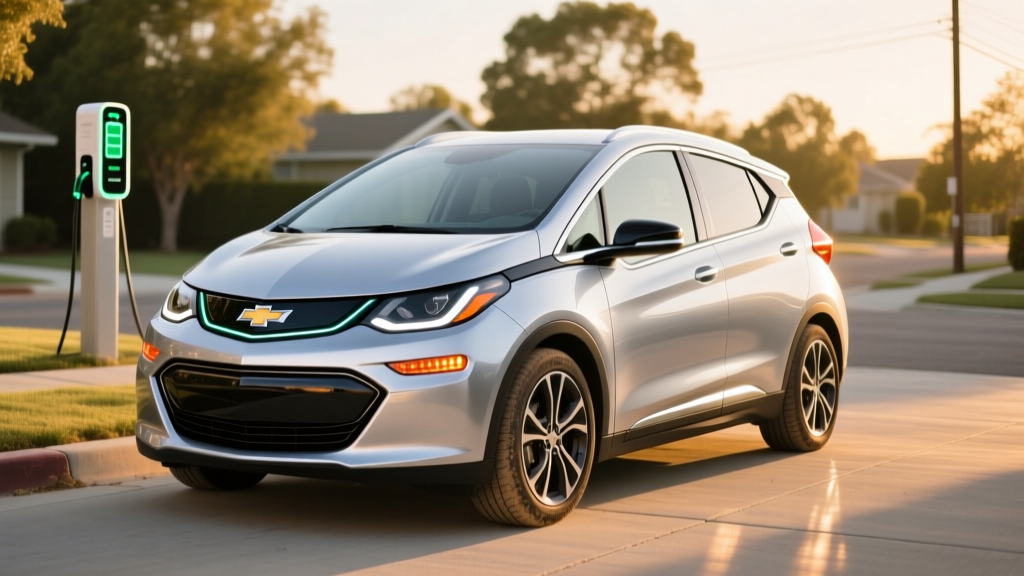
The 2017 Chevrolet Bolt EV was a watershed moment for affordable long-range electric vehicles. When it launched, no other EV under $40,000 offered anywhere near its 238-mile EPA range. Nearly a decade later, the 2017 Bolt EV remains one of the most popular used EVs on the market — and for good reason. But buying a first-generation Bolt in 2026 requires careful attention to battery recall history, charging limitations, and real-world range expectations.
This review covers everything a used-EV shopper needs to know: exact specs, real-world range data, charging speeds, ownership costs, and whether the 2017 Bolt EV still holds up against newer competition.
2017 Bolt EV Core Specifications at a Glance
| Specification | Value |
|---|---|
| EPA Range | 238 miles |
| Battery (usable) | 60 kWh (NMC lithium-ion) |
| Motor Output | 200 hp / 266 lb-ft torque |
| Drivetrain | Front-wheel drive (FWD) |
| 0–60 mph | 6.5 seconds |
| EPA Efficiency | 119 MPGe combined (28 kWh/100 mi) |
| Max DC Fast Charge | ~50 kW (CCS1) |
| Level 2 Charge Rate | 7.2 kW onboard charger |
| Cargo Volume | 56.6 cu ft (rear seats folded) |
| Original Base MSRP | $36,620 (LT), $43,220 (Premier) |
| Battery Warranty | 8 years / 100,000 miles |
Real-World Range: What 238 EPA Miles Actually Means
EPA Sticker: 238 miles
Real-World Highway (70 mph, moderate temps): ~200–215 miles
Real-World City / Mixed Commute: ~220–240 miles (regen-friendly)
Cold Weather (below 32°F): ~155–180 miles (30–35% loss without preconditioning)
Note: The 2017 Bolt EV lacks a battery heat pump or active thermal preconditioning for DC charging, which amplifies cold-weather range loss and slows fast charging in winter.
The 238-mile EPA figure was class-leading in 2017, and it still holds up for daily commuting. According to fueleconomy.gov, the Bolt EV's combined efficiency of 119 MPGe (28 kWh per 100 miles) is excellent. In practice, owners who drive mostly city and suburban routes with frequent regenerative braking opportunities often meet or slightly exceed the EPA estimate.
However, highway driving at 70+ mph reduces range noticeably — expect 200 to 215 miles on a full charge in fair weather. The Bolt EV's relatively small frontal area helps, but it lacks the aerodynamic optimization of newer EVs like the Hyundai Ioniq 5 or Tesla Model 3.
Cold weather is the bigger concern. The 2017 Bolt EV uses a passive thermal management approach for its battery pack — there is no active liquid heating system to warm the cells before driving or charging. In sub-freezing temperatures, range drops of 30–35% are well-documented by owners. If you live in a cold climate, plan for roughly 160–180 miles of usable range in winter.
Charging Speed: The 2017 Bolt EV's Biggest Limitation
Charging is where the 2017 Bolt EV shows its age most clearly. While the battery and range were ahead of their time, the DC fast-charging capability was merely adequate at launch and now falls well behind modern standards.
| Charging Level | Power / Rate | Time / Notes |
|---|---|---|
| Level 1 (120V household) | ~1.2 kW | ~4 miles per hour; full charge in ~50+ hours |
| Level 2 (240V, 32A) | 7.2 kW | ~25 miles per hour; full charge in ~9.5 hours |
| DC Fast Charge (CCS1) | Peak ~50 kW | 10–80% in ~60–70 minutes; tapers sharply above 80% |
The 7.2 kW onboard Level 2 charger is perfectly adequate for overnight home charging. Plug in when you get home, and the battery will be full by morning — roughly 9.5 hours from empty. This is standard for the era and works well for daily use.
DC fast charging is the weak point. The 2017 Bolt EV peaks at approximately 50 kW on a CCS1 connector. On a modern 150 kW or 350 kW station, the Bolt will only draw what it can handle — about 50 kW at peak, and that rate doesn't sustain for long. The charge curve tapers progressively: expect roughly 40–45 kW average from 10–60% SoC, then a steep drop-off above 70%. A 10–80% session takes approximately 60 to 70 minutes.
For context, a 2025 Hyundai Ioniq 5 charges from 10–80% in about 18 minutes at 240 kW peak. The Bolt EV's road-trip charging stops will be significantly longer. If your use case is primarily commuting with occasional longer trips, this is manageable. If you plan regular highway road trips, the slow DC charging will test your patience.
Cold-weather charging note: Without battery preconditioning, DC fast charging in cold weather (below 40°F) can be even slower — sometimes limited to 20–30 kW until the pack warms up through use. Plan accordingly.
Performance and Driving Impressions
The 2017 Bolt EV's single front-mounted permanent-magnet motor produces 200 horsepower and 266 lb-ft of torque. That torque is available instantly from zero RPM, giving the Bolt a punchy, responsive feel in city and suburban driving. The 0–60 mph time of 6.5 seconds is genuinely quick for a compact hatchback and makes merging and passing effortless.
The drivetrain is front-wheel drive only — no AWD option was ever offered. The low center of gravity from the under-floor battery pack gives the Bolt surprisingly composed handling, though the eco-oriented tires prioritize efficiency over grip. Ride quality is firm but acceptable, and the cabin is well-isolated from road noise at moderate speeds.
Regenerative braking is a highlight. The Bolt EV offers a "one-pedal driving" mode via a steering-wheel paddle (labeled "Regen on Demand") and a selectable drive mode that increases regen aggressiveness. In its strongest setting, you can drive almost entirely without touching the brake pedal in stop-and-go traffic. This system is intuitive and one of the best implementations of its era.
Interior, Tech, and Cargo Space
The 2017 Bolt EV is a compact hatchback with surprisingly practical interior dimensions. Chevrolet designed the battery pack to sit flat under the floor, preserving cabin and cargo space.
| Measurement | Value |
|---|---|
| Front Legroom | 41.6 inches |
| Rear Legroom | 35.6 inches |
| Cargo (behind rear seats) | 23.6 cu ft |
| Cargo (rear seats folded) | 56.6 cu ft |
| Seating Capacity | 5 passengers |
The cargo area is generous for the class — 56.6 cubic feet with seats folded rivals many compact SUVs. There is no frunk (front trunk); the space under the hood is occupied by the motor and power electronics.
Infotainment: The 2017 Bolt EV came with Chevrolet's MyLink system on a 10.2-inch touchscreen — large for its time. It supports Apple CarPlay and Android Auto (wired), Bluetooth, and a 4G LTE Wi-Fi hotspot. The interface is dated by 2026 standards but functional. An optional Bose premium audio system was available on the Premier trim.
Driver Assistance: Available features include a surround-view camera, rear cross-traffic alert, blind-spot monitoring, lane-keep assist, and forward collision alert with automatic emergency braking. These are basic SAE Level 0–1 features — there is no adaptive cruise control or lane-centering system on the 2017 model. This is a notable gap compared to even modestly equipped modern EVs.
Battery Health, Recall History, and Warranty
The most critical factor when buying a used 2017 Bolt EV is its battery recall history. General Motors issued a major recall for 2017–2019 Bolt EVs due to a manufacturing defect in certain LG Chem battery cells that could cause fires when charged to high states of charge.
What happened: GM recalled affected vehicles and, in most cases, replaced the entire high-voltage battery pack with a newly manufactured unit. Many 2017 Bolts on the used market in 2026 have received a brand-new replacement battery — which is a significant benefit, essentially resetting the battery's state of health to near-new.
What to verify: Before purchasing any used 2017 Bolt EV, check the VIN on the NHTSA recall lookup to confirm whether the recall was performed and whether the battery was replaced. A Bolt with a completed recall and new battery pack is arguably a better buy than one with the original pack, even if the original shows minimal degradation.
Battery warranty: The original 8-year/100,000-mile battery warranty (covering capacity loss below 60% of original) still applies to 2017 models through 2025 for the earliest-built units. For vehicles that received a recall replacement battery, GM extended the warranty on the new pack — typically 8 years from the date of replacement. Confirm warranty status with a Chevrolet dealer using the VIN.
Battery chemistry: The 2017 Bolt EV uses an NMC (nickel-manganese-cobalt) lithium-ion chemistry supplied by LG Chem. NMC offers higher energy density than LFP (lithium iron phosphate), which is how GM fit 60 kWh into a compact hatchback. However, NMC is more sensitive to high-temperature and high-SoC stress over time — another reason to verify battery health and recall completion.
Pricing, Tax Credits, and Used-Buying Economics
The 2017 Bolt EV originally started at $36,620 for the LT trim and $43,220 for the Premier trim (before the $7,500 federal credit available at the time). In the 2026 used market, pricing has settled considerably.
| Item | Value |
|---|---|
| Original MSRP (LT) | $36,620 |
| Original MSRP (Premier) | $43,220 |
| Typical Used Price (2026, 60K–90K mi) | $10,000–$15,000 |
| Federal Used EV Credit (§25E) | Up to $4,000 (30% of sale price, max $4,000) |
| Effective Price After Credit | As low as ~$6,000–$11,000 |
Federal used-EV tax credit (§25E): The 2017 Bolt EV may qualify for the federal used clean vehicle credit under IRS §25E. Key requirements include:
- Sale price must be $25,000 or less (most 2017 Bolts qualify)
- Buyer income caps: $75,000 single / $112,500 head of household / $150,000 joint (modified AGI)
- Vehicle must be at least two model years old (2017 qualifies)
- Must purchase from a licensed dealer (private-party sales do not qualify)
- Credit is 30% of sale price, up to a maximum of $4,000
- Credit is non-refundable — you must have tax liability to benefit (unless transferred at point of sale under current IRS rules)
On a $12,000 used Bolt EV, the 30% credit yields $3,600 — bringing the effective cost to $8,400. That makes the 2017 Bolt EV one of the most affordable long-range EVs available in 2026, with a cost-per-mile-of-range that is nearly unbeatable.
Insurance: Used Bolt EV insurance rates are generally moderate. Expect $100–$150/month depending on your location, driving record, and coverage level. This is comparable to a used gasoline compact hatchback.
Pros, Cons, and Who Should Buy a 2017 Bolt EV
- 238-mile EPA range still competitive for commuting
- Punchy 200 hp motor with instant torque
- Excellent one-pedal regen driving
- Spacious cargo area (56.6 cu ft)
- Many units have new replacement batteries from recall
- Very affordable used — potentially under $10K after credit
- Low running costs (~$0.04–$0.06/mi on home charging)
- Slow DC fast charging (~50 kW peak, 60–70 min 10–80%)
- No battery preconditioning — cold-weather charging suffers
- No adaptive cruise control or lane-centering assist
- FWD only — no AWD option
- Battery recall history requires careful VIN verification
- Dated infotainment (no wireless CarPlay/Android Auto)
- Significant cold-weather range loss (30–35%)
- Daily commuters with round trips under 150 miles and home Level 2 charging
- Budget-conscious EV buyers who want 200+ miles of range for under $15,000
- Second-car households needing an efficient runabout for errands and school runs
- Urban and suburban drivers who rarely take long road trips
- Frequent road-trippers who need fast DC charging
- Cold-climate drivers without garage parking (range loss is significant)
- Buyers who want modern ADAS features like adaptive cruise or lane centering
- Those needing AWD for snow or mountain driving
How the 2017 Bolt EV Compares to Alternatives
In the used EV market around $10,000–$15,000, the 2017 Bolt EV faces competition from several models:
| Model | EPA Range | DC Fast Charge | Used Price Range |
|---|---|---|---|
| 2017 Chevy Bolt EV | 238 mi | ~50 kW | $10K–$15K |
| 2017 Nissan Leaf (30 kWh) | 107 mi | ~50 kW (CHAdeMO) | $7K–$11K |
| 2018 Nissan Leaf (40 kWh) | 151 mi | ~50 kW (CHAdeMO) | $9K–$13K |
| 2017 Tesla Model 3 (Std Range) | 220 mi | ~170 kW (NACS) | $15K–$20K |
| 2017 VW e-Golf | 125 mi | ~50 kW (CCS1) | $9K–$13K |
| 2018 Hyundai Ioniq Electric | 124 mi | ~50 kW (CCS1) | $10K–$14K |
The Bolt EV's range advantage is clear — it offers nearly double the range of the Leaf 30 kWh and e-Golf at a similar price point. The only competitor that matches its range is the 2017–2018 Tesla Model 3, which also charges significantly faster (170 kW vs 50 kW) and has access to the Supercharger network. However, used Model 3s command a $5,000+ premium over comparable Bolts.
If your budget is firm at $12,000–$15,000 and range is your top priority, the 2017 Bolt EV is the clear value leader. If fast charging and road-trip capability matter more, stretching the budget for a used Model 3 is worth considering.
Frequently Asked Questions
What is the real-world range of the 2017 Bolt EV?
In moderate temperatures with mixed driving, expect 210–230 miles. Highway-only driving at 70 mph yields about 200–215 miles. In cold weather below freezing, plan for 155–180 miles. The EPA sticker says 238, but real-world conditions — especially temperature and driving style — significantly affect the outcome.
How fast does the 2017 Bolt EV charge at home and on DC fast chargers?
At home on a 240V Level 2 charger, the 7.2 kW onboard charger adds about 25 miles per hour, fully charging the 60 kWh battery in roughly 9.5 hours. On a DC fast charger, it peaks at about 50 kW, taking 60–70 minutes from 10–80%. This is the Bolt's weakest spec by modern standards.
Does the 2017 Bolt EV qualify for any federal tax credit in 2026?
It is not eligible for the new-vehicle §30D credit (the car is discontinued). However, it may qualify for the §25E used clean vehicle credit — up to $4,000 (30% of sale price) if purchased from a dealer for $25,000 or less, subject to buyer income caps. Verify eligibility with a tax professional.
Is the 2017 Bolt EV battery recall a dealbreaker?
Not necessarily — in fact, a completed recall can be a benefit. GM replaced the battery packs in recalled vehicles with new units, effectively giving those cars a fresh battery. The key is to verify via the NHTSA VIN lookup that the recall was completed. Avoid any 2017 Bolt where the recall status is unknown or incomplete.
How does the 2017 Bolt EV compare to a new budget EV in 2026?
New budget EVs like the 2026 Chevrolet Equinox EV or Hyundai Kona Electric offer 250–300+ miles of range, faster charging, modern ADAS, and full warranties — but start at $33,000+. A used 2017 Bolt at $10,000–$15,000 (potentially $6,000–$11,000 after the used-EV credit) delivers 80% of the range for 30–40% of the cost. For buyers who can accept slower charging and older tech, the value proposition is outstanding.
Can I install a home Level 2 charger for the 2017 Bolt EV?
Yes. Any standard J1772 Level 2 home charger will work. A 32-amp, 240V circuit delivering 7.2 kW is ideal to match the Bolt's onboard charger. Installation costs typically range from $500–$2,000 depending on your electrical panel capacity and the distance from the panel to the charging location. Consult a licensed electrician for a site-specific quote.