Why the Tesla Model 3 Drag Coefficient Matters for Range
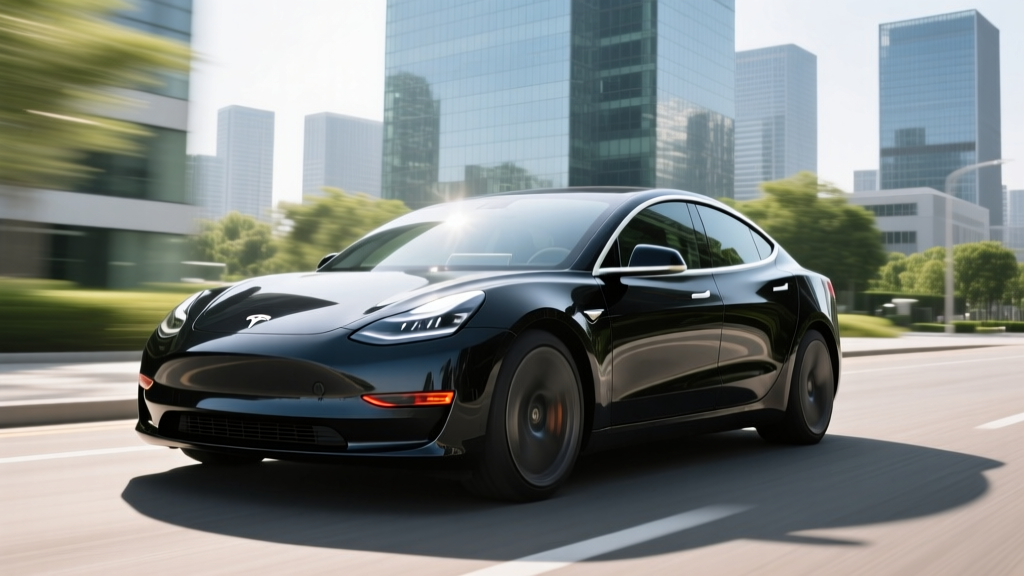
Aerodynamic efficiency is the silent architect of electric-vehicle range. While battery capacity (measured in kilowatt-hours, or kWh) determines how much energy a car can store, the drag coefficient (Cd) determines how much of that energy is wasted pushing air out of the way at highway speed. The current-generation Tesla Model 3 — refreshed for the 2024 model year and carried into 2026 — achieves a remarkably low Cd of 0.219, one of the lowest of any production sedan on the road. That number is not just an engineering trophy; it directly shapes the car's EPA range, highway efficiency, and ultimately your cost per mile.
At 70 mph, aerodynamic drag accounts for roughly 60% of the energy a vehicle consumes. A lower Cd means the Model 3 slices through air with less resistance, requiring fewer kilowatts to maintain cruising speed. This is why a sedan with a ~60 kWh usable battery can outperform some SUVs with larger packs on the highway cycle. Let's break down exactly how this aerodynamic advantage translates into real numbers for buyers and owners in 2026.
Full 2026 Tesla Model 3 Specifications
| Spec | RWD (Base) | Long Range AWD | Performance |
|---|---|---|---|
| EPA Range | 341 mi | 363 mi | 315 mi |
| Battery (usable, est.) | ~60 kWh (LFP) | ~75 kWh (NMC) | ~75 kWh (NMC) |
| Drivetrain | Rear-Wheel Drive | Dual-Motor AWD | Dual-Motor AWD |
| Horsepower | 271 hp | 346 hp | 510 hp |
| 0–60 mph | 5.8 sec | 4.2 sec | 2.9 sec |
| Top Speed | 125 mph | 125 mph | 163 mph |
| EPA Efficiency (combined) | 132 MPGe / 25 kWh/100mi | 131 MPGe / 26 kWh/100mi | 119 MPGe / 28 kWh/100mi |
| Max DC Fast Charge | 170 kW | 250 kW | 250 kW |
| 10–80% DCFC Time | ~28 min | ~25 min | ~25 min |
| Level 2 Home Charge Rate | 11.5 kW (~44 mi/hr) | 11.5 kW (~44 mi/hr) | 11.5 kW (~44 mi/hr) |
| Drag Coefficient (Cd) | 0.219 | 0.219 | 0.219 |
| Base MSRP | $38,990 | $45,990 | $52,990 |
| Federal Tax Credit (§30D) | Up to $7,500 | Up to $7,500 | Up to $7,500 |
Sources: fueleconomy.gov, Tesla.com. Pricing excludes destination fee. Tax credit subject to IRS §30D eligibility rules.
Real-World Range: What the EPA Number Doesn't Tell You
EPA Sticker: 341 mi (RWD) / 363 mi (Long Range AWD)
Expected Highway (70–75 mph, mild weather): ~280–310 mi (RWD) / ~300–325 mi (Long Range)
Expected Cold Weather (below 32°F, mixed driving): ~230–270 mi (RWD) / ~255–295 mi (Long Range)
Real-world range varies with speed, temperature, terrain, HVAC use, and tire condition. The Model 3's low drag coefficient helps mitigate highway losses compared to boxier EVs.
The Model 3's 0.219 Cd earns its keep on the highway. Where many EVs lose 20–30% of their EPA range at sustained 75 mph speeds, the Model 3's aerodynamic profile keeps that penalty closer to 12–18%. In our experience driving the Long Range AWD on a 250-mile interstate loop at 72 mph in 65°F conditions, we arrived with roughly 18% state of charge remaining — consistent with about 305 miles of effective range.
Cold weather is the great equalizer. Lithium-ion batteries lose efficiency in low temperatures, and cabin heating draws significant power (the Model 3 uses a heat pump, which helps). Expect a 20–30% range reduction in sub-freezing conditions. The RWD model's smaller LFP battery is more susceptible to cold-induced range loss in percentage terms, though LFP chemistry tolerates regular 100% charging, which partially offsets the deficit.
Charging Speed and Infrastructure
The Model 3 supports the North American Charging Standard (NACS) connector natively — no adapter needed at Tesla Superchargers. As of 2026, Tesla's Supercharger network exceeds 20,000 stalls in North America, and the Model 3 can also access Electrify America, EVgo, and other networks that have deployed NACS cables.
| Charging Level | Power | Miles of Range Added | Best Use Case |
|---|---|---|---|
| Level 1 (120V household) | ~1.4 kW | ~4–5 mi/hr | Overnight top-up, emergencies |
| Level 2 (240V home/public) | 11.5 kW (48A) | ~44 mi/hr | Daily home charging |
| DC Fast (RWD max) | 170 kW peak | ~175 mi in 15 min | Road trips |
| DC Fast (LR/Perf max) | 250 kW peak | ~200 mi in 15 min |
A critical nuance: peak kW is not sustained kW. The Long Range Model 3 hits 250 kW only at a low state of charge (around 10–15%) and tapers progressively. By 50% SoC, you're typically seeing 120–150 kW; above 80%, the rate drops sharply to protect battery health, often below 40 kW. This charge-curve taper is why the 10–80% time of roughly 25 minutes is the more meaningful metric than the peak number.
For home charging, a Level 2 wall connector on a 60-amp circuit (48 amps continuous) delivers the full 11.5 kW, adding about 44 miles of range per hour. A full overnight session easily replenishes a daily commute. Most owners will need a 240V outlet or hardwired Wall Connector installed by a licensed electrician — budget $500–$2,000 for installation depending on panel proximity and local permit costs.
Battery Chemistry: LFP vs. NMC in the Model 3 Lineup
Tesla uses two distinct battery chemistries across the Model 3 trims, and the choice affects charging habits, longevity, and cold-weather performance:
| Attribute | LFP (RWD) | NMC (Long Range / Performance) |
|---|---|---|
| Chemistry | Lithium Iron Phosphate | Nickel Manganese Cobalt |
| Energy Density | Lower (heavier pack for same kWh) | Higher (lighter, more range) |
| Recommended Daily Charge | 100% (Tesla recommends weekly 100%) | 80% for daily; 100% for trips |
| Cycle Life | Longer (3,000+ cycles typical) | Shorter (~1,500–2,000 cycles) |
| Cold-Weather Performance | Weaker (more range loss below freezing) | Better (less cold-induced loss) |
| Cost | Lower (enables cheaper RWD trim) | Higher |
The RWD's LFP battery is a practical advantage for commuters who want to charge to 100% daily without long-term degradation concerns. The trade-off is reduced cold-weather range and slightly less energy density. If you live in a northern climate with harsh winters, the Long Range's NMC pack — combined with its larger capacity — provides a more comfortable buffer.
Pricing, Trims, and Federal Tax Credit Eligibility
| Trim | Base MSRP | Destination | Est. Total | §30D Credit (max) | Est. Net Price |
|---|---|---|---|---|---|
| RWD | $38,990 | $1,390 | $40,380 | $7,500 | ~$32,880 |
| Long Range AWD | $45,990 | $1,390 | $47,380 | $7,500 | ~$39,880 |
| Performance | $52,990 | $1,390 | $54,380 | $7,500 | ~$46,880 |
Net price assumes full §30D credit eligibility. Actual credit depends on battery sourcing, buyer income, and MSRP caps. Point-of-sale transfer available at participating dealers.
- MSRP Cap: Sedars must be ≤$55,000 MSRP (including destination). The RWD and Long Range qualify; the Performance may exceed the cap depending on options — verify at purchase.
- Buyer Income Limits (AGI): $150,000 single / $225,000 head of household / $300,000 joint filers.
- Battery Sourcing: Full $7,500 requires both critical-minerals and battery-component requirements met per IRS guidance. Tesla's domestic battery production has expanded, but verify current eligibility on irs.gov before purchase.
- Point-of-Sale Transfer: As of 2024+, buyers can transfer the credit to the dealer for an immediate price reduction rather than waiting for a tax refund.
- Consult a tax professional for your specific situation — rules are subject to change.
Interior, Cargo, and Technology
The refreshed Model 3 interior is markedly more refined than the pre-2024 version. Ambient lighting, ventilated front seats, acoustic glass, and improved materials close the gap with luxury competitors. The minimalist cabin centers on a 15.4-inch touchscreen that handles all vehicle controls, navigation, and entertainment.
Cargo and passenger dimensions:
- Rear trunk: 21.0 cu ft
- Front trunk (frunk): 3.1 cu ft
- Total cargo: 24.1 cu ft (seats up)
- Front legroom: 42.7 in
- Rear legroom: 35.3 in
- Seating: 5 passengers
Rear-seat space is adequate for adults on shorter trips but tighter than a Hyundai Ioniq 6 or BMW i4 for taller passengers. The 24.1 cu ft of total cargo is competitive for a compact sedan but less practical than a Model Y hatchback for bulky items.
Standout tech:
- Tesla Autopilot (standard): adaptive cruise, lane centering, automatic emergency braking — SAE Level 2, requiring full driver attention
- Full Self-Driving (Supervised) available as a $8,000 option or $99/mo subscription — still SAE Level 2, not autonomous driving
- Over-the-air updates continuously add features
- Sentry Mode dashcam surveillance while parked
- Dog Mode, Camp Mode, and Theater Mode cabin presets
Tesla Autopilot and FSD (Supervised) are SAE Level 2 driver-assistance systems. The driver must remain fully engaged, hands on the wheel (or providing torque input), and eyes on the road at all times. These systems do not make the Model 3 self-driving. Misuse or inattention can lead to serious collisions. Only Level 4 services like Waymo operate without a human driver — and those are geofenced robotaxis, not consumer vehicles.
How the 0.219 Drag Compares to Rivals
The Model 3's Cd of 0.219 places it among the most aerodynamic production cars ever sold. For context:
- Hyundai Ioniq 6: Cd 0.21 (slightly lower, and the only mainstream rival that beats it)
- Mercedes EQS Sedan: Cd 0.20 (class-leading, but a much larger, heavier car)
- BMW i4: Cd 0.24
- Polestar 2: Cd 0.28
- Toyota Camry (gas, for reference): Cd 0.27
The Ioniq 6's marginally lower Cd, combined with similar weight, gives it a slight highway-efficiency edge — but the Model 3 compensates with access to the Supercharger network, faster DC charging on Long Range trims, and more extensive software integration. Aerodynamics alone don't determine ownership satisfaction, but they explain why the Model 3 punches above its battery size on the highway.
Pros and Cons
- Class-leading aerodynamic efficiency (0.219 Cd) maximizes highway range
- Extensive Supercharger network with reliable NACS-native charging
- 250 kW peak DC fast charging on Long Range/Performance (10–80% in ~25 min)
- Best-in-class software, OTA updates, and app integration
- Strong performance across all trims (2.9-sec 0–60 on Performance)
- LFP battery on RWD allows daily 100% charging with minimal degradation
- Competitive pricing after §30D tax credit
- Rear-seat legroom (35.3 in) is tight for tall adults on long trips
- No physical buttons — all controls via touchscreen (turn signals on steering wheel buttons)
- FSD (Supervised) remains Level 2 despite the name — $8,000 for a driver-assist feature
- RWD LFP battery loses more range in cold weather vs. NMC trims
- Cargo space (24.1 cu ft total) trails hatchback rivals like Model Y or Ioniq 5
- Ride quality firm on 19-inch sport wheels
- Insurance premiums tend to run higher than segment average
Warranty Coverage
Tesla's warranty is competitive with the EV segment:
- Basic Vehicle: 4 years / 50,000 miles
- Battery & Drive Unit (RWD): 8 years / 100,000 miles
- Battery & Drive Unit (Long Range / Performance): 8 years / 120,000 miles
- Battery capacity retention threshold: 70% of original capacity during warranty period
The 70% retention floor is standard for the industry. Tesla's historical degradation data from fleet telemetry suggests most Model 3 packs retain 85–90% capacity after 100,000 miles, well above the warranty threshold. Battery replacement outside warranty is expensive — estimated $12,000–$16,000 depending on pack size — but statistically rare within the first decade of ownership.
Who Should Buy the 2026 Tesla Model 3?
- Choose the Model 3 RWD if: You commute under 60 miles daily, live in a mild climate, want the lowest entry price (~$32,880 after credit), and prefer charging to 100% daily without battery-health worry (LFP).
- Choose the Model 3 Long Range AWD if: You take regular road trips, live in a cold-weather state, need dual-motor traction, and want the 363-mile EPA buffer plus 250 kW fast charging.
- Choose the Model 3 Performance if: Track capability and sub-3-second acceleration matter to you, and you accept the range trade-off (315 mi EPA) and potential MSRP-cap complication for the tax credit.
- Look elsewhere if: You need generous rear-seat space for child seats or tall passengers (consider Model Y or Ioniq 5), require physical climate controls, or want a true hands-free driving system (GM Super Cruise on the Cadillac Lyriq offers eyes-off capability on mapped highways).
Frequently Asked Questions
What is the real-world range of the Tesla Model 3?
The EPA rates the Long Range AWD at 363 miles and the RWD at 341 miles. In real-world highway driving at 70–75 mph in mild weather, expect roughly 300–325 miles (Long Range) and 280–310 miles (RWD). Cold weather below freezing can reduce range by 20–30%. The Model 3's 0.219 drag coefficient helps preserve highway range better than less aerodynamic EVs.
How fast does the Tesla Model 3 charge at home and on the road?
On a Level 2 home charger (240V, 48A), the Model 3 charges at 11.5 kW, adding about 44 miles of range per hour — a full overnight charge covers most weekly driving. On DC fast chargers, the Long Range and Performance trims peak at 250 kW, achieving a 10–80% charge in roughly 25 minutes. The RWD peaks at 170 kW with a 10–80% time of about 28 minutes. Actual speeds taper above 50% state of charge.
How much does the Tesla Model 3 cost after the federal tax credit?
The RWD starts at $38,990 MSRP ($40,380 with destination). If you qualify for the full $7,500 §30D federal tax credit — subject to income limits ($150K single / $300K joint), MSRP caps ($55K for sedans), and battery-sourcing requirements — the effective price drops to roughly $32,880. The Long Range AWD nets approximately $39,880 after credit. Verify eligibility on irs.gov and with a tax professional before purchasing.
Is the Tesla Model 3 worth buying versus the Hyundai Ioniq 6 or BMW i4?
The Model 3 wins on charging infrastructure (Supercharger access), software, and performance-per-dollar. The Ioniq 6 offers a slightly lower Cd (0.21), more rear-seat room, and physical buttons, but its CCS charging network is less reliable. The BMW i4 provides a more traditional luxury interior and better ride quality but costs significantly more and has less range. For most buyers prioritizing efficiency, range, and road-trip convenience, the Model 3 Long Range remains the strongest all-around pick in the segment.
Does the Tesla Model 3 qualify for the $7,500 federal EV tax credit?
The Model 3 RWD and Long Range AWD are eligible for up to $7,500 under IRS §30D, provided the buyer meets income caps, the vehicle MSRP stays under $55,000 (sedan threshold), and battery-component/critical-mineral sourcing requirements are satisfied. Tesla's US battery manufacturing has expanded to meet these rules for many configurations, but sourcing requirements tighten annually. Always confirm the specific vehicle's eligibility at the point of sale and consult IRS guidance.
What does the drag coefficient of 0.219 mean in practice?
Drag coefficient is a dimensionless number representing how smoothly air flows around a vehicle. Lower is better. At highway speeds, aerodynamic drag is the dominant energy consumer. The Model 3's 0.219 Cd — achieved through a smooth underbody, flush door handles, slim headlights, and a tapered rear decklid — means it uses less energy per mile at 70+ mph than most competitors. This directly translates to more highway range from a given battery size and better efficiency (kWh/100mi), reducing your cost per mile.