What Is Tesla Dog Mode and Why Owners Love It
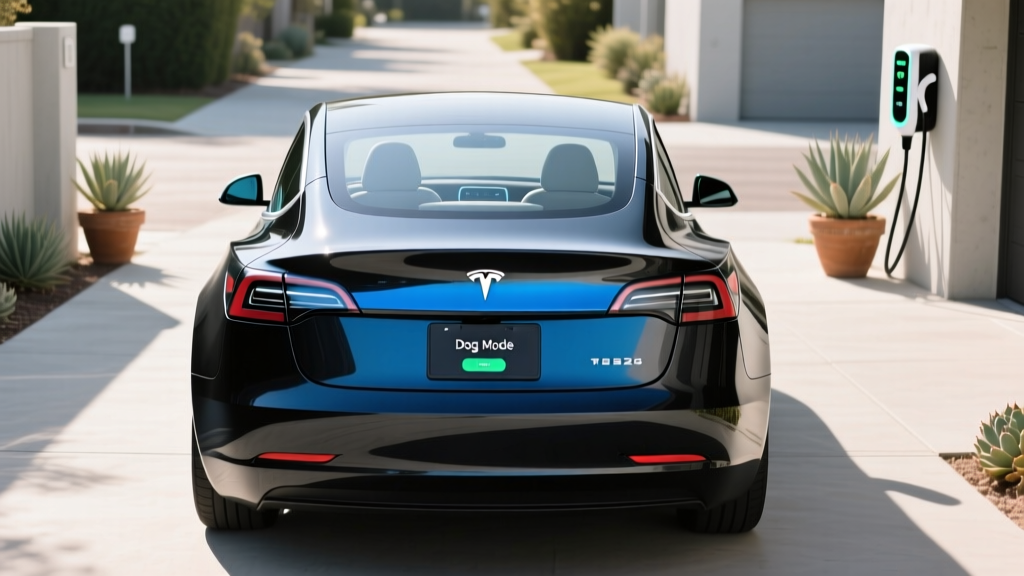
If you've ever needed to leave your pet in the car for a quick errand, Tesla's Dog Mode is one of the most practical quality-of-life features in any electric vehicle. It keeps the climate control running while you're away, displays a clear message on the touchscreen telling passersby your pet is safe, and sends you a notification with the cabin temperature. But Dog Mode is just one piece of a much larger ownership experience with the 2026 Tesla Model 3 — a car that continues to set the benchmark for midsize electric sedans.
This guide walks you through exactly how to activate Dog Mode, then dives deep into everything else you need to know about the 2026 Model 3: real-world range, charging speeds, battery chemistry, tax credit eligibility, and whether it still holds up against a growing field of competitors.
How to Put Tesla in Dog Mode: Step-by-Step
Activating Dog Mode in a 2026 Model 3 (and most Tesla models running current software) takes about 10 seconds. Here's the process:
- Exit the vehicle and close all doors.
- On the touchscreen, tap the fan icon at the bottom of the screen to open climate controls.
- Tap "Dog" in the top-right corner of the climate panel (the options are Off, On, Dog, and Camp).
- Set your desired cabin temperature. Tesla recommends 68–72°F for most pets.
- Exit the vehicle. The touchscreen will display: "My owner will be back soon. Don't worry! My humans have left the A/C on and the temperature is XX°F."
Key details to know:
- Dog Mode requires at least 20% battery charge to activate. If the battery drops below 20%, the vehicle will send an alert to your phone.
- The system draws power from the high-voltage traction battery, so range will decrease while it's running — typically 1–2 miles of range per hour depending on outside temperature.
- You can monitor cabin temperature remotely via the Tesla mobile app.
- Dog Mode works in Park only. It cannot be activated while driving.
- For extended parking (overnight camping, tailgating), use Camp Mode instead — it keeps climate on without the pet message and allows USB/12V accessory use.
2026 Tesla Model 3: Full Specifications
| Spec | Model 3 RWD (Standard Range) | Model 3 Long Range AWD | Model 3 Performance |
|---|---|---|---|
| EPA Range | 272 mi | 363 mi | 315 mi |
| Battery (usable) | 57.5 kWh (LFP) | 82 kWh (NMC) | 82 kWh (NMC) |
| Drivetrain | RWD, single motor | AWD, dual motor | AWD, dual motor |
| Horsepower | 271 hp | 346 hp | 510 hp |
| 0–60 mph | 5.8 sec | 4.2 sec | 2.9 sec |
| Max DC Fast Charge | 170 kW | 250 kW | 250 kW |
| 10–80% DCFC Time | ~25 min | ~27 min | ~27 min |
| Level 2 Home Charge | 7.6 kW (~30 mi/hr) | 11.5 kW (~44 mi/hr) | 11.5 kW (~44 mi/hr) |
| MPGe (combined) | 132 MPGe | 125 MPGe | 113 MPGe |
| kWh/100 mi | 25 | 27 | 30 |
| Cargo (trunk + frunk) | 21.0 cu ft + 3.1 cu ft | 21.0 cu ft + 3.1 cu ft | 21.0 cu ft + 3.1 cu ft |
| Rear Legroom | 35.2 in | 35.2 in | 35.2 in |
| Base MSRP | $38,990 | $44,990 | $52,990 |
Source: fueleconomy.gov and Tesla specifications. Prices exclude $1,390 destination fee. Specs reflect 2026 model year.
Real-World Range: What to Actually Expect
The RWD Standard Range model, equipped with an LFP (lithium iron phosphate) battery, shows less cold-weather degradation than NMC-equipped trims — typically 10–15% loss versus 20–30% for NMC in freezing conditions. This is because LFP chemistry is more thermally stable, though it also has lower energy density, which is why the RWD carries a smaller battery and shorter range.
For Dog Mode specifically, plan on losing roughly 1–3 miles of range per hour of use depending on ambient temperature. On a hot 95°F day, the compressor works harder and draws more power. On a mild 70°F day, the draw is minimal. If you're parked for an hour at the grocery store with Dog Mode running, you'll barely notice the impact.
Charging Speed and Home Setup
| Charging Level | Power | Miles Added per Hour | Notes |
|---|---|---|---|
| Level 1 (120V outlet) | 1.4 kW | ~5 mi/hr | Emergency/trickle only |
| Level 2 (240V, 32A) | 7.6 kW | ~30 mi/hr | Mobile Connector, NEMA 14-50 |
| Level 2 (240V, 48A) | 11.5 kW | ~44 mi/hr | Wall Connector (LR/Perf only) |
| DC Fast Charge (V3/V4 Supercharger) | Up to 250 kW peak | ~1,000+ mi/hr (peak) | 10–80% in ~27 min (LR) |
Charging curve reality: The 250 kW peak on Long Range and Performance trims is not sustained. The Model 3 hits peak charge rate between roughly 10–30% State of Charge (SoC), then tapers progressively. From 80–100%, charging slows dramatically to protect battery health — expect the final 20% to take as long as the first 70%. For road trips, plan stops around the 10–80% window for the fastest throughput.
The RWD trim's LFP battery charges at a lower peak rate (170 kW) but has a practical advantage: Tesla recommends regularly charging LFP batteries to 100%, whereas NMC batteries are best kept between 20–80% for daily use to minimize degradation. This means the RWD's usable daily range is effectively closer to its EPA sticker, while Long Range owners should mentally budget around 290 miles for daily driving (80% of 363).
For a detailed breakdown of home charger installation costs and electrical panel requirements, see our Level 2 home charging guide.
Pricing, Tax Credits, and Total Cost
| Trim | Base MSRP | As-Tested (typical) | §30D Credit Eligible? | After Max Credit |
|---|---|---|---|---|
| RWD Standard Range | $38,990 | $40,380 (w/ destination) | Yes (meets MSRP + sourcing) | ~$32,880* |
| Long Range AWD | $44,990 | $46,380 (w/ destination) | Yes (meets MSRP + sourcing) | ~$38,880* |
| Performance | $52,990 | $54,380 (w/ destination) | Yes (under $55k sedan cap) | ~$46,880* |
*Assumes full $7,500 IRS §30D credit. Eligibility requires: buyer AGI ≤ $150k single / $300k joint, vehicle MSRP ≤ $55,000 (sedans), and battery critical-mineral + component sourcing thresholds met. The credit is available as a point-of-sale transfer to the dealer, reducing your purchase price directly. Confirm eligibility at the point of purchase — sourcing requirements tighten annually.
All three Model 3 trims currently fall under the $55,000 MSRP cap for sedans. However, adding options like FSD (Supervised), premium paint, or larger wheels can push the as-tested price above the cap. If your configured vehicle's MSRP exceeds $55,000, it loses §30D eligibility. Configure carefully.
Pros and Cons: The Honest Assessment
Pros
- Class-leading Supercharger network access (19,000+ stalls in North America)
- Best-in-class efficiency: 25–30 kWh/100 mi depending on trim
- Over-the-air updates continuously add features (Dog Mode improvements, UI refinements)
- LFP battery on RWD allows daily 100% charging with minimal degradation concern
- Lowest total cost of ownership in the segment when factoring fuel, maintenance, and credit
- Standard heat pump improves cold-weather range and Dog Mode efficiency
Cons
- No physical stalks — turn signals and wipers are touchscreen/steering-wheel buttons (learning curve)
- Rear seat legroom (35.2 in) is tighter than Hyundai Ioniq 6 or BMW i4
- Minimalist interior isn't for everyone — no instrument cluster, no physical climate knobs
- Repair costs after collision can be high due to integrated structural battery pack
- FSD (Supervised) is a Level 2 system — not self-driving, requires full driver attention
- Insurance premiums run 15–30% higher than comparable gas sedans
How the Model 3 Stacks Up Against Competitors
The midsize electric sedan segment has matured considerably. Here's how the 2026 Model 3 Long Range compares to its primary rivals on the metrics that matter most:
| Attribute | Tesla Model 3 LR | Hyundai Ioniq 6 SEL | BMW i4 eDrive40 |
|---|---|---|---|
| EPA Range | 363 mi | 361 mi | 307 mi |
| Max DCFC | 250 kW | 233 kW | 205 kW |
| 10–80% Time | ~27 min | ~18 min | ~31 min |
| Base MSRP | $44,990 | $42,600 | $57,900 |
| §30D Eligible | Yes | Partial (sourcing varies) | No (MSRP > $55k) |
| Rear Legroom | 35.2 in | 38.2 in | 34.7 in |
Bottom line: The Ioniq 6 charges faster (18-minute 10–80% is segment-leading) and offers more rear-seat room. The BMW i4 delivers a more traditional luxury experience but loses the tax credit and costs significantly more. The Model 3 wins on charging infrastructure access (Tesla Superchargers are the most reliable DCFC network in North America, per IIHS and owner surveys), overall efficiency, and software integration including Dog Mode, Camp Mode, and Sentry Mode.
Who Should Buy the 2026 Tesla Model 3
Choose the Model 3 If:
- Commuters: The RWD trim at ~$33k after credit is one of the cheapest ways into a new EV with 272 miles of range and ultra-low running costs (~$0.04/mi on home electricity).
- Road trippers: The Supercharger network remains the gold standard for cross-country travel. Plan 20–25 minute stops every 250 miles and you'll arrive relaxed.
- Pet owners: Dog Mode, combined with the Model 3's efficient heat pump, makes this one of the best EVs for leaving pets safely in the car during quick stops.
- Tech-forward buyers: OTA updates, the Tesla app, Sentry Mode dashcam surveillance, and the best-in-class navigation with real-time Supercharger routing.
Look Elsewhere If:
- Large families: Rear legroom is tight for taller passengers; consider the Model Y or Hyundai Ioniq 5 for more space.
- Towing: The Model 3 is not rated for towing. Look at the Model Y (3,500 lb) or Ford F-150 Lightning (7,700 lb).
- Traditional interior preference: If you want physical buttons, an instrument cluster, and Apple CarPlay, the BMW i4 or Hyundai Ioniq 6 will feel more familiar.
Frequently Asked Questions
Can Dog Mode drain the Model 3 battery completely?
No. Dog Mode requires a minimum 20% battery to activate and will send escalating notifications to your phone as the battery depletes. If the battery reaches a critically low level, the system will shut off climate control to preserve enough charge for the vehicle to be drivable. In practice, Dog Mode uses roughly 1–2 kWh per hour in moderate weather — meaning a Long Range Model 3 at 80% SoC could theoretically run Dog Mode for 30+ hours.
Does the 2026 Model 3 qualify for the full $7,500 federal tax credit?
All three trims currently qualify, provided the buyer meets IRS income limits ($150,000 single / $300,000 joint AGI) and the vehicle's battery meets critical-mineral and component sourcing thresholds. The credit can be applied as a point-of-sale reduction, lowering your out-of-pocket cost directly. Always confirm eligibility with your tax professional and at the point of purchase, as sourcing rules tighten each year.
How does LFP vs NMC battery chemistry affect my Model 3?
The RWD Standard Range uses an LFP (lithium iron phosphate) battery, which is less energy-dense but more durable and can be charged to 100% daily without significant degradation concerns. The Long Range and Performance trims use NMC (nickel manganese cobalt) chemistry, which offers higher energy density (more range) but is best kept between 20–80% for daily charging to maximize longevity. For most owners, both chemistries will outlast the vehicle's 8-year/120,000-mile battery warranty with minimal capacity loss.
Is Tesla Autopilot or FSD self-driving?
No. Both Autopilot and FSD (Supervised) are SAE Level 2 driver-assistance systems. The driver must remain fully attentive, keep hands on the steering wheel, and be prepared to take over at any moment. Only Level 4 systems like Waymo's robotaxi service operate without a human driver. Tesla's naming can be misleading — treat FSD as an advanced cruise control and lane-keeping system, not a replacement for active driving.
What's the warranty coverage on the 2026 Model 3 battery?
Tesla covers the battery and drive unit for 8 years or 120,000 miles (Long Range/Performance) and 8 years or 100,000 miles (RWD), whichever comes first. The warranty guarantees the battery will retain at least 70% of its original capacity during the coverage period. The limited vehicle warranty covers 4 years or 50,000 miles.
Sources: EPA fueleconomy.gov, IRS §30D Clean Vehicle Credits, Tesla official specifications.