If you're researching the Tesla Model 3, you've probably noticed that most spec sheets stop at horsepower and range. But the real questions buyers ask — Will it fit in my garage? Can my family fit inside? How much will it actually cost after incentives? — require a deeper look at Tesla 3 dimensions, real-world efficiency, and ownership economics. This profile covers the current 2026 Model 3 lineup (RWD, Long Range AWD, and Performance) with the exact numbers you need to decide.
Exterior Dimensions and Garage Fitment
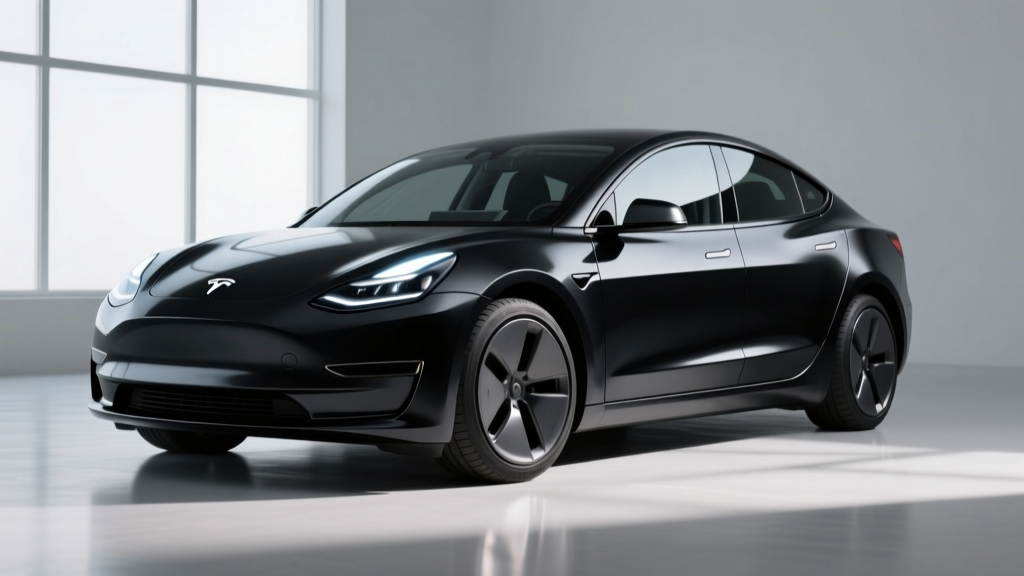
The Model 3 remains a compact executive sedan, but the 2024 "Highland" refresh added a few millimeters that matter if you're working with a tight garage. Here are the official exterior measurements for the current Model 3:
| Dimension | Model 3 (All Trims) |
|---|---|
| Overall Length | 184.8 in (4,694 mm) |
| Overall Width (mirrors folded) | 72.8 in (1,849 mm) |
| Overall Width (mirrors out) | 82.2 in (2,089 mm) |
| Height | 56.8 in (1,443 mm) |
| Wheelbase | 113.2 in (2,875 mm) |
| Ground Clearance | 5.3 in (135 mm) |
| Curb Weight (RWD / LR AWD / Perf) | 3,862 / 4,034 / 4,065 lbs |
At 184.8 inches long, the Model 3 is roughly the same footprint as a BMW 3 Series or Hyundai Ioniq 6. You'll need a minimum garage depth of about 20 feet to close the door comfortably behind it. The 5.3-inch ground clearance is low enough that steep driveways and speed bumps require care — especially when loaded.
Interior Space: Passenger and Cargo Dimensions
The cabin is where Tesla 3 dimensions generate the most debate. The minimalist dashboard creates a feeling of openness, but the physical measurements tell a more specific story:
| Interior Dimension | Front | Rear |
|---|---|---|
| Headroom | 40.3 in | 37.8 in |
| Legroom | 42.7 in | 35.2 in |
| Shoulder Room | 56.3 in | 54.0 in |
| Hip Room | 53.4 in | 51.6 in |
Cargo Volume: 23.1 cubic feet total — 21.0 cu ft in the rear trunk and 2.1 cu ft in the front trunk (frunk). The trunk opening is wide and the 60/40 split rear seats fold nearly flat, making it practical for IKEA runs or road-trip luggage for two adults and two children.
Real-world note: rear headroom is tight for passengers over 6'1" due to the sloping roofline. If you frequently carry tall adults in back, sit in the rear seat during your test drive before committing. The 35.2 inches of rear legroom is adequate for average-height passengers but noticeably tighter than a Hyundai Ioniq 5 or BMW i4.
EPA Range, Battery Specs, and Real-World Expectations
Tesla offers three Model 3 trims for 2026, each with a different battery pack and drivetrain configuration. Here's the official data from fueleconomy.gov:
| Spec | RWD | Long Range AWD | Performance |
|---|---|---|---|
| EPA Range | 272 mi | 363 mi | 315 mi |
| Battery (Usable) | ~57.5 kWh | ~75 kWh | ~75 kWh |
| Chemistry | LFP (CATL) | NMC | NMC |
| MPGe (Combined) | 132 MPGe | 130 MPGe | 116 MPGe |
| kWh per 100 mi | 25 | 26 | 29 |
| Drivetrain | Rear-Wheel Drive | Dual-Motor AWD | Dual-Motor AWD |
The EPA sticker is a laboratory blended cycle. In our experience and consistent third-party testing, expect the following from the Long Range AWD (363 mi EPA):
• Highway driving (70-75 mph, 70°F): ~300-320 miles
• City/suburban mixed: ~330-350 miles (regen braking helps)
• Cold weather (below 30°F): ~250-280 miles (cabin heating and battery resistance reduce range 15-25%)
The RWD model's smaller LFP battery means its 272-mile EPA figure can drop to roughly 210-230 miles on a cold highway day. Plan your road-trip stops accordingly.
Charging Speed: DC Fast Charge and Home Level 2
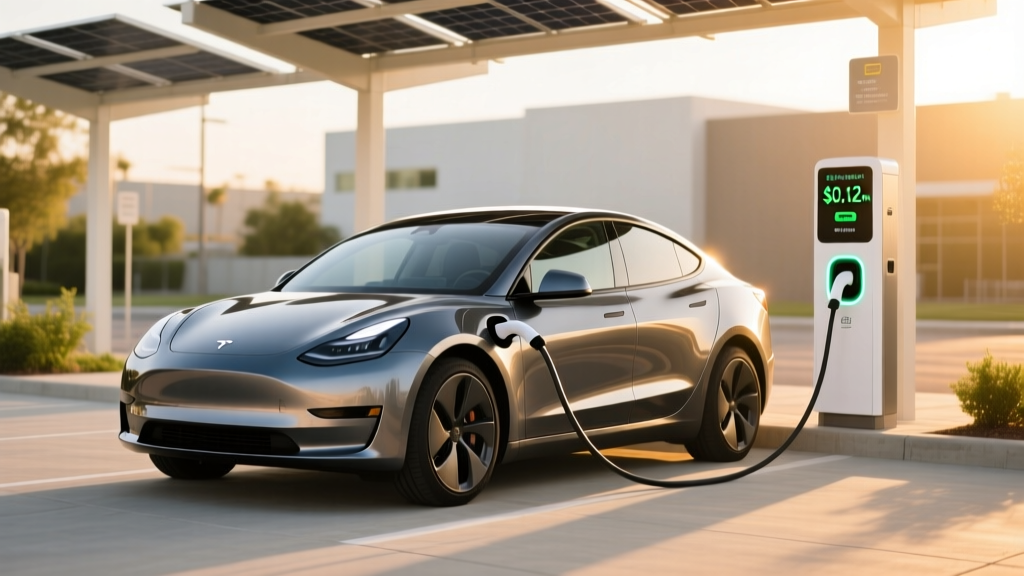
Charging is where the Model 3's NACS connector gives it a structural advantage: native access to the Tesla Supercharger network, which remains the most reliable DC fast-charging ecosystem in the U.S.
| Charging Method | RWD (LFP) | Long Range / Performance (NMC) |
|---|---|---|
| Max DC Fast Charge | 170 kW | 250 kW |
| 10-80% DCFC Time | ~25 min | ~18 min |
| Level 2 (240V, 48A) | 11.5 kW / ~37 mi/hr | 11.5 kW / ~37 mi/hr |
| Level 1 (120V, 12A) | ~1.4 kW / ~4 mi/hr | ~1.4 kW / ~4 mi/hr |
Charging-curve reality: The Long Range and Performance trims peak at 250 kW but only sustain that rate between roughly 10-30% State of Charge. Above 50%, the rate tapers to ~120 kW, and above 80% it drops sharply to ~40-50 kW. This is why Tesla's navigation system targets 80% on road trips — the last 20% can add 15+ minutes to your stop.
For home Level 2 charging, Tesla's Wall Connector ($420) at 48 amps on a NEMA 14-50 or hardwired 60A circuit delivers about 37 miles of range per hour. An overnight charge from 20% to 80% takes roughly 6-7 hours on Long Range, which is practical for daily commuting. Expect a home installation cost of $800-$2,500 depending on panel capacity and wiring distance — always get a quote from a licensed electrician before purchasing.
One LFP advantage: Tesla recommends charging the RWD's LFP battery to 100% at least once weekly for accurate state-of-charge calibration. NMC owners should stick to 80-90% daily limits for longevity, using 100% only for road trips.
Performance: 0-60, Horsepower, and Drivetrain
| Performance Metric | RWD | Long Range AWD | Performance |
|---|---|---|---|
| Horsepower | 271 hp | 384 hp | 510 hp |
| Torque | 317 lb-ft | 376 lb-ft | 546 lb-ft |
| 0-60 mph | 5.8 sec | 4.2 sec | 2.9 sec |
| Top Speed | 125 mph | 125 mph | 163 mph |
| Towing Capacity | Not rated | Not rated | Not rated |
Even the base RWD Model 3 delivers brisk acceleration that outpaces most gas-powered compact sedans off the line. The Performance trim's 2.9-second 0-60 time is supercar territory, though its 4,065-lb curb weight is noticeable in tight cornering compared to lighter sports sedans.
Regenerative braking is strong and configurable (Standard or Low), and one-pedal driving is practical in daily traffic. The Model 3 is not rated for towing — if you need to pull a trailer, look at the Model Y or a truck-based EV.
Pricing, Trims, and Federal Tax Credit Eligibility
| Trim | Base MSRP | Est. After §30D Credit |
|---|---|---|
| Model 3 RWD | $38,990 | $31,490* |
| Model 3 Long Range AWD | $45,990 | $38,490* |
| Model 3 Performance | $52,990 | $45,490* |
*Estimated after $7,500 federal tax credit. Destination fee ($1,390) not included.
- MSRP Cap: Sedans must be under $55,000 MSRP. All three Model 3 trims qualify (SUV cap is $80,000).
- Buyer Income Cap (MAGI): $150,000 single / $225,000 head of household / $300,000 joint filers.
- Battery Sourcing: The $7,500 credit splits into $3,750 for critical-minerals sourcing and $3,750 for battery-component assembly. Sourcing requirements tighten annually — verify current-year compliance on IRS.gov.
- Point-of-Sale Transfer: As of 2024+, you can transfer the credit to the dealer at purchase, reducing your out-of-pocket cost immediately rather than waiting for a tax refund.
- Consult a tax professional — eligibility depends on your specific tax situation and the manufacturer's supply-chain compliance in your delivery quarter.
Warranty, Safety, and Standout Technology
Warranty Coverage:
- Basic Vehicle: 4 years / 50,000 miles
- Battery & Drive Unit (RWD): 8 years / 100,000 miles
- Battery & Drive Unit (Long Range / Performance): 8 years / 120,000 miles
- Capacity retention threshold: Tesla warrants the battery will retain at least 70% of original capacity during the warranty period.
Safety: The Model 3 earned a 5-Star Overall Safety Rating from NHTSA and a Top Safety Pick+ designation from IIHS. Standard active safety includes automatic emergency braking, blind-spot monitoring, lane-departure warning, and rear cross-traffic alert.
Technology:
- 15.4-inch center touchscreen (all vehicle controls integrated — no physical instrument cluster)
- Over-the-air software updates add features post-purchase
- Tesla Autopilot (Level 2 driver assistance) is standard — includes Traffic-Aware Cruise Control and Autosteer
- Full Self-Driving (Supervised) available as a $8,000 add-on or $99/month subscription — still requires active driver supervision per SAE Level 2 classification
- Sentry Mode dashcam recording, Dog Mode cabin climate, and Tesla Profile for personalized settings
Pros, Cons, and Who Should Buy the Model 3
Pros
- Class-leading efficiency (130+ MPGe across trims)
- Supercharger network access — most reliable DCFC in the U.S.
- Strong real-world range on Long Range AWD (300+ mi highway)
- OTA updates continuously improve the vehicle
- Low maintenance costs (no oil, minimal brake wear from regen)
- Qualifies for full $7,500 federal tax credit (verify sourcing)
Cons
- Rear seat headroom tight for tall passengers
- All controls on touchscreen — no physical buttons for HVAC, mirrors, or glovebox
- No towing capacity
- RWD LFP range drops significantly in cold weather
- Insurance premiums run 15-25% higher than comparable gas sedans
- Turn-signal stalks removed in Highland refresh (steering-wheel buttons)
Who the Model 3 suits best:
- Daily commuters with home Level 2 charging who want minimal fuel and maintenance costs
- Tech-forward buyers who value OTA updates and integrated software over traditional luxury materials
- Couples and small families who need four seats and a usable trunk but not SUV cargo space
- Road-trippers (Long Range AWD) who want Supercharger access on cross-country drives
Look elsewhere if: you regularly carry three adults in the rear seat, need towing capability, prefer physical controls, or live in an apartment without charging access and lack reliable public DCFC nearby.
How It Compares: Model 3 vs. Key Rivals
| Spec | Tesla Model 3 LR | Hyundai Ioniq 6 LR | BMW i4 eDrive40 |
|---|---|---|---|
| EPA Range | 363 mi | 361 mi | 307 mi |
| Base MSRP | $45,990 | $42,450 | $57,900 |
| Max DCFC | 250 kW | 240 kW | 205 kW |
| 10-80% Time | ~18 min | ~18 min | ~31 min |
| Rear Legroom | 35.2 in | 35.0 in | 34.5 in |
| Charging Network | NACS (Supercharger) | CCS → NACS adapter | CCS → NACS adapter |
The Ioniq 6 matches the Model 3 on range and charges nearly as fast, at a lower price — but lacks native Supercharger access (an adapter is available). The BMW i4 offers superior interior materials and driving dynamics but costs significantly more and has less range. The Model 3's software ecosystem and Supercharger network remain its strongest differentiators.
Frequently Asked Questions
What is the real-world range of the Tesla Model 3?
The Long Range AWD delivers 363 miles EPA but expect roughly 300-320 miles at highway speeds in moderate temperatures, and 250-280 miles in sub-freezing conditions. The RWD model (272 mi EPA) typically yields 220-240 real-world highway miles in warm weather.
How fast does the Model 3 charge at home and on the road?
On a 250 kW Supercharger, the Long Range and Performance trims add up to 175 miles in 15 minutes (10-80% in ~18 min). At home on a 48-amp Level 2 charger, expect ~37 miles of range per hour, or a full overnight charge from 20% to 80%.
Does the 2026 Tesla Model 3 qualify for the $7,500 federal tax credit?
All three trims fall under the $55,000 sedan MSRP cap. Buyer income must not exceed $150K (single) / $300K (joint). Battery critical-mineral and component sourcing rules apply and tighten annually — verify current eligibility on IRS.gov before purchase. The credit can be transferred at point of sale.
Is the Tesla Model 3 worth buying over the Hyundai Ioniq 6 or BMW i4?
If Supercharger access and software integration matter most, the Model 3 wins. If you want a lower price with similar range and don't mind using a NACS adapter, the Ioniq 6 is a strong alternative. The i4 appeals to buyers prioritizing interior refinement and driving dynamics over range and price.
What are the biggest drawbacks of the Model 3?
The touchscreen-only interface (no physical buttons), tight rear headroom for tall passengers, removal of turn-signal stalks in the Highland refresh, and cold-weather range loss on the RWD LFP trim are the most common complaints from owners.
How long will the Model 3 battery last?
Tesla warrants the battery for 8 years / 100,000 miles (RWD) or 8 years / 120,000 miles (LR/Performance) with a minimum 70% capacity retention threshold. Real-world degradation data from high-mileage owners suggests 10-15% capacity loss at 100,000 miles, with the NMC packs showing a slower degradation curve after the initial 5-8% drop in the first year.