Quick Verdict: The Model 3 in 2026 — Still the EV to Beat?
The Tesla Model 3 enters 2026 as the best-selling electric sedan in the United States for good reason. Following the significant "Highland" refresh that debuted for the 2024 model year, the current Model 3 offers a compelling blend of range, charging speed, build quality, and tech integration that competitors still struggle to match. For the data-driven buyer, the numbers tell the story: up to 363 miles of EPA-estimated range, DC fast charging that peaks at 250 kW, and a starting price that — after the federal tax credit — undercuts most rivals in the premium electric sedan segment.
But the Model 3 isn't just about driving specs. It doubles as a rolling surveillance platform thanks to its integrated dashcam and Sentry Mode. Getting the right USB for Tesla dashcam functionality is critical if you want reliable, continuous recording without frustrating errors. This review covers everything you need to know about the 2026 Model 3 as a vehicle — and as a dashcam platform.
2026 Tesla Model 3 Full Spec Sheet
| Specification | Long Range RWD | Long Range AWD | Performance |
|---|---|---|---|
| EPA Range | 363 mi | 341 mi | 315 mi |
| Battery Capacity | ~79 kWh usable (NMC) | ~79 kWh usable (NMC) | ~79 kWh usable (NMC) |
| Drivetrain | Rear-Wheel Drive | Dual-Motor AWD | Dual-Motor AWD |
| Horsepower | 271 hp | 346 hp | 510 hp |
| 0–60 mph | 5.8 sec | 4.2 sec | 2.9 sec |
| Top Speed | 125 mph | 125 mph | 163 mph |
| Max DC Fast Charge | 250 kW | 250 kW | 250 kW |
| 10–80% DC Charge Time | ~25 min | ~25 min | ~25 min |
| Level 2 Home Charging | 11.5 kW (~44 mi/hr) | 11.5 kW (~44 mi/hr) | 11.5 kW (~44 mi/hr) |
| MPGe (Combined) | 132 MPGe | 125 MPGe | 118 MPGe |
| Efficiency (kWh/100 mi) | 25 kWh | 27 kWh | 29 kWh |
| Cargo Volume | 23 cu ft (rear trunk + frunk combined) | ||
| Rear Legroom | 35.2 in | ||
| Base MSRP (2026) | $42,490 | $47,490 | $54,990 |
| Battery Warranty | 8 years / 120,000 miles (70% retention) | ||
Sources: fueleconomy.gov, Tesla Model 3 official specs.
Range and Efficiency: Real-World vs. EPA Sticker
EPA Estimate: 341–363 miles (depending on trim)
Real-World Highway (70 mph, mild weather): ~290–310 miles
Real-World Highway (cold weather, below 32°F): ~230–260 miles
City / Mixed Commuting: Closer to EPA, ~320–340 miles
The Model 3 Long Range RWD achieves an impressive 363 miles on the EPA cycle, making it one of the longest-range EVs available under $50,000. However, real-world results depend heavily on driving style, temperature, and terrain.
At sustained highway speeds of 70–75 mph, expect to lose roughly 12–15% from the EPA figure. That puts the Long Range RWD at approximately 305–315 real highway miles in moderate temperatures. The AWD variant drops slightly further due to the second motor's parasitic drag, landing around 290–300 miles on a real highway run.
Cold weather remains the great equalizer for all EVs. In sub-freezing conditions, lithium-ion batteries experience increased internal resistance, and cabin heating draws significant energy. Without preconditioning, expect a 25–35% range reduction. The Model 3's standard heat pump (introduced with the Highland refresh) helps substantially — it's roughly 3x more efficient than resistive heating — but you'll still see real winter range around 230–260 miles for the AWD trim.
The Long Range RWD is the efficiency champion of the lineup at 132 MPGe combined (25 kWh per 100 miles). That translates to roughly $0.04–0.05 per mile on residential electricity at the national average rate of $0.16/kWh — dramatically cheaper than any gasoline alternative.
Charging Speed: DC Fast, Level 2, and Home Setup
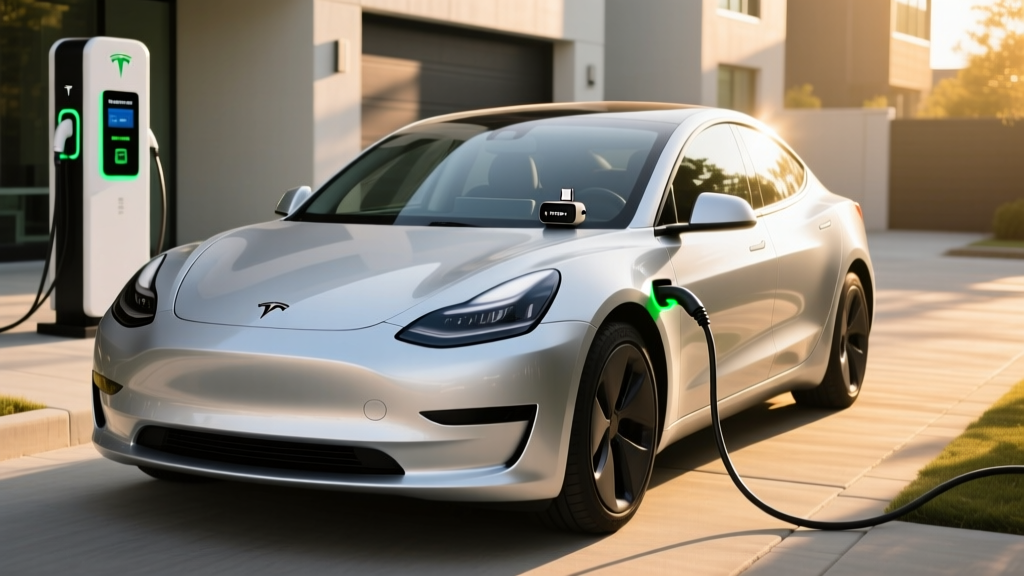
Charging speed is where Tesla continues to hold a decisive advantage. The Model 3 supports up to 250 kW on DC fast chargers, and critically, it has access to the Supercharger network — which remains the most reliable and widespread fast-charging ecosystem in North America with over 6,500 stations and 60,000+ connectors as of early 2026.
| Charging Level | Power | Speed (Miles Added) | Notes |
|---|---|---|---|
| Level 1 (120V household) | ~1.4 kW | ~3–5 mi/hr | Emergency/trickle only |
| Level 2 (240V, 48A Wall Connector) | 11.5 kW | ~44 mi/hr | Full charge in ~7–8 hours |
| Level 2 (240V, 32A Mobile Connector) | 7.7 kW | ~30 mi/hr | Budget home option |
| DC Fast (V3 Supercharger) | Up to 250 kW | Up to 175 mi in 15 min | 10–80% in ~25 min |
| DC Fast (CCS via adapter) | Up to 150–250 kW | Varies by station | Non-Tesla networks (EA, EVgo) |
A crucial detail about the 250 kW peak: the Model 3 does not sustain that rate for the entire session. The charge curve peaks around 250 kW between 10–20% state of charge (SoC), then tapers progressively. By 50% SoC, you're typically seeing 100–120 kW. By 80%, it drops below 50 kW. This is why the 10–80% time of ~25 minutes is the meaningful metric — it captures the realistic usable session, not the marketing peak.
Pro tip: Always precondition the battery before arriving at a Supercharger. Navigate to the charger using the car's built-in navigation, and the thermal management system will warm the battery to optimal temperature, enabling faster charging. Skipping this step can add 5–10 minutes to your session in cool weather.
For home charging, the Tesla Wall Connector ($420) on a 60-amp circuit delivers the full 11.5 kW (48 amps continuous). This adds roughly 44 miles of range per hour, meaning an overnight session of 7–8 hours easily replenishes a full battery. Installation costs vary from $500 to $2,000+ depending on whether your electrical panel needs an upgrade — consult a licensed electrician for a site assessment.
Performance and Driving Dynamics
Even the base Long Range RWD Model 3 delivers satisfying acceleration: 271 hp and a 5.8-second 0–60 mph time make it quicker than most gasoline sedans in its price range. The instant torque delivery — a hallmark of electric powertrains — makes the car feel even faster in real-world stoplight-to-stoplight driving.
The Long Range AWD adds a front motor for 346 hp and a 4.2-second sprint, along with the traction benefits of all-wheel drive that matter in rain and snow. The Performance model is a different animal entirely: 510 hp and a 2.9-second 0–60 time put it in supercar territory, with adaptive dampers, larger brakes, and a track mode that adjusts torque distribution and regen behavior.
Across all trims, the Highland refresh significantly improved ride quality. Revised suspension tuning, acoustic glass, and improved sound deadening have transformed the Model 3 from a firm-riding tech sedan into a genuinely comfortable daily driver. Road noise at highway speeds is noticeably lower than pre-2024 models.
Interior, Tech, and Dashcam USB Setup
The Model 3's minimalist interior centers on a 15.4-inch touchscreen that handles everything from navigation to climate control to entertainment. Rear passengers get their own 8-inch screen for climate and media. The cabin materials in the current generation are a clear step up — ventilated front seats, ambient lighting, and premium textiles replace the sparser feel of earlier Model 3s.
Cargo space totals approximately 23 cubic feet between the rear trunk (19.4 cu ft) and the front trunk, or "frunk" (3.1 cu ft). Rear legroom measures 35.2 inches — adequate for adults but tighter than a midsize sedan like the Hyundai Ioniq 6.
Setting Up the Best USB for Tesla Dashcam
The Model 3's built-in dashcam system uses its suite of external cameras (front, rear, left repeater, right repeater) to record video clips. However, Tesla requires a properly formatted USB drive connected to a specific port to store this footage. Here's what you need to know:
Which USB port to use: In the 2026 Model 3 (Highland generation), the dashcam/Sentry Mode USB port is the USB-C port in the center console (the storage bin between the front seats), or the USB-C port in the glovebox depending on software version. Tesla moved away from the front USB-A ports used in pre-2023 models. Check your owner's manual or software release notes, as port assignments can shift with over-the-air updates.
Drive requirements: Tesla's dashcam writes video continuously, which is demanding on flash storage. You need a USB drive that meets these criteria:
- USB 3.0/3.1 or USB-C — USB 2.0 is too slow for multi-camera recording
- Minimum 64 GB capacity — 128 GB or higher recommended for Sentry Mode
- High endurance rated — Standard USB drives will fail quickly under constant write cycles
- Formatted as exFAT or FAT32 — The car can format the drive for you via the touchscreen (Controls > Safety > Dashcam > Format USB Drive)
Recommended drives: The Samsung BAR Plus (128 GB or 256 GB, USB 3.1) and the SanDisk High Endurance (128 GB, USB-C with adapter) are consistently top-rated by Tesla owners for reliability. For a native USB-C solution, the Samsung FIT Plus USB-C or the Kingston DataTraveler microDuo work well in the Highland's USB-C ports. Budget approximately $15–$30 for a quality drive.
File structure: When you insert a properly formatted drive, the car creates a TeslaCam folder with subfolders: RecentClips, SavedClips, and SentryClips. Recent clips auto-delete after about an hour unless manually saved. Sentry Mode clips are saved automatically when the system detects a threat, but Sentry Mode requires the battery to remain above 20% SoC.
Common issues: If you see a "USB drive not detected" or "USB drive is too slow" warning, the drive is likely not rated for sustained write operations. Switch to a high-endurance model. Also ensure the drive is plugged into the correct port — only the designated data port supports dashcam, not the charge-only USB-C ports.
Pricing, Tax Credits, and Total Cost
| Trim | Base MSRP | Destination | Est. After §30D Credit |
|---|---|---|---|
| Long Range RWD | $42,490 | $1,390 | ~$36,380* |
| Long Range AWD | $47,490 | $1,390 | ~$41,380* |
| Performance | $54,990 | $1,390 | ~$48,880* |
*After $7,500 federal tax credit, assuming buyer eligibility. Actual credit amount depends on battery sourcing, income, and tax liability.
The federal EV tax credit under IRS §30D can reduce the effective price by up to $7,500, but eligibility is not automatic. Here are the current rules for 2026:
- Income caps: Modified AGI must not exceed $150,000 (single), $225,000 (head of household), or $300,000 (married filing jointly)
- MSRP cap: Sedans must have an MSRP at or below $55,000 — the Model 3 Performance at $54,990 clears this, but options can push it over
- Battery sourcing: The $7,500 credit is split into two $3,750 halves — one for critical minerals sourcing and one for battery component manufacturing. Tesla has maintained North American battery assembly, but critical-mineral sourcing requirements tighten annually. Verify current-year eligibility on the IRS clean vehicle credit page before purchasing
- Point-of-sale transfer: As of 2024, buyers can transfer the credit to the dealer at purchase, reducing the out-of-pocket price immediately rather than waiting to claim it on their tax return. This requires the dealer to be registered with the IRS Energy Credits Online portal
As-tested, a Long Range AWD with common options (FSD capability at $8,000, premium paint at $1,500–$2,500) can reach $57,000–$59,000 before incentives. The FSD purchase is optional — the standard Autopilot (adaptive cruise + lane centering) is included and sufficient for most buyers.
Warranty and Long-Term Ownership
Tesla provides a competitive warranty package:
- Basic vehicle: 4 years / 50,000 miles
- Battery and drive unit: 8 years / 120,000 miles (Long Range); 8 years / 100,000 miles (RWD base)
- Battery retention guarantee: Tesla warrants at least 70% capacity retention during the warranty period
The 70% retention threshold is industry-standard, matching competitors like Hyundai (which offers 10/100,000 but also at 70%). Real-world data from Tesla's fleet suggests most Model 3 batteries degrade only 5–10% over the first 100,000 miles, with NMC chemistry showing a steeper initial drop that then flattens into a long, slow decline.
Insurance costs remain a consideration: the Model 3 typically carries premiums 15–25% higher than comparable gasoline sedans, driven by high repair costs for collision damage (particularly to the aluminum body structure and sensor array). Get quotes before purchasing — they vary significantly by state and insurer.
Pros and Cons
- Class-leading range (363 mi RWD)
- Supercharger network access
- Excellent efficiency (25 kWh/100 mi)
- Over-the-air updates add features over time
- Integrated dashcam with no aftermarket hardware needed
- Improved ride quality post-Highland refresh
- Strong resale value relative to EV segment
- Touchscreen-only controls (no physical buttons for climate/media)
- Turn signal buttons on steering wheel (controversial)
- Rear legroom tight for taller passengers (35.2 in)
- Insurance costs above segment average
- FSD purchase is expensive ($8,000) and remains SAE Level 2
- No Apple CarPlay or Android Auto
Who Should Buy the 2026 Model 3?
Choose the Model 3 Long Range AWD if: You live in a region with snow or rain, need the extra traction, and want the faster 4.2-second 0–60 time. This is the best all-around daily driver in the lineup.
Choose the Model 3 Performance if: You want sports-car acceleration in a practical sedan, plan to use track mode, and the $54,990 price (still under the $55K MSRP cap for the tax credit) fits your budget.
Look elsewhere if: You need maximum rear-seat room (consider the Model Y or Hyundai Ioniq 5), prefer physical buttons, or require Apple CarPlay integration.
Frequently Asked Questions
What is the real-world range of the 2026 Tesla Model 3?
The EPA rates the Long Range RWD at 363 miles and the AWD at 341 miles. In real-world highway driving at 70 mph in mild weather, expect 290–315 miles. In cold weather (below freezing), range drops to approximately 230–260 miles due to battery resistance and cabin heating demands. The heat pump helps mitigate this loss compared to older EVs.
How fast does the Model 3 charge at home and on the road?
On a V3 Supercharger, the Model 3 peaks at 250 kW and charges from 10–80% in approximately 25 minutes. At home on a 48-amp Level 2 Wall Connector (11.5 kW), it adds about 44 miles of range per hour, fully recharging overnight in 7–8 hours. On a standard 120V outlet (Level 1), expect only 3–5 miles per hour — useful only for emergencies or very low-mileage drivers.
How much does the 2026 Model 3 cost after tax credits?
With the full $7,500 federal §30D credit applied, the Long Range RWD drops to approximately $36,380 including destination. However, credit eligibility depends on your income (must be under $150K single / $300K joint), the vehicle's MSRP (must be ≤$55,000 for sedans), and current battery-sourcing requirements. The credit can be transferred to the dealer at point of sale for an immediate price reduction. Always verify eligibility on irs.gov before purchasing.
What USB drive do I need for Tesla dashcam and Sentry Mode?
You need a high-endurance USB 3.0+ or USB-C flash drive, minimum 64 GB (128 GB recommended). Top picks include the Samsung BAR Plus (USB-A with adapter) and Samsung FIT Plus (USB-C native). The drive must be formatted as exFAT — the car can do this automatically via Controls > Safety > Dashcam. Plug it into the designated data USB-C port in the center console or glovebox, not the charge-only ports.
Is the Model 3 worth buying vs. competitors in 2026?
Against the Hyundai Ioniq 6 (361 mi range, $42,500), the Model 3 offers similar range but superior charging infrastructure via Superchargers and better software integration. The BMW i4 (307 mi, $52,200) offers a more traditional luxury interior but costs significantly more for less range. The Polestar 2 (276 mi, $49,800) has appealing Scandinavian design but trails on range and charging speed. For most buyers prioritizing range, charging access, and value, the Model 3 remains the segment benchmark.
Does the 2026 Model 3 qualify for the federal EV tax credit?
Yes, the Model 3 currently qualifies for up to $7,500 under §30D, subject to buyer income limits, MSRP caps ($55,000 for sedans), and battery critical-mineral/component sourcing requirements that tighten each year. The Long Range RWD ($42,490), Long Range AWD ($47,490), and Performance ($54,990) all fall under the MSRP cap at base price. Verify current sourcing eligibility and your income qualification on the IRS website before finalizing your purchase, as rules can change with new Treasury guidance.