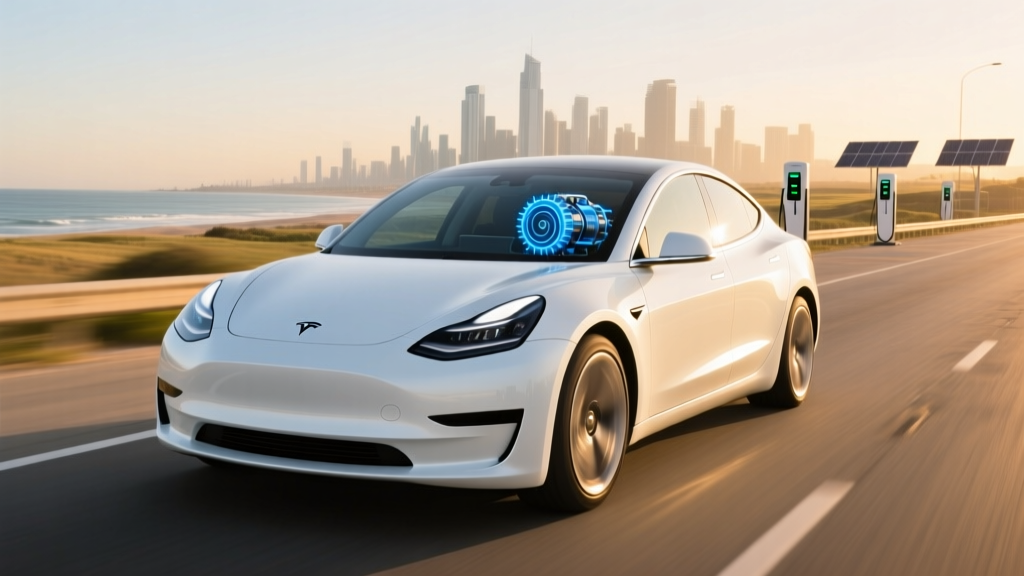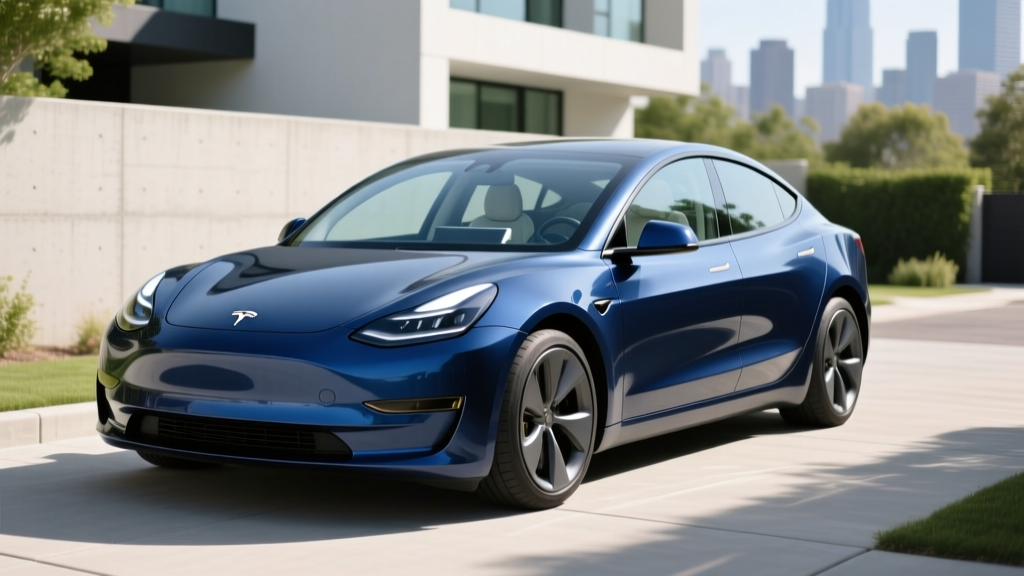
The Tesla Model 3 remains the default answer for buyers entering the EV market, but with competition from the Hyundai Ioniq 6, BMW i4, and Polestar 2 intensifying in 2026, the question isn't just whether it's a good car—it's whether the numbers still pencil out. This review dissects the current-generation Model 3 (the "Highland" refresh that arrived for the 2024 model year and carries into 2026) with a specific focus on what owners actually pay to keep it charged, how far it really goes on a charge, and whether the federal tax credit applies to your situation.
2026 Tesla Model 3: Quick Specs at a Glance
| Specification | RWD (Standard Range) | Long Range AWD | Performance |
|---|---|---|---|
| EPA Range | 272 miles | 363 miles | 315 miles |
| Battery Capacity (usable) | ~60 kWh (LFP) | ~79 kWh (NMC) | ~79 kWh (NMC) |
| Drivetrain | Rear-Wheel Drive | Dual-Motor AWD | Dual-Motor AWD |
| Horsepower | 271 hp | 346 hp | 510 hp |
| 0-60 mph | 5.8 sec | 4.2 sec | 2.9 sec |
| Max DC Fast Charge | 170 kW | 250 kW | 250 kW |
| 10-80% DCFC Time | ~25 min | ~25 min | ~25 min |
| Level 2 Home Charge Rate | 11.5 kW (~44 mi/hr) | 11.5 kW (~44 mi/hr) | 11.5 kW (~44 mi/hr) |
| EPA Efficiency | 132 MPGe / 25 kWh/100mi | 132 MPGe / 25 kWh/100mi | 119 MPGe / 28 kWh/100mi |
| Base MSRP | $38,990 | $47,740 | $54,990 |
Source: fueleconomy.gov and Tesla's official 2026 specification sheets.
Real-World Range: What the EPA Sticker Doesn't Tell You
RWD: EPA 272 mi — Expect ~220-240 mi highway at 75 mph; ~180-200 mi in sub-30°F cold.
Long Range AWD: EPA 363 mi — Expect ~300-320 mi highway at 75 mph; ~250-280 mi in sub-30°F cold.
Performance: EPA 315 mi — Expect ~260-280 mi highway at 75 mph; ~215-240 mi in sub-30°F cold.
Tesla's efficiency engineering is among the best in the industry. The Model 3's heat pump (standard across all trims) significantly reduces cold-weather range loss compared to earlier EVs that relied on resistive cabin heating. In our experience, the Long Range AWD at 70°F on mixed driving comfortably returns 330-340 miles. Push it to sustained 80 mph on the interstate, and you'll see that drop to around 290-300 miles.
The LFP battery in the RWD trim has a practical quirk: Tesla recommends charging it to 100% regularly (unlike NMC batteries, which prefer an 80% daily limit for longevity). This means RWD owners effectively get access to all 60 kWh daily, whereas Long Range owners who set an 80% daily charge limit are working with roughly 63 kWh for commuting. On road trips, you'll charge to 100% regardless, but this daily-use nuance matters for real-world planning.
Cost to Charge a Tesla Model 3: Home, Supercharger, and Destination
This is where the Model 3's ownership economics either shine or disappoint, depending entirely on your charging setup. Let's break down the actual cost per mile across three scenarios.
Scenario 1: Home Level 2 Charging (Best Case)
If you have a Level 2 home charger on a standard residential electricity rate, your cost to charge is remarkably low. Using the national average electricity rate of approximately $0.17/kWh (as of early 2026, per EIA data):
- RWD (60 kWh battery): $10.20 for a full 0-100% charge = ~$0.038/mile
- Long Range (79 kWh battery): $13.43 for a full 0-100% charge = ~$0.037/mile
Compare that to a 30 MPG gas car at $3.40/gallon: $0.113/mile. Home charging makes the Model 3 roughly one-third the fuel cost per mile.
If you have time-of-use rates and charge overnight at $0.08-0.12/kWh, costs drop further. A full Long Range charge at $0.10/kWh costs just $7.90 — or about $0.022/mile.
Scenario 2: Tesla Supercharger Network
Tesla's Supercharger pricing varies by location, time of day, and whether you're on a paid membership tier. In 2026, typical Supercharger rates range from $0.25 to $0.48/kWh depending on the station and region.
- At $0.30/kWh: ~$0.067/mile (Long Range)
- At $0.40/kWh: ~$0.089/mile (Long Range)
- At $0.48/kWh (peak urban): ~$0.107/mile (Long Range)
Even at peak Supercharger rates, the Model 3 is competitive with or cheaper than a gas car — but the savings gap narrows significantly. Exclusive Supercharger reliance is the most expensive way to own a Model 3.
Scenario 3: Third-Party DC Fast Chargers
With the Model 3 now using the NACS connector natively (no adapter needed), Tesla owners have access to Tesla's network plus a growing number of third-party stations. Electrify America, EVgo, and ChargePoint stations typically charge $0.35-$0.55/kWh. At $0.45/kWh, expect ~$0.10/mile — essentially gas-car parity.
| Charging Method | Power | Speed (mi/hr) | Cost/kWh | Cost/Mile (LR) |
|---|---|---|---|---|
| Level 1 (120V outlet) | ~1.4 kW | ~4-5 mi/hr | $0.17 avg | $0.037 |
| Level 2 Home (240V) | 11.5 kW | ~44 mi/hr | $0.10-0.17 | $0.022-0.038 |
| Tesla Supercharger V3/V4 | Up to 250 kW | ~1,000 mi/hr (peak) | $0.25-0.48 | $0.056-0.107 |
| Third-Party DCFC | 50-350 kW | Varies | $0.35-0.55 | $0.078-0.122 |
Charging Performance: DC Fast Charging Curve and Home Setup
The Model 3 Long Range and Performance peak at 250 kW on V3 and V4 Superchargers. However — and this is critical — peak rate is not sustained rate. Here's what the actual charging curve looks like:
- 10-30% SoC: Sustains near 250 kW (Long Range) or 170 kW (RWD)
- 30-50% SoC: Tapers to ~200 kW (LR) / ~140 kW (RWD)
- 50-80% SoC: Tapers further to ~100-120 kW (LR) / ~80-100 kW (RWD)
- 80-100% SoC: Drops to ~30-50 kW — this is why road-trip strategy targets 10-80% charges
The 10-80% time of approximately 25 minutes applies to both Long Range and RWD trims, but for different reasons: the Long Range has a higher peak rate but a bigger battery to fill, while the RWD has a lower peak rate but a smaller battery. On a road trip, plan for 20-30 minute stops every 2.5-3 hours.
For home Level 2 charging, the Model 3's onboard charger accepts up to 11.5 kW (48 amps). This requires a 60-amp circuit installed by a licensed electrician. Tesla's Wall Connector costs around $425 for the hardware; professional installation typically runs $500-$2,000 depending on panel proximity and whether a panel upgrade is needed. A full overnight charge from 20% to 100% takes roughly 7-8 hours on Level 2.
Pricing, Trims, and Federal Tax Credit Eligibility
| Trim | Base MSRP | As-Tested (typical) | §30D Credit Eligibility | Effective Price (if eligible) |
|---|---|---|---|---|
| RWD | $38,990 | $40,490 (w/ paint + wheels) | Up to $7,500 | ~$31,490-$32,990 |
| Long Range AWD | $47,740 | $49,240 (w/ paint) | Up to $7,500 | ~$40,240-$41,740 |
| Performance | $54,990 | $56,490 (w/ paint) | Up to $7,500 | ~$47,490-$48,990 |
The federal EV tax credit under IRS §30D is not automatic. To qualify for the full $7,500, you must satisfy all of the following criteria simultaneously:
- Income caps: Modified AGI ≤ $150,000 (single), $225,000 (head of household), $300,000 (joint) — applies to the year of delivery or prior year, whichever is lower
- MSRP cap: Vehicle MSRP must be ≤ $55,000 for sedans (all Model 3 trims qualify)
- Battery sourcing: Increasing percentages of critical minerals and battery components must be sourced from the U.S. or FTA partners — Tesla has been working to meet these thresholds, but eligibility can shift quarterly
- Point-of-sale transfer: As of 2024, buyers can transfer the credit to the dealer at purchase, reducing the purchase price directly rather than waiting for a tax refund
Always verify current eligibility on irs.gov before purchasing, as battery sourcing requirements tighten annually and specific trim/build-date eligibility can change. Consult a tax professional for your individual situation.
Interior, Cargo, Tech, and Driver Assistance
The Highland refresh brought meaningful improvements to the Model 3 cabin. Ambient lighting, ventilated front seats, a rear touchscreen for passengers, and significantly improved sound insulation make the 2026 Model 3 a notably more refined car than pre-2024 versions.
Cargo and Space:
- Rear trunk: 21.0 cu ft
- Front trunk (frunk): 3.1 cu ft
- Total cargo: 24.1 cu ft (seats up)
- Rear legroom: 35.2 inches
- Front headroom: 40.3 inches
The Model 3's cargo volume is adequate for a couple's road trip but tight for a family of four with luggage. The sloping roofline eats into rear headroom for passengers over 6 feet tall.
Tech Highlights:
- 15.4-inch center touchscreen with Tesla's latest UI
- 8.0-inch rear passenger display (climate, media, gaming)
- Tesla Premium Audio (17 speakers on Long Range/Performance)
- Over-the-air updates continuously add features
- No Apple CarPlay or Android Auto (Tesla's ecosystem only)
Driver Assistance (SAE Level 2):
The driver must remain fully engaged, hands on the wheel, eyes on the road. These are not self-driving systems. Tesla's Full Self-Driving (Supervised) can navigate intersections, stop signs, and highway interchanges, but requires continuous driver supervision. Only Level 4 services like Waymo operate without a human driver.
Basic Autopilot (lane centering + adaptive cruise) is standard. FSD (Supervised) is a $8,000 option or $99/month subscription in 2026. It's impressive in controlled highway environments but can behave unpredictably in complex urban scenarios, construction zones, or adverse weather.
Warranty and Long-Term Ownership
- Basic Vehicle Warranty: 4 years / 50,000 miles
- Battery & Drive Unit Warranty (RWD): 8 years / 100,000 miles, minimum 70% capacity retention
- Battery & Drive Unit Warranty (Long Range/Performance): 8 years / 120,000 miles, minimum 70% capacity retention
Tesla's battery warranty guarantees that the pack will retain at least 70% of its original capacity during the warranty period. In practice, Tesla's battery degradation data (from fleet telemetry) shows most Model 3 packs retaining approximately 88-92% capacity at 100,000 miles. LFP batteries in the RWD trim tend to show slightly less degradation than NMC packs, partly because regular 100% charging cycles keep the BMS well-calibrated.
Out-of-warranty battery replacement for a Model 3 currently runs approximately $12,000-$16,000 depending on the pack, though this cost is expected to decline as battery manufacturing scales. Third-party repair shops are increasingly offering module-level repairs for $3,000-$6,000.
Pros, Cons, and Who the Model 3 Suits Best
Pros
- Industry-leading efficiency (kWh/100mi) keeps charging costs low
- Access to Tesla's Supercharger network — still the most reliable DCFC ecosystem
- Over-the-air updates continuously improve the vehicle
- Strong resale value relative to most EV competitors
- LFP option (RWD) offers excellent battery longevity
- Highland refresh fixed most cabin quality complaints
Cons
- No Apple CarPlay / Android Auto — dealbreaker for some
- Rear seat space is tight for tall adults on long trips
- FSD (Supervised) remains Level 2 and requires full driver attention despite the name
- Turn signals on steering wheel buttons (no stalks) take adaptation
- Insurance costs run 15-30% higher than comparable gas sedans
- No physical instrument cluster — all info on center screen
Who Should Buy the Model 3?
Choose the Model 3 RWD if: You commute under 50 miles daily, have home charging, want the lowest entry price, and value battery longevity (LFP chemistry).
Choose the Model 3 Long Range AWD if: You road-trip regularly, live in a cold climate (AWD + bigger battery buffer), or need the most range per charge without stepping up to a Model S.
Choose the Model 3 Performance if: You want sports-sedan acceleration (2.9s 0-60) and track capability, and range compromises are acceptable.
Consider competitors if: You need CarPlay (Hyundai Ioniq 6), more rear-seat room (BMW i4 Gran Coupe), or a more traditional interior layout (Polestar 2).
Frequently Asked Questions
What is the real-world range of the Tesla Model 3?
The EPA rates the Long Range AWD at 363 miles, but expect 300-320 miles on sustained highway driving at 75 mph, and 250-280 miles in freezing temperatures. The RWD's 272-mile EPA rating translates to roughly 220-240 highway miles in moderate weather.
How fast does the Model 3 charge at home and on DC fast chargers?
On a Level 2 home charger (11.5 kW), the Model 3 adds about 44 miles of range per hour — a full charge takes 7-8 hours. On a V3/V4 Supercharger, the Long Range peaks at 250 kW and charges from 10-80% in about 25 minutes. The RWD peaks at 170 kW with a similar 10-80% time due to its smaller battery.
What does it cost to charge a Tesla Model 3 per month?
For a driver covering 1,000 miles/month with exclusive home charging at $0.14/kWh, expect roughly $35-40/month for the Long Range and $25-30/month for the RWD. Exclusive Supercharger use at $0.35/kWh pushes that to $85-100/month. Most owners fall somewhere in between.
Does the Tesla Model 3 qualify for the $7,500 federal EV tax credit?
All Model 3 trims fall under the $55,000 MSRP sedan cap. However, eligibility depends on your income (AGI caps apply), the battery's critical-mineral and component sourcing at the time of your specific vehicle's manufacture, and other IRS requirements. Verify on irs.gov and consult a tax professional. The credit can be transferred at point of sale to reduce your purchase price directly.
Is the Tesla Model 3 worth buying vs. the Hyundai Ioniq 6 or BMW i4?
The Model 3 wins on Supercharger network access, efficiency, and software ecosystem. The Ioniq 6 offers Apple CarPlay, 800V ultra-fast charging (10-80% in ~18 minutes), and comparable range at a similar price. The BMW i4 offers a more traditional luxury interior and CarPlay but at a higher MSRP. If Supercharger reliability is your top priority, the Model 3 still leads. If CarPlay and interior variety matter more, test-drive the Ioniq 6.
How long will a Tesla Model 3 battery last?
Tesla's fleet data suggests most Model 3 batteries retain 88-92% capacity at 100,000 miles. The warranty guarantees 70% retention at 100,000-120,000 miles depending on trim. Many owners report minimal degradation at 150,000+ miles. LFP batteries (RWD) may outlast NMC packs due to their more robust chemistry, though long-term data is still accumulating.
Always verify the latest specifications on Tesla's official site and check fueleconomy.gov for the most current EPA ratings before purchasing.