The Short Answer: No Electric LFA Exists Yet
If you're searching for an electric LFA, here's the reality as of 2026: Lexus has not produced a battery-electric successor to the legendary LFA supercar. The original LFA (2010–2012) was a 553-hp, 4.8-liter V10 masterpiece — one of only 500 built — and it remains strictly a gasoline-powered machine. Lexus's current EV lineup consists of the RZ 450e crossover and the newly launched RZ 300e, neither of which approaches supercar territory. However, Toyota's parent company has showcased the Lexus Electrified Sport concept, hinting at a future electric halo car with a solid-state battery and a targeted sub-2-second 0–60 mph time. That car remains unreleased with no confirmed production date or pricing.
Why the LFA Matters — and Why an Electric Version Is So Anticipated
The Lexus LFA is widely regarded as one of the greatest supercars ever engineered. Its hand-built 1LR-GUE V10, developed with Yamaha, revved to 9,000 RPM and produced a howl that automotive journalists still reference as a benchmark. Only 500 units were built over two years, with original MSRPs around $375,000. Today, auction values regularly exceed $800,000 to over $1 million, according to Hagerty valuation data.
The search term "electric LFA" reflects a real desire among enthusiasts: a zero-emission Lexus halo car that matches the original's engineering ambition. That desire collides with a practical problem — current battery-electric powertrains prioritize efficiency and daily usability, not the visceral, lightweight, high-revving character that defined the LFA.
What Lexus Actually Offers in EVs Right Now
Rather than a supercar, Lexus's 2026 electric lineup focuses on practical luxury crossovers. Here's how they stack up with real numbers:
| Spec | 2026 Lexus RZ 450e (AWD) | 2026 Lexus RZ 300e (FWD) | Original LFA (2012) |
|---|---|---|---|
| Powertrain | Dual-motor BEV | Single-motor BEV | 4.8L V10 |
| Horsepower | 308 hp | 201 hp | 553 hp |
| 0–60 mph | 5.0 sec | 7.4 sec | 3.6 sec |
| EPA Range | 220 mi (est.) | 266 mi (est.) | ~270 mi (8.3 gal × ~32 mi) |
| Battery | 71.4 kWh (NMC) | 71.4 kWh (NMC) | N/A (17.3 gal tank) |
| DC Fast Charge Peak | ~150 kW | ~150 kW | N/A |
| 10–80% Charge Time | ~30 min | ~30 min | Refuel ~5 min |
| Base MSRP | ~$55,000 | ~$48,000 | $375,000 (2012) |
| Weight | ~4,600 lbs | ~4,300 lbs | 3,263 lbs |
The contrast is stark. The RZ 450e is a competent luxury EV crossover, but at 4,600 pounds and 308 hp, it's an entirely different animal from a 3,263-pound, 553-hp supercar. This weight gap is the central engineering challenge Lexus faces in building an electric LFA successor.
The Electrified Sport Concept: What We Know
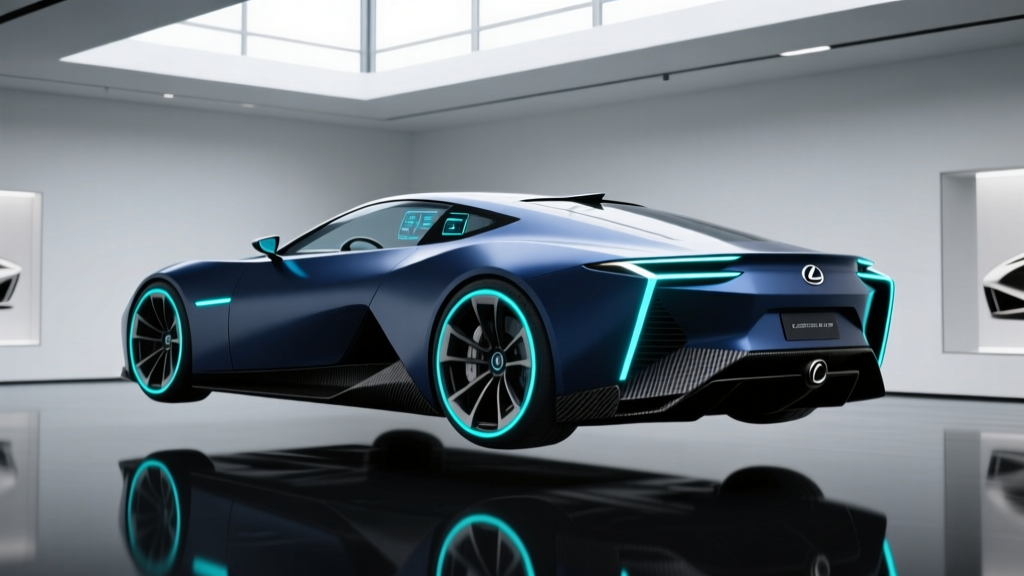
Lexus unveiled the Electrified Sport concept as a vision for a future electric halo car. Key claimed targets from the concept reveal include:
- 0–60 mph: Under 2.0 seconds
- Range: Over 430 miles (targeting solid-state battery technology)
- Design: Low-slung, two-seat sports car proportions reminiscent of the LFA
- Steering: Steer-by-wire with no mechanical connection
- Center of gravity: Ultra-low battery placement for handling dynamics
These are concept-car targets, not production specifications. Toyota's solid-state battery program has faced repeated delays, and as of 2026, no Toyota or Lexus production vehicle uses a full solid-state pack. Toyota has announced limited solid-state production for 2027–2028, initially in small volumes. Until a production model is officially announced with confirmed specs and pricing, treat all Electrified Sport figures as preliminary and aspirational.
The Real Costs: Supercar EV Ownership vs. What Exists Today
If Lexus does build an electric LFA successor, expect pricing well above $200,000 based on the brand's positioning and the technology involved. Here's a cost framework comparing a hypothetical electric supercar to current options:
| Cost Factor | Hypothetical Electric Supercar ($200K+) | Current RZ 450e (~$55K) | Gas Supercar (e.g., Porsche 911 Turbo S, ~$230K) |
|---|---|---|---|
| Purchase Price | $200,000+ | $55,000 | $230,000 |
| Federal Tax Credit (§30D) | $0 (exceeds MSRP cap) | Up to $7,500 (if eligible) | $0 |
| Annual "Fuel" (12K mi/yr) | ~$720 (electric, $0.15/kWh avg) | ~$660 | ~$3,600 (premium, 18 MPG) |
| Annual Maintenance | ~$500 (est.) | ~$400 | ~$2,500+ |
| Insurance (Annual) | $8,000–$15,000+ | $1,800–$2,500 | $5,000–$10,000+ |
| Home Charger Install | $1,500–$3,000 (Level 2) | $1,500–$3,000 | N/A |
The §30D federal EV tax credit has an MSRP cap of $80,000 for SUVs and $55,000 for sedans/sports cars, plus buyer income limits ($150K single / $300K joint). Any electric supercar from Lexus would far exceed these caps, meaning zero federal incentive. Check current rules at IRS.gov before making purchase decisions.
Realistic Alternatives: Electric Performance Cars You Can Buy Now
If you want electric performance in the spirit of what an electric LFA might represent — rapid acceleration, advanced technology, striking design — here are real 2026 options with verified data:
Choose Your Path
If you want raw acceleration under $150K: The Tesla Model S Plaid delivers 1,020 hp, a 1.99-second 0–60, and 396 miles of EPA range from ~$89,990. It seats five and charges at up to 250 kW (10–80% in ~20 minutes on a V3 Supercharger).
If you want a true two-seat electric sports car: No mainstream option exists yet. The closest is the upcoming generation of electric roadsters from various startups, but production volumes and long-term reliability remain unproven.
If you want Lexus luxury with electric power: The RZ 450e is your only current option. It's a refined crossover, not a sports car — but it offers Lexus build quality, a well-insulated cabin, and the brand's first dedicated EV platform (e-TNGA).
If you want a modern supercar experience and don't need electric: The current-generation Acura NSX Type S (discontinued after 2022, available used) or a Porsche 911 Turbo S remain benchmarks. The NSX was actually a hybrid (twin-turbo V6 + 3 electric motors, 600 hp), making it the closest spiritual bridge between the LFA and an electric future.
Common Myths About an Electric LFA
| Myth | Fact |
|---|---|
| "The Electrified Sport concept is available to order." | It remains a concept with no confirmed production date, pricing, or specs. Lexus has not opened reservations. |
| "An electric LFA would be lighter than the original." | Extremely unlikely. Current battery energy density means a 400+ mile pack would add 1,200+ lbs. The original LFA weighed just 3,263 lbs thanks to its carbon-fiber monocoque. |
| "Electric supercars can't match gas supercar handling." | Not categorically true. Low center of gravity and torque vectoring can produce exceptional handling. But weight remains the enemy of transient response and tire wear on track. |
| "I'll get a federal tax credit on an electric supercar." | The §30D credit caps eligible MSRP at $55,000 for cars and $80,000 for SUVs/trucks. No supercar qualifies. Income limits also apply. |
| "Solid-state batteries will solve the weight problem soon." | Solid-state promises higher energy density, but Toyota's own timeline targets limited production in 2027–2028. Meaningful cost reduction and volume production will take years longer. |
What a First-Time EV Buyer Should Know Before Chasing Halo Cars
If the electric LFA search led you here and you're actually new to EVs, here's the practical grounding:
Home charging is essential for daily satisfaction. Public DC fast charging works for road trips, but 90%+ of EV charging happens at home. A Level 2 home charger (240V, typically 48 amps / 11.5 kW) adds roughly 35–44 miles of range per hour of charging. Installation costs $1,500–$3,000 if your electrical panel has capacity, and $3,000–$5,000+ if you need a panel upgrade to 200 amps. Always get a quote from a licensed electrician before purchasing.
Real-world range falls short of EPA stickers. Highway driving at 75+ mph typically reduces range by 15–25%. Cold weather (below freezing) can cut range by 20–40% depending on the vehicle's heat pump and thermal management. The RZ 450e's estimated 220-mile EPA range could realistically deliver 160–175 miles on a cold highway day.
Charging speed isn't constant. A vehicle rated for 150 kW peak charging hits that rate only at low states of charge (typically 10–30%). Above 80%, the charge curve tapers significantly to protect the battery. A "30-minute 10–80% charge" can become a 50+ minute 10–95% charge.
Maintenance is lower, but tires and insurance cost more. EVs eliminate oil changes, spark plugs, and transmission service. But they're heavier (more tire wear), have expensive battery packs (higher comprehensive insurance), and regenerative braking extends brake life significantly.
The Bottom Line: Wait, Look Elsewhere, or Enjoy What Exists
An electric LFA is one of the most exciting prospects in the EV world — and one of the most distant. Lexus has signaled intent through the Electrified Sport concept, and Toyota's solid-state battery investment is substantial. But no production timeline, no confirmed specs, and no pricing exist as of 2026.
If you need electric performance today, the Model S Plaid, Lucid Air Sapphire (1,234 hp, $249,000), or Porsche Taycan Turbo GT (1,019 hp, ~$190,000) deliver supercar acceleration with real production volumes and service networks. If you're specifically loyal to Lexus and want an EV, the RZ 450e is a refined daily driver — just don't expect it to evoke the LFA's 9,000-RPM scream.
For enthusiasts willing to wait: watch for an official Lexus production announcement tied to Toyota's solid-state battery rollout, likely no earlier than 2028–2029. Until then, the original LFA's values will likely keep climbing.
Has Lexus officially confirmed an electric LFA production model?
No. As of 2026, Lexus has shown the Electrified Sport concept but has not announced a production version, pricing, or timeline. Any release date found online is speculative.
Would an electric LFA qualify for the $7,500 federal EV tax credit?
No. The §30D credit caps eligible vehicle MSRP at $55,000 for sedans and sports cars, and $80,000 for SUVs, vans, and trucks. Buyer income limits also apply ($150K single, $300K joint filers). An electric supercar would far exceed these thresholds. Always verify current rules at IRS.gov.
What is the fastest electric car Lexus currently sells?
The 2026 Lexus RZ 450e AWD with 308 hp and a 5.0-second 0–60 mph time. It is a luxury crossover, not a performance car. Lexus does not currently sell an electric sports car.
Can I convert an original LFA to electric power?
Technically, aftermarket EV conversions exist, but converting a $800,000+ collector car would destroy its value, void any remaining provenance, and require extensive custom engineering. No reputable shop recommends this for a vehicle of the LFA's rarity and value.
What solid-state battery timeline has Toyota announced?
Toyota has targeted limited solid-state battery production beginning in 2027–2028, initially in small volumes for select models. Mass-market adoption with meaningful cost reduction is not expected before 2030. These timelines have shifted multiple times and should be considered estimates. Source: Toyota corporate announcements.
Is the Lexus RZ 450e a good first EV?
It's a solid choice if you want Lexus luxury and your daily driving is under 150 miles round-trip with home charging access. Its 220-mile estimated EPA range is modest by 2026 standards — competitors like the Hyundai Ioniq 5 (310+ mi) and Tesla Model Y (320+ mi) offer more range at similar prices. Check fueleconomy.gov for verified EPA data before purchasing.