2026 Tesla Model 3 Overview: Beyond the Paint Booth
When shoppers search for Model 3 colors, they're usually deep in the configurator, weighing Stealth Gray against Ultra Red. But paint is only the surface. The 2026 Tesla Model 3 (the refreshed "Highland" generation that debuted for the 2024 model year) remains one of the most efficient, tech-forward sedans on the market, with EPA range reaching 363 miles, a Supercharger network advantage, and a starting MSRP that keeps it in the crosshairs of the Hyundai Ioniq 6, BMW i4, and Polestar 2.
This guide walks through the full color palette, then layers in the data that actually determines whether the car works for your commute, road trips, and budget — range, charging curves, battery chemistry, tax credits, and ownership trade-offs.
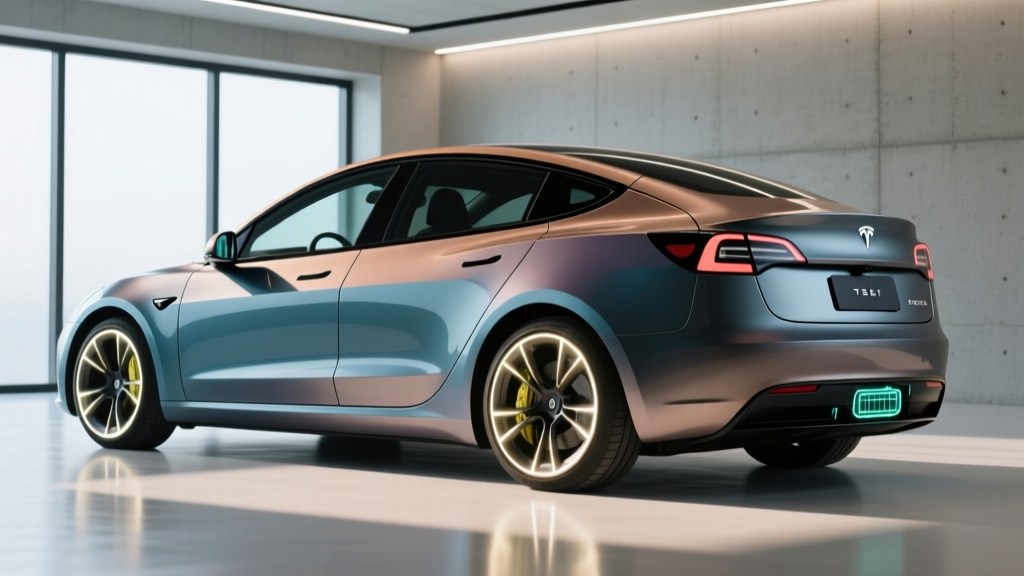
2026 Tesla Model 3 Color Options (Exterior & Interior)
Tesla periodically reshuffles its palette. As of the current 2026 model year, the U.S. configurator typically offers the following exterior finishes. Note that Tesla has been known to swap colors mid-year without notice, so always verify in the live configurator before ordering.
| Exterior Color | Cost | Notes |
|---|---|---|
| Pearl White Multi-Coat | No cost | Default, high-resale, shows dirt easily |
| Solid Black | +$1,500 | Classic, hides minor scratches, shows swirl marks |
| Deep Blue Metallic | +$1,500 | Metallic flake, popular in northern climates |
| Stealth Gray | +$2,000 | Replaced Midnight Silver; darker, more modern tone |
| Ultra Red | +$2,500 | Multi-coat, high-impact, longest lead times |
Interior choices remain limited to two: All Black (standard, vegan leather) and Black and White (+$1,000, same material but two-tone). Both use the same perforated, heated-and-ventilated front seats introduced with the Highland refresh.
Range, Efficiency & Battery Chemistry
The 2026 Model 3 is offered in three trims, each with a different battery and drivetrain. EPA estimates come from fueleconomy.gov.
| Trim | Battery (usable kWh) | Chemistry | EPA Range | MPGe (combined) | kWh/100 mi |
|---|---|---|---|---|---|
| Long Range RWD | ~75 kWh | NMC (CATL/LG) | 363 mi | 132 MPGe | 25 |
| Long Range AWD | ~75 kWh | NMC | 346 mi | 125 MPGe | 27 |
| Performance AWD | ~75 kWh | NMC | 315 mi | 113 MPGe | 30 |
The base RWD trim (discontinued and reintroduced in various years) uses an LFP (lithium iron phosphate) pack when available — lower energy density but superior cycle life and tolerance for regular 100% charging. For 2026, Tesla has consolidated around the Long Range NMC architecture in the U.S., though the base RWD occasionally returns as an order-bank option. Always confirm chemistry on your specific VIN before purchase; Tesla sources from CATL, LG, and Panasonic depending on production batch.
Real-World Range Expectations
EPA numbers assume a mix of city and highway driving at moderate temperatures. In practice:
- Highway-only at 75 mph, 70°F: Expect ~290-310 miles in the Long Range RWD (15-20% below EPA).
- City/suburban with regen: Often exceeds EPA — 370+ miles is achievable.
- Cold weather (20°F, highway): Range drops 25-35%, putting the Long Range RWD at roughly 235-270 miles. The heat pump helps, but battery chemistry is the limiting factor.
- Mountain passes: Elevation gain consumes energy, but regen on descents recovers 40-60% of it.
Charging: Supercharger Speeds & Home Level 2
Charging speed is where the Model 3 continues to lead rivals. The Highland-gen electrical architecture supports peak DC fast-charge rates around 250 kW on V3 Superchargers and compatible CCS/NACS stations.
| Level | Power | Miles Added Per Hour | Notes |
|---|---|---|---|
| Level 1 (120V) | ~1.4 kW | ~5 mi/hr | Emergency/trickle only |
| Level 2 (240V, 48A) | 11.5 kW | ~44 mi/hr | Home Wall Connector; full charge overnight |
| DC Fast (V3 Supercharger) | Peak 250 kW | ~170 mi in 15 min | 10-80% in ~25 min; tapers above 60% |
| DC Fast (V4 Supercharger) | Peak 250+ kW | Similar to V3 | Newer stalls; CCS adapter native |
Charge curve reality: The 250 kW peak is sustained only between ~10-30% State of Charge (SoC). From 30-60%, expect 170-200 kW. Above 80%, the car throttles to protect the battery — plan to charge to 80% on road trips and skip the top-off unless you need the last 20% for your destination.
The Model 3 uses the NACS (North American Charging Standard) connector natively. With Tesla opening the Supercharger network to NACS-equipped EVs from Ford, GM, Rivian, and others, stall availability at peak travel times has become more competitive — plan holiday trips with the Tesla app's live stall-count feature.
Performance & Drivetrain
| Trim | Drivetrain | Horsepower | 0-60 mph |
|---|---|---|---|
| Long Range RWD | Rear-Wheel Drive | ~346 hp | 5.8 sec |
| Long Range AWD | Dual-Motor AWD | ~346 hp | 4.2 sec |
| Performance AWD | Dual-Motor AWD | ~510 hp | 2.9 sec |
Even the "slowest" Model 3 is quicker than most gas sedans. The Performance trim adds Track Mode, adaptive dampers, high-performance brakes, and 20-inch wheels (which reduce EPA range by ~20 miles vs. the 19-inch setup). All trims use a single-speed reduction gear — no transmission to maintain.
Pricing, Trims & Federal Tax Credit (IRS §30D)
| Trim | Base MSRP | Destination | Est. As-Tested* | Potential §30D Credit |
|---|---|---|---|---|
| Long Range RWD | $42,490 | $1,390 | $45,880+ | Up to $7,500 |
| Long Range AWD | $47,490 | $1,390 | $50,880+ | Up to $7,500 |
| Performance AWD | $54,990 | $1,390 | $58,380+ | Up to $7,500 |
*As-tested reflects typical color/interior upgrades; actual varies.
Federal Tax Credit Eligibility (2026 Rules)
Under IRS §30D, the Model 3 may qualify for up to $7,500, split into two $3,750 halves tied to battery-component and critical-minerals sourcing requirements. Eligibility is NOT automatic — it depends on:
- MSRP cap: Sedans must be under $55,000 — the Long Range trims qualify; the Performance trim does NOT.
- Buyer income cap: AGI ≤ $150,000 (single), $225,000 (head of household), $300,000 (joint).
- Battery sourcing: Both the components and critical-minerals tests must be met for the full $7,500. Tesla's supply chain shifts periodically; verify the specific VIN's eligibility on the DOE's credit lookup tool at time of purchase.
- Point-of-sale transfer: You can apply the credit as a down-payment reduction at delivery rather than waiting for tax filing.
State incentives (California, Colorado, New York, etc.) stack on top but vary by jurisdiction — consult your state's energy office.
Interior, Cargo & Standout Tech
The Highland interior is minimalist by design. A 15.4-inch center touchscreen handles everything — no instrument cluster, no stalks (turn signals are on the steering wheel, which takes a week to build muscle memory). Rear passengers get an 8-inch screen for climate and media.
- Cargo: 23 cu ft trunk + 3.1 cu ft frunk. Sedan shape limits vertical space vs. the Model Y hatchback.
- Legroom: 42.7 in front / 35.2 in rear — adequate for adults on trips under 3 hours.
- Tech: Tesla's infotainment remains class-leading for responsiveness, OTA updates, and native Supercharger routing. Apple Music, Spotify, and Netflix (parked only) are built in.
- Driver assist: Basic Autopilot is standard (lane centering + adaptive cruise). Full Self-Driving (Supervised) is a $8,000 option or $99/month — it is SAE Level 2, meaning you must remain engaged. It does not make the car self-driving.
Warranty & Long-Term Ownership
- Basic vehicle: 4 years / 50,000 miles
- Battery & drive units: 8 years / 120,000 miles (Long Range), with a minimum 70% capacity retention guarantee
- Expected degradation: NMC packs typically lose ~8-12% capacity over the first 100,000 miles, then plateau. LFP packs degrade more slowly but are less common on 2026 U.S. Model 3s.
Tesla's mobile service and Supercharger reliability continue to lead the industry in J.D. Power and Consumer Reports EV satisfaction surveys, though body-shop wait times after collisions remain a pain point in some metro areas.
Pros, Cons & Who Should Buy
Pros
- Class-leading efficiency (25 kWh/100 mi)
- Supercharger network access (native NACS)
- Strong OTA updates, continuous feature additions
- Resale value holds better than most EVs
- Sub-$40k effective price after credit on Long Range RWD
Cons
- Turn-signal buttons on wheel are polarizing
- No physical controls for climate/audio
- Rear visibility compromised by sloped roofline
- FSD subscription cost adds up without delivering Level 4
- Insurance premiums run 15-25% above segment average
Who It Suits Best
- Commuters (30-80 miles/day): Long Range RWD is the sweet spot — home-charge overnight, rarely visit a Supercharger.
- Tech-forward buyers: If you want the most software-rich EV experience, Tesla still leads.
- Road trippers: Supercharger routing is seamless; 25-minute 10-80% stops beat most rivals.
- NOT ideal for: Families needing hatchback cargo (choose Model Y), buyers who prefer physical controls (try Ioniq 6 or BMW i4), or those in areas with limited Tesla service centers.
2026 Tesla Model 3 FAQ
What is the real-world range of the 2026 Model 3?
EPA rates the Long Range RWD at 363 miles. Real-world highway driving at 75 mph yields ~290-310 miles; cold weather (20°F) drops that to 235-270 miles. City driving with regen often exceeds EPA.
How fast does the Model 3 charge at home and on the road?
At home on a Level 2 Tesla Wall Connector (48A, 11.5 kW), expect ~44 miles of range per hour, or a full charge in ~8 hours. On a V3 Supercharger, peak 250 kW delivers 10-80% in about 25 minutes.
How much does the Model 3 cost after tax credits?
The Long Range RWD starts at $42,490 + $1,390 destination. With the full $7,500 §30D credit (if your VIN and income qualify), the effective price drops to ~$36,380 — before state incentives.
Does the 2026 Model 3 qualify for the federal EV tax credit?
Long Range RWD and AWD trims qualify on MSRP (under $55,000 sedan cap). The Performance trim does NOT. Buyer income caps and battery-sourcing rules also apply — verify at purchase via fueleconomy.gov.
Which Model 3 color holds value best?
Pearl White (no-cost) and Stealth Gray (+$2,000) historically show the strongest resale. Ultra Red commands attention but can extend delivery timelines by weeks.
Is the Model 3 worth buying vs. the Hyundai Ioniq 6 or BMW i4?
Choose the Model 3 if Supercharger access, OTA updates, and efficiency matter most. Choose the Ioniq 6 for 800V ultra-fast charging and physical controls. Choose the BMW i4 if you want a more traditional luxury interior and don't mind CCS charging.
Is Tesla FSD actually self-driving?
No. FSD (Supervised) is an SAE Level 2 system. The driver must remain fully engaged. It handles many highway and city scenarios but requires constant supervision.