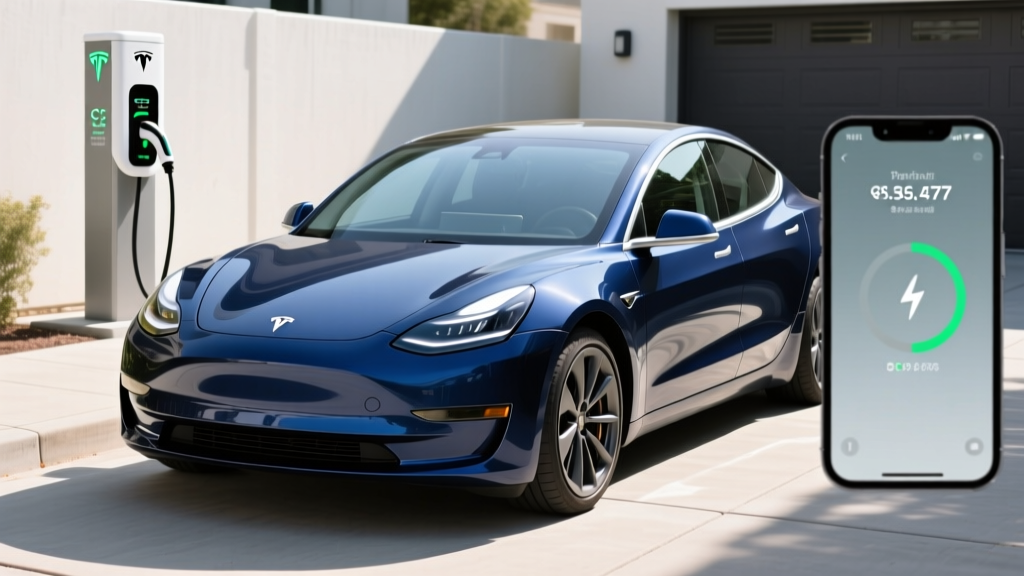
If you've ever wondered does it cost money to charge a Tesla, the short answer is yes — but the real answer depends on where, when, and how you plug in. A Tesla Model 3 owner charging at home on a standard utility rate might spend $0.13 per kWh, while a Supercharger session in a peak-demand urban corridor can run $0.40–$0.55 per kWh. That difference translates to roughly $4 versus $16 to add 200 miles of range.
This review uses the 2026 Tesla Model 3 (the current "Highland" refresh generation) as our reference vehicle to answer the charging-cost question in full context — covering the actual battery capacity, EPA range, real-world efficiency, charging speeds at every level, and the total cost of ownership compared to a gas sedan. If you're cross-shopping the Model 3 against the Hyundai Ioniq 6, BMW i4, or Polestar 2, the numbers below will tell you exactly what you're signing up for.
2026 Tesla Model 3: Quick Spec Overview
| Spec | Model 3 RWD | Model 3 Long Range AWD | Model 3 Performance |
|---|---|---|---|
| EPA Range | 272 mi | 363 mi | 315 mi |
| Battery (usable) | ~57 kWh (LFP) | ~75 kWh (NMC) | ~75 kWh (NMC) |
| MPGe (combined) | 142 MPGe | 134 MPGe | 125 MPGe |
| Efficiency | 24 kWh/100mi | 25 kWh/100mi | 27 kWh/100mi |
| 0–60 mph | 5.8 sec | 4.2 sec | 2.9 sec |
| Horsepower | 283 hp | 384 hp | 510 hp |
| Drivetrain | RWD (single motor) | AWD (dual motor) | AWD (dual motor) |
| Peak DC Charge | 170 kW | 250 kW | 250 kW |
| 10–80% DCFC Time | ~25 min | ~22 min | ~22 min |
| Level 2 Home Rate | 11.5 kW (~44 mi/hr) | 11.5 kW (~44 mi/hr) | 11.5 kW (~44 mi/hr) |
| Base MSRP | $38,990 | $47,740 | $53,990 |
Source: fueleconomy.gov and Tesla's official specifications. Real-world results vary by temperature, terrain, and driving style.
Does It Cost Money to Charge a Tesla? The Three Scenarios
Tesla owners charge in three primary contexts, and the cost structure of each is completely different. Here's the breakdown for a 2026 Model 3 Long Range AWD (75 kWh usable battery, ~25 kWh/100mi efficiency).
Scenario 1: Home Level 2 Charging (Cheapest)
Most Tesla owners do 80–90% of their charging at home. The national average residential electricity rate sits around $0.16/kWh (per EIA data), though this varies wildly — from $0.10/kWh in parts of the Pacific Northwest to $0.30+/kWh in California during peak hours.
- Cost for a full charge (0–100%): ~$12.00 at $0.16/kWh
- Cost per mile: ~$0.04
- Cost to add 200 miles: ~$8.00
- Time: ~6.5 hours from 0–100% on an 11.5 kW Wall Connector
If you have access to time-of-use (TOU) rates or solar panels, your effective cost can drop to $0.06–$0.10/kWh, making home charging nearly unbeatable on a per-mile basis.
Scenario 2: Tesla Supercharger Network (Mid-Range)
Tesla's Supercharger network now features V3 (250 kW) and V4 stalls across the U.S. Pricing is per-kWh in most states, though some legacy stalls still bill per minute. Expect to pay $0.25–$0.55/kWh depending on location, time of day, and whether you have a Tesla membership plan.
- Cost for 200 miles (~50 kWh): $12.50–$27.50
- Cost per mile: $0.06–$0.14
- Idle fees: $0.50–$1.00/min if you stay plugged in after reaching your charge limit
The real-world charge curve matters here: the Model 3 Long Range peaks at 250 kW but only holds that rate briefly. Expect an average of ~150–170 kW across a 10–80% session, which takes roughly 22 minutes. Above 80% SoC, charging tapers sharply — plan your stops around the 10–80% window for efficiency.
Scenario 3: Destination & Third-Party Chargers (Variable)
Hotels, shopping centers, and non-Tesla networks (ChargePoint, EVgo, Electrify America) offer a wide cost range. Some destinations provide free Level 2 charging as an amenity; others charge $0.30–$0.69/kWh on DC fast chargers. Always check the network app before plugging in.
The EPA rates the 2026 Model 3 Long Range AWD at 363 miles. In our experience, expect ~300–320 miles on highway road trips (70–80 mph, moderate climate control) and ~250–280 miles in cold weather (below 32°F) due to battery preconditioning overhead and cabin heating demands. The LFP-equipped RWD model shows a similar ~15–20% cold-weather reduction from its 272-mile EPA sticker. Plan Supercharger stops around 200–220 miles apart in winter for a comfortable buffer.
Charging Speed at Every Level: What You Actually Get
| Charging Level | Power (kW) | Miles Added/Hour | Typical Use Case | Cost Range |
|---|---|---|---|---|
| Level 1 (120V) | ~1.4 kW | ~3–5 mi/hr | Overnight top-off, no garage upgrade | $0.03–$0.05/mi |
| Level 2 (240V, Wall Connector) | 11.5 kW | ~44 mi/hr | Daily home charging | $0.03–$0.06/mi |
| DC Fast (V3 Supercharger) | Peak 250 kW | ~1,000 mi/hr (peak) | Road trips, quick stops | $0.06–$0.14/mi |
| DC Fast (V4 Supercharger) | Peak 350 kW* | ~1,000+ mi/hr (peak) | Newer corridor stalls | $0.06–$0.14/mi |
*V4 peak rates depend on vehicle acceptance rate; the 2026 Model 3 caps at ~250 kW. kW = power (charge speed); kWh = energy (battery capacity). These are not interchangeable.
For home Level 2 installation, budget $800–$2,000 for the Tesla Wall Connector plus electrician labor if your panel has capacity. A panel upgrade (100A to 200A) adds $1,500–$3,000. Always consult a licensed electrician for final specifications.
Battery Chemistry: LFP vs. NMC and What It Means for Cost
The 2026 Model 3 RWD uses an LFP (lithium iron phosphate) battery, while the Long Range and Performance trims use NMC (nickel manganese cobalt). This chemistry split has direct implications for charging habits and long-term cost:
| Factor | LFP (RWD) | NMC (Long Range / Performance) |
|---|---|---|
| Energy Density | Lower (smaller range) | Higher (longer range) |
| Cycle Life | 3,000+ cycles | 1,000–2,000 cycles |
| Daily Charge Recommendation | 100% OK daily | 80% daily, 100% for trips |
| Cold-Weather Performance | More range loss in cold | Better cold tolerance |
| Cost to Replace (out of warranty) | ~$8,000–$12,000 | ~$12,000–$16,000 |
LFP's ability to charge to 100% daily without accelerated degradation means RWD owners can use the full 57 kWh every day — effectively reducing cost-per-usable-mile. NMC owners should set their charge limit to 80% for daily driving (~60 kWh usable) and only charge to 100% before long trips.
Pricing, Tax Credits, and True Cost to Own
| Trim | Base MSRP | Federal §30D Credit | Effective Price |
|---|---|---|---|
| Model 3 RWD | $38,990 | Up to $7,500* | ~$31,490* |
| Model 3 Long Range AWD | $47,740 | Up to $7,500* | ~$40,240* |
| Model 3 Performance | $53,990 | Up to $7,500* | ~$46,490* |
*Critical tax credit caveats (IRS §30D, 2026 rules):
- MSRP cap: Sedans must be under $55,000. The Performance trim at $53,990 qualifies at base, but adding options that push MSRP above $55,000 disqualifies it.
- Income cap: Modified AGI must not exceed $150,000 (single), $225,000 (head of household), or $300,000 (joint).
- Battery sourcing: Critical minerals and battery components must meet escalating domestic-content thresholds. Verify current eligibility on the vehicle's Monroney label and at IRS.gov §30D.
- Point-of-sale transfer: You can transfer the credit to the dealer at purchase for an immediate price reduction, rather than waiting for tax filing.
Consult a tax professional for your specific situation. State and local incentives vary by jurisdiction — check your state energy office or utility for additional rebates.
Interior, Tech, and Daily Livability
The Model 3 Highland refresh brought meaningful improvements to cabin quality and noise isolation. Here are the dimensions that matter:
- Cargo volume: 23 cu ft (rear trunk + frunk combined)
- Front legroom: 42.3 inches
- Rear legroom: 35.3 inches — adequate for adults on short trips, tight for tall passengers on long drives
- Infotainment: 15.4-inch center touchscreen with Tesla OS; no Apple CarPlay or Android Auto (Tesla's native navigation and media are robust, but phone projection is absent)
- Rear display: 8-inch touchscreen for rear passengers (climate, media)
- Driver assist: Basic Autopilot included; FSD (Supervised) available for $8,000 or $99/month
Tesla's Autopilot and FSD (Supervised) are SAE Level 2 driver-assistance systems — not self-driving. The driver must remain fully engaged, hands on or near the wheel, eyes on the road. Only Level 4 robotaxi services like Waymo operate without a human driver in defined geofenced areas. Do not treat any Tesla feature as a substitute for active driving attention.
Warranty and Long-Term Battery Confidence
- Basic vehicle warranty: 4 years / 50,000 miles
- Battery & drive unit (RWD): 8 years / 100,000 miles
- Battery & drive unit (Long Range / Performance): 8 years / 120,000 miles
- Capacity retention threshold: Tesla warrants a minimum of 70% battery capacity retention over the warranty period
Real-world degradation data from Tesla's fleet suggests most Model 3 batteries retain ~88–92% capacity after 100,000 miles, with LFP packs showing slower fade curves than NMC. The warranty threshold is conservative — most owners will never approach it under normal use.
Pros and Cons: The Honest Verdict
- Industry-leading efficiency (24–27 kWh/100mi) keeps charging costs low
- Supercharger network reliability is best-in-class for road trips
- Over-the-air updates continuously improve the vehicle
- LFP battery on RWD allows worry-free 100% daily charging
- Strong resale value relative to most EV competitors
- Minimal maintenance costs (no oil, no transmission fluid)
- No Apple CarPlay or Android Auto — a dealbreaker for some
- Rear seat space is tighter than the Hyundai Ioniq 6 or BMW i4
- FSD (Supervised) costs $8,000 and remains Level 2 — not autonomous
- Supercharger costs rising in some metro areas ($0.50+/kWh peak)
- Insurance premiums run 15–30% higher than comparable gas sedans
- Repair costs after collisions can be high due to integrated battery structure
Who the 2026 Tesla Model 3 Suits Best
Choose the Model 3 RWD if: You commute under 50 miles daily, have home Level 2 charging, want the lowest entry price, and don't regularly drive in extreme cold. The LFP battery's 100% daily charge tolerance makes it a zero-worry daily driver.
Choose the Model 3 Long Range AWD if: You take regular road trips (300+ miles), live in a cold-weather state, or want dual-motor traction in rain and snow. The 363-mile EPA range gives you comfortable 200-mile Supercharger spacing.
Choose the Model 3 Performance if: You want sports-sedan acceleration (2.9s 0–60) with daily-driver practicality, and you accept the range trade-off and MSRP-cap tightness for tax credit eligibility.
Look elsewhere if: You need generous rear-seat space (consider the Hyundai Ioniq 5 or Kia EV6), want Apple CarPlay (most competitors offer it), or lack access to reliable home charging.
Frequently Asked Questions
Does it cost money to charge a Tesla at home?
Yes. Home charging costs are added to your monthly electricity bill. At the national average of $0.16/kWh, a full charge of the Model 3 Long Range (~75 kWh) costs about $12. That's roughly $0.04 per mile — about one-third the per-mile cost of a 30-MPG gas sedan at $3.50/gallon.
Is Tesla Supercharging free?
No. Free unlimited Supercharging was discontinued for new Model 3 purchases years ago. Some promotional referrals or trade-in deals include limited free Supercharging credits, but standard billing applies otherwise. Expect $0.25–$0.55/kWh depending on location and time.
Can I charge a Tesla at non-Tesla chargers?
Yes. The 2026 Model 3 comes equipped with the NACS (North American Charging Standard) connector natively. With a CCS adapter (included or ~$150–$250), you can also use Electrify America, EVgo, and other CCS networks. Tesla's own Supercharger network is also opening to non-Tesla EVs, but Tesla owners retain priority pricing.
How much does a Tesla Wall Connector cost to install?
The Tesla Wall Connector hardware costs ~$475. Professional installation by a licensed electrician runs $500–$1,500 if your electrical panel has spare capacity. A panel upgrade from 100A to 200A adds $1,500–$3,000. Total budget: $1,000–$5,000 depending on your home's electrical infrastructure.
Does the 2026 Model 3 qualify for the $7,500 federal tax credit?
It can, subject to IRS §30D rules. The RWD ($38,990) and Long Range ($47,740) both fall under the $55,000 sedan MSRP cap. The Performance ($53,990) qualifies at base MSRP but can be disqualified by options. You must also meet income caps ($150K single / $300K joint) and the vehicle must meet battery-sourcing requirements. Verify at IRS.gov before purchasing.
What is the real-world range of the Model 3 Long Range?
The EPA rates it at 363 miles. In real-world highway driving at 75 mph with climate control, expect ~300–320 miles. In cold weather (below freezing), plan for ~250–280 miles. Preconditioning the battery before Supercharger stops helps recover some efficiency.
How does the Model 3's charging cost compare to gas?
At $0.16/kWh (home), the Model 3 Long Range costs ~$0.04/mile. A comparable 30-MPG gas sedan at $3.50/gallon costs ~$0.12/mile. Over 15,000 annual miles, that's ~$600/year for electric versus ~$1,750/year for gas — a savings of ~$1,150/year, assuming home charging. Supercharging at $0.40/kWh narrows the gap to ~$0.10/mile.
Always verify current pricing, tax credit eligibility, and specifications with Tesla's official configurator and fueleconomy.gov before making a purchase decision. Rules and specs are subject to change.