If you've walked into a traditional car dealership expecting the usual negotiation dance, Tesla's approach feels almost alien. The most common question from first-time Tesla shoppers is straightforward: do Tesla sales people get commission? The short answer is no — Tesla employees who assist buyers (often called "Advisors" or "Specialists," not salespeople) do not earn commission on vehicle sales. This single fact reshapes the entire buying experience, and understanding it is critical before you configure your 2026 Model 3 and click "Order."
In this guide, we break down exactly how Tesla's no-commission model works, then deliver the full owner-relevant review of the 2026 Tesla Model 3 — including EPA range, real-world expectations, DC fast-charging speeds, battery chemistry, pricing across trims, and IRS §30D federal tax credit eligibility.
How Tesla's No-Commission Sales Model Works
Tesla sells vehicles directly to consumers — no franchised dealers, no haggling, no markup games. Whether you order online at tesla.com or visit a Tesla gallery, the price you see is the price you pay. Advisors are salaried employees whose compensation is not tied to which trim you choose, whether you add FSD (Supervised), or how quickly you close the deal.
This eliminates the classic dealership conflict of interest. A traditional salesperson earns more if you buy a higher trim, add accessories, or finance through the dealer. A Tesla Advisor has no financial incentive to upsell you on the Long Range AWD over the Rear-Wheel Drive, or to push the $8,000 FSD package. Their role is informational and logistical: helping you configure the right car, explaining delivery timelines, and walking you through the app-based purchase flow.
What this means for buyers: You won't face pressure tactics, but you also won't negotiate the price down. Tesla adjusts MSRPs periodically (sometimes weekly) based on demand and production costs, but there is no "dealer discount" to chase. Inventory vehicles occasionally carry small price reductions, but these are set by Tesla corporate, not individual staff.
2026 Tesla Model 3: Spec Table at a Glance
| Specification | RWD (Base) | Long Range AWD | Performance |
|---|---|---|---|
| EPA Range | 363 miles | 346 miles | 315 miles |
| Battery (usable) | ~60 kWh (LFP) | ~75 kWh (NMC) | ~75 kWh (NMC) |
| Drivetrain | Rear-Wheel Drive | Dual-Motor AWD | Dual-Motor AWD |
| Horsepower | 271 hp | 346 hp | 510 hp |
| 0–60 mph | 5.8 sec | 4.2 sec | 2.9 sec |
| Max DC Fast Charge | 170 kW | 250 kW | 250 kW |
| 10–80% DCFC Time | ~25 min | ~18 min | ~18 min |
| Level 2 Home Charge | 11.5 kW (~44 mi/hr) | 11.5 kW (~44 mi/hr) | 11.5 kW (~44 mi/hr) |
| MPGe (combined) | 132 MPGe | 125 MPGe | 115 MPGe |
| Base MSRP | $38,990 | $45,490 | $52,990 |
| Battery Warranty | 8 yr / 100,000 mi | 8 yr / 120,000 mi | 8 yr / 120,000 mi |
Source: fueleconomy.gov and Tesla's official specifications. Verify current pricing at tesla.com — Tesla adjusts MSRPs frequently.
Real-World Range: What the EPA Sticker Doesn't Tell You
EPA Estimated Range: 363 miles (RWD) / 346 miles (Long Range AWD) / 315 miles (Performance)
Real-World Expectation: Plan for ~280–310 miles on highway road trips at 70–80 mph in moderate temperatures. In cold weather (below 32°F), expect a 20–30% reduction, dropping highway range to ~220–260 miles depending on conditions and whether you precondition.
The Model 3 Long Range AWD's 346-mile EPA figure is among the best in its class, but EPA testing uses a mix of city and highway cycles at moderate speeds. On a real interstate drive at 75 mph with climate control running, you'll see closer to 3.5–3.8 miles per kWh, yielding roughly 260–285 miles before you'd want to stop. In winter, lithium-ion batteries lose efficiency, cabin heating draws significant power (the heat pump helps, but doesn't eliminate the penalty), and regenerative braking is limited until the battery warms up.
The RWD trim uses an LFP (lithium iron phosphate) battery, which Tesla recommends charging to 100% regularly — unlike the NMC packs in the Long Range and Performance trims, which benefit from daily limits around 80% to minimize degradation. This means RWD owners can actually access their full 363-mile EPA range daily, while Long Range owners typically use ~277 miles of their 346-mile capacity on a standard charge.
Charging Speed: DC Fast, Level 2, and the Charge Curve
Charging speed is where trim choice matters significantly. The RWD's LFP battery peaks at 170 kW on DC fast chargers, while the Long Range and Performance models reach 250 kW at V3 Superchargers. But peak kW is only part of the story — the charge curve determines actual time spent plugged in.
| Charging Method | RWD (LFP) | Long Range / Performance (NMC) |
|---|---|---|
| DC Fast Charge (peak) | 170 kW | 250 kW |
| 10–80% Time (DCFC) | ~25 minutes | ~18 minutes |
| 80–100% Taper | Slows sharply above 80%; add 15–20 min | Slows sharply above 80%; add 15–20 min |
| Level 2 Home (240V / 48A) | 11.5 kW (~44 mi/hr) | 11.5 kW (~44 mi/hr) |
| Level 2 Full Charge (0–100%) | ~6–7 hours | ~8–9 hours |
| Level 1 (120V / 12A) | ~1.4 kW (~5 mi/hr) | ~1.4 kW (~5 mi/hr) |
At a Tesla V3 Supercharger (250 kW capable), the Long Range Model 3 sustains peak charging speed from roughly 10% to 30% SoC, then gradually tapers. By 60%, you're pulling around 100–120 kW; by 80%, it drops to roughly 50 kW. This is why the 10–80% metric matters more than peak kW — the last 20% takes nearly as long as the first 70%. For road trips, plan stops at 10–80% and skip topping to 100% unless it's your final charge before reaching home.
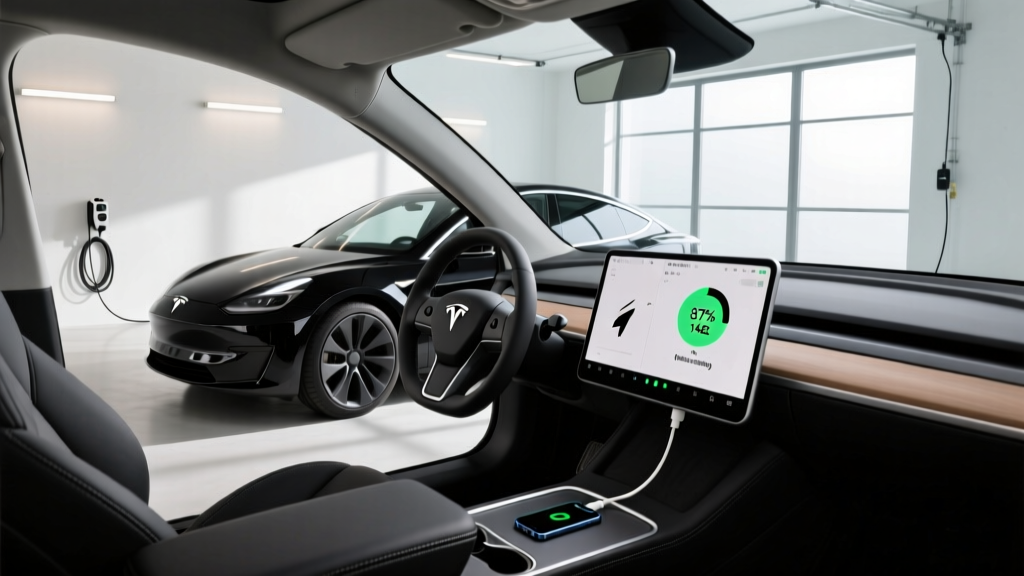
For home charging, a Tesla Wall Connector on a 60-amp circuit (48 amps continuous) delivers 11.5 kW — adding roughly 44 miles of range per hour. An overnight charge from 20% to 80% takes about 4–5 hours, which covers virtually all daily driving needs. Installation costs for a 240V / 60A circuit typically range from $500 to $2,500 depending on panel proximity and local permitting. Always hire a licensed electrician and confirm your panel has headroom for a 60-amp breaker.
Performance, Efficiency, and Daily Driving
Even the base RWD Model 3 delivers 271 hp and a 5.8-second 0–60 time — quicker than most gas-powered sedans in its price range. The Long Range AWD's dual-motor setup provides confident all-weather traction and 346 hp, while the Performance variant's 510 hp and 2.9-second 0–60 time puts it in sports-car territory.
Efficiency remains a Tesla strong point. The RWD achieves 132 MPGe combined (roughly 25 kWh per 100 miles), making it one of the most efficient EVs on the market. The Long Range AWD drops slightly to 125 MPGe, and the Performance sits at 115 MPGe — still excellent for the power delivered. At the national average electricity rate of ~$0.16/kWh, fueling a Model 3 Long Range costs approximately $4.00 per 100 miles, compared to ~$12–14 for a 30-MPG gas sedan at $3.50/gallon.
Ride quality in the refreshed Model 3 (internally called "Highland," continuing into the 2026 model year) is markedly improved over pre-2024 versions. New dampers, acoustic glass, and revised suspension tuning reduce road noise and harshness. The steering remains quick but slightly numb — a trade-off most Tesla owners accept given the efficiency and tech benefits.
Pricing, Trims, and Federal Tax Credit Eligibility
Tesla's pricing is transparent but fluid. Here's where the 2026 Model 3 lineup stands, along with federal tax credit context:
| Trim | Base MSRP | Federal §30D Credit | Effective Price (if eligible) |
|---|---|---|---|
| RWD | $38,990 | Up to $7,500 | ~$31,490 |
| Long Range AWD | $45,490 | Up to $7,500 | ~$37,990 |
| Performance | $52,990 | Up to $7,500 | ~$45,490 |
Federal tax credit rules (IRS §30D) are strict and change periodically. As of 2026, key eligibility requirements include:
- MSRP Cap: Sedans must be at or below $55,000. The RWD and Long Range AWD qualify; the Performance at $52,990 also qualifies, but adding options that push MSRP above $55,000 may disqualify it.
- Income Caps: Modified AGI must not exceed $150,000 (single), $225,000 (head of household), or $300,000 (joint).
- Battery Sourcing: The full $7,500 requires meeting both critical-mineral and battery-component sourcing thresholds set by the IRS. Vehicles meeting only one threshold receive $3,750. Tesla's supply chain has adapted significantly, but verify current eligibility at fueleconomy.gov before ordering.
- Point-of-Sale Transfer: Since 2024, you can transfer the credit to Tesla at purchase, reducing your out-of-pocket cost immediately rather than waiting for a tax refund. This effectively works as an instant rebate.
Because Tesla does not negotiate price, your only leverage on cost is timing (watching for Tesla-initiated price cuts), choosing inventory vehicles with slight discounts, and ensuring you qualify for the federal credit plus any state incentives. Consult a tax professional to confirm your personal eligibility — we cannot provide individualized tax advice.
Interior, Cargo, Tech, and Driver Assistance
The Model 3's minimalist interior continues to polarize. Everything routes through the 15.4-inch center touchscreen — including climate controls, mirror adjustment, and glovebox release. There is no instrument cluster; speed and navigation appear in the upper-left corner of the main screen. Tesla removed the turn-signal stalk in the refreshed model, moving signals to steering-wheel buttons and the touchscreen — an adjustment period is required.
Cargo and space:
- Rear trunk: 21.0 cu ft (including under-floor storage)
- Front trunk (frunk): 3.1 cu ft
- Total cargo: 24.1 cu ft
- Rear legroom: 35.2 inches
- Front headroom: 40.3 inches
These numbers put the Model 3 behind the Hyundai Ioniq 6 and similar sedans in rear-seat comfort, but competitive with the BMW i4. Taller passengers (6'2"+) will find the rear seat adequate but not generous.
Tech highlights:
- Tesla's infotainment remains the EV benchmark — fast, responsive, with Netflix/YouTube while parked, and an excellent navigation system that routes through Superchargers with preconditioning.
- Over-the-air updates add features regularly; recent additions include improved adaptive cruise behavior and UI refinements.
- Standard Autopilot includes Traffic-Aware Cruise Control and Autosteer (SAE Level 2). FSD (Supervised) adds auto lane-change, Navigate on Autopilot, and traffic-light recognition for $8,000 (one-time) or $99/month — but the driver must remain fully attentive at all times.
SAE Automation Level: Tesla Autopilot and FSD (Supervised) are Level 2 driver-assistance systems. They do not make the car self-driving. The driver must keep hands on the wheel (or demonstrate attention via the cabin camera) and eyes on the road. Only Level 4 robotaxi services (Waymo, Zoox) operate without a human driver — and those are geofenced to specific cities.
Warranty Coverage and Long-Term Ownership
Tesla's warranty structure is straightforward:
- Basic Vehicle: 4 years / 50,000 miles
- Battery & Drive Unit (RWD): 8 years / 100,000 miles, minimum 70% capacity retention
- Battery & Drive Unit (Long Range / Performance): 8 years / 120,000 miles, minimum 70% capacity retention
The 70% retention threshold is industry-standard (matching Hyundai, Ford, and others). Real-world data from Tesla's fleet suggests most Model 3 batteries retain 85–90% capacity at 100,000 miles, with LFP packs showing particularly slow degradation due to their chemistry. Battery replacement out of warranty costs approximately $12,000–$16,000 depending on the pack — a worst-case scenario that remains rare but worth budgeting awareness for long-term owners.
Insurance costs tend to run 15–25% higher than comparable gas sedans due to repair costs (aluminum body panels, sensor recalibration after collisions). Get quotes before ordering — premiums vary significantly by zip code and driving record.
Pros
- Class-leading efficiency (132 MPGe RWD)
- Access to Tesla Supercharger network — the most reliable DC fast-charging network in the U.S.
- Over-the-air updates that add features post-purchase
- No-commission, no-haggle buying experience
- Strong real-world range (280–310 mi highway)
- Best-in-class infotainment and navigation with automatic charge routing
Cons
- No physical turn-signal stalk — steep learning curve
- Rear seat space is tight for tall passengers
- FSD ($8,000) remains Level 2 — not self-driving
- Higher insurance premiums than gas equivalents
- No Apple CarPlay or Android Auto
- Minimalist interior lacks physical buttons some drivers prefer
Who Should Buy the 2026 Tesla Model 3?
Choose the Model 3 RWD if: You commute under 60 miles daily, want the lowest purchase price (~$31,500 after tax credit), prefer LFP's 100% daily charging convenience, and rarely road-trip in extreme cold.
Choose the Long Range AWD if: You take regular road trips (300+ miles), live in a region with snow or ice (AWD traction), need maximum range flexibility, and want the faster 250 kW DC charging curve.
Choose the Performance if: You prioritize acceleration and handling, accept the range trade-off, and can confirm your build stays under the $55,000 MSRP cap for tax credit eligibility.
Look elsewhere if: You need a spacious rear seat for adults, prefer physical controls and Apple CarPlay, or want to negotiate price at a dealership. Consider the Hyundai Ioniq 6, BMW i4, or Polestar 2 as alternatives.
Frequently Asked Questions
Do Tesla sales people get commission on vehicle sales?
No. Tesla Advisors and Specialists are salaried employees who do not earn commission based on the vehicle you buy, the options you add, or whether you purchase FSD. This eliminates upselling pressure but also means there is no room to negotiate price — what you see on tesla.com is what you pay.
What is the real-world range of the 2026 Model 3?
Expect roughly 280–310 miles on highway trips at 70–80 mph in moderate weather for the Long Range AWD (EPA 346 mi). In cold weather below 32°F, plan for 220–260 miles. The RWD's LFP battery can be charged to 100% daily, giving you access to the full EPA 363 miles for city driving.
How fast does the Model 3 charge at home and on the road?
On a Level 2 home charger (240V, 48A), the Model 3 charges at 11.5 kW, adding about 44 miles of range per hour. A full overnight charge takes 6–9 hours depending on trim. At a Tesla V3 Supercharger, the Long Range and Performance peak at 250 kW and charge from 10–80% in approximately 18 minutes. The RWD peaks at 170 kW with a 10–80% time of about 25 minutes.
Does the 2026 Tesla Model 3 qualify for the $7,500 federal tax credit?
The RWD ($38,990) and Long Range AWD ($45,490) fall well under the $55,000 sedan MSRP cap. The Performance ($52,990) also qualifies at base price, but adding options could push it over. You must also meet IRS income caps ($150K single / $300K joint) and the vehicle must meet battery-sourcing requirements. Verify current eligibility on fueleconomy.gov and consult a tax professional. The credit can be transferred to Tesla at point of sale for an instant price reduction.
Is the Tesla Model 3 worth buying vs. competitors in 2026?
The Model 3 remains the efficiency and charging-network benchmark in its class. Its Supercharger access (the most reliable U.S. network), OTA updates, and strong resale value are significant advantages. However, the Hyundai Ioniq 6 offers more rear-seat space and Apple CarPlay; the BMW i4 provides a more traditional luxury interior; and the Polestar 2 appeals to those wanting Scandinavian design. If charging reliability and software matter most, the Model 3 leads. If interior space or physical controls are priorities, test-drive the alternatives.
Is Tesla Autopilot or FSD self-driving?
No. Both Autopilot and FSD (Supervised) are SAE Level 2 driver-assistance systems. The driver must remain attentive, keep hands available for steering, and be prepared to take over at any moment. They are not autonomous. Only Level 4 robotaxi services like Waymo operate without a driver, and those are limited to specific mapped areas in select cities.