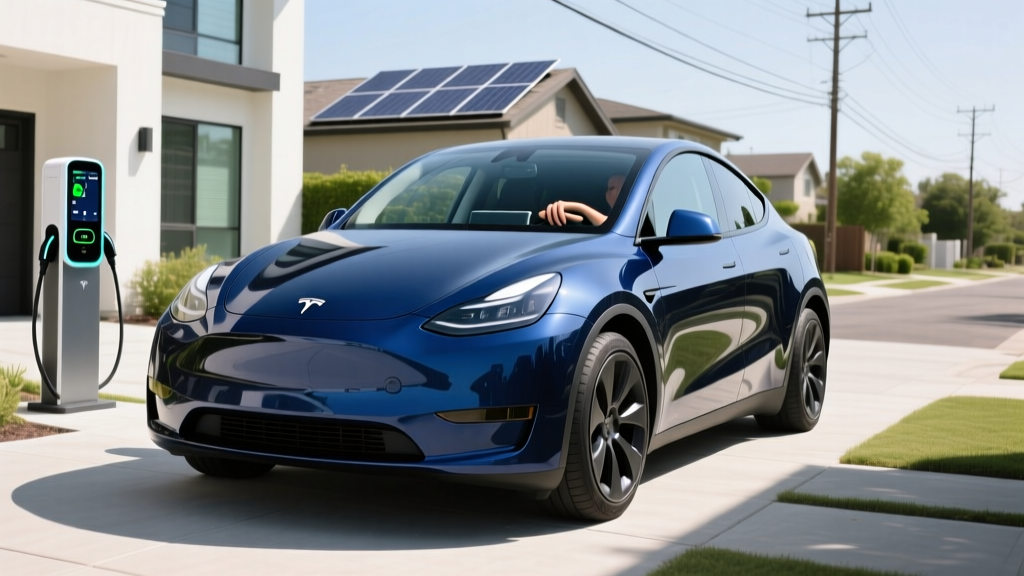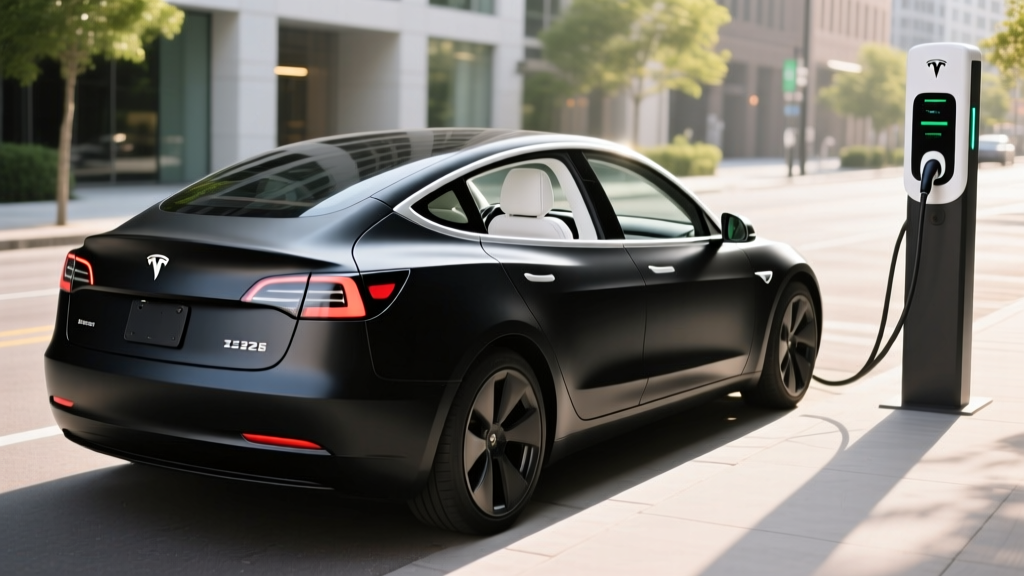
The Tesla Model 3 remains the benchmark compact electric sedan, and the current-generation "Highland" refresh has sharpened its appeal with a quieter cabin, improved suspension tuning, and a more refined interior. Among the most-searched configurations is the Tesla Model 3 black with white interior — a combination that pairs the no-cost Solid Black paint with the $1,000 premium Black and White vegan leather cabin. It's a high-contrast look that photographs well and, practically speaking, hides wear better than pure white seats while keeping the airy feel of the lighter upholstery.
But aesthetics only get you so far. Below, we break down everything that matters for ownership: real-world range versus the EPA sticker, charging speeds across DC fast-charging and home Level 2, total cost after federal tax credits, and how the Model 3 Long Range AWD stacks up against the Hyundai Ioniq 6, BMW i4, and Polestar 2 in 2026.
Quick Verdict: Who the Model 3 Black/White Is For
Choose the Tesla Model 3 Long Range AWD if: You want the deepest Supercharger network access, best-in-class efficiency (kWh/100mi), strong resale value, and a minimalist tech-forward cabin for daily commuting and road trips.
Look elsewhere if: You need physical controls for climate/audio, prefer traditional dealer service, want a head-up display or Apple CarPlay, or require more than 23 cu ft of cargo space for family hauling.
Range, Efficiency, and Real-World Expectations
The 2026 Tesla Model 3 Long Range AWD carries an EPA-estimated 341 miles of range on its 79 kWh (usable) LFP/NMC battery pack. The Rear-Wheel Drive base model, which uses a 60 kWh LFP (lithium iron phosphate) battery, is rated at 272 miles. The Long Range uses an NMC (nickel manganese cobalt) chemistry optimized for energy density, which is why it achieves that higher range figure despite similar exterior dimensions.
EPA Range: 341 miles (Long Range AWD) | 272 miles (RWD)
Real-World Expectation: Plan for 280–310 miles on the Long Range during mixed highway driving at 70–75 mph. In cold weather (below 32°F), expect a 15–25% reduction, dropping effective range to approximately 250–275 miles on the Long Range. City driving with regenerative braking can match or slightly exceed the EPA figure in mild temperatures.
Efficiency is where Tesla still leads the pack. The Long Range AWD achieves approximately 130 MPGe combined (roughly 26 kWh/100mi), making it one of the most energy-efficient all-wheel-drive EVs on the market. For comparison, the Hyundai Ioniq 6 SE Long Range AWD returns around 117 MPGe combined, and the BMW i4 xDrive40 sits near 105 MPGe. That efficiency gap translates directly into lower charging costs and longer intervals between stops on road trips.
Charging Speed: DC Fast, Level 2, and Home Setup
The Model 3 Long Range AWD supports a peak DC fast-charge rate of 250 kW on V3 Superchargers and compatible CCS/NACS stations. In practice, Tesla's charging curve is aggressive in the low-to-mid state of charge but tapers significantly above 80% — a characteristic shared by nearly all lithium-ion packs to protect long-term battery health.
| Charging Level | Power / Rate | Speed / Time | Connector |
|---|---|---|---|
| DC Fast Charge (Peak) | 250 kW | 10–80% in ~25 min; ~175 mi in 15 min | NACS (native); CCS via adapter |
| DC Fast Charge (Sustained avg) | ~150–170 kW avg (10–80%) | Expect ~30 min total including taper | NACS |
| Level 2 (Home / Destination) | 11.5 kW (48A) | ~44 miles per hour of charging | NACS (J1772 adapter included) |
| Level 1 (120V outlet) | ~1.4 kW | ~5 miles per hour | Standard outlet (mobile connector) |
A critical note on charging infrastructure: Tesla's NACS connector is now the de facto North American standard, with Ford, GM, Rivian, Hyundai, and others adopting it through 2025–2026. Model 3 owners gain native access to over 20,000 Supercharger stalls across North America — still the most reliable and geographically complete DC fast-charging network available. Non-Tesla networks like Electrify America and EVgo have improved uptime but remain inconsistent in rural corridors.
For home charging, a Level 2 wall connector on a 60-amp circuit (48A continuous) will fully replenish the Long Range battery in roughly 7–8 hours — easily covering daily driving needs overnight. Installation costs typically range from $500 to $2,000 depending on panel proximity and local permitting, and a panel upgrade to 200A service can add $1,500–$3,000 if your home has an older 100A panel.
Performance and Driving Dynamics
| Specification | RWD (Base) | Long Range AWD | Performance |
|---|---|---|---|
| 0–60 mph | 5.8 sec | 4.2 sec | 2.9 sec |
| Horsepower | 271 hp | 346 hp | 510 hp |
| Drivetrain | Rear-Wheel Drive | Dual-Motor AWD | Dual-Motor AWD |
| Top Speed | 125 mph | 125 mph | 163 mph |
| Battery (Usable) | 60 kWh (LFP) | 79 kWh (NMC) | 79 kWh (NMC) |
| EPA Range | 272 mi | 341 mi | 315 mi |
The Highland refresh brought meaningful improvements to ride quality. Tesla retuned the suspension with frequency-selective dampers and added acoustic glass, making the 2026 Model 3 noticeably quieter at highway speeds than the pre-2024 version. The steering remains quick and precise, though some drivers will note the lack of a traditional instrument cluster — all speed, range, and navigation data lives on the central 15.4-inch touchscreen.
The Long Range AWD strikes the best balance for most buyers: 4.2 seconds to 60 mph is genuinely quick for daily driving, the dual-motor setup provides confident traction in rain and light snow, and the 341-mile EPA range eliminates range anxiety on most road trips without the stiff ride of the Performance trim.
Interior: The Black Exterior / White Cabin Experience
The Black and White interior option ($1,000) uses Tesla's premium vegan leather on the seats, door panels, and dashboard. Paired with Solid Black (no-cost) exterior paint, the result is a striking monochrome contrast that has become one of the most popular Model 3 configurations.
Practically, the white seats are more forgiving than you might expect. Tesla's synthetic leather resists staining from denim transfer and cleans easily with a damp microfiber cloth. The black exterior, however, does show dust, water spots, and swirl marks more readily than silver or gray paints — budget $200–$400 annually for paint maintenance or consider a ceramic coating ($800–$1,500) at delivery.
Cargo and Passenger Space:
- Rear legroom: 35.3 inches
- Front headroom: 40.3 inches
- Trunk: 21 cu ft (rear) + 3.1 cu ft (frunk) = 24.1 cu ft total
- Rear seats fold 60/40 for longer cargo
Space is competitive with the BMW i4 (22 cu ft trunk) but trails the Hyundai Ioniq 6 (25.3 cu ft) and falls well short of any crossover. Two adults ride comfortably in the rear; three-across is tight for anything beyond short trips.
Pricing, Trims, and Federal Tax Credit Eligibility
| Trim | Base MSRP | White Interior Add-On | As-Tested (Black/White) | Est. After §30D Credit |
|---|---|---|---|---|
| RWD | $38,990 | +$1,000 | $39,990 | ~$32,490* |
| Long Range AWD | $45,990 | +$1,000 | $46,990 | ~$39,490* |
| Performance | $52,990 | +$1,000 | $53,990 | ~$46,490* |
*Estimated after $7,500 federal tax credit. Actual eligibility depends on individual tax liability, income, and vehicle sourcing compliance. See details below.
The federal EV tax credit (IRS §30D) offers up to $7,500 for qualifying new EVs, and the Model 3 currently qualifies for the full amount — but eligibility is not universal. Per IRS guidelines, buyers must meet the following criteria:
- Income caps: Modified AGI ≤ $150,000 (single), $225,000 (head of household), $300,000 (married filing jointly)
- MSRP cap: Vehicle MSRP must not exceed $55,000 (sedans like Model 3) — all trims qualify
- Battery sourcing: Critical minerals and battery components must meet phased-in percentage thresholds from US or FTA-partner countries (updated annually through 2030)
- Point-of-sale transfer: As of 2024, buyers can transfer the credit to the dealer at purchase, reducing the purchase price directly rather than waiting for a tax refund
- Tax liability: The credit is non-refundable — you must owe at least $7,500 in federal tax to claim the full amount (unless using point-of-sale transfer)
Tesla's battery supply chain has adapted to meet the critical-mineral and component-sourcing requirements for 2026, but the DOE's official eligibility list should always be checked before purchase, as sourcing rules can shift with trade policy changes.
Technology, Safety, and Driver Assistance
The Model 3's 15.4-inch central touchscreen handles everything: navigation, climate, media, vehicle settings, and even the glovebox release. There is no Apple CarPlay or Android Auto — Tesla's native infotainment includes streaming services (Netflix, YouTube, Spotify), a built-in web browser, and over-the-air software updates that regularly add features.
Autopilot and FSD (Supervised):
SAE Automation Level: Level 2. Tesla's Autopilot (standard) and Full Self-Driving Supervised ($8,000 option or $99/month) are driver-assistance systems, not autonomous driving. The driver must remain attentive, keep hands on the wheel (or demonstrate engagement via the cabin camera), and be prepared to take over at any moment. This is the same SAE Level 2 classification as GM's Super Cruise, Ford's BlueCruise, and Toyota's Safety Sense. Only fully driverless services like Waymo operate at Level 4.
Standard Autopilot includes adaptive cruise control and lane-centering on highways. FSD Supervised adds automatic lane changes, on-ramp to off-ramp navigation, traffic light and stop sign recognition, and enhanced city-street driving. Real-world performance is impressive on well-marked highways but still requires active supervision in construction zones, complex intersections, and adverse weather.
Safety ratings: The Model 3 earned a 5-star overall rating from NHTSA and was named an IIHS Top Safety Pick+ with good ratings across all crashworthiness tests.
Pros
- Class-leading efficiency (26 kWh/100mi) cuts charging costs
- Supercharger network: 20,000+ stalls, best uptime in the industry
- 341-mile EPA range on Long Range eliminates most road-trip anxiety
- Strong resale value relative to competing EVs
- Over-the-air updates continuously improve the vehicle
- Black/White interior is durable and visually striking
Cons
- No physical buttons — all controls via touchscreen, including glovebox and mirror adjustment
- Black paint shows swirl marks and dust easily
- No Apple CarPlay or Android Auto
- Rear visibility is limited by the sloping roofline
- FSD ($8,000) remains Level 2 despite the "self-driving" name
- Service center wait times can stretch to weeks in some metro areas
Warranty and Long-Term Battery Outlook
Tesla covers the Model 3 with the following warranty terms:
- Basic vehicle: 4 years / 50,000 miles
- Battery and drive unit (RWD): 8 years / 100,000 miles
- Battery and drive unit (Long Range & Performance): 8 years / 120,000 miles
- Capacity retention threshold: Tesla warrants at least 70% battery capacity retention over the warranty period
Tesla's LFP packs (RWD) are known for excellent cycle life — LFP chemistry tolerates regular 100% charging and shows minimal degradation over 200,000+ miles in fleet data. The NMC packs in the Long Range benefit from Tesla's thermal management system, and real-world degradation data from high-mileage owners suggests 10–12% capacity loss at 100,000 miles — well within warranty thresholds. A full battery replacement outside warranty currently runs $12,000–$16,000 at Tesla service centers, though this cost has been declining steadily.
How It Compares: Model 3 vs. Key Rivals
| Attribute | Tesla Model 3 LR AWD | Hyundai Ioniq 6 SE LR AWD | BMW i4 xDrive40 |
|---|---|---|---|
| EPA Range | 341 mi | 316 mi | 282 mi |
| Efficiency | 130 MPGe | 117 MPGe | 105 MPGe |
| DC Fast Charge (Peak) | 250 kW | 240 kW | 205 kW |
| 10–80% Time | ~25 min | ~18 min | ~31 min |
| 0–60 mph | 4.2 sec | 5.1 sec | 4.7 sec |
| Base MSRP | $45,990 | $46,700 | $57,900 |
| Charging Network | Supercharger (native NACS) | NACS adapter needed; Ioniq charges faster at peak | NACS adapter; CCS native |
| Physical Controls | None (touchscreen only) | Yes (buttons + knobs) | Yes (iDrive knob + buttons) |
The Ioniq 6 charges faster at peak (240 kW with a flatter curve, hitting 10–80% in ~18 minutes), but its overall range and efficiency trail the Model 3. The BMW i4 offers a more traditional luxury interior with physical controls and a head-up display, but its higher price, shorter range, and lower efficiency make it harder to justify for cost-conscious buyers. For road-trip frequency and total cost of ownership, the Model 3 Long Range still holds the edge.
Frequently Asked Questions
What is the real-world range of the Tesla Model 3 Long Range AWD?
The EPA rates it at 341 miles, but real-world highway driving at 70–75 mph typically yields 280–310 miles in moderate temperatures. In winter (below 32°F), expect 250–275 miles due to battery resistance and cabin heating load. City driving with regenerative braking can match or exceed the EPA number.
How fast does the Model 3 charge at home and on the road?
On a DC fast charger, the Model 3 Long Range peaks at 250 kW and charges from 10–80% in approximately 25 minutes. At home on a Level 2 wall connector (11.5 kW / 48A), it adds about 44 miles of range per hour, fully recharging overnight in 7–8 hours.
How much does a Tesla Model 3 with black paint and white interior actually cost?
The Long Range AWD with Solid Black paint (no-cost) and the Black and White interior ($1,000) comes to $46,990 before incentives. After the $7,500 federal tax credit (if eligible), the effective price drops to approximately $39,490. State and local incentives may reduce this further — check your jurisdiction's programs.
Does the Tesla Model 3 qualify for the federal EV tax credit?
Yes, the Model 3 currently qualifies for the full $7,500 §30D credit, subject to buyer income limits ($150K single / $300K joint), the $55,000 sedan MSRP cap (all trims qualify), and battery-sourcing requirements. The credit can be applied as a point-of-sale discount through a participating dealer. Always verify current eligibility at IRS.gov before purchasing.
Is the Tesla Model 3 worth buying over the Hyundai Ioniq 6 or BMW i4?
For most buyers prioritizing efficiency, range, charging network reliability, and total cost of ownership, the Model 3 Long Range AWD is the strongest choice. The Ioniq 6 is competitive if you value faster peak charging and physical controls. The BMW i4 suits buyers who want a traditional luxury experience and don't mind paying a premium for shorter range.
Does the white interior stain or wear badly?
Tesla's vegan leather is surprisingly durable. Denim dye transfer and minor spills clean easily with a damp cloth. Most long-term owners report the white seats hold up well over 50,000+ miles with basic care. The black exterior, however, requires more attention — plan for regular washes or a ceramic coating to minimize visible swirl marks.
Is Tesla's Autopilot or FSD actually self-driving?
No. Both Autopilot and FSD (Supervised) are SAE Level 2 driver-assistance systems. You must remain fully attentive and ready to take control at all times. FSD adds features like automatic lane changes and traffic-light recognition, but it does not replace the driver. True autonomous (Level 4) driving is currently only available through robotaxi services like Waymo in limited metro areas.