If you've searched for "auto steer tesla" lately, you're likely weighing whether Tesla's driver-assistance tech and the refreshed Model 3 platform justify the price in a market now crowded with compelling EVs. The 2026 Tesla Model 3 Long Range AWD remains the company's volume sedan — a car that pairs a mature Supercharger network advantage with one of the most talked-about (and debated) Level 2 driver-assist systems on the road. This review breaks down the exact numbers buyers need: EPA range versus real-world highway and cold-weather expectations, charging curves at DC fast chargers and on Level 2 home setups, battery chemistry implications, pricing after federal tax credits, and how the Model 3 stacks up against the Hyundai Ioniq 6, BMW i4, and Polestar 2.
2026 Tesla Model 3: Quick Specs at a Glance
| Spec | Model 3 Long Range AWD | Model 3 RWD (Base) | Model 3 Performance |
|---|---|---|---|
| EPA Range | 341 miles | 272 miles | 315 miles |
| Battery (usable) | ~79 kWh, NMC | ~57.5 kWh, LFP | ~79 kWh, NMC |
| Peak DC Fast Charge | 250 kW | 170 kW | 250 kW |
| 10–80% DC Time | ~27 min | ~25 min | ~27 min |
| Level 2 Home Charge | 11.5 kW (~44 mi/hr) | 11.5 kW (~44 mi/hr) | 11.5 kW (~44 mi/hr) |
| 0–60 mph | 4.2 sec | 5.8 sec | 2.9 sec |
| Horsepower | ~346 hp | ~271 hp | ~510 hp |
| Drivetrain | Dual-Motor AWD | RWD | Dual-Motor AWD |
| MPGe (combined) | 132 MPGe | 134 MPGe | 118 MPGe |
| Base MSRP | $47,740 | $38,990 | $54,990 |
Source: fueleconomy.gov and Tesla's official 2026 spec sheets. Prices exclude destination fees.
Real-World Range vs. the EPA Sticker
Real-World Highway (70 mph, mild weather): ~280–300 miles
Real-World Cold Weather (below 32°F, mixed driving): ~230–260 miles
Efficiency Observed: ~25–27 kWh/100 mi highway; ~23 kWh/100 mi mixed
The EPA's 341-mile estimate for the Long Range AWD is achievable on suburban routes at moderate speeds in temperate weather. On sustained highway driving at 70–75 mph, expect to lose roughly 12–18% off the sticker — putting real highway range around 280–300 miles before you need to plan a stop. In sub-freezing temperatures, lithium-ion internal resistance rises and cabin heating draws significant power even with the Model 3's heat pump, pushing losses to 25–32%. That means a worst-case winter road trip might yield 230–260 miles of usable range.
The base RWD model's LFP (lithium iron phosphate) battery trades energy density for longevity. Its 272-mile EPA rating drops more sharply in cold weather (LFP chemistry is more temperature-sensitive), so northern-climate buyers should strongly consider the Long Range variant.
Charging Speed: DC Fast, Level 2, and the Curve Reality
Tesla's Supercharger network remains a decisive ownership advantage, but peak kW numbers only tell part of the story. The charge curve — how fast the battery actually fills across the session — matters more for real road trips.
| Charging Method | Power (kW) | Miles Added per Hour | Notes |
|---|---|---|---|
| Level 1 (120V household) | ~1.4 kW | ~4–5 mi/hr | Emergency/top-up only |
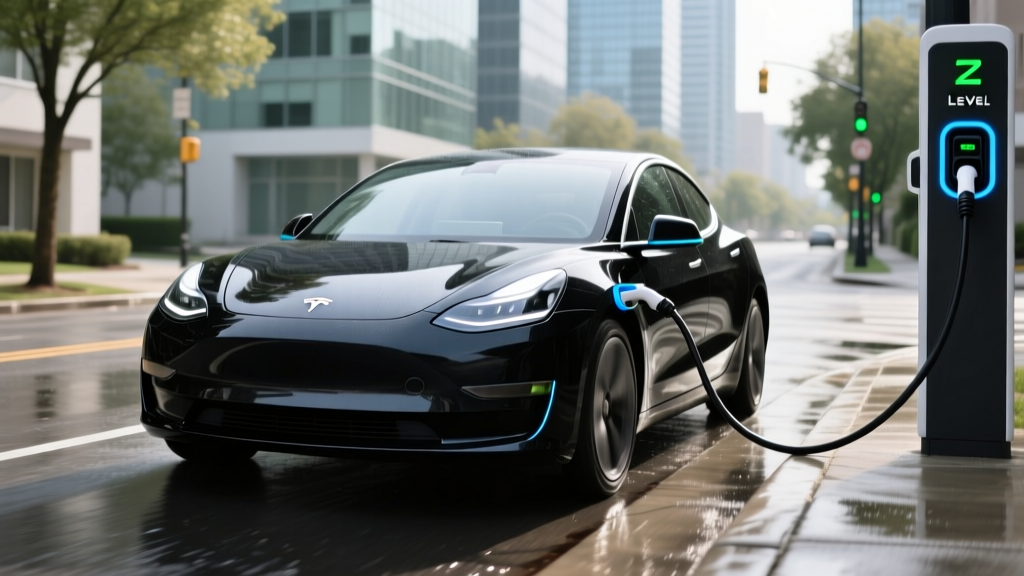
| Level 2 (240V home, 48A) | 11.5 kW | ~44 mi/hr | Full charge in ~7–8 hours |
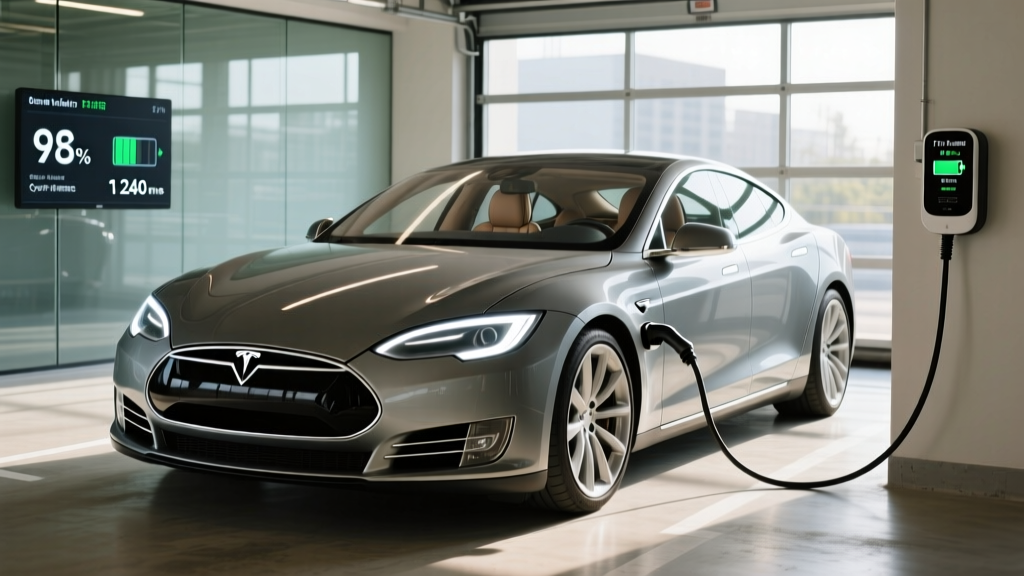
| DC Fast (V3 Supercharger) | Peak 250 kW | Up to ~1,000 mi/hr (at peak) | 10–80% in ~27 min |
| DC Fast (V4 Supercharger) | Peak 250–350 kW* | Varies | Model 3 limited to ~250 kW intake |
*V4 Supercharger cabinets can deliver higher power, but the Model 3's onboard architecture caps intake at approximately 250 kW.
At a V3 Supercharger, the Model 3 Long Range pulls its peak 250 kW only between roughly 10–30% State of Charge. After 50%, the rate tapers to ~150 kW, and above 80% it drops sharply to protect the NMC battery. A typical 10–80% session takes about 27 minutes, but a 10–95% session can stretch past 50 minutes due to the taper. For road trips, plan stops around the 10–80% window and skip the last 20% unless you're near your destination.
At home on a Wall Connector with a 60A circuit (48A continuous), the Model 3 adds roughly 44 miles of range per hour — enough to fully replenish overnight. Installation typically costs $800–$2,000 depending on panel proximity; a 200A panel upgrade can add $1,500–$3,000 if your home's electrical service is older.
Auto Steer, Autopilot, and FSD: What You're Actually Getting
Auto Steer, Autopilot, and Full Self-Driving (Supervised) all require continuous driver engagement. Hands must remain on the wheel, eyes on the road. These systems do NOT drive autonomously.
"Auto Steer" is Tesla's lane-centering function within the broader Autopilot suite. When engaged on marked roads, it provides continuous steering input to keep the vehicle centered, paired with Traffic-Aware Cruise Control for speed management. It works well on clearly marked highways but can struggle with faded lane lines, construction zones, and sharp interchanges.
FSD (Supervised) — an $8,000 add-on or $99/month subscription as of 2026 — extends capability to city streets with traffic-light recognition, stop-sign handling, and automatic turns. Despite the name, it remains a Level 2 system. In our experience, FSD handles routine suburban driving competently but still requires frequent interventions for unprotected left turns, complex merge scenarios, and unusual road geometries. NHTSA continues to scrutinize Tesla's driver-monitoring approach, and buyers should view FSD as an advanced convenience feature, not a replacement for attention.
- Operate without driver supervision — you are legally and practically responsible at all times
- Handle all weather conditions — heavy rain, snow, and glare degrade camera performance
- Navigate unmapped or construction-altered roads reliably
- Replace the need for insurance, attention, or driving skill
Interior, Cargo, and Daily Livability
The 2026 Model 3 "Highland" refresh brought meaningful interior improvements: ventilated front seats, ambient lighting, rear-seat touchscreen, and significantly improved cabin insulation that reduces wind and road noise at highway speeds. The minimalist dashboard (all controls routed through the 15.4-inch center display) remains polarizing — there are no physical stalks for turn signals or gear selection, which requires an adjustment period.
Dimensions:
- Cargo volume (rear trunk + frunk): 23.0 cu ft total
- Front legroom: 42.3 inches
- Rear legroom: 35.2 inches — adequate for adults on shorter trips, tight for tall passengers on long hauls
- Curb weight: ~4,034 lbs (Long Range AWD)
The rear visibility is compromised by the sloping roofline, but the standard rear camera and digital mirror view partially compensate. For families with rear-facing car seats, the Model 3's rear door openings are narrower than crossover alternatives like the Model Y or Ioniq 5.
Pricing, Trims, and Federal Tax Credit Eligibility
| Trim | Base MSRP | Est. After §30D Credit | Eligibility Notes |
|---|---|---|---|
| Model 3 RWD | $38,990 | ~$31,490 | Eligible if buyer income & sourcing requirements met |
| Model 3 Long Range AWD | $47,740 | ~$40,240 | Under $55K MSRP cap for sedans |
| Model 3 Performance | $54,990 | ~$47,490 | Under $55K MSRP cap; options may push above |
The federal EV tax credit under IRS §30D provides up to $7,500, but eligibility is layered and subject to change. Key requirements for 2026:
- MSRP Cap: Sedans must be under $55,000 — all Model 3 trims qualify at base, but heavy optioning can push the Performance above the cap
- Buyer Income Cap: Modified AGI must not exceed $150K (single), $225K (head of household), or $300K (joint)
- Battery Sourcing: Critical minerals and battery components must meet escalating domestic/free-trade-ally percentages — Tesla's shifting supply chain means eligibility can change mid-year
- Point-of-Sale Transfer: Buyers can transfer the credit to the dealer at purchase, reducing the purchase price directly rather than waiting for a tax refund
Always verify current eligibility on IRS.gov before purchasing. State incentives vary separately and may stack.
Warranty, Battery Longevity, and Ownership Costs
Tesla's warranty coverage is competitive but not class-leading:
- Basic Vehicle: 4 years / 50,000 miles
- Battery & Drive Unit: 8 years / 120,000 miles (Long Range/Performance); 8 years / 100,000 miles (RWD)
- Capacity Retention Threshold: Warranty covers degradation below 70% of original capacity during the warranty period
NMC batteries in the Long Range and Performance models typically show 5–10% degradation over the first 50,000 miles before stabilizing. The LFP battery in the RWD model degrades more slowly but is more sensitive to cold-weather range loss. Tesla does not publish official replacement costs, but third-party data suggests a Model 3 battery replacement outside warranty runs $12,000–$16,000.
Insurance costs remain a real-world pain point: Model 3 premiums average 15–30% higher than comparable gas sedans due to repair costs and claims data. Get quotes before ordering.
Pros and Cons: The Honest Verdict
- Supercharger network reliability — still the gold standard for road-trip charging
- Class-leading efficiency (132 MPGe combined) stretches each kWh
- Over-the-air updates continuously add features post-purchase
- Strong real-world fast-charge speeds with mature thermal management
- Highland refresh fixes most cabin noise and ride-quality complaints
- No physical turn-signal stalks — touch-capacitive buttons on the wheel frustrate many drivers
- Rear seat space trails crossovers and several sedan competitors
- FSD remains Level 2 despite the name and $8,000 price tag
- Insurance premiums significantly above segment average
- Build quality inconsistencies still reported at some delivery centers
Model 3 vs. the Competition
The 2026 midsize electric sedan segment is no longer Tesla's alone. Here's how the Model 3 Long Range compares:
- Hyundai Ioniq 6 SE Long Range: EPA 361 miles, 800V architecture (10–80% in ~18 min at 350 kW), but no NACS port until adapter availability matures. Less charging infrastructure convenience.
- BMW i4 eDrive40: EPA 301 miles, more premium interior, traditional luxury dealership experience. Higher starting price (~$57K) and no federal credit due to MSRP cap.
- Polestar 2 Long Range Dual Motor: EPA 276 miles, Google-based infotainment, strong build quality. Significantly less range and slower DC charging.
Choose a competitor if: You need more rear-seat room (Ioniq 5/Model Y), prefer physical controls and luxury trim (BMW i4), or want faster peak charging on 800V architecture (Ioniq 6).
Frequently Asked Questions
What is the real-world range of the 2026 Tesla Model 3?
The EPA rates the Long Range AWD at 341 miles. In real-world highway driving at 70 mph, expect 280–300 miles. In cold weather below freezing, plan for 230–260 miles.
How fast does the Model 3 charge at home and on the road?
On a Level 2 home charger (11.5 kW), it adds ~44 miles per hour, fully charging overnight. At a V3 Supercharger, 10–80% takes about 27 minutes at a peak rate of 250 kW.
Does the Tesla Model 3 qualify for the $7,500 federal tax credit?
All Model 3 trims fall under the $55K sedan MSRP cap. However, buyer income limits, battery critical-mineral sourcing rules, and point-of-sale transfer rules apply. Verify at IRS.gov before purchase.
Is Tesla Auto Steer the same as self-driving?
No. Auto Steer is an SAE Level 2 driver-assist feature that centers the car in its lane. The driver must remain fully engaged, with hands on the wheel and eyes on the road at all times.
Is the Model 3 worth buying over the Ioniq 6 or BMW i4?
The Model 3 wins on Supercharger access, efficiency, and software. The Ioniq 6 charges faster on 800V infrastructure and has more rear-seat space. The BMW i4 offers a more traditional luxury experience. Your priority — charging convenience vs. interior luxury vs. peak charge speed — determines the winner.
What's the biggest drawback of owning a Model 3?
Higher-than-average insurance premiums, the lack of physical turn-signal stalks, and tighter rear-seat packaging compared to crossovers are the most commonly cited frustrations among long-term owners.