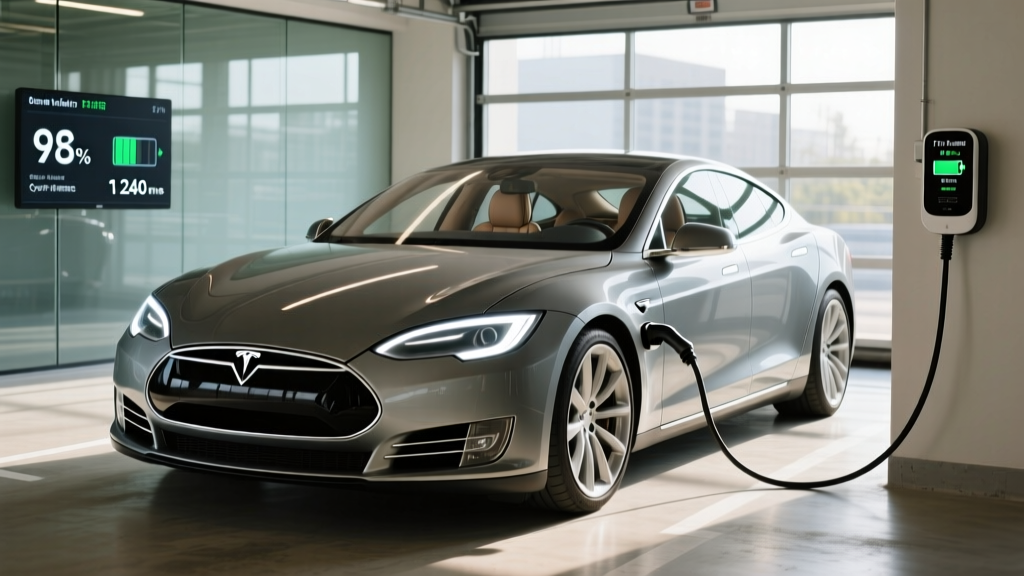
The 2014 Tesla Model S P85 was, in its day, the car that proved electric vehicles could be fast, luxurious, and desirable. More than a decade later, it remains one of the most searched used EVs on the market — and for good reason. With a 265-mile EPA range sticker, a 416-horsepower rear-wheel-drive motor, and access to Tesla's Supercharger network, the P85 still turns heads. But buying a 12-year-old EV requires a different calculus than buying new. Battery degradation, expired warranties, outdated tech, and zero federal tax-credit eligibility all factor in. This review breaks down exactly what you're getting — and what you're risking — with a used 2014 Tesla Model S P85 in 2026.
Quick Verdict: A Pioneer Showing Its Age
The 2014 P85 delivers a driving experience that still feels surprisingly modern: instant torque, a low center of gravity, and a cabin that was years ahead of the competition. But the 85 kWh NMC battery pack is now well into its second decade, and real-world range has likely dropped 15–30% from the original EPA estimate depending on usage history. Charging speeds, once class-leading, now lag behind modern 250+ kW competitors. This car suits an EV-curious buyer who wants Tesla badge cachet and Supercharger access on a tight budget — but go in with eyes open about battery replacement risk.
| Spec | Value |
|---|---|
| EPA Range (Original) | 265 miles |
| Battery Capacity | 85 kWh (gross) / ~81 kWh usable, NMC chemistry |
| Motor | Single rear-wheel drive, 416 hp, 443 lb-ft torque |
| 0–60 mph | 4.2 seconds |
| Top Speed | 130 mph (electronically limited) |
| Max DC Fast Charge | ~120 kW (Supercharger V2) |
| Level 2 Charge Rate | 10 kW (single onboard charger) or 20 kW (twin charger option) |
| Efficiency | 89 MPGe combined / 38 kWh/100 mi |
| Cargo Volume | 26.3 cu ft (rear) + 5.3 cu ft (frunk) |
| Seating | 5 passengers (7 with optional rear-facing third row) |
| Original Base MSRP | ~$92,400 (before incentives) |
| 2026 Used Market Price | ~$14,000–$22,000 depending on mileage and battery health |
| Battery Warranty (Original) | 8 years / 125,000 miles (expired) |
Real-World Range: What 12 Years of Degradation Means
Real-World Expectation in 2026: 185–225 miles depending on battery State of Health (SoH), driving style, and temperature. Highway driving at 75 mph may yield 170–200 miles. Cold-weather (below 32°F) range can drop an additional 20–30%, bringing usable range to 130–170 miles on a frigid day.
The 2014 Model S P85 shipped with an 85 kWh (gross) lithium-ion battery pack using NMC (nickel manganese cobalt) chemistry — the standard high-energy-density choice of that era. Tesla's early NMC cells have demonstrated measurable degradation over time. According to aggregated owner data and studies from sources like fueleconomy.gov, a typical 2014 P85 with 100,000–150,000 miles will show 15–25% capacity loss, meaning the usable pack may now hold only 60–69 kWh.
Several factors determine where a specific car falls on that spectrum:
- Charging habits: Frequent DC fast charging and regular 100% charges accelerate degradation in NMC packs. Cars that were primarily Level 2 charged to 80% fare better.
- Climate: Hot-climate cars (Arizona, Texas) often show faster degradation than those from temperate regions. The 2014 Model S has active liquid thermal management, which helps, but it's not as sophisticated as Tesla's current systems.
- Mileage: Higher-mileage examples will generally show more cycle-related wear, though calendar aging also plays a significant role regardless of miles driven.
Before purchasing, request a battery health reading. Tesla Service Centers can pull a State of Health (SoH) percentage, and third-party tools like Tessie or the car's own energy graph can give you a reasonable estimate. An SoH below 75% is a red flag — it means you're looking at under 200 miles of real-world range and a potential battery replacement in the near future.
Charging Speeds: Still Functional, No Longer Fast
| Charging Level | Power / Rate | Speed |
|---|---|---|
| Level 1 (120V household) | ~1.4 kW | ~3–4 miles per hour |
| Level 2 (240V, single charger) | 10 kW | ~29 miles per hour |
| Level 2 (240V, twin charger option) | 20 kW | ~58 miles per hour |
| DC Fast Charge (Tesla Supercharger V2) | ~120 kW peak | 10–80% in ~40–45 minutes |
| DC Fast Charge (CCS via adapter) | ~50–80 kW (limited) | Slower; adapter required |
The P85 uses Tesla's proprietary connector (pre-NACS standardization). It charges natively on Tesla Superchargers, which in 2014 meant V2 stations delivering up to ~120 kW. That was exceptional at the time. In 2026, with V3 (250 kW) and V4 (up to 350 kW) Superchargers now widespread, the P85's charge curve tops out well below modern vehicles. Expect a 10–80% session to take roughly 40–45 minutes at a V2 Supercharger, and potentially longer at a V3/V4 station because the car's battery management system limits intake.
Charge curve reality: The P85 peaks near 120 kW only between roughly 10–30% State of Charge (SoC). By 50% SoC, the rate tapers to ~80 kW, and above 80% it drops sharply to 20–30 kW. This is typical NMC behavior — the battery management system protects cell longevity by reducing current as the pack fills.
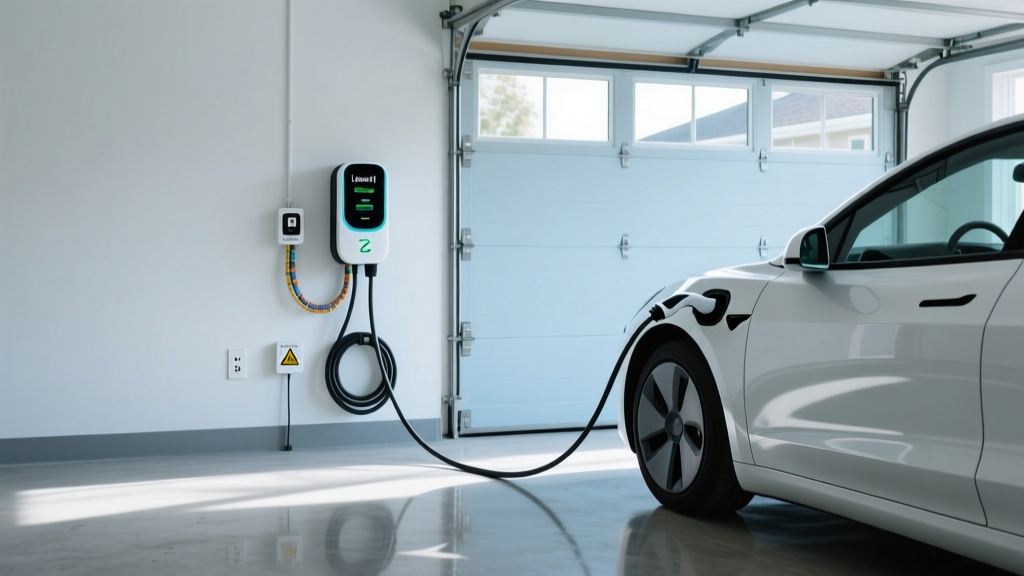
For home charging, the single onboard charger delivers 10 kW on a 240V/50A circuit, adding about 29 miles of range per hour — enough to fully replenish overnight. The optional twin charger doubles this to 20 kW, which was a $3,600 upgrade when new. Verify whether a used example has this option; it's a meaningful quality-of-life feature.
Regarding non-Tesla public charging: Tesla now sells a CCS adapter that allows the 2014 Model S to use Electrify America, EVgo, and other CCS networks. However, the older battery architecture limits DC charge speeds on non-Tesla chargers, often to 50–80 kW. For road trips, Superchargers remain the most reliable option.
Performance & Driving Dynamics
The P85's single rear-mounted AC induction motor produces 416 horsepower and 443 lb-ft of torque. That translates to a 4.2-second 0–60 mph time — still genuinely quick by any standard, and in 2014 it was supercar territory for a sedan. The instant torque delivery from a standstill remains thrilling, and the low-slung battery pack gives the Model S a handling poise that few sedans of its era could match.
Key driving impressions:
- Acceleration: Linear and relentless from 0–80 mph. The P85's "P" stands for Performance, and it delivers.
- Ride quality: The standard air suspension (included on P85) provides a comfortable, adaptive ride. However, 2014-era air suspension units are known to develop leaks and require replacement — budget $1,500–$2,500 per corner if they haven't been serviced.
- Steering: Electrically assisted, reasonably weighted, but not as communicative as a BMW 5 Series or Mercedes E-Class of the same year.
- NVH (noise, vibration, harshness): Quiet at low speeds, but wind and tire noise become noticeable above 65 mph. The absence of engine noise makes road noise more apparent than in a gas car.
- Regen braking: The P85 offers strong regenerative braking that enables near one-pedal driving in city traffic. It's one of the features that makes EV ownership addictive.
Interior, Tech & Driver Assistance
The 2014 Model S interior was a radical departure from traditional luxury sedans. The centerpiece is a 17-inch touchscreen that controls nearly every vehicle function — HVAC, navigation, media, suspension settings, and software updates. In 2014, this was revolutionary. In 2026, the hardware shows its age: the screen is resistive-style (not as responsive as modern capacitive panels), the processor is slow by current standards, and the infotainment software — while periodically updated by Tesla — lacks Apple CarPlay, Android Auto, and the snappy interface of newer Teslas.
Driver assistance: The 2014 P85 predates Tesla's Autopilot hardware suite. Cars built before October 2014 have no Autopilot capability whatsoever. Those built from late 2014 onward may have Hardware 1 (HW1), which supports basic Autopilot features (lane-keeping, adaptive cruise) but cannot be upgraded to Full Self-Driving (FSD). This is an important distinction: you are buying a car with, at best, basic SAE Level 2 driver assistance — and possibly none at all.
Notable drawbacks of the 2014 interior:
- No HEPA air filtration (introduced with the 2016 refresh)
- No glass roof option (panoramic sunroof was standard, but it's a conventional panel that some owners report leaks from)
- Seats are comfortable but lack the bolstering and material quality of German rivals
- Rear visibility is limited; no backup camera standard (added later via software/hardware updates on some cars)
- MCU1 (Media Control Unit) is prone to failure — the eMMC memory chip degrades over time. Tesla issued a recall for this; verify it was performed. Replacement costs ~$1,500–$2,000 out of warranty.
Cargo, Passenger Space & Practicality
The 2014 Model S remains a spacious sedan:
- Rear cargo: 26.3 cu ft — large for a sedan, thanks to the hatchback-style liftgate
- Front trunk (frunk): 5.3 cu ft — useful for charging cables, groceries, or a small bag
- Front legroom: 42.7 inches
- Rear legroom: 35.4 inches — adequate for adults, but less generous than a Mercedes S-Class
- Optional third row: Rear-facing jump seats added two child-sized seats, bringing total capacity to 7. These were removed in later model years due to safety concerns.
With the rear seats folded (60/40 split), cargo capacity expands to approximately 58 cu ft — enough for furniture or camping gear. The flat floor (no transmission tunnel) makes the interior feel airier than its dimensions suggest.
Pricing, Tax Credits & Ownership Costs
| Item | Detail |
|---|---|
| Original MSRP (2014) | ~$92,400 (base P85, before destination/options) |
| As-Tested Typical (2014) | $98,000–$110,000 with options (twin charger, air suspension, tech package) |
| 2026 Used Market Price | $14,000–$22,000 (varies by mileage, condition, battery SoH) |
| Federal EV Tax Credit (§30D New) | NOT eligible — credit applies only to new vehicle purchases |
| Used EV Tax Credit (§25E) | NOT eligible — §25E requires purchase from a dealer for ≤$25,000 AND the vehicle must be at least 2 model years old, but the credit is limited to $4,000 or 30% of sale price; many 2014 P85 transactions fall into a gray area. Verify with a tax professional per IRS guidelines. |
| Estimated Annual Insurance | $1,800–$2,800 (varies by state, driver profile) |
| Estimated Annual Electricity Cost | $500–$800 (12,000 mi/yr at $0.15/kWh national avg) |
Tax credit reality check: The federal §30D new clean vehicle credit (up to $7,500) does not apply to any used vehicle purchase. The separate §25E used clean vehicle credit (up to $4,000 or 30% of the sale price, whichever is less) has strict requirements: the vehicle must be purchased from a licensed dealer, the sale price must be $25,000 or less, and buyer income caps apply ($75,000 single / $112,500 head of household / $150,000 joint). Many 2014 P85 sales happen privately, which disqualifies them entirely. Always consult a tax professional and review current IRS §25E rules before counting on this credit.
Battery replacement risk: This is the single biggest financial variable. A remanufactured 85 kWh pack from Tesla currently costs $12,000–$16,000 installed. Third-party replacements or module-level repairs can reduce this to $6,000–$10,000 but may not restore full original capacity. If the battery in a $16,000 P85 fails, your total investment suddenly doubles.
Warranty Status in 2026
The original 2014 Model S P85 came with:
- Battery warranty: 8 years / 125,000 miles (whichever came first) — expired for all 2014 vehicles as of 2022
- Drivetrain warranty: 8 years / 125,000 miles — also expired
- Basic vehicle warranty: 4 years / 50,000 miles — expired long ago
Every 2014 P85 on the road in 2026 is entirely out of factory warranty. Any repair — battery, drive unit, air suspension, MCU — comes out of pocket. This is the most critical risk factor for prospective buyers. A pre-purchase inspection by a Tesla Service Center or a qualified independent EV shop is strongly recommended.
Pros and Cons
- Still fast: 4.2s 0–60 mph and 416 hp hold up in 2026
- Access to Tesla Supercharger network (the most reliable DC fast-charging network in the US)
- Spacious hatchback design with frunk — practical for a luxury sedan
- Over-the-air software updates still occasionally delivered by Tesla
- Low entry price into the Tesla ecosystem ($14K–$22K used)
- No gasoline costs; electricity is cheaper per mile than fuel
- Battery degradation is significant; expect 185–225 real-world miles, not 265
- All factory warranties expired — battery replacement is a $12K+ risk
- Charging speed (120 kW peak) is slow by 2026 standards
- MCU1 infotainment hardware is outdated and prone to eMMC failure
- Little to no driver-assist technology (no modern Autopilot)
- Air suspension failures are common and costly
- Federal tax credit eligibility is limited or nonexistent
- No Apple CarPlay, Android Auto, or modern infotainment features
Who Should Buy the 2014 Tesla Model S P85?
- You want an affordable entry into the Tesla Supercharger network for road trips
- Your daily commute is under 100 miles round-trip (well within degraded range)
- You have access to home Level 2 charging and can charge overnight
- You're mechanically inclined or have a budget set aside for potential repairs
- You value performance (416 hp, 4.2s 0–60) at a bargain price
- You need a reliable daily driver with minimal repair risk
- You regularly drive in extreme cold (range loss compounds with degradation)
- You want modern driver-assist features (adaptive cruise, lane centering)
- You can't absorb a potential $12,000–$16,000 battery replacement
- You want fast DC charging for frequent long-distance travel
How It Compares to Alternatives
In the $14,000–$22,000 used EV market in 2026, the P85 competes with:
- 2017–2018 Tesla Model 3 Long Range (used): More modern, better range (~310 mi EPA), newer Autopilot hardware, but less cargo space and a firmer ride. Priced similarly (~$18,000–$25,000).
- 2018–2019 Chevrolet Bolt EV (used): 238-mile EPA range, far more affordable ($12,000–$16,000), but no DC fast charging capability comparable to Superchargers and a much slower, smaller car.
- 2016–2018 Nissan Leaf (30/40 kWh): Cheaper still, but CHAdeMO charging, passive battery cooling (faster degradation), and 107–151 mile range make it less practical for road trips.
- 2015–2017 BMW i3 (used): Unique, fun to drive, but only 80–114 mile range and a very niche form factor.
The P85's unique value proposition is the combination of performance, size, and Supercharger access at a low price. No other used EV in this range offers 416 hp and access to the best charging network simultaneously. But the total-cost-of-ownership picture changes dramatically if the battery needs replacement.
Frequently Asked Questions
What is the real-world range of a used 2014 Tesla Model S P85?
Expect 185–225 miles in moderate temperatures with mixed driving, assuming the battery has retained 75–85% of its original capacity. Highway driving at 75+ mph will reduce this to 170–200 miles. In cold weather (below freezing), plan for 130–170 miles. Always check the car's battery State of Health before purchasing.
How fast does the 2014 P85 charge at home and on road trips?
At home on a 240V Level 2 charger, the single onboard charger adds ~29 miles of range per hour (10 kW). The optional twin charger doubles this to ~58 mi/hr (20 kW). On Tesla Superchargers, the P85 peaks at ~120 kW, achieving a 10–80% charge in roughly 40–45 minutes. This is slower than modern EVs (which can do 10–80% in 15–25 minutes) but still practical for road-trip stops.
Does the 2014 Tesla Model S P85 qualify for any federal tax credit?
The §30D new vehicle credit does not apply. The §25E used vehicle credit (up to $4,000) may apply if you buy from a licensed dealer for $25,000 or less and meet income caps ($75K single / $150K joint). However, private-party sales are excluded, and many P85 transactions fall into a gray area. Consult a tax professional and review IRS §25E guidance before assuming eligibility.
Is it worth buying a 2014 P85 versus a newer used EV?
It depends on your risk tolerance and priorities. The P85 offers unmatched performance-per-dollar and Supercharger access in the sub-$22K market. But the expired warranty, battery degradation, and aging tech (MCU1, no Autopilot) make it a riskier proposition than a used 2018+ Model 3 or Chevy Bolt. If you can budget $5,000–$10,000 for potential repairs over the first two years of ownership, the P85 can be a rewarding car. If not, a newer, lower-mileage used EV is the safer financial choice.
What are the most common problems with the 2014 Model S P85?
The most frequently reported issues are: (1) MCU1 eMMC memory failure causing the touchscreen to go black — verify the recall was performed; (2) air suspension strut leaks requiring $1,500–$2,500 per corner replacement; (3) drive unit (motor) whine or failure, typically $5,000–$8,000 to replace; (4) 12V battery failures (the small auxiliary battery, not the main traction pack); and (5) door handle mechanisms failing to present or retract. A pre-purchase inspection is essential.
Can I still get software updates on a 2014 Model S P85?
Yes, Tesla still pushes occasional over-the-air updates to 2014 Model S vehicles, though the feature set is limited by the older MCU1 hardware. You won't receive the latest entertainment features, improved Autopilot capabilities, or UI redesigns that newer Tesla vehicles get. Basic navigation, media, and vehicle-settings updates continue.