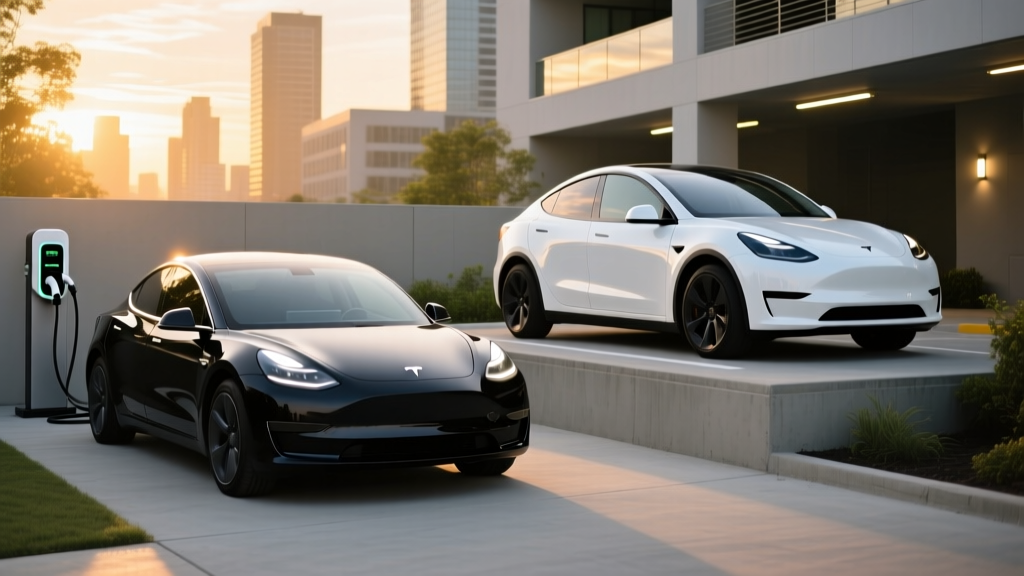
If you're cross-shopping the Tesla Model 3 and Y, you're looking at the two best-selling electric vehicles in the United States — and for good reason. Both ride on Tesla's shared platform, tap into the Supercharger network, and undercut most rivals on price-per-mile of range. But they aren't interchangeable. The Model 3 is a sleek, efficient sedan that rewards solo drivers and commuters; the Model Y is a taller crossover with the cargo room families actually need. Below, we break down the 2026 lineup with real-world range expectations, charging curves, and the tax-credit math that changes the purchase equation.
Quick Verdict: Which One Fits Your Life?
The Model 3 wins on efficiency, driving dynamics, and price. The Model Y wins on practicality — hatchback cargo, easier child-seat installation, and a commanding seating position. If you regularly carry more than two passengers or need to haul gear, the Y's $3,000–$4,000 premium pays for itself in daily usability. If it's mostly you and a laptop bag, the 3 is the sharper buy.
Choose the Tesla Model 3 if: you commute solo or as a couple, want the longest range per dollar, and prefer a sportier driving feel.
Choose the Tesla Model Y if: you have kids, dogs, or cargo; you want hatchback versatility; you value easier ingress/egress and better outward visibility.
Spec Table: Tesla Model 3 vs Model Y (2026 Lineup)
| Spec | Model 3 RWD | Model 3 Long Range AWD | Model 3 Performance | Model Y RWD | Model Y Long Range AWD | Model Y Performance |
|---|---|---|---|---|---|---|
| EPA Range | ~363 mi | ~363 mi | ~315 mi | ~320 mi | ~330 mi | ~285 mi |
| Battery (usable, kWh) | ~60 (LFP) | ~82 (NMC) | ~82 (NMC) | ~60 (LFP) | ~82 (NMC) | ~82 (NMC) |
| Drivetrain | RWD | Dual-Motor AWD | Dual-Motor AWD | RWD | Dual-Motor AWD | Dual-Motor AWD |
| Horsepower | ~271 hp | ~384 hp | ~510 hp | ~295 hp | ~384 hp | ~456 hp |
| 0–60 mph | 5.8 s | 4.2 s | 2.9 s | 6.6 s | 4.8 s | 3.3 s |
| Efficiency (MPGe) | ~132 MPGe | ~125 MPGe | ~113 MPGe | ~123 MPGe | ~117 MPGe | ~111 MPGe |
| Max DC Fast Charge | 170 kW | 250 kW | 250 kW | 170 kW | 250 kW | 250 kW |
| 10–80% DCFC Time | ~30 min | ~25 min | ~25 min | ~30 min | ~25 min | ~25 min |
| Base MSRP | $38,990 | $45,490 | $52,990 | $41,990 | $48,490 | $54,990 |
Specs reflect 2026 model-year estimates per Tesla and EPA data. Verify at fueleconomy.gov before purchase.
Real-World Range: What the EPA Sticker Doesn't Tell You
EPA vs Reality: The Long Range AWD Model 3 carries a ~363-mile EPA estimate, but sustained 75+ mph highway driving typically yields ~290–310 miles before you'd want to stop. In freezing temperatures (below 32°F), expect a 15–30% reduction, dropping effective range to ~250–270 miles. The Model Y Long Range AWD behaves similarly, with highway reality around ~270–290 miles and cold-weather range near ~230–250 miles.
Tesla's efficiency is among the best in the industry — roughly 24–27 kWh per 100 miles depending on trim — but physics still governs the outcome. Aerodynamic drag rises with the square of speed, so a 70-mph cruise sips electrons while 80+ mph gulps them. The Model 3's lower, sleeker profile gives it a measurable edge over the taller Model Y at highway speeds, which is why the sedan posts slightly better range despite sharing hardware.
Preconditioning matters. When you navigate to a Supercharger, the car warms the battery to optimize charge acceptance. Skipping preconditioning in cold weather can halve your peak charge rate, turning a 25-minute stop into a 45-minute one.
Charging Speed: DC Fast, Level 2, and the Supercharger Advantage
Both the Model 3 and Model Y come with the NACS (North American Charging Standard) connector natively, meaning full access to Tesla's Supercharger network — widely regarded as the most reliable DC fast-charging ecosystem in the U.S. — without an adapter. As of 2026, non-Tesla EVs can also use many Supercharger stalls via the Magic Dock adapter, but Tesla owners still enjoy the most seamless plug-and-charge experience.
| Charging Level | Power / Rate | Miles Added per Hour | Notes |
|---|---|---|---|
| Level 1 (120V household) | ~1.4 kW | ~3–5 mi/hr | Emergency/trickle only |
| Level 2 (240V home, 48A) | ~11.5 kW | ~37–44 mi/hr | Full overnight charge (~8–10 hrs) |
| DC Fast (LFP RWD trims) | Peak 170 kW | — | 10–80% in ~30 min |
| DC Fast (Long Range / Perf.) | Peak 250 kW | — | 10–80% in ~25 min; tapers above 80% |
Understanding the charge curve: That "peak 250 kW" figure applies only at the bottom of the battery's state of charge (roughly 10–30% SoC) and with a preconditioned, warm battery. As the battery fills, the rate tapers — by 60% SoC you might see ~150 kW, and above 80% it drops sharply to protect cell longevity. This is why we quote 10–80% times rather than 0–100%. Charging from 80–100% at a DC fast charger can take as long as the first 70%, so plan your stops accordingly.
Home charging setup: Tesla's Wall Connector (~$450) delivers up to 48 amps (11.5 kW) on a 60-amp circuit. Most owners with a 240V/60A outlet (NEMA 14-60 or hardwired) wake up to a full battery every morning. Installation costs vary from $500–$2,000 depending on panel proximity and whether your electrical panel needs an upgrade.
Battery Chemistry: LFP vs NMC — Which Trim Gets Which?
This is one of the most consequential differences across the lineup and rarely explained clearly to buyers.
| Attribute | LFP (Lithium Iron Phosphate) | NMC (Nickel Manganese Cobalt) |
|---|---|---|
| Found in | Model 3 RWD, Model Y RWD | Long Range & Performance trims |
| Energy density | Lower (heavier pack for same kWh) | Higher (more range in same weight) |
| Cycle life | ~3,000+ cycles (excellent longevity) | ~1,000–2,000 cycles |
| Recommended SoC | Charge to 100% regularly | Charge to 80% daily; 100% for trips |
| Cold-weather performance | Slightly worse range retention | Better low-temp efficiency |
| Cobalt content | None (lower supply-chain concern) | Contains cobalt |
What this means for you: If you buy an RWD trim with LFP, Tesla's own guidance is to charge to 100% at least once per week for battery calibration. If you buy Long Range or Performance (NMC), daily charging to 80% preserves longevity, and you only push to 100% before a road trip. LFP packs are heavier and offer less range per kilogram, but their longer cycle life and cobalt-free chemistry appeal to high-mileage drivers and the sustainability-minded.
Performance, Handling, and Daily Driving
The Model 3 Performance is a legitimate sports sedan: 2.9 seconds to 60 mph, dual-motor AWD, and Track Mode for controlled oversteer on closed courses. Even the base RWD Model 3 at 5.8 seconds outruns most gas-powered compact sedans. The Model Y, being ~350 pounds heavier and taller, sacrifices some agility — the Performance variant still hits 3.3 seconds, but you feel the weight in corners.
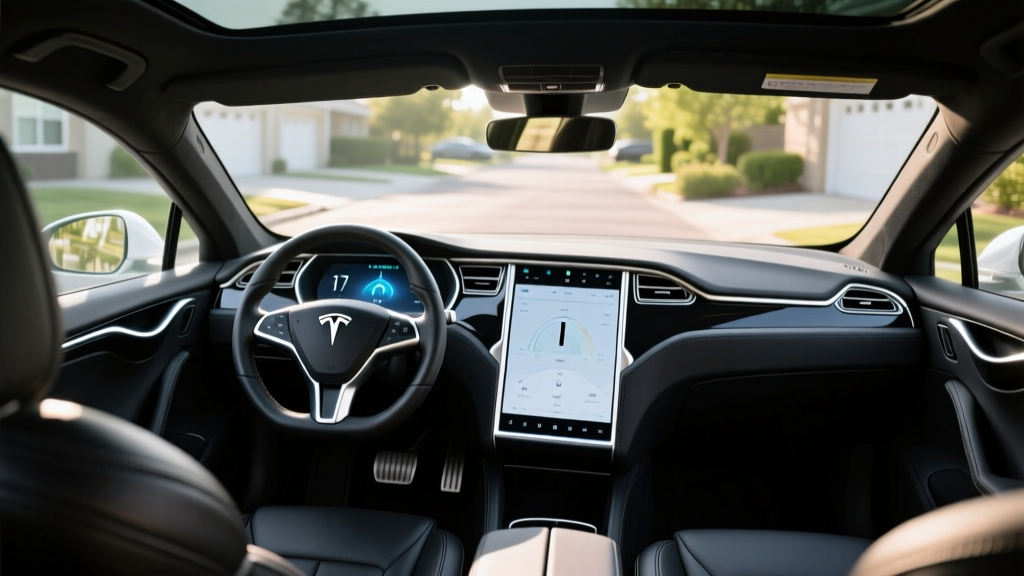
Both vehicles feature Tesla's adaptive regenerative braking (reintroduced as a driver-selectable option in late 2024 after earlier removal), allowing one-pedal-style driving for those who prefer it. The "Highland" refresh (Model 3) and "Juniper" refresh (Model Y) brought meaningful improvements: ventilated front seats, ambient lighting, a rear touchscreen for passengers (Model 3), quieter cabins with acoustic glass, and a more compliant suspension tune that finally addressed the firm-ride criticism.
Cargo, Passenger Space, and Practicality
Here's where the Model Y pulls decisively ahead for families:
- Model 3 cargo: ~23 cu ft trunk (sedan trunk, not a hatchback) + ~3 cu ft frunk. Long items require folding the 60/40 rear seats.
- Model Y cargo: ~30 cu ft behind the second row (hatchback) + ~4 cu ft frunk. With rear seats folded: ~72 cu ft — rivaling compact SUVs.
- Rear legroom: Model 3 offers ~35.2 inches; Model Y provides ~40.5 inches — a meaningful difference for tall passengers and rear-facing child seats.
- Ground clearance: Model 3 at ~5.5 inches; Model Y at ~6.6 inches. The Y handles rough driveways and light snow with more confidence.
The Model Y's hatchback design is the practicality king. Loading a stroller, groceries, or camping gear is simply easier than threading items through the Model 3's conventional trunk opening.
Pricing, Trims, and Federal Tax Credit Eligibility
| Trim | Base MSRP | Est. After §30D Credit | §30D Eligible? |
|---|---|---|---|
| Model 3 RWD | $38,990 | ~$31,490 | Yes (if sourcing rules met) |
| Model 3 Long Range AWD | $45,490 | ~$37,990 | Yes (if sourcing rules met) |
| Model 3 Performance | $52,990 | ~$45,490 | Yes (under $55k sedan cap) |
| Model Y RWD | $41,990 | ~$34,490 | Yes (if sourcing rules met) |
| Model Y Long Range AWD | $48,490 | ~$40,990 | Yes (under $80k SUV cap) |
| Model Y Performance | $54,990 | ~$47,490 | Yes (under $80k SUV cap) |
Tax credit rules for 2026 (§30D): The full $7,500 federal credit requires meeting all of the following, per IRS guidelines:
- MSRP cap: Sedans (Model 3) must be under $55,000; SUVs/trucks/vans (Model Y) under $80,000.
- Buyer income cap: Modified AGI ≤ $150,000 (single), $225,000 (head of household), $300,000 (joint).
- Battery sourcing: A minimum percentage of critical minerals and battery components must be sourced from the U.S. or free-trade-agreement countries. These thresholds tighten annually.
- Point-of-sale transfer: You can transfer the credit to the dealer at purchase to reduce your out-of-pocket cost immediately — no need to wait for tax filing.
- Final assembly: Must occur in North America (both vehicles are assembled in Fremont, CA and Austin, TX).
Important: Battery-sourcing requirements have disqualified some Tesla trims in prior years and may shift again. Always verify current eligibility on the IRS clean vehicle credit page and confirm with your tax professional before relying on the credit in your purchase budget.
Warranty, Ownership Costs, and Reliability
Tesla covers both vehicles with:
- Basic vehicle warranty: 4 years / 50,000 miles
- Battery & drive unit warranty: 8 years / 100,000 miles (RWD); 8 years / 120,000 miles (Long Range & Performance), with at least 70% capacity retention guaranteed
That 70% retention threshold is the industry norm, though some competitors offer slightly better terms. In practice, Tesla's battery degradation data from fleet analyses suggests most packs retain ~88–92% capacity after 100,000 miles, well above the warranty floor.
Insurance costs tend to run 15–30% higher than comparable gas vehicles due to repair costs and parts pricing. Get a quote before purchasing — it can add $500–$1,500/year depending on your profile and state.
Maintenance is minimal: cabin air filter replacement every 2–3 years, brake fluid checks, tire rotations (EVs wear tires faster due to instant torque and heavier weight), and wiper fluid. No oil changes, no spark plugs, no transmission service.
Driver Assistance: Autopilot and FSD (Supervised)
SAE Automation Level: Level 2. Tesla's Autopilot (standard) and Full Self-Driving Supervised (optional, ~$8,000 or $99/month) are driver-assist systems. The driver must remain attentive, keep hands on the wheel, and be prepared to take over at any moment. These are not Level 4 autonomous systems like Waymo's driverless robotaxis.
Autopilot provides solid adaptive cruise control and lane-centering on highways. FSD (Supervised) adds automated lane changes, traffic-light recognition, and city-street navigation, but its performance varies significantly by geography and road complexity. It's an impressive system that reduces highway fatigue, but it does not replace an alert driver. If you're considering the FSD purchase, treat it as a convenience feature, not a safety guarantee.
Pros and Cons at a Glance
Pros
- Class-leading efficiency (MPGe) and real-world range per dollar
- Supercharger network access — the most reliable DCFC ecosystem in the U.S.
- OTA software updates continuously add features
- Strong performance across all trims; even base models are quick
- Excellent LFP battery longevity on RWD trims
- Point-of-sale tax credit transfer reduces upfront cost
Cons
- Minimalist interior lacks physical controls — everything routes through the touchscreen
- No Apple CarPlay or Android Auto
- Insurance premiums higher than segment average
- Model 3 trunk opening limits cargo versatility vs. hatchback rivals
- FSD (Supervised) is expensive and still requires full driver attention
- Service center availability varies by region; mobile service can't handle everything
Frequently Asked Questions
What is the real-world range of the Tesla Model 3 and Y?
The Model 3 Long Range AWD delivers roughly 290–310 highway miles and 250–270 in freezing cold. The Model Y Long Range AWD yields about 270–290 highway miles and 230–250 in cold weather. RWD/LFP trims run 20–40 miles shorter in real-world use due to smaller batteries.
How fast do the Model 3 and Y charge?
Long Range and Performance trims peak at 250 kW DC fast charging, reaching 10–80% in roughly 25 minutes at a V3 Supercharger. RWD/LFP trims peak at 170 kW, taking about 30 minutes for 10–80%. At home on a 240V/48A Level 2 charger, both add approximately 37–44 miles per hour of charging.
How much do the Model 3 and Y cost after tax credits?
If you qualify for the full $7,500 §30D credit (income, MSRP, and sourcing rules met), the Model 3 RWD drops to roughly $31,490 and the Model Y Long Range AWD to about $40,990. Credit eligibility is not guaranteed — verify sourcing requirements on the IRS website before purchase.
Is the Tesla Model 3 or Y worth buying over competitors?
Against the Hyundai Ioniq 6, BMW i4, Ford Mustang Mach-E, and Chevrolet Equinox EV, the Tesla pair still leads on charging infrastructure access, software integration, and efficiency. Competitors may win on interior material quality, physical controls, or Apple CarPlay support. If the Supercharger network matters to your lifestyle, Tesla remains the default choice.
Does the Tesla Model 3 and Y qualify for the federal EV tax credit?
All current trims of the Model 3 and Model Y are assembled in the U.S. and fall under their respective MSRP caps ($55k sedan / $80k SUV). However, the $7,500 credit also depends on your income, battery-sourcing compliance (which changes annually), and final assembly. Check IRS clean vehicle credits for the latest eligibility list.
Which is better for a family — Model 3 or Model Y?
The Model Y, without question. Its hatchback cargo area, taller roof, easier child-seat installation, and ~5 extra inches of rear legroom make it the family vehicle. The Model 3 is better suited to singles, couples, or as a secondary commuter car.
How long will the Tesla battery last?
Tesla warranties the battery for 8 years / 100,000–120,000 miles (depending on trim) with at least 70% capacity retention. Fleet data suggests most packs retain 88–92% at 100,000 miles. Replacement cost, if needed out of warranty, ranges from $12,000–$20,000 depending on the pack, though full replacements remain uncommon within the first decade of ownership.