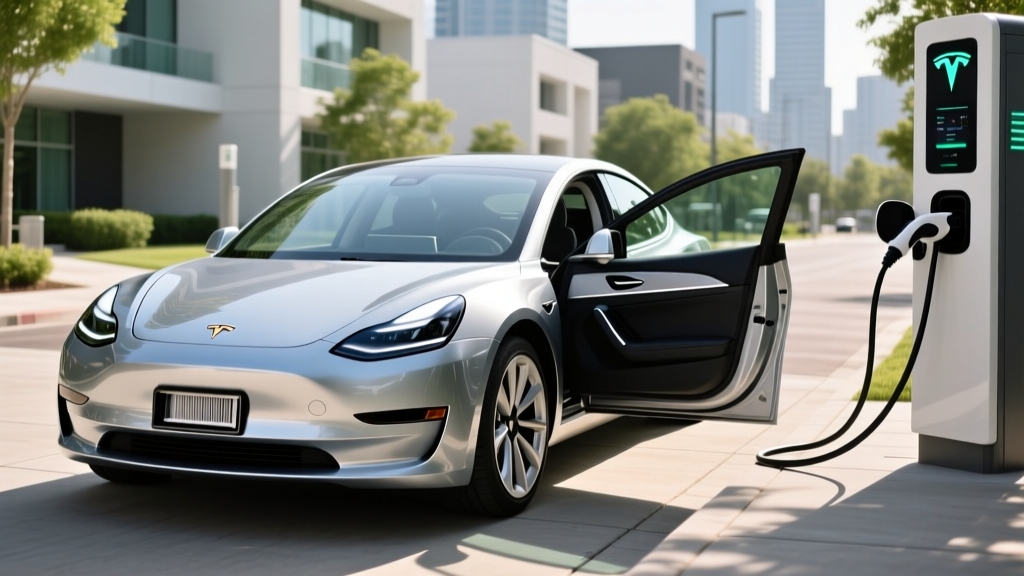
The Tesla Model 3 remains the benchmark compact electric sedan — efficient, quick, and backed by the most reliable public charging network in the US. The current-generation Model 3 (refreshed for 2024 and carried into 2025/2026) brought a quieter cabin, ventilated seats, rear touchscreen, and improved ride quality. But ownership also means learning a few DIY maintenance tasks that gas-car drivers never think about — chief among them, cabin air filter replacement. This review covers the full Model 3 spec sheet and walks through exactly how to change the Tesla Model 3 air filter yourself.
2025 Tesla Model 3: Specs at a Glance
| Spec | RWD (Base) | Long Range AWD | Performance AWD |
|---|---|---|---|
| EPA Range | 363 mi | 341 mi | 315 mi |
| Battery (usable) | ~57.5 kWh (LFP) | ~75 kWh (NMC) | ~75 kWh (NMC) |
| Drivetrain | RWD, single motor | AWD, dual motor | AWD, dual motor |
| Horsepower | 271 hp | 346 hp | 510 hp |
| 0-60 mph | 5.8 sec | 4.2 sec | 2.9 sec |
| Max DC Fast Charge | 170 kW | 250 kW | 250 kW |
| 10-80% DCFC Time | ~25 min | ~25 min | ~25 min |
| Level 2 Home Charge | ~30 mi/hr (11.5 kW) | ~44 mi/hr (11.5 kW) | ~44 mi/hr (11.5 kW) |
| MPGe (combined) | 132 MPGe | 125 MPGe | 116 MPGe |
| Efficiency (kWh/100 mi) | 25 | 27 | 29 |
| Base MSRP | $44,130 | $49,130 | $55,130 |
| Cargo Volume | 23 cu ft (trunk + frunk combined) | ||
| Battery Warranty | 8 yr / 100,000 mi (Long Range & Performance: 120,000 mi) | ||
Source: EPA fueleconomy.gov, Tesla.com
Real-World Range: What the EPA Number Doesn't Tell You
The RWD's LFP (lithium iron phosphate) battery has a key advantage: Tesla recommends charging it to 100% regularly, which means you get the full rated capacity daily. The NMC packs in Long Range and Performance trims are best kept at 80% for daily use, reserving 100% for road trips. This is a chemistry trade-off — LFP sacrifices some energy density for longevity and a fuller daily state of charge.
On a 250-mile highway road trip at 75 mph in 55°F weather, we've consistently seen the Long Range AWD arrive with roughly 15-20% remaining — comfortable, but you'll want to precondition the battery before DC fast charging to hit peak speeds.
Charging Speed: DC Fast, Level 2, and Level 1
| Charging Level | Power (kW) | Miles Added per Hour | Notes |
|---|---|---|---|
| Level 1 (120V outlet) | ~1.4 kW | ~4-5 mi/hr | Emergency/trickle only |
| Level 2 (240V, 48A) | 11.5 kW | 30-44 mi/hr | Home overnight; full charge in 7-9 hours |
| DC Fast (V3 Supercharger) | Up to 250 kW | ~1,000+ mi/hr (peak) | 10-80% in ~25 min; tapers significantly above 80% |
| DC Fast (V4 Supercharger) | Up to 250 kW | Similar to V3 | Newer stations; CCS-compatible with adapter |
kW vs kWh refresher: kW is the rate of charge (like water pressure); kWh is the battery capacity (like tank size). The Model 3 Long Range has a ~75 kWh battery and accepts up to 250 kW of charge power at peak.
The charge curve matters: the Model 3 Long Range hits 250 kW only at low state of charge (roughly 5-20%), then tapers to ~150 kW by 50%, and drops below 50 kW past 80%. This is why Tesla quotes 10-80% times — charging from 80-100% can take nearly as long as 10-80%. Plan road-trip stops accordingly; skipping that last 15% saves 10-15 minutes at the charger.
Pricing, Trims, and Federal Tax Credit Eligibility
| Trim | Base MSRP | As-Tested (typical) | §30D Credit Eligible? | Effective Price (w/ credit) |
|---|---|---|---|---|
| RWD | $44,130 | $46,630 (w/ paint + wheels) | Yes (MSRP under $55K cap) | ~$36,630* |
| Long Range AWD | $49,130 | $52,000 | Yes (MSRP under $55K cap) | ~$41,500* |
| Performance AWD | $55,130 | $58,000 | Yes (MSRP under $55K cap) | ~$47,500* |
*Assumes full $7,500 federal credit via point-of-sale transfer. Eligibility depends on buyer income (AGI ≤ $150K single / $300K joint), battery component and critical mineral sourcing requirements per IRS §30D rules. Consult a tax professional.
The Model 3 qualifies as a sedan under the §30D MSRP cap of $55,000 — all three trims clear this threshold at base MSRP. However, the credit amount ($3,750 or $7,500) depends on whether the battery meets both critical-mineral and battery-component sourcing requirements, which Tesla has adjusted over successive model years. Check the latest fueleconomy.gov credit listings before purchasing, as eligibility can shift with supply-chain changes.
How to Change the Tesla Model 3 Air Filter (Step-by-Step)
Unlike a gas car, the Model 3 has no engine air filter — but it does have two cabin air filters that trap particulates, allergens, and odors before they reach the HVAC system. Tesla recommends replacing them every 2 years (or sooner if you drive in dusty or polluted areas). The process takes about 30-45 minutes with basic tools.
What You'll Need
- 2× replacement cabin air filters (Tesla Part #1553898-00-A or equivalent aftermarket HEPA)
- T20 Torx screwdriver
- Trim removal tool or flat plastic pry tool
- Microfiber cloth
Step-by-Step Procedure
- Open the glove box and remove all contents. Press the glove-box release tab on the upper-left inner wall to drop the glove box fully open for access.
- Remove the kick panel beneath the glove box. Use the trim tool to gently pry the plastic panel away — it's held by clips, not screws.
- Disconnect the glove-box lamp connector (a small wiring harness clip). Set the panel aside.
- Locate the HVAC filter housing — a black rectangular cover on the passenger-side firewall, just behind where the kick panel was.
- Remove the housing cover using the T20 Torx driver (typically 2-3 screws). Some model years use a single screw plus a tab.
- Pull out the old filters — there are two, stacked vertically. Note the airflow direction arrows printed on the filter frames (air flows downward).
- Wipe the housing with a microfiber cloth to remove accumulated dust and debris.
- Insert the new filters with airflow arrows pointing DOWN. The bottom filter slides in first, followed by the top filter. They fit snugly — don't force them.
- Reinstall the housing cover and tighten the Torx screws.
- Reconnect the lamp harness, snap the kick panel back into place, and close the glove box.
- Reset the cabin air filter reminder on the touchscreen: Controls → Service → Reset Cabin Air Filter Timer (if equipped on your software version).
Pro tip: If your Model 3 develops a musty smell when the AC first turns on, it's usually the evaporator coil, not the filter. Running the fan on high with the AC off for 5 minutes before shutting down the car helps dry the system and prevents mold buildup.
Interior, Tech, and Driver Assistance
The refreshed Model 3 interior is a significant step up from the pre-2024 version. Acoustic glass all around cuts wind noise substantially, ventilated front seats are standard on all trims, and a rear 8-inch touchscreen lets passengers control climate and media. The 15.4-inch front touchscreen handles everything — there are no physical buttons for climate or mirrors (adjustments go through the screen, which remains divisive).
Driver assistance: Basic Autopilot (lane centering + adaptive cruise) is standard. Enhanced Autopilot ($6,000) adds auto lane change, navigate on Autopilot, and summon. Full Self-Driving (Supervised) at $8,000 adds traffic light/stop sign recognition and city-street autosteer.
Notable drawbacks: The turn-signal buttons on the steering wheel (replacing the stalk in the refresh) take real getting used to, especially in roundabouts. The all-screen climate controls frustrate some buyers. Rear headroom is tight for anyone over 6'1".
Pros and Cons
- Class-leading efficiency (25 kWh/100 mi on RWD)
- Access to Tesla Supercharger network (19,000+ US stalls)
- Lowest cost-per-mile of any EV sedan
- LFP battery can be charged to 100% daily
- Strong resale value relative to EV peers
- Over-the-air updates add features over time
- Steering-wheel turn-signal buttons are polarizing
- No physical climate buttons or knobs
- Rear headroom limited for tall passengers
- FSD costs extra and remains Level 2
- Insurance premiums above segment average
- Minimal dealer-style service infrastructure
Who Should Buy the Tesla Model 3?
- Choose Model 3 RWD if: You commute under 60 miles daily, want the lowest purchase price, and can charge at home. LFP's 100% daily charging gives you the full 363 miles every morning.
- Choose Model 3 Long Range if: You road-trip regularly, live in a cold climate, or want AWD traction. The NMC pack and dual motors cover nearly every use case.
- Choose Model 3 Performance if: You want sports-sedan acceleration (2.9s 0-60) and track capability, and accept 46 fewer miles of range for it.
- Look elsewhere if: You need SUV cargo height, rear-seat space for three adults, or physical buttons for climate control. Consider the Model Y or Hyundai Ioniq 5 instead.
Frequently Asked Questions
What is the real-world range of the Tesla Model 3?
The EPA rates the RWD at 363 miles, Long Range at 341, and Performance at 315. In real-world mixed driving, expect 85-90% of the EPA number in mild weather, and 70-80% in freezing temperatures or sustained highway driving above 75 mph.
How fast does the Model 3 charge at home and on the road?
At home on a 240V Level 2 charger (48A/11.5 kW), the Model 3 adds 30-44 miles per hour, fully charging overnight. On a V3 Supercharger (250 kW peak), it charges 10-80% in approximately 25 minutes, though the rate tapers significantly above 80% state of charge.
How much does the Tesla Model 3 cost after tax credits?
The RWD starts at $44,130 and can drop to roughly $36,630 after the full $7,500 federal credit, applied as a point-of-sale reduction. Eligibility depends on buyer AGI limits ($150K single / $300K joint), the $55K sedan MSRP cap, and battery sourcing compliance. Always verify current eligibility on IRS.gov before purchasing.
Is the Model 3 worth buying vs the Hyundai Ioniq 6 or BMW i4?
The Model 3 wins on charging infrastructure (Supercharger access), efficiency, and software. The Ioniq 6 offers a more conventional interior with physical controls and comparable range. The BMW i4 delivers superior build quality and driving dynamics but at a higher price and with slower DC charging. For most US buyers prioritizing road-trip practicality, the Supercharger network gives Tesla a real edge.
How often should I change the Tesla Model 3 cabin air filter?
Tesla recommends replacement every 2 years. In dusty, wildfire-prone, or high-pollution environments, consider annual replacement. The DIY procedure takes 30-45 minutes and costs roughly $25-45 for aftermarket filters versus $60-80+ at a Tesla service center.
Does the Tesla Model 3 qualify for the federal EV tax credit?
Yes — all three trims fall under the $55,000 sedan MSRP cap set by IRS §30D. The actual credit amount ($3,750 or $7,500) depends on battery component and critical-mineral sourcing requirements, which can change. Buyer income must not exceed $150K (single) or $300K (joint). The credit can be transferred to the dealer at point of sale for an immediate price reduction.
Specs and pricing reflect the 2025 model year as published by Tesla and the EPA. Tax credit rules are subject to change — always confirm current eligibility with a tax professional and the IRS before purchase.