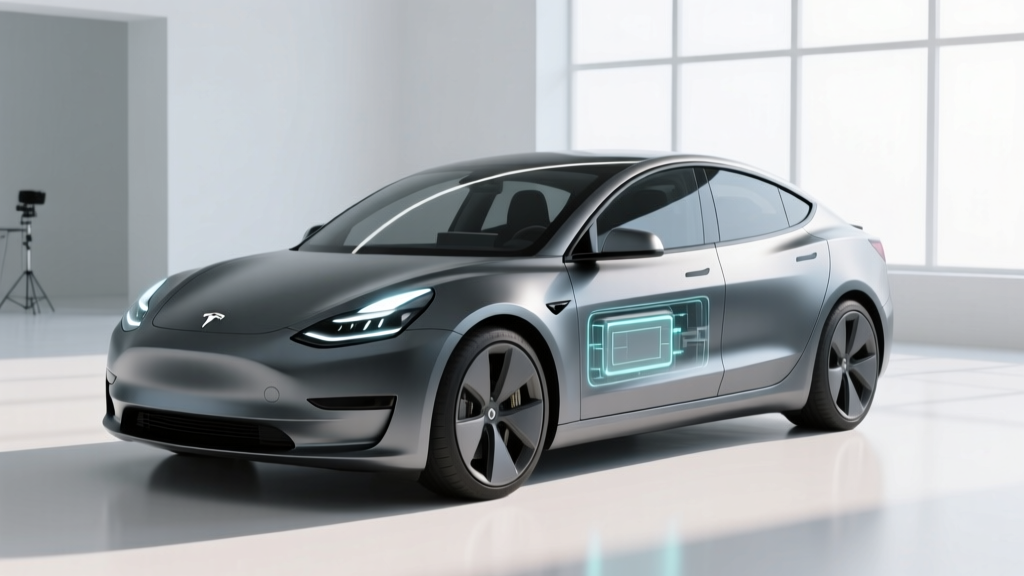
When shopping for a compact electric sedan, many buyers start by examining every angle of a Tesla Model 3 3D model configurator before ever stepping foot in a showroom. Understanding the exterior dimensions, interior layout, and engineering beneath the sheet metal is critical before committing over $38,000. This profile breaks down the exact numbers behind the refreshed Model 3 lineup—covering EPA range, charging curves, battery chemistry, and the real-world ownership economics you won't find on a brochure.
2026 Tesla Model 3 Core Specifications
Before exploring the virtual 3D walkthrough of the vehicle, here are the hard numbers that define the Model 3's daily usability and road-trip capability. Tesla offers three primary trims for the current model year, each with distinct battery chemistries and drivetrain configurations.
| Attribute | Model 3 RWD | Model 3 Long Range AWD | Model 3 Performance |
|---|---|---|---|
| EPA Range | 272 miles | 341 miles | 315 miles |
| Battery (Usable) | ~57.5 kWh (LFP) | ~75 kWh (NMC) | ~75 kWh (NMC) |
| Drivetrain | Rear-Wheel Drive | Dual-Motor AWD | Dual-Motor AWD |
| Horsepower | 271 hp | 346 hp | 510 hp |
| 0-60 mph | 5.8 sec | 4.2 sec | 2.9 sec |
| Max DC Charge Rate | 170 kW | 250 kW | 250 kW |
| Base MSRP | $38,990 | $47,740 | $54,990 |
Real-World Range and Efficiency
Spinning a Model 3 3D model in a virtual showroom won't tell you how the car performs at 75 mph in January. The EPA estimates are a useful baseline, but your actual mileage will vary based on driving style, terrain, and climate. The Model 3 remains one of the most efficient EVs on the market, with the Long Range AWD achieving an impressive 131 MPGe combined (roughly 26 kWh/100 miles).
Long Range AWD EPA: 341 miles.
Real-World Highway (75 mph): Expect ~280–295 miles.
Cold Weather Impact: In sub-freezing temperatures, LFP and NMC batteries can lose 15-25% of their range due to cabin heating and battery resistance. An LFP RWD Model 3 may drop to ~210 miles in harsh winter conditions unless preconditioned and garage-kept.
Charging Speed and Infrastructure
One of the strongest arguments for the Model 3 is access to Tesla's Supercharger network, which remains the most reliable public charging infrastructure in North America. While the industry transitions to the North American Charging Standard (NACS), Tesla owners continue to enjoy seamless plug-and-charge reliability.
| Charging Level | Power Output | Speed (Miles per Hour) | 10-80% Time |
|---|---|---|---|
| Level 1 (120V) | 1.4 kW | ~3-4 mi/hr | N/A (Days) |
| Level 2 (240V/48A) | 11.5 kW | ~44 mi/hr | ~6-7 hours |
| DC Fast (Supercharger V3) | 250 kW (Peak) | ~1,000 mi/hr (Peak) | ~25-28 minutes |
Charging Curve Insight: The 250 kW peak on the Long Range and Performance trims is not sustained. The battery will accept peak power only between roughly 10% and 35% State of Charge (SoC). By 60%, the rate tapers to ~100 kW, and above 80%, it drops significantly to protect cell longevity. For the RWD trim with the LFP (Lithium Iron Phosphate) battery, Tesla recommends charging to 100% at least once a week to maintain battery calibration—a unique trait of LFP chemistry.
Interior Dimensions and Cargo
When you examine the interior of a Tesla Model 3 3D model, the cabin appears minimalist, but the packaging is highly efficient. Because there is no transmission tunnel, the floor is flat, maximizing passenger comfort for the middle rear occupant.
- Front Legroom: 42.7 inches
- Rear Legroom: 35.2 inches
- Cargo Volume (Trunk): 21.0 cu ft
- Front Trunk (Frunk): 3.1 cu ft
- Total Cargo Capacity: 24.1 cu ft (seats up)
While the rear seat is tighter than a Model Y or an Ioniq 6, it comfortably fits two adults on long road trips. The glass roof provides excellent headroom and an airy feel, though it does reduce structural cross-member rigidity compared to a traditional steel roof.
Pricing, Tax Credits, and Ownership
The financial case for the Model 3 hinges on the IRS §30D Clean Vehicle Credit. For 2026, the rules remain strict regarding battery sourcing and buyer income.
- MSRP Cap: Must be under $55,000 for sedans. (The Performance trim at $54,990 barely qualifies; options can push it over).
- Income Cap: AGI must not exceed $150k (single) or $300k (joint).
- Battery Sourcing: Requires specific percentages of critical minerals and battery components from the US or FTA partners.
- Point of Sale: Eligible buyers can transfer the credit to the dealer for an immediate price reduction.
Source: IRS.gov. Always consult a tax professional.
If eligible, the Model 3 RWD can effectively drop to roughly $31,490, making it one of the most affordable premium EVs in its class. However, insurance premiums for the Model 3 tend to run 15-25% higher than equivalent gas sedans due to repair costs for the aluminum-intensive unibody and sensor arrays.
Warranty and Battery Longevity
Tesla's warranty structure is straightforward and competitive with the broader EV market.
- Basic Vehicle Warranty: 4 years / 50,000 miles
- Battery & Drive Unit Warranty: 8 years / 100,000 miles (RWD) or 120,000 miles (Long Range/Performance)
- Capacity Retention: Tesla guarantees a minimum of 70% retention over the warranty period.
Real-world data from high-mileage fleets suggests the NMC batteries in the Long Range models typically lose about 5-8% capacity in the first 50,000 miles before the degradation curve flattens significantly. LFP batteries in the RWD model show even slower degradation but are heavier and less energy-dense.
Tech, ADAS, and the "Tesla Vision" Approach
The Model 3 relies on Tesla Vision, a camera-only system that eschews radar or LiDAR. It includes standard Autopilot (lane-keeping and traffic-aware cruise), which is a robust SAE Level 2 driver-assist system.
The infotainment system is centered on a 15.4-inch touchscreen that controls everything from mirror adjustment to glovebox release. While some buyers miss physical buttons, the system's responsiveness and over-the-air (OTA) update cadence remain industry-leading.
Pros, Cons, and the Final Verdict
Pros
- Class-leading efficiency (131 MPGe)
- Access to the Supercharger network
- Excellent OTA software updates
- Strong resale value relative to EV peers
- Frunk + trunk cargo versatility
Cons
- No physical buttons/stalks (turn signals on wheel)
- Rear visibility is compromised by the sloping roof
- Repair costs and insurance premiums are high
- Phantom braking incidents reported with Vision
- Performance trim risks exceeding the $55k tax credit cap
Frequently Asked Questions
Can I view a Tesla Model 3 3D model online before buying?
Yes. Tesla's official configurator offers a high-fidelity 3D model that allows you to visualize paint colors, wheel options, and interior trims. Third-party automotive sites also offer interactive 3D walkthroughs that show internal battery pack layouts and suspension geometry.
Is the Model 3 better than the Hyundai Ioniq 6 or BMW i4?
The Model 3 wins on charging infrastructure and software. The Ioniq 6 offers an 800V architecture for faster peak charging (up to 350 kW) and physical buttons. The BMW i4 offers a more traditional luxury interior and build quality but at a significantly higher price point.
Does the LFP battery in the RWD model handle cold weather well?
LFP chemistry is more resistant to degradation over time but is more sensitive to cold-weather charging speeds. In freezing temperatures, you must precondition the battery via the Tesla app or navigation to achieve acceptable DC fast-charging speeds.
For more data on efficiency, visit Fueleconomy.gov to compare the Model 3 against other 2026 EVs.