2026 Tesla Model 3: The Benchmark Compact EV Gets Smarter
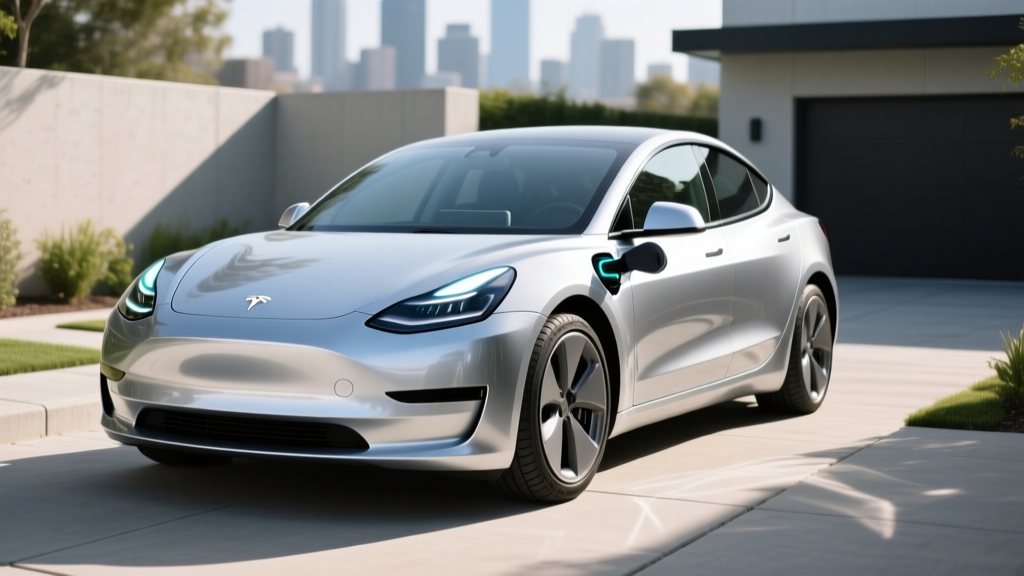
The 2026 Tesla Model 3 remains the default answer for buyers entering the electric-vehicle market for the first time. After the significant "Highland" refresh introduced for the 2024 model year and subsequent refinements through 2025 and 2026, the current Model 3 is quieter, more comfortable, and more technologically dense than any predecessor. But with the Hyundai Ioniq 6, BMW i4, and refreshed Polestar 2 all competing aggressively, the Model 3's advantages now hinge as much on software and charging infrastructure as on raw specs.
This review covers the full ownership picture — EPA range, real-world efficiency, DC fast-charging curves, federal tax credit eligibility under current IRS §30D rules, and a deep dive into Tesla's over-the-air (OTA) software platform, including practical tips on how to get Tesla updates faster if you're an existing owner or prospective buyer.
Range, Battery, and Real-World Efficiency
The 2026 Model 3 is offered in three trims, each with a distinct battery and drivetrain configuration:
| Spec | RWD (Standard Range) | Long Range AWD | Performance AWD |
|---|---|---|---|
| EPA Range | 272 mi | 341 mi | 315 mi |
| Battery (usable) | ~57 kWh (LFP) | ~75 kWh (NMC) | ~75 kWh (NMC) |
| Drivetrain | RWD, single motor | AWD, dual motor | AWD, dual motor |
| Horsepower | 271 hp | 346 hp | 510 hp |
| 0–60 mph | 5.8 sec | 4.2 sec | 2.9 sec |
| MPGe (combined) | 132 MPGe | 131 MPGe | 118 MPGe |
| Efficiency | 25 kWh/100mi | 26 kWh/100mi | 29 kWh/100mi |
| Max DC Fast Charge | 170 kW | 250 kW | 250 kW |
| 10–80% DC Time | ~25 min | ~25 min | ~25 min |
| Level 2 Home Charge | 11.5 kW (~44 mi/hr) | 11.5 kW (~44 mi/hr) | 11.5 kW (~44 mi/hr) |
| Base MSRP | $38,990 | $42,490 | $52,990 |
According to fueleconomy.gov, the Model 3 Long Range achieves 131 MPGe combined — a figure that translates to roughly 26 kWh consumed per 100 miles of driving. That efficiency advantage is partly why the Model 3 continues to lead its class in miles-per-kWh, reducing both charging costs and charging frequency.
Charging Speed and Infrastructure
Charging speed is a top concern for EV buyers, and the Model 3 delivers competitive — though not class-leading — DC fast-charging performance. The Long Range and Performance trims peak at 250 kW on V3 Superchargers, while the RWD (with its LFP battery) peaks at 170 kW.
| Charging Level | Power | Miles Added per Hour | Notes |
|---|---|---|---|
| Level 1 (120V household) | ~1.4 kW | ~3–5 mi/hr | Emergency/trickle only |
| Level 2 (240V home, 48A) | 11.5 kW | ~44 mi/hr | Full charge overnight in ~7–8 hrs |
| DC Fast Charge (V3 Supercharger) | Up to 250 kW (LR/Perf) Up to 170 kW (RWD) |
~175 mi in 15 min (LR) | 10–80% in ~25 min; tapers above 80% |
A critical nuance: Tesla's 250 kW peak rate is not sustained across the full charging session. The charge curve peaks around 250 kW at low state-of-charge (10–20%), then tapers progressively. By 60% SoC, you're typically seeing 100–120 kW, and above 80% the rate drops sharply to protect battery health. This is why Tesla (and most EV makers) quote 10–80% times rather than 0–100%. Plan your road-trip stops around that 10–80% window for maximum efficiency.
One infrastructure advantage remains significant: Tesla's Supercharger network, now exceeding 6,000 stations and 65,000+ connectors in North America. With the Model 3's native NACS port, you get seamless plug-and-charge access to the most reliable DC fast-charging network available — no adapter needed. Non-Tesla EVs are increasingly gaining Supercharger access via NACS adapters or built-in NACS ports, but Tesla owners still benefit from integrated navigation-based preconditioning and automatic billing.
How to Get Tesla Updates Faster: OTA Software Explained
Tesla's over-the-air (OTA) update system is arguably the brand's most distinctive feature. Unlike traditional automakers that require dealer visits for software updates, Tesla pushes firmware, feature additions, UI changes, and even performance improvements wirelessly — sometimes multiple times per month.
If you've wondered how to get Tesla updates faster, here's what actually influences your position in the rollout queue:
1. Enable Advanced Updates
Navigate to Controls > Software > Software Update Preferences and select "Advanced" instead of "Standard." This opts your vehicle into the earliest wave of deployments. Tesla rolls out updates gradually — Standard-preference vehicles receive updates days or weeks after Advanced-preference vehicles have validated them in the field.
2. Maintain Consistent Wi-Fi Connectivity
Tesla prioritizes Wi-Fi for downloading update packages (which can be 1–4 GB). Vehicles that regularly connect to home Wi-Fi download updates faster and are often queued earlier in the deployment wave. Set up your home network in the vehicle's Wi-Fi settings and ensure the car is within range when parked at home. A strong Wi-Fi signal is the single most impactful factor for receiving downloads promptly.
3. Keep Your Vehicle in Range of Tesla's Deployment Geography
Tesla often rolls out updates regionally — starting with vehicles in specific markets (frequently the U.S. West Coast or specific fleet clusters) before expanding globally. There's no way to change your geography, but understanding that rollout timing correlates with region helps set expectations.
4. Don't Skip or Delay Pending Updates
If you repeatedly defer an available update, Tesla's system may deprioritize your vehicle for subsequent updates. When an update is ready, schedule it promptly — ideally during overnight hours when the car is parked and charging.
5. Ensure Sufficient Battery Charge
Tesla requires a minimum state of charge (typically 20% or higher) before an update will install. If your car sits at low SoC for extended periods, you may miss the installation window. Keep the vehicle plugged in or above 20% when you know an update is pending.
What Updates Actually Deliver
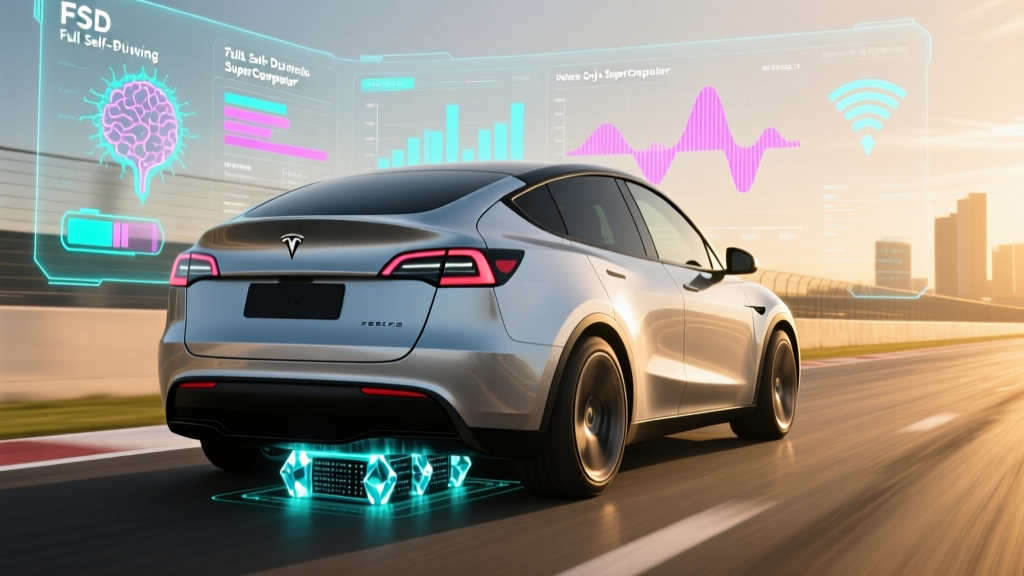
Recent OTA updates for the 2026 Model 3 have included improved adaptive cruise control behavior, new navigation routing algorithms, enhanced Sentry Mode efficiency, expanded voice command support, and UI refinements to the 15.4-inch center display. Major version updates (like the transition from v11 to v12 software) have historically delivered significant Autopilot and Full Self-Driving (Supervised) neural-network improvements. These are not cosmetic changes — they can materially alter driving behavior, efficiency, and feature availability.
Pricing, Tax Credits, and Ownership Cost
The 2026 Model 3 lineup starts at $38,990 for the RWD trim and reaches $52,990 for the Performance model. All trims sit below the IRS §30D MSRP cap of $55,000 for sedans, making them potentially eligible for the federal EV tax credit — but eligibility depends on multiple factors beyond the vehicle itself.
| Trim | Base MSRP | As-Tested (typical config) | Est. After §30D Credit* |
|---|---|---|---|
| RWD (Standard Range) | $38,990 | $39,990 (w/ paint) | ~$32,490 |
| Long Range AWD | $42,490 | $44,490 (w/ paint + wheels) | ~$36,990 |
| Performance AWD | $52,990 | $54,490 (w/ paint + wheels) | ~$46,990 |
*Estimated prices assume full $7,500 §30D credit eligibility. Actual eligibility depends on buyer income, battery component sourcing, and critical mineral requirements. Verify current rules at irs.gov.
- Income caps: Modified adjusted gross income (MAGI) must not exceed $150,000 (single), $225,000 (head of household), or $300,000 (joint filing).
- MSRP cap: Vehicle MSRP must be ≤ $55,000 for sedans (all Model 3 trims qualify).
- Battery sourcing: A percentage of battery components must be manufactured or assembled in North America, and a percentage of critical minerals must be sourced from the U.S. or free-trade-agreement countries. These thresholds increase annually. Tesla publishes sourcing information, but final eligibility can shift — confirm at point of sale.
- Point-of-sale transfer: As of 2024, eligible buyers can transfer the credit to the dealer at purchase, receiving the benefit as an immediate price reduction rather than waiting for tax filing. This applies in 2026 as well.
5-Year Total Cost of Ownership
Based on 15,000 miles/year, $0.14/kWh home electricity, and $3.50/gallon gasoline for a comparable BMW 330i, the Model 3 Long Range saves approximately $4,200–$5,800 in fuel costs over five years. Insurance premiums for the Model 3 tend to run 10–20% higher than comparable ICE sedans — factor in roughly $200–$280/month depending on your profile and location. Maintenance costs are minimal: no oil changes, reduced brake wear from regenerative braking, and cabin air filter replacement every 2–3 years.
Interior, Tech, and Daily Livability
The 2026 Model 3 cabin reflects Tesla's minimalist philosophy, refined through the Highland update with better materials, acoustic glass, ventilated front seats, and ambient lighting. The 15.4-inch center touchscreen remains the primary interface for virtually all vehicle controls — there are no physical buttons for climate, media, or navigation. This design polarizes buyers: some find it clean and intuitive; others miss tactile controls, especially for climate adjustments while driving.
Space and Cargo
- Front legroom: 42.1 inches
- Rear legroom: 35.3 inches (adequate for average-height adults; tight for tall passengers on long trips)
- Cargo volume (rear trunk): 21.0 cu ft
- Frunk (front trunk): 3.1 cu ft (useful for charging cables or a small bag)
- Total cargo with rear seats folded: ~56 cu ft
The rear seat remains a relative weakness compared to the Hyundai Ioniq 6 or BMW i4. The sloping roofline limits headroom for passengers over 6 feet, and the seat cushion is mounted low, creating a knees-up seating position on longer drives.
Standout Tech Features
- Teslavision: Camera-based system (no radar or ultrasonic sensors) powering Autopilot, parking assist, and Sentry Mode.
- 15.4" center display: High-resolution, responsive, with integrated Netflix/YouTube streaming while parked.
- Phone-as-key: Seamless Bluetooth-based entry and start — no fob needed.
- Over-the-air updates: Continuous feature additions and refinements (see software section above).
- Sentry Mode: 360° camera recording when parked, with app-based alerts.
- Heat pump: Standard on all trims, significantly improving cold-weather range and cabin heating efficiency vs. resistive heaters.
Notable Drawbacks
- No physical buttons or stalks — turn signals are on the steering wheel rim (a common complaint).
- Rear visibility is limited; reliance on the backup camera is high.
- No Apple CarPlay or Android Auto — Tesla's proprietary system only.
- Panel gaps and paint quality, while improved, still lag behind German competitors on occasion.
- FSD (Supervised) requires a $8,000 one-time purchase or $99/month subscription and remains Level 2 — not autonomous.
Warranty and Battery Longevity
| Component | Coverage |
|---|---|
| Basic Vehicle | 4 years / 50,000 miles |
| Battery & Drive Unit (RWD) | 8 years / 100,000 miles (70% minimum retention) |
| Battery & Drive Unit (LR/Perf) | 8 years / 120,000 miles (70% minimum retention) |
Tesla's battery warranty guarantees that the pack will retain at least 70% of its original capacity during the warranty period. In practice, Tesla's own fleet data and third-party analyses (including long-term owner reports tracked by Teslanorth and community databases) show that NMC packs in the Long Range and Performance models typically degrade 8–12% over the first 100,000 miles, while LFP packs in the RWD model show even slower degradation — often under 5% at equivalent mileage — thanks to LFP chemistry's inherent cycle-life advantages.
The LFP vs. NMC distinction matters for ownership habits: LFP batteries tolerate (and Tesla recommends) regular 100% charging, making the RWD model ideal for daily commuting with predictable range. NMC batteries benefit from daily charging limits of 80–90%, reserving 100% for road trips. If you plan to charge to full frequently, the RWD's LFP chemistry is actually an advantage.
Who the 2026 Model 3 Suits Best
Choose the Model 3 Long Range AWD if: You take regular road trips (300+ miles), live in a region with cold winters, need AWD traction, and want the best real-world range in the lineup.
Choose the Model 3 Performance if: You prioritize acceleration and handling, want track-capable performance (2.9-second 0–60), and don't mind sacrificing ~26 miles of EPA range for the privilege.
Consider a competitor if: You need more rear-seat space (Ioniq 6), want physical buttons and CarPlay (BMW i4), or prefer a more traditional dealership experience.
How It Compares: Model 3 vs. Key Rivals
| Spec | Tesla Model 3 LR AWD | Hyundai Ioniq 6 SEL AWD | BMW i4 xDrive40 |
|---|---|---|---|
| EPA Range | 341 mi | 316 mi | 282 mi |
| Max DC Charge | 250 kW | 235 kW | 205 kW |
| 10–80% DC Time | ~25 min | ~18 min | ~31 min |
| 0–60 mph | 4.2 sec | 5.1 sec | 4.7 sec |
| Base MSRP | $42,490 | $46,500 | $57,995 |
| Apple CarPlay | No | Yes | Yes |
| NACS Native | Yes | No (CCS; adapter avail.) | No (CCS; adapter avail.) |
| OTA Updates | Extensive, frequent | Limited | Limited |
The Model 3 Long Range wins on EPA range, price, and Supercharger access. The Ioniq 6 charges faster (thanks to its 800V architecture) and offers CarPlay. The BMW i4 delivers superior build quality and a more traditional luxury experience but at a significant price premium. For most buyers prioritizing range, value, and charging convenience, the Model 3 Long Range remains the strongest overall package.
- Class-leading EPA range (341 mi, Long Range)
- Best-in-class Supercharger network access (native NACS)
- Continuous OTA software improvements
- Lowest starting price in the segment for AWD
- Excellent efficiency (26 kWh/100mi)
- Strong safety ratings (NHTSA 5-Star overall)
- No Apple CarPlay or Android Auto
- Turn signals on steering wheel rim (not a stalk)
- Rear seat headroom and cushion height are limiting
- FSD (Supervised) is expensive and remains Level 2
- Insurance costs above segment average
- Minimal physical controls — everything is touchscreen
Frequently Asked Questions
What is the real-world range of the 2026 Tesla Model 3?
The Long Range AWD's EPA rating is 341 miles, but real-world highway driving at 70–75 mph typically yields 280–305 miles. In cold weather (below freezing), expect 230–260 miles. The RWD model delivers approximately 220–240 miles in mild highway conditions from its 272-mile EPA rating.
How fast does the Model 3 charge at home and on the road?
On a Level 2 home charger (240V, 48A), the Model 3 charges at 11.5 kW, adding roughly 44 miles of range per hour — enough for a full overnight charge. On a V3 Supercharger, the Long Range and Performance models peak at 250 kW and charge from 10–80% in approximately 25 minutes. The RWD peaks at 170 kW with a similar 10–80% time due to its smaller battery.
How much does the 2026 Model 3 cost after federal tax credits?
With full $7,500 §30D credit eligibility, the RWD drops to approximately $32,490, the Long Range to ~$36,990, and the Performance to ~$46,990. Eligibility requires meeting IRS income caps ($150K single / $300K joint), MSRP caps ($55K for sedans — all trims qualify), and battery component/critical mineral sourcing requirements. Confirm eligibility at the point of sale and via irs.gov.
Is the 2026 Model 3 worth buying vs. competitors?
For buyers prioritizing range, charging infrastructure, and software features, the Model 3 Long Range remains the strongest value proposition in the compact EV sedan segment. If CarPlay, rear-seat comfort, or traditional dealership service matter more to you, the Hyundai Ioniq 6 or BMW i4 are strong alternatives at higher price points.
How do I get Tesla software updates faster?
Set your Software Update Preference to "Advanced" in the vehicle settings, maintain a strong Wi-Fi connection at home (Tesla downloads updates over Wi-Fi), and install updates promptly when they're available. Vehicles that consistently connect to Wi-Fi and don't defer updates tend to receive new software earlier in the rollout cycle.
Does the Model 3 qualify for the federal EV tax credit?
All 2026 Model 3 trims fall under the $55,000 MSRP cap for sedans. However, buyer income limits and battery sourcing requirements determine individual eligibility. The credit can be transferred at the point of sale for an immediate price reduction. Check current requirements on the IRS website before purchasing.