The Bottom Line on the 2026 Tesla Model 3
The Tesla Model 3 remains the benchmark compact electric sedan, and recent financial disclosures overseen by the Tesla chief accounting officer underscore just how competitive its unit economics have become. For 2026, the Model 3 "Highland" refresh carries forward with meaningful efficiency gains, a revised pricing structure, and continued eligibility for the federal EV tax credit on select trims. If you're cross-shopping the Hyundai Ioniq 6, BMW i4, or Polestar 2, this review gives you the exact numbers — range, charging speed, battery chemistry, and total cost — to make a spec-driven decision.
| Spec | Model 3 RWD | Model 3 Long Range AWD | Model 3 Performance |
|---|---|---|---|
| EPA Range | 272 mi | 341 mi | 315 mi |
| Battery (usable) | ~57.5 kWh | ~75 kWh | ~75 kWh |
| Chemistry | LFP | NMC | NMC |
| 0–60 mph | 5.8 sec | 4.2 sec | 2.9 sec |
| Horsepower | 271 hp | 346 hp | 510 hp |
| Drivetrain | RWD | Dual-Motor AWD | Dual-Motor AWD |
| Peak DC Charge | 170 kW | 250 kW | 250 kW |
| 10–80% DC Time | ~25 min | ~22 min | ~22 min |
| Level 2 Rate | 11.5 kW (~44 mi/hr) | 11.5 kW (~44 mi/hr) | 11.5 kW (~44 mi/hr) |
| MPGe (combined) | 132 MPGe | 119 MPGe | 113 MPGe |
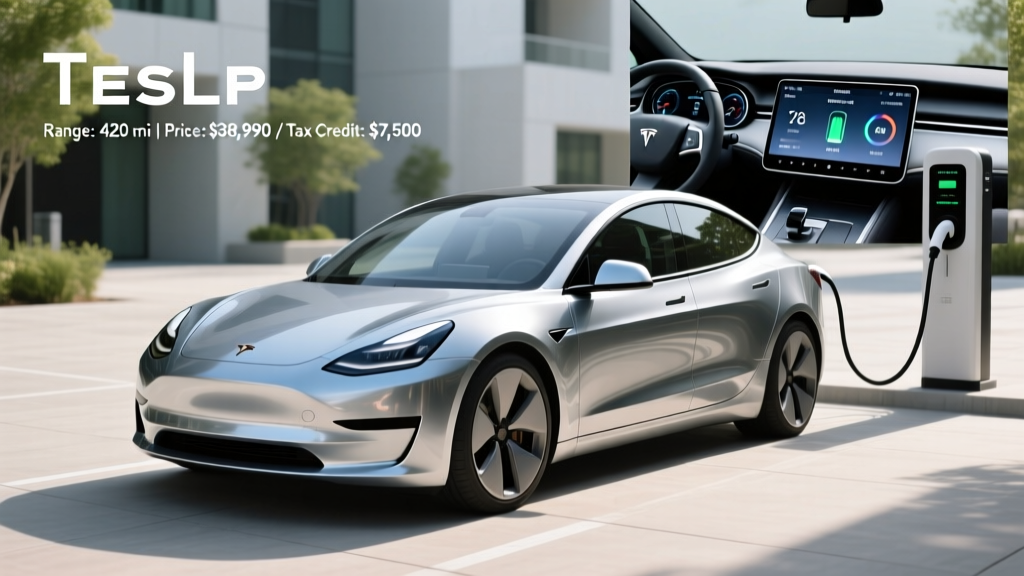
| Base MSRP | $38,990 | $47,740 | $52,990 |
| Battery Warranty | 8 yr / 100,000 mi | 8 yr / 120,000 mi | 8 yr / 120,000 mi |
Real-World Range: What the EPA Sticker Doesn't Tell You
The RWD trim uses a lithium iron phosphate (LFP) battery, which Tesla recommends charging to 100% daily — a significant advantage for commuters who want full range every morning without babying the state of charge. The Long Range and Performance trims use nickel manganese cobalt (NMC) chemistry, where Tesla recommends an 80% daily charge limit for longevity, reserving 100% for road trips. This means the Long Range's effective daily range is closer to 273 miles at 80% SoC, though the full 341 miles are available when you need them.
Efficiency varies by trim: the RWD achieves 132 MPGe combined (25 kWh/100mi) per EPA data on fueleconomy.gov, making it one of the most efficient EVs on the market. The Performance model drops to 113 MPGe due to stickier tires, heavier curb weight, and more aggressive power delivery.
Charging Speed: DC Fast Charging and Home Setup
Charging speed remains one of the Model 3's strongest selling points, especially within the Tesla Supercharger network. Here's what to expect at each charging level:
| Level | Power | Miles Added/Hour | Best For |
|---|---|---|---|
| Level 1 (120V) | ~1.4 kW | ~5 mi/hr | Emergency / overnight trickle |
| Level 2 (240V, 48A) | 11.5 kW | ~44 mi/hr | Daily home charging |
| DC Fast (Supercharger V3) | Up to 250 kW | ~175 mi in 15 min (peak) | Road trips |
| DC Fast (RWD max) | Up to 170 kW | ~130 mi in 15 min (peak) | Road trips |
A critical nuance: the 250 kW peak on Long Range and Performance trims is not sustained. The charge curve tapers significantly above 60% SoC, and charging from 80–100% can take as long as the 10–80% portion. Tesla's battery preconditioning feature — activated when you navigate to a Supercharger — warms the pack to optimize charge acceptance. Skipping preconditioning in cold weather can add 10–15 minutes to a fast-charge session.
For 2026, the Model 3 comes equipped with the NACS (North American Charging Standard) connector natively. Tesla has opened its Supercharger network to other EVs, but Model 3 owners benefit from seamless plug-and-charge integration and the highest station density in the U.S. — over 6,000 Supercharger stations and 65,000+ stalls nationwide.
Home Level 2 charging requires a 240V circuit rated for at least 60 amps to deliver the full 48A (11.5 kW) charge rate. Installation costs typically range from $800 to $2,500 depending on panel capacity and conduit run. Homes with older 100-amp electrical panels may need a $1,500–$3,000 panel upgrade — a hidden cost many buyers overlook.
Performance and Drivetrain: Which Trim Fits Your Driving?
The Model 3 lineup spans practical commuter to sports-sedan territory. The RWD's single rear motor delivers 271 hp and a 5.8-second 0–60 time — brisk by any standard and more than adequate for highway merging and city driving. The dual-motor Long Range adds all-wheel drive and 346 hp, cutting 0–60 to 4.2 seconds while providing confident traction in rain and light snow.
The Performance model is a different animal entirely: 510 hp, 2.9-second 0–60, adaptive dampers, and a track mode that adjusts torque distribution and regen settings. It competes with the BMW i4 M50 and Audi RS e-tron GT on acceleration while undercutting both on price. However, the Performance's stiffer ride and lower-profile tires trade some comfort for capability.
All trims feature Tesla's regenerative braking with adjustable intensity, though one-pedal driving remains the default experience. The heat pump, standard across the lineup, significantly reduces range loss in cold weather compared to resistive heating systems found in older EVs.
Interior, Tech, and Driver Assistance
The Highland refresh brought a more refined cabin: ventilated front seats, ambient lighting, rear-seat touchscreen, improved sound insulation, and a new steering wheel without stalk-mounted turn signals (a polarizing change). The 15.4-inch center touchscreen runs Tesla's proprietary infotainment — fast, responsive, and deeply integrated, but notably lacking Apple CarPlay and Android Auto.
Cargo space measures 23 cubic feet combined (trunk + frunk), with the frunk providing a useful 3.1 cubic feet for charging cables or small bags. Rear legroom is 35.3 inches — adequate for adults but tighter than the Hyundai Ioniq 6's 37.0 inches. The glass roof creates an airy cabin but can cause heat buildup in summer; the updated Highland model includes a reflective coating to mitigate this.
Autopilot includes adaptive cruise control, lane centering, and automatic emergency braking. FSD Supervised adds automated lane changes, traffic light and stop sign recognition, and city-street navigation — impressive in controlled conditions but prone to cautious or erratic behavior in complex construction zones and unprotected left turns. The NHTSA continues to monitor Tesla's ADAS performance through its Standing General Order on crash reporting.
Pricing, Tax Credits, and Total Cost of Ownership
| Trim | Base MSRP | Destination | As-Tested (typical) | §30D Credit Eligible? |
|---|---|---|---|---|
| RWD | $38,990 | $1,390 | $40,380 | Up to $7,500* |
| Long Range AWD | $47,740 | $1,390 | $49,130 | Up to $7,500* |
| Performance | $52,990 | $1,390 | $54,380 | Up to $7,500* |
*Federal tax credit eligibility under IRS §30D depends on three factors that change frequently:
- MSRP Cap: Sedans must be under $55,000 MSRP. The RWD and Long Range qualify; the Performance exceeds the cap and is ineligible.
- Buyer Income Cap: Modified AGI must not exceed $150,000 (single), $225,000 (head of household), or $300,000 (joint filing).
- Battery Sourcing: The credit splits into two halves ($3,750 each) — one for critical minerals and one for battery components. Sourcing requirements tighten annually; verify current-year compliance on the IRS clean vehicle credit page before purchasing.
- Point-of-Sale Transfer: Eligible buyers can transfer the credit to the dealer at purchase, reducing the out-of-pocket price immediately rather than waiting for tax filing.
The RWD Model 3, at $38,990 before incentives, becomes one of the most affordable long-range EVs on the market when the full $7,500 credit applies — effectively $31,490. This pricing puts pressure on competitors like the Chevrolet Equinox EV and Hyundai Ioniq 6, neither of which consistently match Tesla's combination of range, charging speed, and Supercharger access.
Over five years, the Model 3 RWD's estimated electricity cost is roughly $3,200 (at $0.16/kWh national average and 15,000 miles/year), compared to approximately $9,500 in gasoline for a comparable 30 MPG sedan. Insurance premiums run 15–25% higher than equivalent gas vehicles — a recurring cost that partially offsets fuel savings.
How It Stacks Up Against Key Competitors
The Model 3 faces credible competition in 2026. The Hyundai Ioniq 6 offers 361 miles of EPA range in its Long Range RWD trim (more than the Model 3) and supports 350 kW DC fast charging on 800V architecture — faster than Tesla's 250 kW. However, the Ioniq 6 uses CCS charging, which has fewer public fast-charging locations than the Supercharger network.
The BMW i4 eDrive40 starts at $52,200 with 307 miles of range and offers Apple CarPlay, a more conventional interior layout, and a premium driving experience — but at a significant price premium. The Polestar 2, now in its next generation, provides strong build quality and Google-based infotainment but trails on range and charging speed.
- Class-leading Supercharger network access with NACS native connector
- LFP battery on RWD allows daily 100% charging without degradation concern
- Best-in-class efficiency at 132 MPGe (RWD)
- Over-the-air updates continuously add features
- Competitive pricing after §30D tax credit
- Heat pump standard for cold-weather efficiency
- No Apple CarPlay or Android Auto
- Stalkless steering wheel and screen-dependent controls polarize drivers
- Rear legroom tighter than Hyundai Ioniq 6
- Performance trim exceeds $55K MSRP cap — no federal tax credit
- FSD Supervised costs $8,000 and remains Level 2 (not autonomous)
- Insurance costs 15–25% above segment average
Who Should Buy the 2026 Tesla Model 3?
Choose the Model 3 RWD if: You commute under 60 miles daily, can charge at home, want the lowest entry price with full tax credit eligibility, and prefer daily 100% charging convenience from the LFP battery.
Choose the Model 3 Long Range AWD if: You take regular road trips, live in a climate with rain or snow, need dual-motor traction, and want the maximum 341-mile range buffer for highway driving.
Choose the Model 3 Performance if: Acceleration and track capability are priorities, you're unconcerned about the federal tax credit, and you value adaptive suspension and sport-tuned dynamics over ride comfort.
Look elsewhere if: You require Apple CarPlay, need maximum rear-seat space for car seats, or want the fastest possible DC charging speeds (Hyundai Ioniq 6 at 350 kW on 800V architecture).
Frequently Asked Questions
What is the real-world range of the 2026 Tesla Model 3?
The EPA rates the Long Range AWD at 341 miles, but expect 280–305 miles on sustained highway drives and 240–270 miles in freezing weather. The RWD delivers approximately 240 real-world highway miles, dropping to ~190 miles in winter. City driving with regenerative braking often matches or slightly exceeds EPA estimates.
How fast does the Model 3 charge at home and on the road?
At home on a Level 2 (240V/48A) charger, the Model 3 adds roughly 44 miles of range per hour at 11.5 kW — a full overnight charge from 20% to 100% takes about 8–9 hours. On a Tesla Supercharger V3, the Long Range and Performance peak at 250 kW and charge from 10–80% in approximately 22 minutes. The RWD peaks at 170 kW with a 10–80% time of about 25 minutes. Charge speed tapers significantly above 80%.
Does the 2026 Model 3 qualify for the $7,500 federal EV tax credit?
The RWD and Long Range trims qualify (MSRP under the $55,000 sedan cap), provided the buyer meets income limits and the vehicle's battery meets current-year critical mineral and component sourcing requirements under IRS §30D. The Performance trim exceeds $55,000 and is not eligible. Always verify eligibility on the IRS clean vehicle credit page and consult a tax professional before purchasing.
Is the Model 3 worth buying over the Hyundai Ioniq 6 or BMW i4?
The Model 3 wins on Supercharger network access, efficiency (MPGe), and pricing after tax credits. The Ioniq 6 offers more EPA range (361 mi) and faster peak charging (350 kW) but relies on the less ubiquitous CCS network. The BMW i4 provides a more traditional luxury experience and CarPlay but costs significantly more. Your priority — network access vs. range vs. luxury — determines the best fit.
What is the battery warranty on the 2026 Model 3?
Tesla covers the RWD battery and drive unit for 8 years or 100,000 miles (whichever comes first), with a minimum 70% capacity retention threshold. The Long Range and Performance extend that to 8 years or 120,000 miles. Real-world data from Tesla's impact reports show average degradation of approximately 12–15% over 200,000 miles across its fleet — well within warranty limits for most owners.
Is Tesla's Full Self-Driving actually self-driving?
No. FSD Supervised is an SAE Level 2 system. It can handle many driving scenarios but requires continuous driver supervision — hands near the wheel, eyes on the road. Tesla's cabin camera monitors engagement and issues warnings if attention lapses. True Level 4 autonomy (no driver required) is not available on any consumer vehicle as of 2026.