Quick Verdict: Still the Benchmark Sedan, But Mind the Rear Seat
The 2022 Tesla Model 3 remains one of the most efficient and best-supported electric sedans on the used market heading into 2026. Buyers searching for "2022 Model 3 back space" are onto something important: while the Model 3 leads its class in powertrain efficiency and Supercharger network access, its rear cabin and trunk are noticeably tighter than rival sedans like the Hyundai Ioniq 6 or BMW i4. If rear-seat practicality is a priority, measure carefully before committing. If you prioritize range-per-dollar, charging speed, and software polish, the 2022 Model 3 still holds up remarkably well.
Real-World Range, Efficiency, and the LFP Factor
The 2022 Model 3 was sold in three trims, each with distinct battery chemistry and range characteristics. The Standard Range Rear-Wheel Drive (RWD) uses a CATL-sourced lithium iron phosphate (LFP) pack, while the Long Range and Performance trims use nickel-manganese-cobalt (NMC) chemistry from Panasonic/LG. This chemistry split matters for daily ownership.
EPA Range vs. Real-World Expectations (2022 Model 3)
- RWD (LFP, ~60 kWh usable): EPA 272 mi — expect ~230-250 mi highway at 70 mph; ~180-200 mi in sub-30°F cold
- Long Range AWD (NMC, ~75 kWh usable): EPA 358 mi — expect ~300-320 mi highway; ~240-260 mi in winter
- Performance AWD (NMC, ~75 kWh usable): EPA 315 mi — expect ~265-285 mi highway; ~210-230 mi in winter
Source: fueleconomy.gov. Cold-weather loss of 20-30% is typical for all EVs; Tesla's heat pump helps mitigate this compared to older EVs without active thermal management.
LFP chemistry in the RWD trim offers two practical advantages: it tolerates regular 100% charging without accelerated degradation, and it exhibits less capacity loss over high cycle counts. The tradeoff is lower energy density (hence the smaller pack and shorter range) and slightly worse cold-weather performance than NMC. If you're a commuter who can charge at home nightly and rarely road-trips in winter, the RWD is a compelling value play. If you need maximum range or frequently drive in freezing temperatures, the Long Range's NMC pack is the better fit.
Efficiency is where the Model 3 shines. The RWD achieves an EPA-rated 132 MPGe combined (25 kWh/100 mi), while the Long Range hits 131 MPGe combined (26 kWh/100 mi). These figures remain among the best of any EV sold, translating to lower electricity costs per mile than nearly every competitor.
2022 Model 3 Back Space: Rear Seat and Cargo Dimensions
This is where the search intent of "2022 Model 3 back space" deserves a direct answer. The Model 3's rear seat and trunk are adequate for compact-sedan duty but fall short of midsize rivals.
| Measurement | Model 3 | Hyundai Ioniq 6 (2023) | BMW i4 (2022) |
|---|---|---|---|
| Rear legroom | 35.2 in | 36.5 in | 34.7 in |
| Rear headroom | 37.8 in | 37.6 in | 37.6 in |
| Rear shoulder room | 55.2 in | 55.7 in | 54.6 in |
| Trunk (rear seats up) | 23 cu ft | 12.3 cu ft (sedan trunk) | 16.6 cu ft (liftback) |
| Frunk (front trunk) | 3.1 cu ft | 1.6 cu ft | None |
| Total cargo volume | 26.1 cu ft | 13.9 cu ft | 16.6 cu ft |
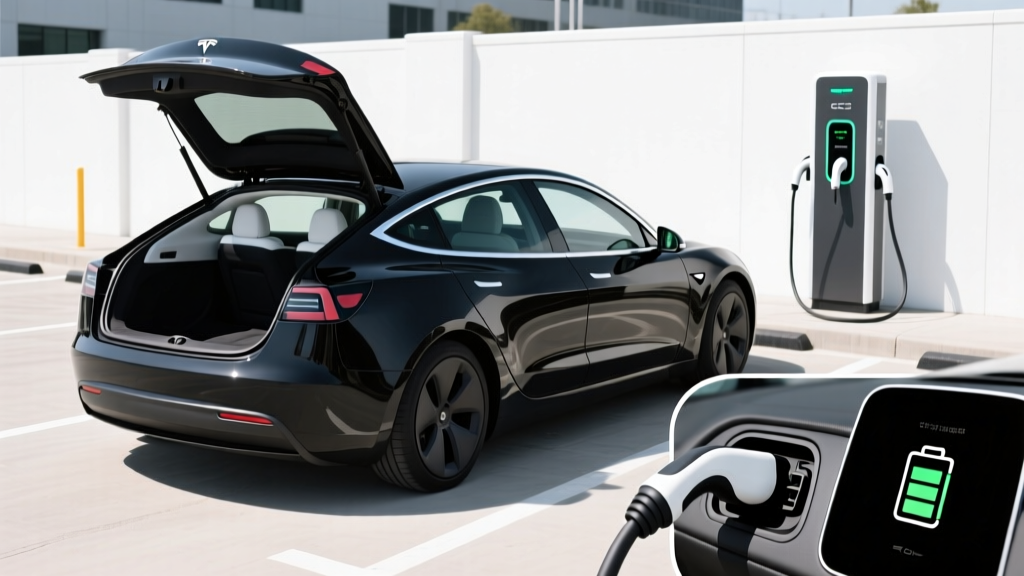
The Model 3's 35.2 inches of rear legroom is tight for adults over six feet, especially if the front passenger slides the seat far back. The rear floor is flat (no transmission tunnel), which helps the middle passenger, but the sloping roofline cuts into headroom for taller riders. The 23 cu ft trunk is a liftback design, making loading easier than a traditional sedan trunk, and the 3.1 cu ft frunk adds useful space for charging cables or a small bag.
Practical takeaway: The Model 3 fits two adults comfortably in back for short-to-medium trips. For families with rear-facing car seats or frequent five-passenger duty, measure your specific child-seat fit — the sloping roofline and firm rear cushion can complicate installation. If cargo volume is paramount, a Model Y or Ioniq 5 offers substantially more utility.
Charging Speeds: Supercharger Network Advantage
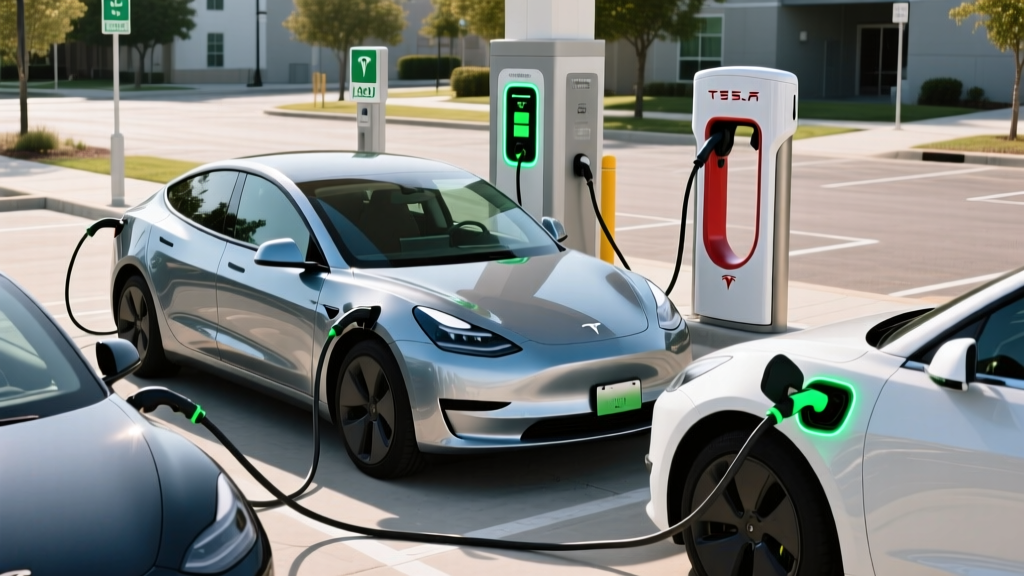
Charging infrastructure remains a decisive ownership factor, and the 2022 Model 3 benefits from native access to Tesla's Supercharger network — the most reliable and widespread DC fast-charging system in North America.
| Charging Level | RWD (LFP) | Long Range / Performance (NMC) |
|---|---|---|
| Max DC fast-charge rate | 170 kW peak | 250 kW peak (V3 Supercharger) |
| 10-80% DC fast-charge time | ~30 min | ~25-30 min |
| Level 2 (240V, 48A onboard) | ~11.5 kW / ~37 mi/hr | ~11.5 kW / ~44 mi/hr |
| Level 1 (120V, 12A) | ~1.4 kW / ~4-5 mi/hr | ~1.4 kW / ~5-6 mi/hr |
| Connector | Tesla (NACS) — CCS adapter available | |
The 250 kW peak rate on Long Range and Performance trims is achievable only at V3 Superchargers and only between roughly 10-30% state of charge. The charging curve tapers significantly above 60%, which is why Tesla and most EV manufacturers quote 10-80% times rather than 0-100%. In practice, plan your road-trip stops around 20-25 minute sessions to keep the battery in the fast-charging sweet spot.
For home charging, a Tesla Wall Connector on a 60A circuit (48A continuous) delivers a full overnight charge in 6-8 hours for any trim. Most owners find a nightly Level 2 routine eliminates range anxiety entirely. Budget $500-$1,500 for a professional Level 2 home installation, depending on your electrical panel's proximity to the garage and whether a panel upgrade is needed.
Performance, Drivetrain, and Driving Impressions
| Spec | RWD | Long Range AWD | Performance AWD |
|---|---|---|---|
| Drivetrain | Rear-wheel drive | Dual-motor AWD | Dual-motor AWD |
| Horsepower | 283 hp | 346 hp | 450 hp |
| 0-60 mph | 5.8 sec | 4.2 sec | 3.1 sec |
| Top Speed | 140 mph | 145 mph | 162 mph |
| Curb Weight | ~3,862 lbs | ~4,034 lbs | ~4,065 lbs |
Even the base RWD Model 3 feels quick off the line thanks to instant electric torque. The Long Range's dual-motor AWD provides confident traction in rain and light snow, while the Performance trim's 3.1-second 0-60 time rivals sports cars costing three times as much. The low center of gravity (battery pack under the floor) gives all trims composed handling, though the ride quality is firm — you'll feel sharp pavement imperfections more than in a Hyundai Ioniq 6 or BMW i4.
Tesla's regenerative braking is strong and one-pedal driving is intuitive once you adapt. There is no adjustable regen setting in the 2022 Model 3 — Tesla removed the low-regen option in 2020. This is a minor frustration for new EV adopters who prefer a gradual transition.
Autopilot, FSD, and Driver-Assist Technology
SAE Automation Level: Level 2
Tesla's Autopilot and Full Self-Driving (Supervised) are SAE Level 2 driver-assist systems. The driver must remain fully engaged, hands on the wheel (or providing steering-torque input), and eyes on the road at all times. These systems do not make the car "self-driving." Only Level 4 robotaxi services like Waymo operate without a human driver in geofenced areas.
Every 2022 Model 3 comes standard with Tesla's basic Autopilot (Traffic-Aware Cruise Control and Autosteer). The optional FSD (Supervised) package — priced at $12,000 in 2022, later reduced and offered as a subscription — adds Navigate on Autopilot, Auto Lane Change, Autopark, Summon, and traffic-light/stop-sign recognition.
What FSD (Supervised) Does NOT Do:
- Drive without your supervision — you are legally and operationally responsible
- Handle all construction zones, unmapped roads, or severe weather reliably
- Replace attentive driving — NHTSA has investigated multiple crashes involving Autopilot misuse
For detailed safety data, see NHTSA investigations and Tesla's quarterly Vehicle Safety Reports.
The 15-inch center touchscreen handles all infotainment, navigation, and vehicle settings — there are no physical buttons or a traditional instrument cluster. This minimalist approach polarizes buyers but the interface is responsive and over-the-air (OTA) updates continue to add features years after purchase. The 2022 Model 3 received an updated AMD Ryzen processor, making the UI noticeably faster than pre-2021 models.
Pricing, Tax Credits, and 2026 Used-Market Value
| Trim | Original MSRP (2022) | §30D New-Vehicle Credit (if bought new in 2022-2023) | §25E Used-Vehicle Credit (2026 purchase) |
|---|---|---|---|
| RWD (Standard Range) | $46,990 | $3,750-$7,500 (varied by sourcing rules) | Up to $4,000 (30% of sale price, max $4,000) |
| Long Range AWD | $52,990 | $7,500 (subject to sourcing phase-in) | Up to $4,000 |
| Performance AWD | $60,990 | $7,500 | Up to $4,000 |
Key §30D / §25E caveats for 2026 buyers: If you're purchasing a used 2022 Model 3 from a dealer in 2026, you may qualify for the IRS §25E used-vehicle credit — up to $4,000 or 30% of the sale price, whichever is lower. Eligibility requires the sale price to be $25,000 or less, buyer income under $75,000 (single) / $150,000 (joint), purchase from a licensed dealer, and the vehicle must be at least two model years old. The vehicle must also have been assembled in North America (the Model 3 qualifies, built in Fremont, CA).
As of early 2026, used 2022 Model 3 RWD examples typically list between $22,000-$27,000 depending on mileage and condition — putting many within range of the §25E credit. Always verify eligibility with a tax professional and the dealer's point-of-sale transfer documentation.
Warranty Coverage and Long-Term Ownership
| Component | Coverage |
|---|---|
| Basic Vehicle | 4 years / 50,000 miles |
| Battery & Drive Unit (RWD) | 8 years / 100,000 miles (70% minimum retention) |
| Battery & Drive Unit (Long Range/Performance) | 8 years / 120,000 miles (70% minimum retention) |
The 70% capacity retention threshold is the trigger for a warranty replacement. Real-world data from Tesla's fleet suggests average degradation of roughly 10-12% over the first 100,000 miles for NMC packs, with LFP packs showing slightly less degradation but more variance in early production batches. The Model 3's battery and drive-unit warranty is competitive with Hyundai/Kia's 10-year/100,000-mile coverage but shorter in calendar years.
For a 2026 buyer considering a used 2022 Model 3, check the battery's State of Health (SoH) via the Tesla app or a third-party diagnostic tool. Most 2022 examples with under 50,000 miles should retain 90%+ of original capacity.
Pros, Cons, and Who Should Buy
Pros
- Class-leading efficiency (25-26 kWh/100 mi)
- Access to Tesla Supercharger network (most reliable DC network in the US)
- Strong OTA update support — features improve over time
- LFP battery in RWD allows daily 100% charging
- Low center of gravity, composed handling
- Used-market prices now within §25E credit range
Cons
- Rear seat space tight for tall adults (35.2" legroom)
- Firm ride quality — road imperfections transmit to cabin
- No physical buttons or instrument cluster — steep learning curve
- Single regen setting (no adjustable one-pedal intensity)
- Insurance premiums above segment average
- FSD (Supervised) remains Level 2 — not autonomous despite the name
Choose the 2022 Model 3 if: You prioritize efficiency, Supercharger access, and software-driven features; you commute solo or with one passenger most of the time; and you can charge at home. The RWD with LFP is the value pick for commuters; the Long Range is the road-trip and cold-weather choice.
Look elsewhere if: You regularly carry rear-seat passengers or need maximum cargo space (consider the Model Y or Ioniq 5); you prefer a traditional instrument cluster and physical controls (consider the BMW i4 or Hyundai Ioniq 6); or you want the longest possible battery warranty (Hyundai/Kia's 10-year coverage leads).
Frequently Asked Questions
What is the real-world range of the 2022 Tesla Model 3?
The EPA rates the RWD at 272 miles, the Long Range at 358 miles, and the Performance at 315 miles. In real-world highway driving at 70 mph, expect roughly 10-15% less than EPA. In sub-30°F cold, plan for 20-30% reduction. The Long Range AWD is the safest bet for drivers who face winter conditions or take frequent road trips.
How fast does the 2022 Model 3 charge at home and on the road?
On a V3 Supercharger (250 kW), the Long Range and Performance trims charge from 10-80% in roughly 25-30 minutes. The RWD peaks at 170 kW and takes about 30 minutes. At home on a Level 2 Wall Connector (48A/11.5 kW), any trim charges fully overnight in 6-8 hours, adding roughly 37-44 miles of range per hour.
Does a used 2022 Model 3 qualify for a federal tax credit in 2026?
Yes, potentially. Under IRS §25E, buying a used 2022 Model 3 from a licensed dealer for $25,000 or less can qualify you for up to $4,000 (30% of the sale price). You must meet income caps ($75K single / $150K joint) and the vehicle must be at least two model years old. Consult a tax professional for your specific situation.
Is the 2022 Model 3 worth buying vs. competitors in 2026?
For efficiency, charging infrastructure, and software, yes. The Model 3's Supercharger access and OTA update track record are difficult to match. However, if rear-seat space, ride comfort, or physical controls matter, the Hyundai Ioniq 6, BMW i4, or Polestar 2 are strong alternatives. On the used market, the Model 3's depreciation has made it one of the best value-per-mile-of-range EVs available.
What are the biggest ownership costs to budget for?
Beyond the purchase price, budget for above-average insurance premiums (the Model 3 is among the more expensive EVs to insure due to repair costs), potential tire replacement every 25,000-35,000 miles (EVs wear tires faster due to weight and torque), and home charger installation ($500-$1,500). Electricity costs vary by region but average roughly $0.15/kWh nationally, making the Model 3's 25 kWh/100 mi efficiency translate to about $3.75 per 100 miles — roughly one-third the fuel cost of a comparable gas sedan.
Does the 2022 Model 3 have a heat pump?
Yes. Tesla introduced a heat pump system (called the "Octovalve" thermal management architecture) starting with 2021 Model 3 production. This significantly improves cold-weather range and cabin heating efficiency compared to the older resistive heater used in 2018-2020 models. It's one of the reasons a 2022 Model 3 is a better winter EV than earlier years.