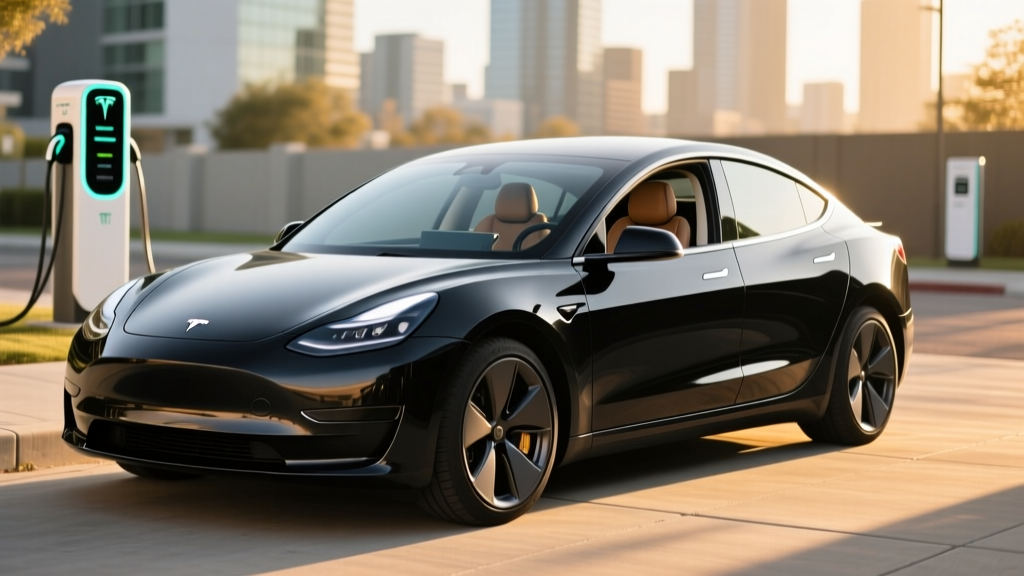
The 2020 Tesla Model 3 remains one of the most-searched used electric vehicles on the market, and for good reason. By 2026, thousands of lease returns and fleet vehicles have flooded the secondary market, pushing prices into territory where a well-maintained example competes directly with new budget EVs. But buying a six-year-old EV requires scrutinizing battery health, charging hardware, and software support in ways that gas-car shoppers never consider.
This profile breaks down the 2020 Model 3 lineup — Standard Range Plus, Long Range, and Performance — with exact EPA figures, real-world range expectations, DC fast-charging curves, and the specific federal tax credit rules that apply to used EV purchases today.
2020 Tesla Model 3 Trims and Specifications at a Glance
| Spec | Standard Range Plus (RWD) | Long Range (AWD) | Performance (AWD) |
|---|---|---|---|
| EPA Range | 250 mi | 322 mi | 299 mi |
| Battery (usable) | ~50 kWh (LFP in later builds, NMC in early) | ~75 kWh (NMC) | ~75 kWh (NMC) |
| Drivetrain | Rear-Wheel Drive | Dual-Motor AWD | Dual-Motor AWD |
| 0-60 mph | 5.3 sec | 4.4 sec | 3.2 sec |
| Horsepower | 283 hp | 384 hp | 450 hp |
| EPA Efficiency (MPGe) | 141 MPGe (24 kWh/100mi) | 134 MPGe (25 kWh/100mi) | 121 MPGe (28 kWh/100mi) |
| Max DC Fast Charge | 170 kW (peak) | 250 kW (V3 Supercharger) | 250 kW (V3 Supercharger) |
| 10-80% DC Charge Time | ~28 min | ~27 min | ~27 min |
| Level 2 Home Charge Rate | 7.6 kW (~30 mi/hr) | 11.5 kW (~44 mi/hr) | 11.5 kW (~44 mi/hr) |
| Original MSRP (2020) | $37,990 | $46,990 | $54,990 |
| Typical Used Price (2026) | $17,000–$21,000 | $22,000–$27,000 | $25,000–$31,000 |
Sources: EPA fueleconomy.gov, Tesla 2020 archive specs, Kelley Blue Book used pricing data (Jan 2026).
Real-World Range: What the EPA Sticker Doesn't Tell You
The 2020 Long Range AWD carries an EPA rating of 322 miles. In mixed driving, expect 270–290 miles. Sustained highway speeds above 70 mph drop that to roughly 240–260 miles. In freezing temperatures (below 32°F), plan for 200–230 miles of usable range due to cabin heating demand and battery resistance. The SR+ (250 EPA) realistically delivers 200–220 miles in temperate mixed use and as little as 160 miles in deep cold.
The 2020 Model 3 Long Range's 322-mile EPA figure was class-leading at launch, but real-world efficiency depends heavily on driving style and climate. Tesla's heat pump was not standard on all 2020 builds — it became more common with the "Project Highland" refresh in late 2020. Earlier 2020 cars use resistive PTC heating, which draws significantly more energy in winter.
For the SR+ trim, the 250-mile EPA rating is adequate for commutes under 80 miles round-trip but becomes limiting on road trips. The 50 kWh usable battery simply has less buffer for HVAC load, elevation changes, and high-speed driving.
Battery chemistry note: Some late-2020 SR+ vehicles built for the Chinese and later US market use LFP (lithium iron phosphate) cells supplied by CATL. LFP offers longer cycle life and can be charged to 100% daily without degradation concerns, but it sacrifices roughly 10–15% energy density and performs worse in cold weather. Early-2020 SR+ cars use NMC (nickel manganese cobalt) from Panasonic. Check the vehicle's battery label or Tesla service records to confirm chemistry.
Charging Speed: DC Fast, Level 2, and Level 1
| Charging Level | Power (kW) | Miles Added per Hour | Notes |
|---|---|---|---|
| Level 1 (120V household) | ~1.4 kW | ~5 mi/hr | Emergency/trickle only |
| Level 2 (240V, 48A) | 11.5 kW (LR/Perf) / 7.6 kW (SR+) | 44 mi/hr (LR) / 30 mi/hr (SR+) | Full charge in ~7–10 hours |
| DC Fast (V3 Supercharger) | Up to 250 kW peak (LR/Perf) | ~170 mi in 15 min | 10-80% in ~27 min; tapers sharply above 80% |
| DC Fast (V2 Supercharger / CCS adapter) | ~150 kW peak | ~110 mi in 15 min | Older V2 stalls cap at 150 kW |
The 2020 Model 3 Long Range and Performance support V3 Supercharger speeds up to 250 kW, but that peak is only sustained between roughly 10–30% state of charge. By 50% SoC, charge rate typically drops to 100–120 kW, and above 80% it falls below 40 kW. This charge-curve taper means the advertised "250 kW" figure is a brief peak, not a sustained rate.
The SR+ is limited to roughly 170 kW on DC fast charging, and its smaller battery means it reaches 80% faster in absolute time (~28 minutes) but gains fewer total miles.
Connector compatibility: The 2020 Model 3 uses Tesla's proprietary connector (now called NACS). It does not natively support CCS or CHAdeMO. However, Tesla sells a CCS adapter (~$175) that allows charging at Electrify America, EVgo, and other CCS networks — essential if you live outside Tesla Supercharger coverage or travel to areas with limited Supercharger density. As of 2026, Tesla has opened many Superchargers to non-Tesla vehicles, but the 2020 Model 3 still benefits from the largest proprietary fast-charging network in North America.
Performance and Driving Dynamics
Even the base SR+ delivers 283 hp and a 5.3-second 0-60 time — quicker than most gas-powered sport sedans. The Long Range's dual-motor AWD system provides confident traction in rain and light snow, while the Performance trim's 3.2-second 0-60 rivals sports cars costing three times as much.
Regenerative braking on the 2020 Model 3 is aggressive in "Standard" mode, enabling near one-pedal driving in most situations. Tesla removed the user-adjustable regen setting via a 2020 OTA update (later restored in 2021), so check the software version on any used example to confirm you have regen adjustability.
Ride quality is firm — the 2020 Model 3 uses a sport-tuned suspension that transmits road imperfections more than competitors like the Hyundai Ioniq 6 or BMW i4. Road noise is noticeable above 65 mph, a common complaint Tesla partially addressed in the 2024 Highland refresh but which persists in 2020 models.
Tax Credits, Pricing, and Total Cost for Used Buyers
The 2020 Model 3 was never eligible for the new-vehicle §30D credit after Tesla hit the 200,000-unit cap in mid-2018, which eliminated the $7,500 federal credit for all new Tesla purchases through 2022. However, as a used EV, it now qualifies for the Used Clean Vehicle Credit (IRC §25E) — up to $4,000 or 30% of the sale price, whichever is less.
| Requirement | Detail |
|---|---|
| Max vehicle sale price | $25,000 or less |
| Buyer income cap (AGI) | $75,000 single / $112,500 head of household / $150,000 joint |
| Vehicle age | At least 2 model years old (2020 qualifies) |
| Dealer requirement | Must purchase from a licensed dealer (private sales excluded) |
| Prior credit history | Vehicle's VIN must not have been claimed for §25E previously |
| Credit amount | 30% of sale price, up to $4,000 max |
Source: IRS.gov — Used Clean Vehicle Credit. Rules current for tax year 2026; consult a tax professional for your specific situation.
Practical example: A 2020 Long Range AWD purchased from a dealer for $24,500 would qualify for the full $4,000 credit (30% of $24,500 = $7,350, capped at $4,000). Effective price: $20,500. An SR+ at $18,000 would yield a $4,000 credit (30% = $5,400, capped at $4,000), bringing the effective price to $14,000.
Important caveat: The $25,000 sale-price cap eliminates many Long Range and most Performance examples from credit eligibility, as clean, low-mileage versions often list above that threshold. Negotiate price or look for higher-mileage examples to stay under the cap.
Battery Health, Degradation, and Warranty Remaining
Tesla's battery warranty for the 2020 Model 3 is 8 years / 100,000 miles (SR+) or 8 years / 120,000 miles (Long Range / Performance), whichever comes first, with a minimum 70% capacity retention guarantee. As of 2026, all 2020 examples are within the 8-year window, but many have exceeded 100,000 miles — meaning the SR+ warranty may have expired by mileage.
Real-world degradation data from fleet analytics (Recurrent Auto, Tesloop) shows the 2020 Model 3 NMC battery typically loses 8–12% capacity over the first 100,000 miles, with most of the loss occurring in the first 30,000 miles before stabilizing. A 2020 Long Range with 80,000 miles might show 90–92% state of health (SoH), translating to roughly 290–296 miles of EPA-equivalent range at full charge.
Before buying, check:
- Battery SoH percentage via the Tesla app or third-party tools like Tessie or Teslalogger
- Charge the car to 100% and note the displayed range — compare to original EPA
- Verify warranty remaining by VIN through Tesla Service
- Check for any battery replacement history (Tesla sometimes refurbishes packs under warranty)
LFP batteries in late-2020 SR+ models degrade more slowly (typically 5–8% over 100,000 miles) but deliver less range to begin with. They also lose more range in cold weather due to LFP's lower conductivity at low temperatures.
Interior, Cargo, and Technology
The 2020 Model 3's minimalist interior centers on a 15-inch touchscreen that controls virtually every vehicle function — climate, mirrors, glovebox, and driving settings. There is no traditional instrument cluster; speed and navigation appear on the left third of the center screen.
Dimensions:
- Front legroom: 42.7 inches
- Rear legroom: 35.2 inches (tight for adults over 6 feet)
- Cargo (trunk): 15 cu ft
- Frunk (front trunk): 3.1 cu ft
- Total cargo: 18.1 cu ft
The rear seat is the Model 3's most common complaint — it's low, flat, and offers limited thigh support on longer trips. Families with rear-facing child seats will find the space barely adequate. Cargo capacity is competitive with compact sedans but trails hatchback EVs like the Chevrolet Bolt EUV (54 cu ft with seats folded).
Notable tech features:
- Over-the-air (OTA) software updates — Tesla continues pushing updates to 2020 vehicles in 2026
- Basic Autopilot standard (lane-keeping, adaptive cruise) — SAE Level 2 driver assist
- Full Self-Driving (FSD) Supervised available as add-on ($8,000 new, transfers with vehicle if previously purchased)
- Sentry Mode dashcam surveillance, Dog Mode climate, and Theater Mode for streaming while parked
- Phone-as-key via Bluetooth
Autopilot and FSD (Supervised) on the 2020 Model 3 are SAE Level 2 systems. The driver must remain fully attentive, keep hands on the wheel, and be prepared to take over at any moment. These are not self-driving systems. FSD (Supervised) handles some city streets and stoplights but requires constant monitoring and does not eliminate driver liability. Only Level 4 robotaxi services (Waymo, Zoox) operate without a human driver in defined areas.
How the 2020 Model 3 Stacks Up Against 2026 Competitors
For buyers cross-shopping a used 2020 Model 3 against new or newer alternatives:
| Attribute | 2020 Model 3 LR (Used) | 2026 Hyundai Ioniq 6 SE (New) | 2026 Chevy Equinox EV 2LT (New) |
|---|---|---|---|
| Effective Price (after credits) | ~$20,500 | ~$34,500 | ~$28,500 |
| EPA Range | 322 mi | 361 mi | 319 mi |
| Max DC Fast Charge | 250 kW | 350 kW | 150 kW |
| Charging Network | NACS (Tesla Supercharger) | NACS (Tesla SC access) | NACS (Tesla SC access) |
| Warranty Remaining | Partial (0–2 yr / 0–40k mi) | Full 5yr/60k + 10yr/100k battery | Full 3yr/36k + 8yr/100k battery |
| Software/Tech | OTA, Sentry, FSD option | OTA, Hyundai Digital Key | OTA, Super Cruise option |
The used 2020 Model 3 wins on price and Supercharger network maturity. The new Ioniq 6 wins on range, charging speed, and full warranty. The Equinox EV offers more cargo space and crossover ride height but charges slower.
Pros, Cons, and Who Should Buy
- Strong real-world range (270+ mi on LR) at a used price under $25K
- Access to Tesla Supercharger network — the most reliable DC fast-charging network in North America
- OTA updates keep software current through 2026
- 250 kW peak DC charging on LR/Performance still competitive with new EVs
- Used EV tax credit up to $4,000 dramatically lowers effective cost
- Strong performance even in base trim (5.3s 0-60)
- Rear seat comfort and legroom are below segment average
- No native CCS port — requires $175 adapter for non-Tesla chargers
- Battery warranty may be partially expired by mileage on SR+ trim
- Firm ride and noticeable road noise at highway speeds
- Touchscreen-only controls frustrate some drivers (no physical buttons for climate, mirrors)
- Autopilot/FSD is Level 2 only — not self-driving despite the name
- Insurance costs run 15–25% higher than comparable gas sedans
Best suited for: Solo commuters or couples without rear-seat passengers who want maximum range and fast charging on a budget. The Long Range AWD is the sweet spot — its 322-mile EPA rating, dual-motor traction, and 250 kW charging make it a capable road-trip vehicle. The SR+ works for city commuters who charge at home and rarely exceed 150 miles in a day.
Less ideal for: Families needing rear-seat space, buyers in extreme cold climates without garage parking (LFP range loss is significant), or anyone who prefers physical controls and a traditional instrument cluster.
Frequently Asked Questions
What is the real-world range of the 2020 Tesla Model 3?
The Long Range AWD delivers roughly 270–290 miles in mixed temperate driving, 240–260 miles at sustained highway speeds, and 200–230 miles in freezing weather. The SR+ provides 200–220 miles mixed and 160–180 miles in cold conditions. Always plan charging stops with a 15–20% buffer below these figures.
How fast does the 2020 Model 3 charge at home and on the road?
At home on a 240V Level 2 charger, the Long Range adds about 44 miles of range per hour (11.5 kW), fully charging in roughly 7 hours. The SR+ adds about 30 miles per hour (7.6 kW). On a V3 Supercharger, the LR/Performance peaks at 250 kW and charges 10–80% in about 27 minutes, though the rate tapers significantly above 60% SoC.
Does the 2020 Model 3 qualify for the federal EV tax credit?
Not the new-vehicle §30D credit, but it can qualify for the Used Clean Vehicle Credit (§25E) — up to $4,000 — if purchased from a dealer for $25,000 or less, and the buyer's AGI falls under IRS income limits ($75K single / $150K joint). The vehicle's VIN must not have been previously claimed under §25E. Verify eligibility with your tax professional and the IRS guidelines.
Is the 2020 Model 3 worth buying in 2026 vs. a new EV?
If you can find a Long Range under $25,000 (qualifying for the $4,000 used credit), the effective price of ~$20,500 is difficult to beat. No new EV in 2026 offers 322 miles of EPA range and 250 kW charging at that price. However, you accept reduced warranty coverage, potential battery degradation, and older interior materials. If full warranty and the latest safety tech are priorities, a new Ioniq 6 or Equinox EV is worth the premium.
What should I check before buying a used 2020 Model 3?
Request a battery health report showing state of health (SoH) percentage. Verify remaining warranty by VIN through Tesla Service. Test all cameras and Autopilot functionality. Confirm whether the car has the CCS adapter. Check for open recalls at NHTSA.gov. Review service history for any suspension or drive-unit work. And confirm the software version supports adjustable regenerative braking.
Does the 2020 Model 3 have a heat pump?
Not universally. Tesla began equipping Model 3 vehicles with a heat pump in late 2020 as part of a running production change. Earlier 2020 builds use resistive PTC heating, which consumes more battery energy in cold weather. Check the vehicle's build date or ask Tesla Service to confirm whether a specific car has the heat pump — it can add 15–25 miles of real-world winter range.