Tesla Model 3 Performance & Acceleration: The Numbers That Matter
The Tesla Model 3 remains one of the most-searched electric sedans in the U.S., and for good reason: it consistently posts acceleration figures that embarrass cars costing twice as much. If you've landed here searching for Model 3 0 to 60 times, you're in the right place — but acceleration is just one line on the spec sheet. Real ownership hinges on range, charging speed, tax-credit eligibility, and daily livability. This review covers all of it with 2026 model-year data.
| Spec | Model 3 RWD | Model 3 Long Range AWD | Model 3 Performance AWD |
|---|---|---|---|
| 0-60 mph | 5.8 sec | 4.2 sec | 2.9 sec |
| Horsepower | 271 hp | 346 hp | 510 hp |
| Drivetrain | RWD (single motor) | AWD (dual motor) | AWD (dual motor) |
| EPA Range | 272 mi | 341 mi | 315 mi |
| Battery (usable) | ~57.5 kWh (LFP) | ~75 kWh (NMC) | ~75 kWh (NMC) |
| MPGe (combined) | 132 MPGe | 131 MPGe | 119 MPGe |
| kWh/100 mi | 25 | 26 | 28 |
| Base MSRP | $38,990 | $44,990 | $52,990 |
The Performance trim's 2.9-second 0-60 mph run places it in supercar territory — a figure Tesla achieved through its dual-motor setup with a new rear drive unit introduced in the "Highland" refresh and carried forward. But here's what spec sheets don't tell you: the RWD model's 5.8-second time is still quicker than most gas-powered compact sedans, and it's the trim most buyers actually take home.
Real-World Range: What the EPA Sticker Doesn't Say
EPA estimate: 341 miles
Real-world highway (70-80 mph, moderate temps): ~280–305 miles
Real-world winter highway (30°F, cabin heat): ~230–260 miles
City / stop-and-go with regen: ~310–340 miles
The Long Range AWD's 341-mile EPA figure is among the best in the electric sedan segment, but EPA tests use low average speeds and include generous regenerative braking recovery. On sustained highway runs at 75 mph — where aerodynamic drag dominates — expect to see roughly 280 to 305 miles before the battery buffer kicks in. Cold weather compounds this: lithium-ion cells lose efficiency below 40°F, and cabin heating (even with Tesla's standard heat pump) draws significant energy. Plan for a 20–30% range reduction in sub-freezing winter driving, per consistent real-world testing across EV fleets.
The RWD model's LFP (lithium iron phosphate) battery handles cold differently than NMC chemistry. LFP cells have slightly higher internal resistance in freezing temperatures, meaning range loss can reach the upper end of that 20–30% band. However, LFP chemistry tolerates repeated 100% state-of-charge sessions without accelerated degradation — a meaningful advantage for daily commuters who want every available mile.
Charging Speed: DC Fast Charge and Home Level 2
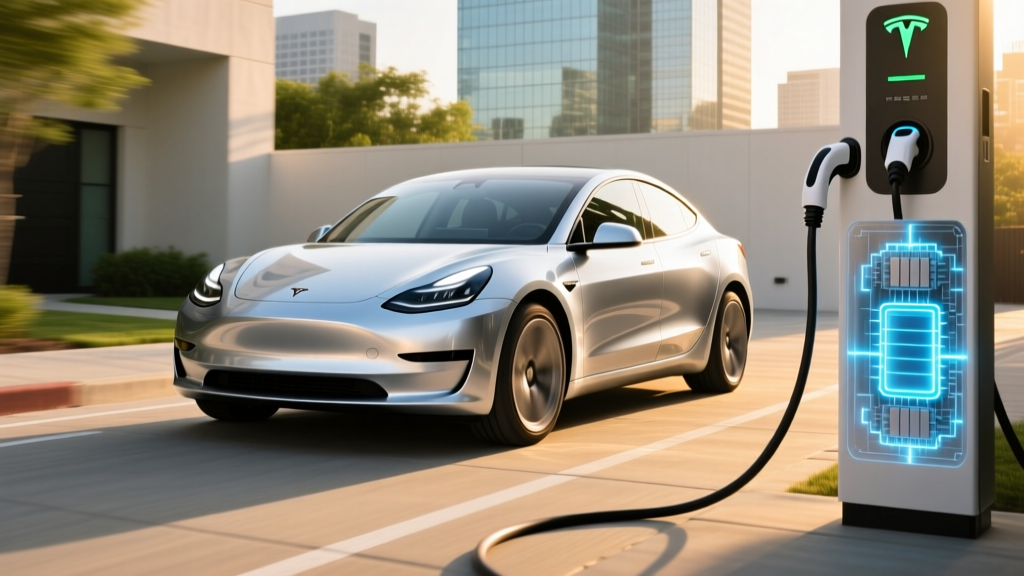
Charging speed is where the Model 3's 800V-adjacent architecture and Tesla's Supercharger network advantage become tangible. Here's what each trim delivers:
| Charging Method | RWD (LFP) | Long Range / Performance (NMC) |
|---|---|---|
| Max DC Fast Charge | 170 kW peak | 250 kW peak |
| 10–80% DCFC Time | ~28 min | ~25 min (V3 Supercharger) |
| Level 2 Home (48A / 11.5 kW) | ~30 mi/hr | ~44 mi/hr |
| Level 1 (120V / 12A) | ~3 mi/hr | ~3 mi/hr |
| Connector | NACS (native) | NACS (native) |
A critical nuance: peak kW is not sustained kW. The Long Range and Performance trims hit 250 kW only between roughly 10–30% state of charge on a V3 Supercharger, then taper progressively. By 60%, you're closer to 100–120 kW; above 80%, charging slows dramatically to protect battery health. This is why the 10–80% metric matters more than peak numbers — it reflects the usable charging window you'll actually rely on during road trips.
At home, a Tesla Wall Connector on a 60-amp circuit delivers up to 11.5 kW (48 amps), adding roughly 44 miles of range per hour on the Long Range. A full overnight charge from 20% to 80% takes about 5–6 hours. If your home electrical panel supports only a 40-amp circuit (32A / 7.7 kW), expect roughly 30 miles per hour — still sufficient for most daily needs. Per Tesla's home charging guidelines, a licensed electrician should evaluate your panel capacity before installation.
Pricing, Tax Credits, and Total Cost
| Trim | Base MSRP | §30D Credit Eligibility | Effective Price (if eligible) |
|---|---|---|---|
| RWD | $38,990 | Eligible (up to $3,750) | ~$35,240 |
| Long Range AWD | $44,990 | Eligible (up to $7,500) | ~$37,490 |
| Performance AWD | $52,990 | Eligible (up to $7,500) | ~$45,490 |
Federal tax credit eligibility under IRS §30D depends on three moving targets: buyer income caps ($150K single / $300K joint MAGI), vehicle MSRP caps ($55,000 for sedans), and battery critical-mineral and component sourcing requirements that tighten annually. As of 2026, the RWD Model 3 — with its LFP battery largely sourced from CATL — typically qualifies for the $3,750 partial credit (meeting critical-mineral thresholds but not full component sourcing). The Long Range and Performance trims with NMC batteries assembled in U.S. plants have historically qualified for the full $7,500, but sourcing rules evolve yearly.
Since 2024, buyers can transfer the credit to the dealer at point of sale, reducing the purchase price directly rather than waiting for a tax refund. Consult a tax professional to confirm your specific eligibility — income phase-outs and sourcing rule changes can shift qualification mid-year.
Interior, Cargo, and Daily Livability
The post-Highland Model 3 interior is markedly quieter and better-finished than pre-2024 versions, with ventilated front seats, ambient lighting, and rear-seat ventilation on higher trims. But the minimalist ethos remains: no instrument cluster, no turn-signal stalks (signals live on the steering wheel), and no physical gear selector (drive/reverse are via the touchscreen or overhead console).
- Front legroom: 42.2 inches
- Rear legroom: 35.2 inches
- Cargo (trunk + frunk): 23.1 cu ft total (19.8 trunk + 3.3 frunk)
- Rear seat fold: 60/40 split, expanding cargo to ~43 cu ft
- Curb weight: 3,862–4,065 lbs depending on trim
The 35.2-inch rear legroom is adequate for adults under 6 feet but tight for taller passengers on long trips. The trunk's 19.8 cu ft is competitive with midsize gas sedans, and the frunk adds useful space for charging cables or a soft bag. Towing is not recommended on the Model 3 — Tesla does not rate it for trailer loads, unlike the Model Y.
Tech, Autopilot, and Driver Assistance
Every Model 3 ships with Tesla's Basic Autopilot (adaptive cruise + lane centering) as standard. Full Self-Driving (Supervised) remains a $8,000 option or $99/month subscription. To be precise about SAE automation levels: both Basic Autopilot and FSD (Supervised) are Level 2 systems — the driver must remain fully engaged, hands on the wheel, eyes on the road. Tesla's "Supervised" label is deliberate: this is not autonomous driving. Level 4 driverless operation (like Waymo's robotaxi service) requires no human oversight; the Model 3 does not offer this.
FSD does not make the Model 3 self-driving. The system requires continuous driver supervision, can miss construction zones, may struggle with unmapped intersections, and can make errors in heavy rain or faded lane markings. NHTSA has investigated multiple incidents involving Tesla's driver-assist systems. Treat FSD as an advanced convenience feature, not a replacement for your attention.
The 15.4-inch center touchscreen handles everything: navigation, media, climate, vehicle settings, and the Tesla app ecosystem. A rear 8-inch screen for back-seat passengers (added in the Highland refresh) controls climate and entertainment. Over-the-air updates continue to add features post-purchase — a Tesla hallmark that few competitors match in scope.
Battery Warranty and Longevity
Tesla covers the Model 3 battery and drive unit for 8 years / 100,000 miles on the RWD trim and 8 years / 120,000 miles on Long Range and Performance trims. The warranty guarantees a minimum 70% state-of-health (capacity retention) over that period. Real-world degradation data from fleet analytics (including Tessu and Recurrent Auto) shows most Model 3 batteries retaining 88–92% capacity at 100,000 miles, with the steepest degradation occurring in the first 20,000 miles before leveling off.
LFP batteries (RWD trim) generally exhibit slower long-term degradation than NMC, and Tesla recommends charging LFP to 100% at least weekly for accurate state-of-charge calibration. NMC owners should target 80% daily charge and reserve 100% for road trips — a practice that extends cell life meaningfully over a decade of ownership.
Pros
- Class-leading 0-60 mph (2.9 sec on Performance)
- 341-mile EPA range on Long Range — among the best in the segment
- Access to Tesla Supercharger network (17,000+ U.S. stalls)
- NACS native connector — no adapter needed at Superchargers
- Low running cost (~$0.04–0.06/mile on home electricity)
- Over-the-air updates add features post-purchase
Cons
- Turn signals on steering wheel — polarizing ergonomics
- No physical gear selector or stalks
- Rear legroom tight for tall passengers (35.2 in)
- FSD costs $8,000 extra and remains Level 2 (not autonomous)
- No towing capacity
- RWD LFP range drops more in extreme cold
Model 3 vs. Key Competitors: Is It Still the One to Beat?
The electric sedan segment has thickened considerably. The Hyundai Ioniq 6 offers 361 miles of EPA range and faster 800V charging (10–80% in ~18 minutes) starting around $42,000. The BMW i4 delivers a more traditional luxury interior and comparable 0-60 times but starts above $52,000 and lacks Supercharger access without adapters. The Polestar 2 is competitive in build quality but trails on range (276 mi EPA for the single-motor) and charging speed.
Where the Model 3 still wins: the Supercharger network remains the most reliable DC fast-charging infrastructure in North America, and the Long Range's combination of 341-mile range, 4.2-second 0-60, and ~$37,490 effective price (after credit) is difficult to match dollar-for-mile. Where it loses: interior material quality versus BMW, rear-seat comfort versus Hyundai, and the ergonomics debate around stalkless controls.
Who Should Buy the Tesla Model 3?
Choose the Model 3 RWD if: You commute under 40 miles daily, can charge at home, want the lowest entry price, and don't regularly drive in sub-20°F winters. The LFP battery's tolerance for daily 100% charging makes it ideal for predictable routines.
Choose the Model 3 Long Range AWD if: You take regular road trips, live in a region with cold winters, need dual-motor traction, and want the best balance of range, acceleration, and price. This is the volume trim for good reason.
Choose the Model 3 Performance if: You prioritize acceleration (2.9-second 0-60 is visceral), want adaptive dampers and track mode, and accept a 26-mile range penalty versus Long Range for the privilege.
Look elsewhere if: You need rear-seat space for tall teenagers, want to tow, prefer physical controls, or require a luxury badge. The Ioniq 6, BMW i4, or Model Y (for cargo and headroom) may serve you better.
Frequently Asked Questions
What is the real-world range of the Tesla Model 3?
The EPA rates the Long Range AWD at 341 miles, but sustained highway driving at 75 mph yields roughly 280–305 miles in moderate weather. In freezing temperatures with cabin heat, expect 230–260 miles. City driving with regenerative braking can match or exceed the EPA figure.
How fast does the Model 3 charge at home and on the road?
On a Level 2 home charger (48A / 11.5 kW), the Long Range adds about 44 miles of range per hour, fully replenishing overnight. On a V3 Supercharger (250 kW peak), 10–80% takes approximately 25 minutes, though charge rate tapers significantly above 60%.
How much does the Model 3 cost after federal tax credits?
The RWD starts at $38,990 and may qualify for a $3,750 partial credit (~$35,240 effective). The Long Range at $44,990 and Performance at $52,990 have historically qualified for the full $7,500 credit, bringing them to ~$37,490 and ~$45,490 respectively. Eligibility depends on your income, the vehicle's MSRP cap compliance, and current battery-sourcing rules per IRS §30D.
Does the Tesla Model 3 qualify for the federal EV tax credit in 2026?
It depends on the trim and current sourcing rules. The Long Range and Performance trims have generally qualified for the full $7,500 when their NMC batteries meet critical-mineral and component-sourcing thresholds. The RWD with its LFP battery often qualifies for $3,750 (partial). Buyer income must not exceed $150K (single) or $300K (joint), and the sedan MSRP must stay under $55,000. Verify current eligibility on the IRS Clean Vehicle page before purchasing.
Is the Model 3 worth buying over the Hyundai Ioniq 6 or BMW i4?
If Supercharger access, proven software, and the Long Range's price-to-range ratio are priorities, the Model 3 holds a strong advantage. If you value 800V charging speed (Ioniq 6 charges 10–80% in ~18 minutes), traditional luxury interiors (BMW i4), or physical controls, the competitors deserve serious consideration. Test-drive all three before deciding.
What are the biggest drawbacks of the Tesla Model 3?
The stalkless steering wheel (turn signals, wipers, and drive/reverse all live on the screen or wheel buttons) frustrates some drivers. Rear legroom is modest at 35.2 inches. FSD costs $8,000 and remains a Level 2 driver-assist system — not autonomous. The RWD LFP battery loses more range in extreme cold than NMC variants.
How long will the Model 3 battery last?
Tesla warranties the battery for 8 years / 100,000 miles (RWD) or 8 years / 120,000 miles (Long Range/Performance), guaranteeing at least 70% capacity retention. Fleet data shows most Model 3 batteries retaining 88–92% capacity at 100,000 miles. With proper charging habits (80% daily for NMC, 100% weekly for LFP), a Model 3 battery should comfortably last 150,000–200,000+ miles before replacement consideration.