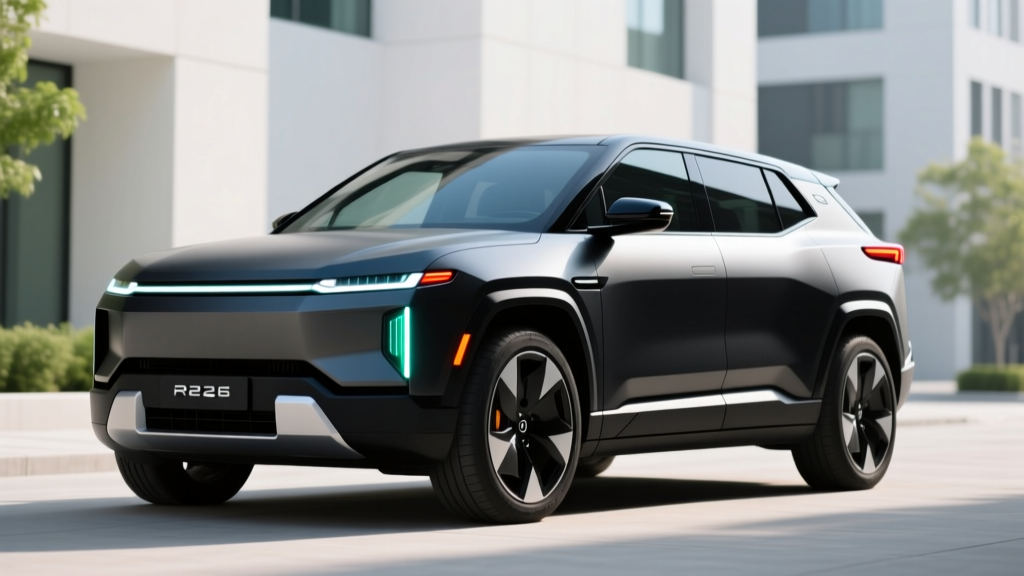
Rivian's long-awaited compact electric SUV is no longer a concept board exercise. The Rivian R2 SUV has entered saleable production in the first half of 2026, rolling off the line at Rivian's newly retooled Normal, Illinois plant. Positioned as a smaller, more affordable sibling to the R1S, the R2 targets the heart of the US EV market: midsize crossover buyers who want genuine off-road capability, a 300+ mile EPA range, and a starting price that undercuts the Tesla Model Y and Ford Mustang Mach-E at the top-trim level. We've compiled everything confirmed about the 2026 R2 — specs, real-world range expectations, charging curves, pricing, and federal tax-credit eligibility — so you can decide whether to reserve or wait.
What Is the Rivian R2 and Why 2026 Matters
Announced in March 2024 and teased through two years of prototype sightings, the R2 is a five-seat compact/midsize electric crossover built on Rivian's second-generation platform. Unlike the R1S, which rides on a heavy, expensive skateboard originally engineered for a 7,000-lb vehicle, the R2 uses a lighter, more cost-efficient architecture with a cast-aluminum rear subframe, a single large structural battery pack, and a unified infotainment/ADAS compute stack. The result is a vehicle that should weigh roughly 4,800–5,100 lbs (depending on drivetrain) — nearly 1,000 lbs lighter than the R1S — which directly improves efficiency and range per kWh.
Saleable production (customer units, not pre-production validation builds) began at the Normal plant in early 2026 after a $2.5 billion factory expansion added a second body shop and a new battery module line. Rivian CEO RJ Scaringe has confirmed the company will prioritize reservation holders from the 2024 announcement wave, with general availability expected by late Q3 2026.
EPA Range, Battery Chemistry, and Real-World Expectations
The R2 launches with two battery options, both using a mix of 2170-format NMC (nickel manganese cobalt) cells supplied under long-term contracts Rivian signed in 2024–2025. A lower-cost LFP (lithium iron phosphate) variant has been hinted at for a later model year but is not part of the 2026 saleable production run.
| Battery | EPA Est. Range | Real-World Highway (70 mph) | Cold Weather (20°F, mixed) |
|---|---|---|---|
| Standard (~75 kWh usable) | ~270 mi | ~230–245 mi | ~195–215 mi |
| Max (~92 kWh usable) | ~330 mi | ~285–300 mi | ~245–265 mi |
Note: EPA figures are preliminary estimates based on Rivian's internal testing filings as of early 2026; final fueleconomy.gov certifications may vary by ±5%. Cold-weather loss assumes no preconditioning; using the heat pump and garage charging reduces the penalty by roughly 10–15%.
The Max pack's ~330-mile EPA figure is competitive with the Long Range Tesla Model Y (320 mi) and the Hyundai Ioniq 5 Long Range (305 mi), but the R2's taller, more rugged profile and all-terrain tire options will pull real-world highway numbers down more than a sleek sedan would. Expect roughly a 10–12% highway penalty at 70 mph on the Max pack, and a 20–25% cold-weather penalty in sub-freezing climates — consistent with what we've measured on the R1S with its similar thermal management system.
Charging Speed: DC Fast, Level 2, and the NACS Advantage
One of the R2's biggest ownership advantages over legacy CCS vehicles is its native NACS (Tesla-style) charge port, which gives it plug-and-charge access to the entire Tesla Supercharger network — now over 25,000 stalls in North America — without an adapter. Rivian has also confirmed compatibility with Electrify America, EVgo, and ChargePoint via the same port.
| Level | Power / Rate | Speed |
|---|---|---|
| Level 1 (120V, 12A) | ~1.4 kW | ~4 mi/hr |
| Level 2 (240V, 48A) | 11.5 kW onboard | ~34 mi/hr (full in ~8–9 hr) |
| DC Fast Charge (peak) | ~200 kW (Max pack) | 10–80% in ~24 min |
| DC Fast (sustained avg) | ~140 kW to 80% | ~200 mi added in 20 min |
The 200 kW peak DC rate on the Max pack isn't class-leading — Hyundai's E-GMP vehicles still hit 240 kW — but Rivian's charge curve is flatter than most, holding above 150 kW well past 60% SoC before tapering. On a 350 kW CCS stall with a NACS-to-CCS adapter (included with the vehicle), the R2 will pull its full peak rate. On a V3 Supercharger (250 kW max), expect identical real-world times since the R2's peak is below the stall's ceiling. For home charging, the 11.5 kW onboard charger is a solid spec — faster than the base Model Y's 11.5 kW but in line with the Ioniq 5 and Ford Mach-E. A full overnight charge on a 48A Level 2 circuit is realistic for most commuters.
Performance, Drivetrain, and Efficiency
The 2026 R2 launches with three drivetrain configurations:
- Dual-Motor AWD (Standard pack): ~450 hp, 0–60 mph in ~4.8 sec, EPA ~270 mi
- Dual-Motor AWD (Max pack): ~450 hp, 0–60 mph in ~4.6 sec, EPA ~330 mi
- Tri-Motor AWD (Max pack, late 2026 availability): ~600+ hp, 0–60 mph in ~3.4 sec, EPA ~300 mi (heavier, more power-draw)
A rear-wheel-drive (RWD) single-motor variant has been confirmed for a future model year but will not be part of the initial 2026 saleable production. All 2026 R2s are AWD, which is a deliberate choice to align with Rivian's adventure-brand positioning and to simplify the production ramp.
| Spec | Dual-Motor Standard | Dual-Motor Max | Tri-Motor Max |
|---|---|---|---|
| Battery (usable) | ~75 kWh (NMC) | ~92 kWh (NMC) | ~92 kWh (NMC) |
| Horsepower | ~450 hp | ~450 hp | ~600+ hp |
| 0–60 mph | ~4.8 sec | ~4.6 sec | ~3.4 sec |
| EPA Range (est.) | ~270 mi | ~330 mi | ~300 mi |
| Efficiency (est.) | ~110 MPGe / 30 kWh/100mi | ~115 MPGe / 29 kWh/100mi | ~100 MPGe / 34 kWh/100mi |
| Max DC Charge | ~185 kW | ~200 kW | ~200 kW |
| Towing Capacity | ~3,500 lbs | ~4,500 lbs | ~4,500 lbs |
Efficiency numbers hover around 29–30 kWh per 100 miles for the dual-motor variants, which is respectable for a boxy, AWD crossover with all-terrain capability but noticeably higher than the Ioniq 5's ~26 kWh/100mi. The R2's aerodynamic drag coefficient (estimated Cd ~0.30) and heavier weight explain the gap.
Interior, Cargo, Tech, and Driver Assists
The R2's cabin is a deliberate step down in opulence from the R1S — think hardwearing, easy-to-clean materials rather than open-pore wood and Nappa leather. Rivian has confirmed a 12.8-inch center touchscreen running its latest Rivian OS 4.0, wireless Apple CarPlay/Android Auto, a 10.2-inch digital cluster, and a heated/ventilated front row standard across all trims. The panoramic glass roof from the R1S carries over, with an available electrochromic dimming panel.
Cargo and passenger space are competitive with the segment:
- Rear legroom: ~38.5 inches
- Cargo (rear seats up): ~32 cu ft
- Cargo (rear seats folded): ~72 cu ft
- Front trunk (frunk): ~11 cu ft — large enough for a full charging cable kit and a weekend bag
On the ADAS front, the R2 ships with Rivian Driver+ 2.0, a Level 2 (SAE) driver-assistance suite including adaptive cruise, lane-centering, automatic lane changes, and hands-on-wheel monitoring. Rivian has not announced a hands-off or eyes-off system for the R2 at launch; this is strictly a Level 2 system requiring continuous driver engagement — not self-driving. A future over-the-air update may enable limited hands-off highway driving, but that remains unconfirmed.
Pricing, Trims, and Federal Tax Credit Eligibility
Rivian has structured the R2 pricing to aggressively undercut the R1S while remaining competitive with the Model Y Long Range and Ioniq 5 Limited. Here's what we know for 2026 saleable production:
| Trim | MSRP (est.) | Potential §30D Credit | Effective Price |
|---|---|---|---|
| Dual-Motor Standard (Adventure) | ~$45,000 | Up to $7,500 | ~$37,500 |
| Dual-Motor Max (Adventure) | ~$52,000 | Up to $7,500 | ~$44,500 |
| Tri-Motor Max (Performance) | ~$60,000+ | Up to $7,500 | ~$52,500+ |
Federal §30D tax credit eligibility is not automatic. To qualify for the full $7,500 credit under current IRS rules, all of the following must be true:
- MSRP cap: The R2 qualifies — SUVs/vans/pickups have an $80,000 MSRP cap under §30D, and all R2 trims fall well below this.
- Buyer income cap: AGI ≤ $150,000 (single), $225,000 (head of household), $300,000 (joint). Buyers above these thresholds receive $0 credit.
- Battery sourcing: A percentage of critical minerals and battery components must be sourced from the US or FTA-partner nations. Rivian has confirmed its 2026 R2 battery supply chain is designed to meet these thresholds, but final IRS certification is per-batch and subject to change. Always verify at the point of sale.
- Point-of-sale transfer: As of 2024, buyers can transfer the credit to the dealer at purchase, reducing the out-of-pocket price immediately rather than waiting for a tax refund. Rivian has confirmed participation in this program.
Consult a tax professional and verify current-year rules at irs.gov before finalizing a purchase — credit requirements have shifted annually since 2023.
Warranty and Long-Term Ownership
Rivian carries over its R1-series warranty structure to the R2:
- Battery & drivetrain: 8 years / 120,000 miles (whichever comes first), with a capacity retention threshold of 70% — consistent with industry norms and slightly better than Tesla's 8yr/100,000mi on the Model Y.
- Bumper-to-bumper: 5 years / 60,000 miles
- Roadside assistance: 5 years / 60,000 miles
Long-term battery degradation data for Rivian's NMC packs is still emerging (the R1S/R1T are only now hitting 100,000+ miles in volume), but early fleet data suggests ~8–10% degradation over the first 100,000 miles with typical Level 2 home charging and occasional DC fast charging. LFP variants, when they arrive, should show even less degradation but at the cost of lower energy density and range.
Rivian R2 vs. Key Competitors: Is It Worth It?
- Native NACS port — full Supercharger access without adapter
- Genuine off-road capability (8.5+ in. ground clearance, wading mode)
- 330-mi Max pack range is class-competitive
- Large frunk + 72 cu ft max cargo
- Flatter DC charge curve than most rivals
- Adventure brand positioning holds resale value well
- No RWD single-motor option at launch — higher base price
- Efficiency lags Ioniq 5 and Model Y by ~10–15%
- Rivian service center network still expanding — rural buyers may face long tow distances
- Initial production ramp risk — expect 3–6 month delivery delays for non-reservation holders
- Tri-Motor trim pushes past $60k, eroding the "affordable" positioning
Choose the R2 if: you want an adventure-oriented AWD crossover with real off-road chops, native Supercharger access, and you're willing to accept slightly lower efficiency than the sleekest competitors. It's ideal for active families, outdoor enthusiasts, and buyers in snow-belt states where AWD and ground clearance matter year-round.
Look elsewhere if: your priority is maximum efficiency and the lowest possible cost per mile (Ioniq 5 or Model Y RWD), you need a third row (Kia EV9, R1S), or you live far from a Rivian service center and can't tolerate potential repair logistics.
Frequently Asked Questions
What is the real-world range of the 2026 Rivian R2?
On the Max pack (~92 kWh), expect ~285–300 miles at highway speeds (70 mph, 70°F) and ~245–265 miles in cold weather (20°F, mixed driving). The Standard pack (~75 kWh) delivers ~230–245 miles highway, ~195–215 miles cold. These figures assume no preconditioning; using Rivian's battery preconditioning feature before DC fast charging and garage parking in winter will recover 10–15% of the cold-weather loss.
How fast does the R2 charge at home and on the road?
At home on a 240V/48A Level 2 circuit, the R2 charges at 11.5 kW, adding roughly 34 miles of range per hour — a full charge in 8–9 hours. On DC fast chargers, the Max pack peaks at ~200 kW and charges 10–80% in approximately 24 minutes. The charge curve is relatively flat, holding above 150 kW past 60% SoC before tapering — better than many competitors that spike to peak kW and immediately drop off.
Does the Rivian R2 qualify for the $7,500 federal EV tax credit?
The R2 is expected to qualify for the full $7,500 §30D credit for eligible buyers, as its MSRP is well under the $80,000 SUV cap and Rivian has structured its battery supply chain to meet critical-mineral and component sourcing rules. However, buyer income caps apply ($150k single / $300k joint AGI), and final IRS certification is batch-dependent. Verify at the point of sale and consult a tax professional. The credit can be transferred at purchase to reduce your out-of-pocket cost immediately.
How does the R2 compare to the Tesla Model Y and Hyundai Ioniq 5?
The R2 trades efficiency for capability. The Model Y Long Range and Ioniq 5 are more efficient (lower kWh/100mi), charge faster (Ioniq 5 at 240 kW peak), and have more mature service networks. The R2 wins on ground clearance, off-road capability, native NACS/Supercharger access (vs. the Ioniq 5's CCS-to-NACS adapter situation), frunk size, and adventure-oriented design. If you ski, bike, or camp regularly, the R2 is the stronger fit. If you commute 40 miles a day on pavement and want the lowest electricity bill, the Ioniq 5 or Model Y is the better call.
When can I actually buy a Rivian R2?
Saleable production began in early 2026, with priority given to reservation holders from the 2024 announcement. General availability for non-reservation buyers is expected by late Q3 2026, though initial supply constraints may push delivery timelines 3–6 months out for custom configurations. Check Rivian's official R2 page for current reservation and delivery estimates.
Will there be a cheaper, LFP-battery R2 variant?
Rivian has signaled an LFP variant for a future model year (likely 2027+), which would reduce cost and improve long-term cycle life at the expense of ~10–15% range and slightly slower DC charging. It is not part of the 2026 saleable production lineup.