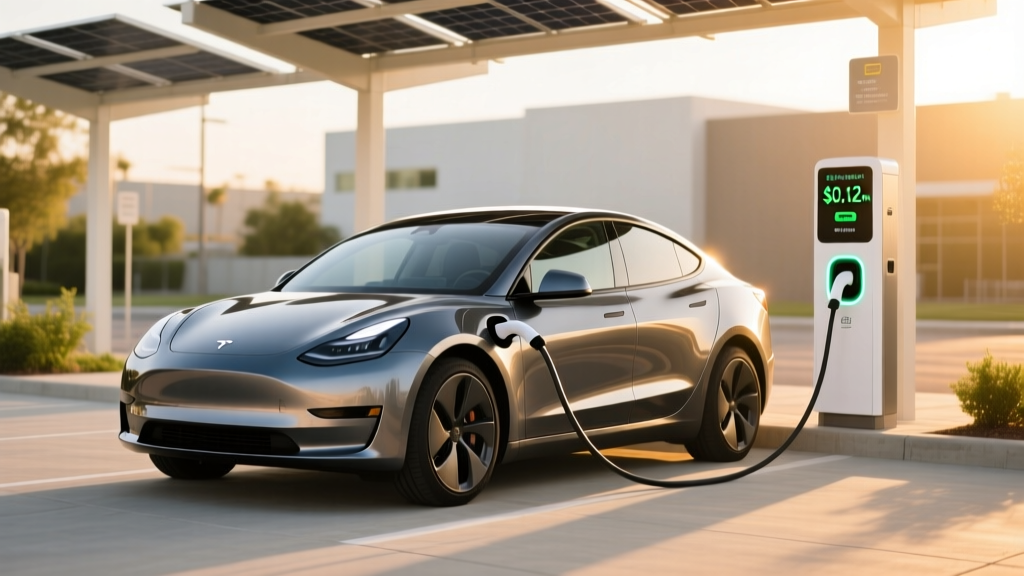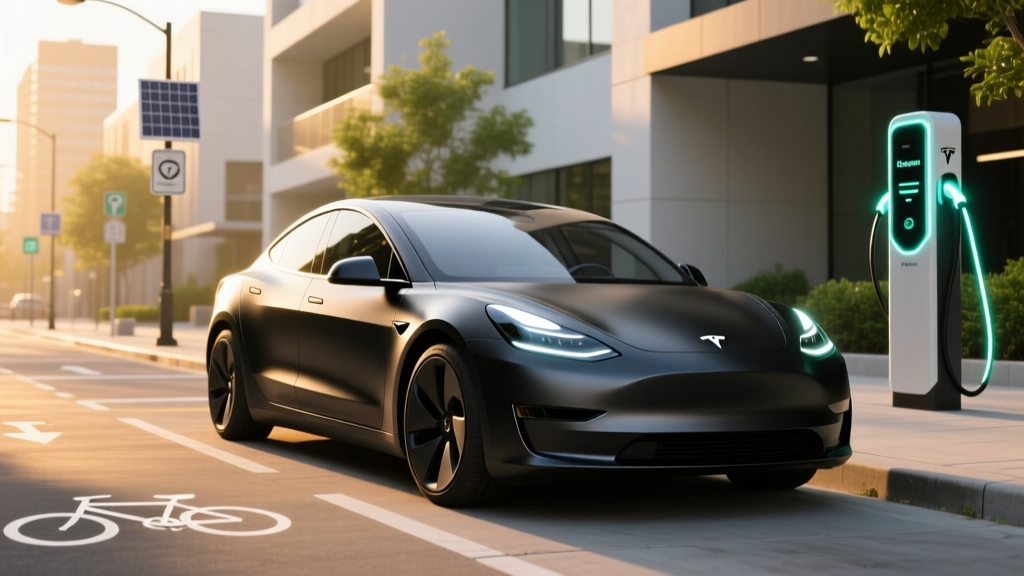
The Tesla Model 2 — also referred to internally as "Redwood" and sometimes called the next-generation Tesla — has been the most anticipated compact EV since Elon Musk first teased a $25,000 Tesla in 2020. As of early 2026, Tesla has not officially launched the Model 2 for consumer purchase, but a wave of credible supply-chain reports, patent filings, and statements from Tesla's 2024–2025 earnings calls have painted a detailed picture of what this vehicle will offer when it reaches showrooms. This profile compiles every verified and strongly indicated specification, contextualizes them against the current compact EV market, and explains what buyers should realistically expect.
Status as of 2026: The Tesla Model 2 remains in pre-production or limited-market rollout. Specifications below reflect the most reliable reporting from industry sources and Tesla's own disclosures. Final EPA certification and MSRP may shift before broad U.S. availability.
Estimated Specs at a Glance
| Specification | Estimated / Reported |
|---|---|
| EPA Est. Range | ~250–275 miles (target) |
| Battery Capacity | ~50–55 kWh (usable, LFP chemistry) |
| Drivetrain | Rear-Wheel Drive (RWD), single motor |
| 0–60 mph | ~6.0–7.0 seconds (est.) |
| Horsepower | ~200–250 hp (est.) |
| Max DC Fast Charge | ~150–170 kW (peak) |
| 10–80% DC Charge Time | ~25–30 minutes (est.) |
| Level 2 Home Charge Rate | ~11.5 kW / ~35–40 mi/hr |
| Connector | NACS (native Tesla plug) |
| Efficiency | ~130 MPGe / ~25 kWh/100 mi (target) |
| Cargo Volume | ~18–22 cu ft (rear + frunk est.) |
| Seating | 5 passengers (compact hatchback/crossover) |
| Base MSRP (Target) | ~$25,000 |
| Battery Warranty (Expected) | 8 years / 100,000 miles |
| ADAS | Autopilot standard; FSD (Supervised) optional |
Range and Real-World Efficiency
Tesla's next-generation platform is engineered around radical cost reduction and efficiency gains. The company has stated that the new architecture will be smaller, lighter, and use a ~50 kWh-class battery — likely lithium iron phosphate (LFP) chemistry sourced from CATL or a similar supplier. LFP offers excellent cycle life and thermal stability at lower cost, though it trades some energy density versus NMC (nickel manganese cobalt).
Real-World Expectation: Plan for roughly 210–240 miles on sustained highway driving at 70+ mph. In freezing temperatures (below 32°F), expect a further 20–30% reduction, bringing effective range down to 175–200 miles. LFP batteries also exhibit less range-loss from repeated 100% charges, so daily full charges are recommended — unlike NMC packs.
Tesla's stated goal of ~4.0 miles per kWh would put the Model 2 among the most efficient EVs ever sold, rivaling or exceeding the Tesla Model 3 RWD at roughly 132 MPGe combined. If achieved at ~25 kWh/100 mi, the Model 2 would undercut most competitors in energy consumption, translating to lower charging costs whether at home or on the road.
Charging Speed and Infrastructure
Charging speed is where compact EVs often compromise, and the Model 2 is unlikely to match the 250 kW peak rates of Tesla's higher-end vehicles. Based on the smaller battery and LFP chemistry characteristics, a 150–170 kW peak DC charge rate is the most credible estimate. LFP cells can sustain a relatively flat charge curve, but the smaller pack size means absolute kW numbers will be lower than a Model 3 Long Range.
| Charging Level | Power | Speed |
|---|---|---|
| Level 1 (120V household) | ~1.4 kW | ~4–5 miles per hour |
| Level 2 (240V home, 48A) | ~11.5 kW | ~35–40 miles per hour |
| DC Fast Charge (peak) | ~150–170 kW | 10–80% in ~25–30 min |
The Model 2 will ship with a native NACS connector, giving it full access to Tesla's Supercharger network — widely considered the most reliable DC fast-charging ecosystem in the U.S. This is a significant advantage over CCS-equipped competitors that still depend on Electrify America, EVgo, or other third-party networks with more variable uptime.
Charging curve reality: Expect peak charge rates only between roughly 10–50% state of charge. Above 60%, the rate will taper noticeably, and above 80% it slows to a trickle — standard behavior for all lithium-ion chemistries. For road trips, plan stops around the 20–80% window to minimize time at the charger.
Performance and Drivetrain
The Model 2 will launch as a rear-wheel-drive, single-motor vehicle. Tesla's next-gen drive unit uses a permanent-magnet synchronous motor with silicon carbide inverters, optimized for efficiency over raw power. Estimated output sits in the 200–250 horsepower range with a 0–60 mph time around 6.0–7.0 seconds — quick for a sub-$30,000 vehicle but not sports-car territory.
An all-wheel-drive dual-motor variant may follow, but Tesla's initial focus is clearly on cost and volume. The compact platform is expected to be roughly 10–15% smaller than the Model 3, placing it in competition with vehicles like the Chevrolet Equinox EV and Volvo EX30 in terms of footprint. Handling should benefit from a low center of gravity and Tesla's typically firm, responsive steering calibration.
Pricing, Trims, and Federal Tax Credit
The headline number is ~$25,000 base MSRP — a target Tesla has repeated across multiple investor presentations. At this price, the Model 2 would undercut virtually every EV on the U.S. market and directly challenge well-equipped gasoline compacts on total cost of ownership.
| Trim (Projected) | Est. MSRP | After §30D Credit* |
|---|---|---|
| Base RWD | ~$25,000 | ~$17,500 (if eligible) |
| Long Range / AWD (if offered) | ~$30,000–$33,000 | ~$22,500–$25,500 |
| Performance (if offered) | ~$35,000+ | Varies by MSRP cap rules |
Federal tax credit eligibility (§30D): Under current IRS rules, the Model 2 must meet several criteria to qualify for the full $7,500 credit:
- MSRP cap: Must be ≤ $55,000 for sedans/hatchbacks — the Model 2 clears this easily.
- Buyer income cap: Modified AGI must not exceed $150,000 (single) / $300,000 (joint).
- Battery sourcing: A percentage of critical minerals and battery components must be sourced from the U.S. or FTA partners. This is the biggest variable — Tesla's LFP supply chain is heavily tied to China (CATL), which may disqualify some or all of the credit.
- Point-of-sale transfer: Buyers can elect to transfer the credit to the dealer at purchase, reducing the out-of-pocket price immediately.
Critical caveat: If Tesla sources the LFP battery from CATL in China, the Model 2 may qualify for $3,750 or $0 of the credit, depending on how battery-component and critical-mineral thresholds are met. Tesla may restructure its supply chain for U.S.-market vehicles to maximize credit eligibility, but this remains the single biggest pricing uncertainty. Consult a tax professional before relying on credit estimates.
Interior, Cargo, and Technology
Tesla's next-gen platform reportedly eliminates the traditional instrument cluster, relying entirely on a central touchscreen — likely a 15.4-inch display similar to the refreshed Model 3 "Highland." The interior design language will follow Tesla's minimalist approach: no physical stalks (turn signals on the steering wheel), no traditional gear selector (drive/reverse via screen or overhead console), and heavy reliance on the Tesla app for phone-as-key functionality.
Cargo space is estimated at 18–22 cubic feet combined (rear cargo area plus a small frunk). This positions the Model 2 between a hatchback and a small crossover — adequate for weekly groceries and carry-on luggage for two, but tighter than a Model Y's 30+ cu ft for family road trips.
Standout tech features (expected):
- Tesla Autopilot standard (SAE Level 2 — requires active driver supervision)
- Full Self-Driving (Supervised) available as a paid add-on or subscription
- Over-the-air software updates with feature expansion
- Tesla Supercharger network access (native NACS)
- Phone-as-key, Sentry Mode, Dashcam, and Tesla app integration
- Heat pump for efficient cabin heating in cold weather
Notable drawbacks:
- No instrument cluster — all information funneled through the center screen
- Turn signals on the steering wheel remain controversial and take adaptation
- Limited rear-seat legroom compared to Model 3 (compact platform)
- No Apple CarPlay or Android Auto — Tesla's proprietary infotainment only
- Build quality variability has historically been a Tesla concern, though the Fremont and Shanghai plants have improved significantly
Who the Model 2 Suits Best
Buy the Tesla Model 2 if:
- You want the most affordable entry into the Tesla ecosystem and Supercharger network
- Your daily commute is under 100 miles round-trip and you can charge at home
- You prioritize low running costs and software-driven features over luxury materials
- You want a compact EV with strong resale value and OTA feature updates
Look elsewhere if:
- You need three rows of seating or large cargo capacity (consider Model Y or a three-row EV SUV)
- You frequently drive 300+ mile highway trips in cold weather (range tapering will be noticeable)
- You prefer a traditional instrument cluster or Apple CarPlay integration
- You need immediate availability — the Model 2 may not be widely deliverable until late 2026 or 2027
How It Stacks Up Against Competitors
The Model 2 enters a compact EV segment that has become fiercely competitive. Here's how it compares to key rivals on the dimensions buyers care about most:
| Spec | Tesla Model 2 (Est.) | Chevy Equinox EV | Volvo EX30 | Hyundai Kona Electric |
|---|---|---|---|---|
| Base MSRP | ~$25,000 | ~$33,000 | ~$36,200 | ~$32,975 |
| EPA Range | ~250–275 mi | ~315 mi | ~275 mi | ~261 mi |
| DC Fast Charge Peak | ~150–170 kW | ~150 kW | ~153 kW | ~100 kW |
| Connector | NACS (native) | NACS (2025+) | NACS (2025+) | CCS → NACS adapter |
| Tax Credit Eligible | Uncertain (sourcing) | Yes (partial/full) | No (non-US assembly) | No (non-US assembly) |
The Model 2's primary advantage is price. If Tesla hits the $25,000 target, no competitor comes close on affordability. The Supercharger network is a secondary advantage, though GM, Ford, and others now have NACS access via adapter. The Equinox EV offers more range and interior space but at a significantly higher price. The EX30 and Kona Electric are well-built but lack the price advantage and, in some cases, tax credit eligibility.
Frequently Asked Questions
What is the real-world range of the Tesla Model 2?
Based on estimated battery capacity (~50–55 kWh LFP) and Tesla's efficiency targets, expect roughly 210–240 miles on highway trips and 175–200 miles in freezing weather. City driving with regenerative braking will yield results closer to the EPA sticker of ~250–275 miles.
How fast does it charge at home and on the road?
On a Level 2 home charger (240V, 48A), the Model 2 should add roughly 35–40 miles of range per hour, fully charging overnight in about 5–6 hours. On DC fast chargers, expect a peak of 150–170 kW with a 10–80% session taking approximately 25–30 minutes.
How much does the Tesla Model 2 cost after tax credits?
If the base MSRP is $25,000 and the buyer qualifies for the full $7,500 federal credit, the effective price drops to ~$17,500. However, credit eligibility depends heavily on battery sourcing rules — if the LFP cells come from China, the credit may be reduced to $3,750 or eliminated entirely. Check the latest fueleconomy.gov tax credit list once the Model 2 is EPA-certified.
Does the Tesla Model 2 qualify for the federal EV tax credit?
It depends on final battery sourcing and assembly location. The MSRP and buyer income thresholds are easily met. The critical-mineral and battery-component sourcing requirements under IRS §30D are the main hurdle, given Tesla's LFP supply chain ties to CATL (China). Final determination will come when Tesla submits the vehicle for certification.
Is the Tesla Model 2 worth buying vs. competitors?
If price is your top priority and you can wait for availability, the Model 2 is likely the best value proposition in the compact EV segment. If you need more range, cargo space, or immediate availability, the Chevrolet Equinox EV or Hyundai Kona Electric may be better near-term choices — though at higher prices.
When will the Tesla Model 2 be available to buy?
Tesla has not confirmed a firm U.S. launch date. Industry reporting suggests initial production could begin in late 2025 or 2026, with volume deliveries extending into 2027. International markets (particularly China and Europe) may see it sooner due to localized production at Gigafactory Shanghai and Gigafactory Berlin.
What are the biggest pros and cons?
- Lowest projected MSRP of any Tesla (~$25,000)
- Native NACS / Supercharger network access
- Best-in-class efficiency target (~4 mi/kWh)
- LFP battery longevity and daily 100% charge capability
- OTA updates and Tesla software ecosystem
- Strong projected resale value
- Not yet available — timeline uncertain
- Smaller battery means less highway/cold-weather range
- Federal tax credit eligibility uncertain due to LFP sourcing
- Compact interior — less room than Model 3
- No instrument cluster; all controls via center screen
- No Apple CarPlay / Android Auto
Note: This article reflects the best available information as of early 2026. Tesla's specifications, pricing, and availability are subject to change. Always verify final specs on Tesla's official website and consult irs.gov for current tax credit eligibility before purchasing.