The Tesla Minivan Question: What Buyers Actually Want
Search forums, Reddit threads, and EV Facebook groups and you will find the same recurring request: a Tesla minivan. Families who have outgrown the Model Y's second row, who need sliding doors for tight school-drop-off lanes, and who want three usable rows of seating with a proper trunk — they are looking for a Tesla-badged people mover. The keyword "Tesla minivan 2026" trends steadily among EV-curious parents weighing their next purchase.
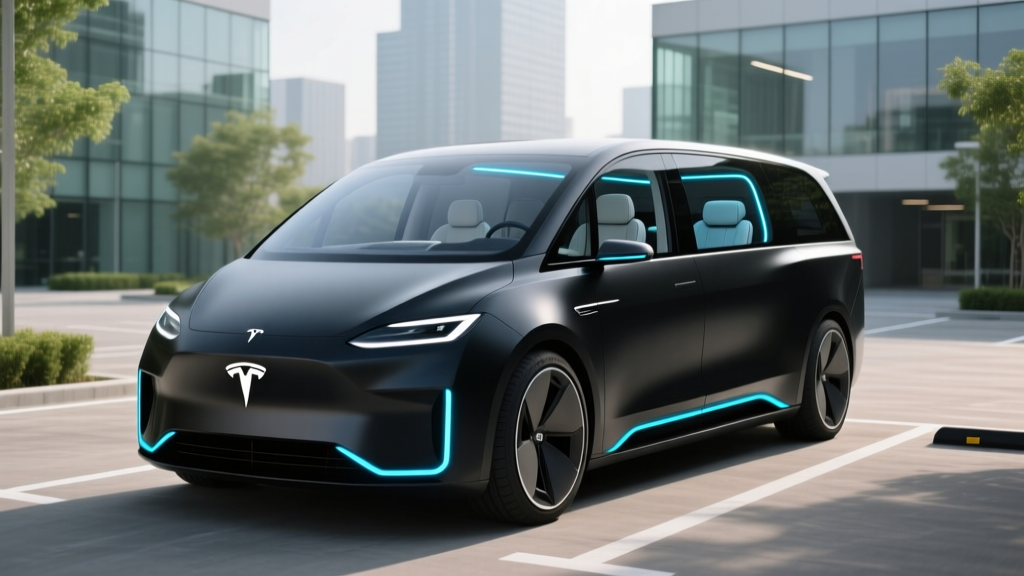
Here is the honest answer as of early 2026: Tesla has not announced, teased, or confirmed a minivan or multi-purpose vehicle (MPV) for the US market. There is no "Model Z" on Tesla's website, no press release, no leaked production timeline from Gigafactory Texas. What exists is a robust rumor cycle, a handful of speculative renders from independent designers, and a genuine gap in Tesla's lineup that competitors are beginning to fill.
This article separates what is known from what is conjecture, projects what a Tesla minivan would need to offer based on current Tesla architecture, and points you toward real alternatives you can actually buy today.
Where the Tesla Minivan Rumors Come From
The minivan speculation gained traction for several converging reasons:
- The Model X is not a minivan. It is a midsize SUV with falcon-wing rear doors and an optional third row, but its third row is tight for adults, cargo space behind the third row is limited, and the starting price pushes well past $80,000. Families want something more practical and more affordable.
- The Chrysler Pacifica PHEV and Toyota Sienna hybrid dominate the family-hauler segment, but neither offers a full BEV option with 300+ miles of range. The minivan market is ripe for electrification.
- Tesla's Robovan concept, briefly shown during the October 2024 "We, Robot" event, hinted at a larger passenger vehicle — but that concept targets autonomous fleet and commercial use, not family retail buyers.
- International market pressure. Chinese competitors like the Zeekr 009, XPeng X9, and Denza D9 are selling premium electric MPVs in Asia. Tesla has acknowledged the need to compete in this space globally, though no US-market product has materialized.
Elon Musk has occasionally referenced a "Tesla Van" in passing on X (formerly Twitter), but these comments have never translated into a formal product program. Tesla's current publicly known priorities remain the next-generation compact platform (often called "Model 2" or "Redwood"), Cybercab robotaxi production, and Optimus humanoid robot scaling.
Projected Specs: What a Tesla Minivan Would Need
If Tesla were to build a minivan for the 2027 or 2028 model year using its current architecture and battery technology, here is what the spec sheet would likely need to look like to compete. These are analyst projections, not confirmed figures.
| Attribute | Projected Spec | Basis for Estimate |
|---|---|---|
| EPA Range | 310–350 miles | Comparable to Model X; larger battery offset by higher weight and drag |
| Battery Capacity | ~100–110 kWh usable | Similar to Model X Long Range pack |
| Battery Chemistry | NMC (nickel manganese cobalt) | Energy density required for 300+ mi range in a large vehicle; LFP too heavy |
| Peak DC Fast Charge | ~250 kW (V3 Supercharger) | Current Tesla architecture; 800V platform possible on next-gen |
| 10–80% DC Charge Time | ~28–35 minutes | Larger pack means longer sustained charge even at high peak kW |
| Level 2 Home Charging | 11.5 kW / ~34 mi/hr | Tesla Wall Connector at 48A on 60A circuit |
| 0–60 mph | 4.5–5.5 seconds (AWD) | Dual-motor AWD; family-oriented tuning, not Plaid territory |
| Horsepower | ~450–500 hp (dual motor) | Similar to Model X Long Range |
| Drivetrain | AWD (dual motor) standard | Minivan buyers expect all-weather capability |
| Seating | 7 or 8 passengers | Three-row with captain's chairs or bench second row |
| Cargo (behind 3rd row) | ~35–45 cu ft | Minivan segment benchmark; needs to beat Model X's ~15 cu ft |
| Cargo (max, seats folded) | ~120–140 cu ft | Competitive with Pacifica/Sienna |
| Efficiency | ~95–105 MPGe / 32–36 kWh/100mi | Heavier, boxier than Model X; similar to Rivian R1S |
| Projected Base MSRP | $55,000–$65,000 | Must undercut Model X; compete with Pacifica PHEV ($50k) and Sienna ($40k hybrid) |
| Battery/Powertrain Warranty | 8 yr / 120,000 mi (est.) | Current Tesla standard for larger vehicles |
The Charging Picture: What Tesla's Network Offers a Minivan
One advantage a Tesla minivan would have over any competitor is access to the Tesla Supercharger network, which remains the most reliable and widely deployed DC fast-charging system in North America. With over 6,500 Supercharger stations and 30,000+ stalls in the US as of early 2026, a Tesla-badged minivan would charge seamlessly across the country.
However, the physics of charging a large minivan battery are important to understand:
| Charging Level | Power (kW) | Miles Added per Hour | Notes |
|---|---|---|---|
| Level 1 (120V outlet) | ~1.4 kW | ~3–4 mi/hr | Emergency/trickle only; 100+ hours for full charge |
| Level 2 (240V, 48A) | 11.5 kW | ~34 mi/hr | Tesla Wall Connector; full charge in ~9–10 hours |
| DC Fast (V3 Supercharger) | Peak 250 kW | ~750 mi/hr (peak) | 10–80% in ~28–35 min; tapers significantly above 80% |
| DC Fast (V4 Supercharger) | Peak 250–350 kW | ~900+ mi/hr (peak) | Newer V4 cabinets; availability varies by station |
Key charging-curve reality: Peak kW is not sustained kW. A 250 kW peak rate typically holds from roughly 10% to 40% State of Charge, then tapers. By 60% SoC, the rate may drop to ~150 kW, and above 80% it falls below 75 kW. For a ~105 kWh minivan battery, a realistic 10–80% stop will take closer to 30–35 minutes, not the "15 minutes" marketing sometimes implies. Preconditioning the battery (which Tesla's navigation does automatically when routing to a Supercharger) is essential to achieving peak rates.
Federal Tax Credit: Would a Tesla Minivan Qualify?
Under the current IRS §30D Clean Vehicle Credit rules in effect for 2026, a Tesla minivan would likely qualify for up to $7,500 — but with important caveats that apply to all Tesla vehicles:
- MSRP cap: Vans and SUVs have an $80,000 MSRP ceiling (sedans are capped at $55,000). A Tesla minivan priced at $55,000–$65,000 would clear this threshold comfortably.
- Buyer income limits: Modified adjusted gross income must not exceed $300,000 (joint filers), $225,000 (head of household), or $150,000 (single). These thresholds have not been indexed for inflation.
- Battery component sourcing: The $7,500 credit is split into two halves — $3,750 for battery components manufactured in North America and $3,750 for critical minerals sourced from the US or free-trade-agreement partners. Tesla has steadily improved its sourcing, but the exact credit amount varies by model year and production batch. Some Tesla vehicles have qualified for the full $7,500 while others received only $3,750.
- Point-of-sale transfer: As of 2024, buyers can transfer the credit to the dealer at purchase, reducing the out-of-pocket price immediately rather than waiting for a tax refund. This applies to Tesla direct sales as well.
Bottom line: if a Tesla minivan launched at ~$60,000 with current US battery sourcing, most income-eligible buyers could expect a $3,750–$7,500 reduction, bringing the effective price to roughly $52,500–$56,250. Always verify current eligibility on the IRS website and consult a tax professional before purchasing.
The Alternatives: What You Can Buy Right Now
Since the Tesla minivan does not exist, families shopping in early 2026 have several electrified and three-row alternatives worth considering:
| Vehicle | Type | EPA Range / MPG | Starting MSRP | Third Row? |
|---|---|---|---|---|
| Chrysler Pacifica PHEV | Plug-in hybrid | 32 mi electric + 30 MPG gas | ~$50,000 | Yes (Stow 'n Go) |
| Toyota Sienna | Hybrid (HEV) | 36 MPG combined | ~$40,000 | Yes |
| Kia EV9 | BEV (3-row SUV) | ~300 mi (EPA) | ~$55,000 | Yes (tight) |
| Tesla Model X | BEV (SUV) | ~335 mi (EPA) | ~$82,000 | Yes (optional, cramped) |
| Rivian R1S | BEV (3-row SUV) | ~340 mi (EPA, Max Pack) | ~$80,000 | Yes (compact) |
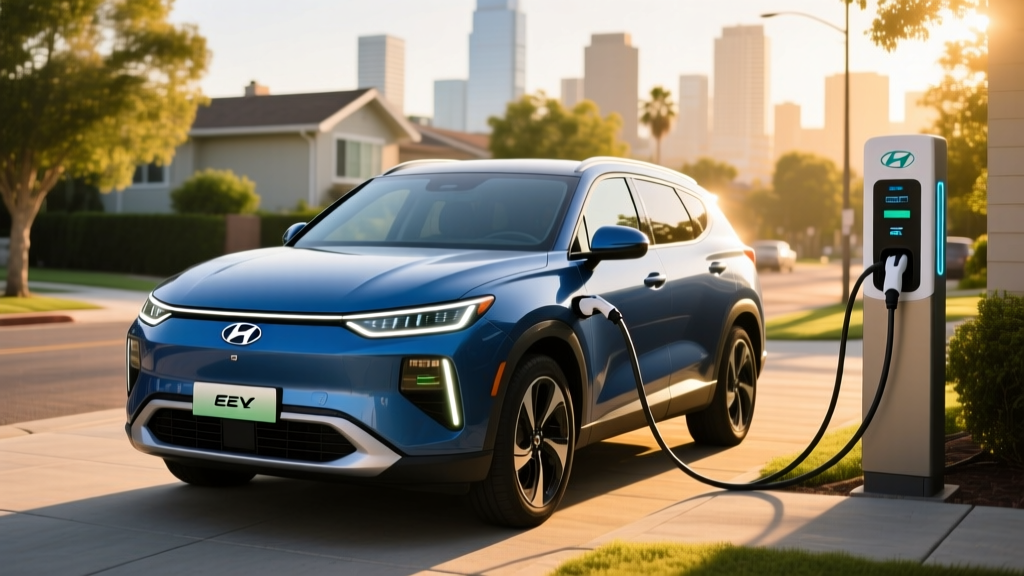
| Hyundai Ioniq 9 | BEV (3-row SUV) | ~310 mi (EPA est.) | ~$55,000 | Yes |
For families who want the Tesla ecosystem (Supercharger access, over-the-air updates, Autopilot) and need three rows, the Model X remains the only option — but its $82,000+ price, limited third-row comfort, and small rear cargo area make it a compromised minivan substitute. The Kia EV9 and Hyundai Ioniq 9 are the closest all-electric alternatives in the family-hauler size class, though neither offers Tesla's Supercharger network natively (both use NACS adapters for Supercharger access starting in 2025–2026).
Why Tesla Might (or Might Not) Build a Minivan
The case for:
- The US minivan market moves ~500,000+ units annually, almost entirely dominated by Toyota (Sienna), Honda (Odyssey), and Chrysler (Pacifica). None are fully electric.
- Tesla's brand loyalty among tech-forward families is high — many Model Y owners say they would buy a Tesla minivan immediately if one existed.
- Sliding doors, a flat floor (enabled by a skateboard battery platform), and a frunk for groceries would be genuinely differentiated features no current minivan offers.
The case against:
- Tesla has historically prioritized high-margin, high-volume segments (sedans, crossovers). Minivans are a lower-margin, image-sensitive category.
- The Cybercab robotaxi and next-gen compact vehicle are consuming Tesla's engineering bandwidth through 2026–2027.
- Minivan sales, while steady, have been slowly declining as three-row SUVs (many now electric) absorb family buyers.
- Tesla's design language — low, sleek, minimalist — is fundamentally at odds with the tall, boxy proportions a functional minivan requires.
Who Should Wait — and Who Should Buy Now
Wait for a Tesla minivan if:
- Your current vehicle has 2+ years of life left and you are not in an urgent buying cycle
- You are deeply invested in the Tesla ecosystem (Powerwall, Solar Roof, Supercharger habit)
- You specifically want a BEV minivan and are willing to wait potentially until 2028 or beyond
- You need three usable rows and real cargo space today
- You drive more than 30 miles round-trip daily and want electric commuting (Pacifica PHEV covers most commutes on battery alone)
- A $50,000–$65,000 budget is firm and you cannot wait for an unannounced product
- You want the full $7,500 federal tax credit before potential legislative changes affect §30D eligibility
Frequently Asked Questions
Is Tesla actually making a minivan in 2026?
No. As of early 2026, Tesla has not announced any minivan or MPV for any market. The "Tesla minivan" remains a rumor and wishlist item. Tesla's current US lineup consists of the Model 3, Model Y, Model S, Model X, and Cybertruck.
What would a Tesla minivan cost?
Based on Tesla's pricing strategy and the competitive landscape, a Tesla minivan would likely start between $55,000 and $65,000. To be competitive with the Chrysler Pacifica PHEV (~$50,000) and to stay under the IRS §30D MSRP cap of $80,000 for vans/SUVs, Tesla would need to price aggressively. Higher trims with dual-motor AWD and larger batteries could push into the $70,000–$75,000 range.
Would a Tesla minivan qualify for the $7,500 federal tax credit?
Likely yes, assuming it is classified as a van or SUV (MSRP cap of $80,000), the buyer meets income requirements ($150,000 single / $300,000 joint), and Tesla's battery sourcing meets the critical-mineral and component-manufacturing thresholds. The credit amount can be $3,750 or $7,500 depending on sourcing compliance. Always check the latest rules at irs.gov.
What is the best electric alternative to a Tesla minivan?
The Kia EV9 and Hyundai Ioniq 9 are the closest all-electric three-row family vehicles available in 2026. Neither is a true minivan (they are SUVs with available third rows), but they offer 300+ miles of EPA range, DC fast charging, and starting prices around $55,000. For a true minivan with electric capability, the Chrysler Pacifica PHEV offers 32 miles of electric-only range plus a gas engine for longer trips.
How fast would a Tesla minivan charge?
Based on Tesla's current V3 Supercharger architecture (250 kW peak), a minivan with a ~105 kWh battery would likely achieve a 10–80% charge in approximately 28–35 minutes. At home on a Level 2 Tesla Wall Connector (11.5 kW / 48A), a full charge from empty would take roughly 9–10 hours, adding about 34 miles of range per hour. These are projections — actual specs would depend on the final battery pack and thermal management system.
Does Tesla's Robovan count as a minivan?
No. The Tesla Robovan concept, shown briefly at the October 2024 "We, Robot" event, is designed as an autonomous passenger shuttle for fleet and commercial use — closer to a small bus than a family minivan. It is not expected to be sold to individual consumers and has no announced production timeline or retail pricing.
Will Tesla ever make a minivan?
It is possible but not certain. Tesla has acknowledged competitive pressure from electric MPVs in China, and the company's skateboard platform could accommodate a minivan form factor. However, Tesla's engineering priorities through 2027 appear focused on the Cybercab, next-gen compact vehicle, and energy products. A realistic earliest launch for a Tesla minivan, if it happens, would be the 2028 or 2029 model year.