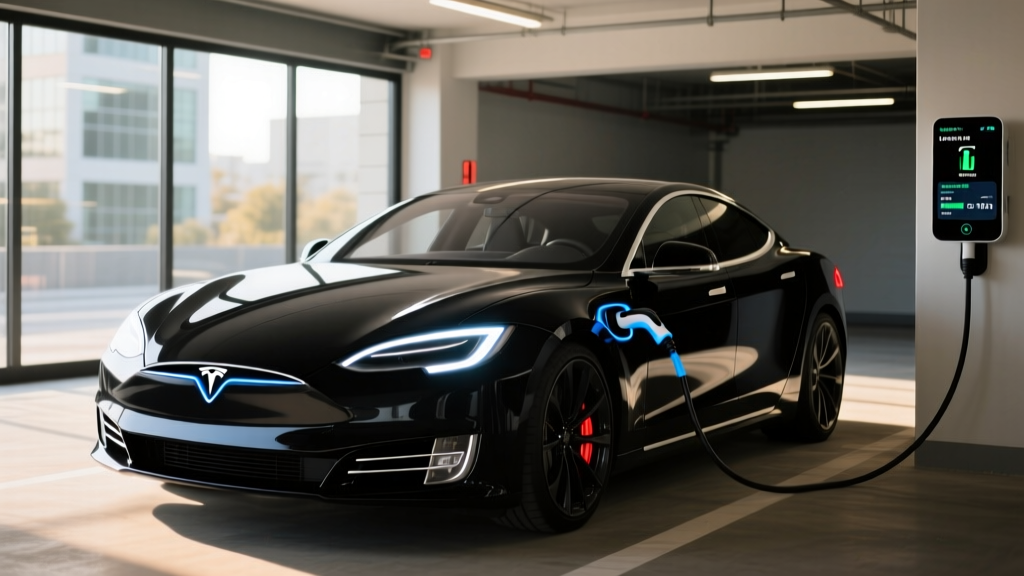
Tesla's promise has always been simple: fewer moving parts mean lower long-term costs. But does that hold up when you factor in tire wear, out-of-warranty repairs, and insurance premiums? If you've been asking are Teslas expensive to maintain, the answer depends heavily on which model you drive, how long you keep it, and whether you're comparing it to a gas car or a competing EV.
In this guide, we break down real 2026 ownership data for Tesla's two highest-volume vehicles — the Model 3 sedan and Model Y crossover — covering routine maintenance, tire costs, battery degradation, warranty coverage, and how they stack up against rivals like the Hyundai Ioniq 5 and Ford Mustang Mach-E.
Tesla Model 3 & Model Y: The Spec Sheet That Drives Maintenance
Before analyzing costs, here are the core specifications that influence long-term ownership for Tesla's current best-sellers.
| Spec | Model 3 Long Range AWD | Model Y Long Range AWD |
|---|---|---|
| EPA Range | 341 miles | 320 miles |
| Battery (usable) | ~75 kWh (NMC) | ~75 kWh (NMC) |
| Drivetrain | Dual-motor AWD | Dual-motor AWD |
| 0-60 mph | 4.2 seconds | 4.8 seconds |
| Horsepower | ~346 hp | ~384 hp |
| MPGe (combined) | 131 MPGe | 122 MPGe |
| Efficiency | 25 kWh/100 mi | 28 kWh/100 mi |
| Peak DC Fast Charge | 250 kW | 250 kW |
| 10-80% DC Time | ~25 minutes | ~27 minutes |
| Level 2 Home Charge | 11.5 kW (~44 mi/hr) | 11.5 kW (~40 mi/hr) |
| Cargo Volume | 23 cu ft (rear) + 3 cu ft frunk | 34 cu ft (rear) + 4 cu ft frunk |
| Rear Legroom | 35.2 inches | 37.0 inches |
| Base MSRP | $47,740 | $52,130 |
| Battery Warranty | 8 yr / 120,000 mi | 8 yr / 120,000 mi |
Routine Maintenance: What Tesla Owners Actually Pay For
The biggest maintenance advantage of any EV over a gas car is the elimination of oil changes, spark plugs, timing belts, exhaust system repairs, and transmission fluid swaps. Tesla takes this further by eliminating even the traditional dealership service-visit cadence — the company recommends no scheduled annual service.
Here's what Tesla maintenance actually looks like year-to-year:
Cabin Air Filter & HEPA Filter
Tesla recommends replacing the cabin air filter every 2 years (or 3 years for vehicles without a HEPA filter). Cost: approximately $30-$50 for the filter if you DIY, or $80-$130 at a Tesla Service Center. The HEPA filter (standard on Model Y, optional on Model 3) runs $80-$120 for the part.
Tire Rotation & Replacement
This is where Tesla costs surprise new owners. Tesla's instant torque and heavy battery packs eat through tires faster than comparable gas vehicles. Tesla recommends rotation every 6,250 miles.
- Rotation cost: $30-$60 per visit (often free at Tesla Service Centers)
- Tire replacement: Expect new tires every 25,000-40,000 miles depending on driving style. A set of four OEM-spec Michelin Pilot Sport or Hankook iON tires for Model Y costs $1,000-$1,600 installed.
- Annual tire cost: Roughly $300-$500/year amortized over the tire's life.
Brake Fluid & Brake Pads
Thanks to regenerative braking, Tesla brake pads can last 100,000+ miles. Tesla recommends checking brake fluid every 2 years for contamination. A brake fluid flush costs $100-$150 when needed.
Windshield Wipers & Washer Fluid
Owner-serviceable. Wiper blades: $40-$70 every 1-2 years. Washer fluid: negligible cost.
Battery Coolant
Tesla's battery thermal management coolant is generally a lifetime fill on current models. No scheduled replacement is required under normal conditions.
Estimated Annual Maintenance Costs: Tesla vs. Gas vs. Competing EVs
| Vehicle Category | Avg Annual Maintenance | Notes |
|---|---|---|
| Tesla Model 3/Y | $300-$500 | Filters, wipers, tire rotation; tires add ~$400/yr |
| Gas Sedan (Toyota Camry) | $600-$900 | Oil changes, filters, belts, transmission fluid |
| Hyundai Ioniq 5 (EV) | $350-$550 | Similar to Tesla; slightly cheaper tires |
| Ford Mustang Mach-E (EV) | $400-$600 | Ford dealer network may add labor overhead |
According to Consumer Reports' long-term reliability data, EVs cost roughly 50% less to maintain over their lifetime compared to internal combustion vehicles. Tesla's minimalist design pushes that number even lower — but the tire cost premium is real and often underreported in marketing materials.
Battery Degradation & Out-of-Warranty Repair Risk
The single biggest fear for prospective Tesla buyers is battery replacement cost. Here's what the data shows:
Degradation Rates
Based on aggregated fleet data from sources like Recurrent Auto and Tesla's own Impact Report, Tesla NMC batteries typically retain:
- ~95% capacity at 30,000 miles
- ~90% capacity at 60,000 miles
- ~85-88% capacity at 100,000 miles
- ~80-85% capacity at 150,000 miles
The degradation curve flattens significantly after the initial 10-15% loss in the first 20,000-30,000 miles. Most Tesla batteries will outlast the vehicle's useful life.
Warranty Coverage
Tesla's battery and drive unit warranty covers 8 years or 120,000 miles (whichever comes first) for the Long Range models, with a guaranteed minimum 70% capacity retention. The base RWD Model 3 (with LFP battery) carries an 8 year / 100,000 mile warranty. If your battery drops below 70% within the warranty period, Tesla replaces it at no cost.
Out-of-Warranty Replacement
If a battery fails after the warranty expires, replacement costs range from $12,000 to $16,000 including labor, depending on the pack size. However, the statistical likelihood of a complete battery failure (as opposed to gradual degradation) remains low — estimated at well under 5% of vehicles based on Tesla's published reliability data.
Drive Unit Reliability
Tesla's permanent magnet synchronous motors have proven highly reliable. Drive unit failures are rare, and the sealed design requires no maintenance. Replacement cost if needed out of warranty: $5,000-$8,000.
Pricing, Tax Credits, and the True Cost of Entry
| Trim | MSRP | Est. Federal Credit (§30D) | Effective Price |
|---|---|---|---|
| Model 3 RWD (LFP) | $38,990 | Up to $7,500* | ~$31,490 |
| Model 3 Long Range AWD | $47,740 | Up to $7,500* | ~$40,240 |
| Model Y Long Range AWD | $52,130 | Up to $7,500* | ~$44,630 |
| Model Y Performance | $56,630 | Up to $7,500* | ~$49,130 |
*Federal tax credit eligibility under IRS §30D depends on multiple requirements: buyer income caps ($150K single / $300K joint for new vehicles), vehicle MSRP caps ($55K for sedans, $80K for SUVs/vans/trucks), and critical mineral + battery component sourcing thresholds that phase in annually. As of 2026, the sourcing requirements are stringent, and not all Tesla trims may qualify for the full $7,500. The credit can be transferred at point of sale as a discount. Always verify current eligibility at irs.gov or with a tax professional.
Insurance Costs: The Hidden Tesla Expense
While maintenance is cheap, insurance is where Tesla owners pay a premium. According to industry data, Tesla insurance costs 20-40% more than comparable gas vehicles due to:
- Higher repair costs after collisions (specialized aluminum body panels, sensor recalibration)
- Higher vehicle replacement values
- Limited third-party repair network (many body shops aren't Tesla-certified)
Average annual insurance for a Model 3: $2,200-$3,200 depending on state, age, and driving record. Model Y: $2,400-$3,500. Tesla offers its own insurance product in many states that uses real-time driving data to price premiums, which can be cheaper for safe drivers but more expensive for aggressive ones.
Charging Costs vs. Gasoline: Where Teslas Save the Most
The operating cost advantage of a Tesla over a gas car is substantial and ongoing:
| Energy Source | Cost per Mile | Annual Cost |
|---|---|---|
| Home charging ($0.14/kWh avg) | $0.035-$0.04 | $420-$480 |
| Public DC fast charging ($0.35-$0.50/kWh) | $0.09-$0.13 | $1,080-$1,560 |
| Gasoline (28 MPG, $3.50/gal) | $0.125 | $1,500 |
Owners who charge primarily at home save $1,000-$1,100 per year on energy compared to a gas car. Over 5 years, that's $5,000-$5,500 in savings — more than offsetting the tire premium and insurance bump.
Is a Tesla Worth It vs. Competing EVs?
Choose Tesla If:
- You want access to the Supercharger network (most reliable public DC charging in the US)
- Over-the-air updates and software experience matter to you
- You prioritize efficiency (25-28 kWh/100 mi is class-leading)
- You want strong resale value backed by brand recognition
- You value the minimalist interior and large central display
Look at Competitors If:
- You prefer physical buttons and traditional gauge clusters (Ioniq 5, EV6)
- You need 800V ultra-fast charging (Ioniq 5: 10-80% in ~18 min at 350 kW)
- You want a dealer service network for in-person support (Ford, Hyundai)
- Build quality consistency is a top priority (Tesla panel gaps remain a talking point)
- You need Android Auto (Tesla uses a proprietary infotainment system)
Pros and Cons: Tesla Model 3 & Model Y Ownership
✓ Pros
- Industry-leading energy efficiency (25-28 kWh/100 mi)
- Supercharger network: 6,000+ US stalls with high uptime
- Low routine maintenance costs (~$300-$500/yr)
- Over-the-air software updates add features post-purchase
- Strong safety ratings (NHTSA 5-star, IIHS Top Safety Pick+)
- Class-leading cargo space in Model Y (76 cu ft with seats folded)
- Heat pump standard for better cold-weather range retention
✗ Cons
- Tire wear is faster and more expensive than average
- Insurance premiums 20-40% higher than gas equivalents
- No Apple CarPlay or Android Auto support
- Service center wait times can be long in some metro areas
- Autopilot/FSD is Level 2 only — not self-driving
- Panel gap and paint quality inconsistency reported by owners
- DC fast charging peaks at 250 kW (slower than 800V rivals)
5-Year Total Cost of Ownership Summary
| Cost Category | Tesla Model 3 LR | Toyota Camry (Gas) |
|---|---|---|
| Purchase Price (after credit) | ~$40,240 | ~$30,000 |
| Energy/Fuel | $2,100-$2,400 | $7,500 |
| Maintenance | $1,500-$2,500 | $3,000-$4,500 |
| Tires | $2,000-$2,500 | $1,200-$1,600 |
| Insurance (avg) | $13,000-$16,000 | $8,000-$10,000 |
| Depreciation (est.) | $14,000-$18,000 | $10,000-$13,000 |
| Total 5-Year Cost | $73,000-$81,000 | $60,000-$67,000 |
The Tesla costs more upfront and in insurance, but saves significantly on energy and routine maintenance. The break-even point vs. a gas sedan typically arrives around year 6-7, depending on local electricity rates, gas prices, and annual mileage. Against a competing EV like the Ioniq 5, the Tesla's maintenance costs are nearly identical — the decision comes down to charging network preference, software experience, and styling.
Frequently Asked Questions
What is the real-world range of a Tesla Model 3 or Model Y?
The EPA rates the Model 3 Long Range at 341 miles and the Model Y Long Range at 320 miles. Real-world highway driving at 70 mph typically yields 280-300 miles (Model 3) and 260-280 miles (Model Y). In freezing temperatures, expect a 20-30% reduction, dropping to roughly 230-260 and 215-240 miles respectively. Preconditioning the battery while plugged in helps mitigate cold-weather losses.
How fast does a Tesla charge at home and on the road?
At home on a Level 2 charger (11.5 kW / 48A), the Model 3 adds approximately 44 miles of range per hour — a full overnight charge from 20% to 80% takes about 5-6 hours. On DC fast chargers, Tesla's V3 Superchargers deliver up to 250 kW peak, achieving a 10-80% charge in roughly 25-27 minutes. Note that charging speed tapers significantly above 80% SoC to protect battery health — a 10-90% charge takes closer to 40 minutes.
Do Teslas qualify for the $7,500 federal EV tax credit?
Eligibility under IRS §30D depends on your income (capped at $150K single / $300K joint for new vehicles), the vehicle's MSRP (sedans capped at $55K; SUVs at $80K), and battery component/critical mineral sourcing requirements. The Model 3 RWD and Long Range fall under the $55K sedan cap. The Model Y qualifies as an SUV under the $80K cap. However, sourcing requirements tighten annually, and partial credit ($3,750) may apply if only one of the two sourcing thresholds is met. Always check current rules at irs.gov. The credit can be applied as a point-of-sale discount through a registered dealer.
Are Teslas expensive to insure?
Yes, relative to gas cars. Average annual premiums run $2,200-$3,500 depending on model, state, and driver profile. This is 20-40% higher than equivalent gas vehicles due to higher repair costs and vehicle values. Tesla's own insurance product (available in most states) can be competitive for safe drivers, using real-time driving behavior to set rates.
How long do Tesla batteries last?
Tesla's NMC batteries are designed to retain at least 70% capacity over the 8-year/120,000-mile warranty period. Real-world fleet data shows most packs retain 85-90% at 100,000 miles. The LFP battery in the base Model 3 RWD is even more durable, with a longer cycle life and the ability to be charged to 100% regularly without degradation concerns. Complete battery failures are statistically rare (under 5%).
Is Tesla's maintenance really cheaper than a gas car?
For routine maintenance — absolutely. You'll spend $300-$500/year on filters, wipers, and fluid checks versus $600-$900/year for oil changes, filters, belts, and fluid services on a gas car. The caveat is tires: Tesla's weight and instant torque wear tires faster, adding $200-$300/year in tire costs compared to a lighter gas sedan. Even with the tire premium, total maintenance runs roughly 40-50% less than a gas vehicle over 5 years.
What are Tesla's biggest ownership drawbacks?
The top complaints from owners are: (1) higher insurance premiums, (2) faster tire wear, (3) no Apple CarPlay/Android Auto, (4) occasional service center delays in less-populated areas, and (5) build quality inconsistencies (panel gaps, paint). The Supercharger network and software experience remain Tesla's strongest advantages that competitors still struggle to match.