Is Ford Really Killing the F-150 Lightning?
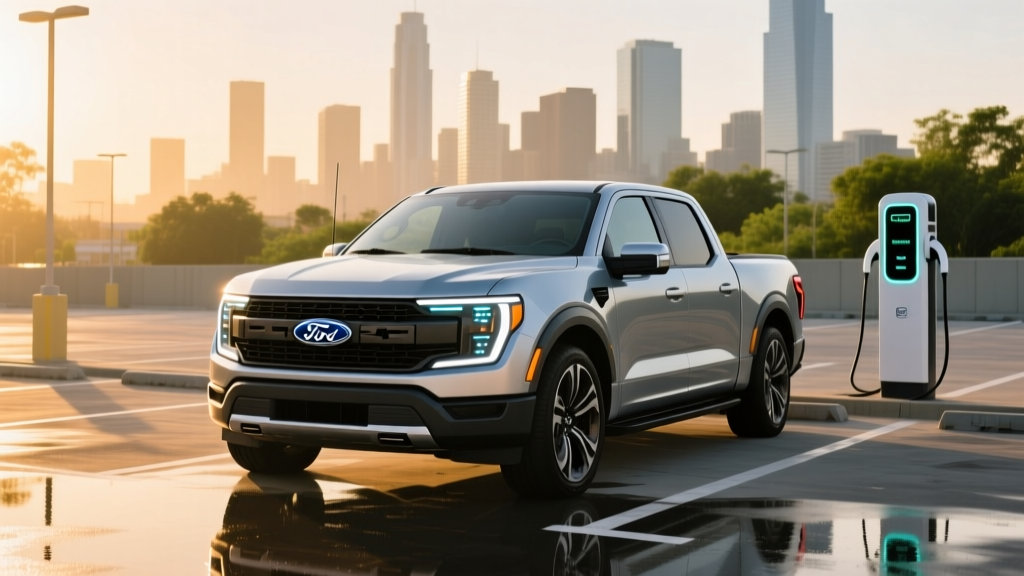
Rumors about a Ford F-150 Lightning discontinuation surface regularly in EV forums and industry publications, and it's easy to see why. Ford has restructured its electric vehicle strategy multiple times since the Lightning's 2022 launch, shifting production targets, delaying next-generation models, and publicly acknowledging that its EV division (Ford Model e) has posted billions in operating losses. For buyers researching a 2026 electric truck purchase, these headlines raise a legitimate question: Is the Lightning still a safe bet, or should you look elsewhere?
Here's the reality as of the 2026 model year: The F-150 Lightning remains in production and available for order through Ford dealerships. Ford has not issued an official discontinuation notice. However, the company has signaled a strategic pivot toward smaller, more affordable EVs and next-generation platforms, leaving the Lightning's long-term future uncertain beyond the current generation. This article breaks down everything you need to know about the truck's specs, ownership viability, and competitive position — whether you're buying now or weighing your options.
2026 Ford F-150 Lightning: Core Specifications
| Attribute | Specification |
|---|---|
| EPA Estimated Range | 320 miles (Extended Range) / 230 miles (Standard Range) |
| Battery Capacity (Usable) | ~131 kWh (Extended Range) / ~98 kWh (Standard Range) |
| Battery Chemistry | NMC (Nickel Manganese Cobalt) |
| Peak DC Fast Charge Rate | 150 kW (Extended Range) |
| 10–80% DC Fast Charge Time | ~41 minutes (Extended Range) |
| Level 2 Home Charging Rate | 19.2 kW (80A Ford Charge Station Pro) — ~30 mi/hr |
| Horsepower | 580 hp (Extended Range) / 563 hp (Standard Range) |
| Torque | 775 lb-ft |
| 0–60 mph | ~3.8 seconds (Extended Range) |
| Drivetrain | Dual-motor AWD (all trims) |
| Max Towing Capacity | 10,000 lbs (Extended Range, Max Trailer Tow Pkg) |
| Max Payload | 2,235 lbs |
| MPGe (Combined) | 70 MPGe (Extended Range) |
| Energy Consumption | 48 kWh/100 mi |
| Base MSRP | ~$54,995 (Pro trim, Standard Range) |
| As-Tested (Lariat Extended Range) | ~$76,000–$82,000 |
| Battery Warranty | 8 years / 100,000 miles (70% capacity retention) |
| Basic / Powertrain Warranty | 3 years / 36,000 mi (basic) · 5 years / 60,000 mi (powertrain) |
Real-World Range: What the EPA Sticker Doesn't Tell You
The F-150 Lightning's aerodynamic profile — essentially a brick pushing through air at highway speeds — is the primary culprit behind its real-world range deficit versus the EPA sticker. The combined-cycle EPA test includes substantial low-speed and stop-and-go driving where regenerative braking recovers energy. On a flat interstate at 65 mph, the Lightning is reasonably efficient for a full-size truck. Push it to 75+ mph, climb mountain grades, or tow a trailer, and energy consumption spikes dramatically.
Towing is where the Lightning's range limitations become most acute. Ford's own testing and independent reviews consistently show a 40–50% range reduction when towing a 5,000–7,000 lb trailer. That 320-mile Extended Range truck becomes a ~160–190-mile truck under load. For buyers who plan to tow frequently over long distances, this is the single biggest practical limitation of the Lightning versus a diesel or gas F-150.
On the positive side, the Lightning's dual-motor AWD system and low center of gravity (thanks to the under-floor battery pack) give it confident all-weather traction. The truck also features a heat pump on Extended Range models, which mitigates some cold-weather range loss compared to resistive heating systems.
Charging Speed: Home and DC Fast Charging Breakdown
| Charging Level | Power | Miles Added Per Hour | Notes |
|---|---|---|---|
| Level 1 (120V household) | ~1.4 kW | ~2–3 mi/hr | Emergency/trickle only; ~5 days for full charge |
| Level 2 (240V, 32A mobile cord) | 7.7 kW | ~13 mi/hr | Standard included cord; ~10 hrs Standard Range |
| Level 2 (240V, 48A wall unit) | 11.5 kW | ~19 mi/hr | Common aftermarket chargers; ~8 hrs Standard Range |
| Level 2 (240V, 80A Ford Charge Station Pro) | 19.2 kW | ~30 mi/hr | Requires 100A circuit; ~5 hrs Extended Range |
| DC Fast Charge (peak) | 150 kW | ~200+ mi/hr (peak) | 10–80% in ~41 min (Extended Range); tapers above 80% |
The Lightning's 150 kW peak DC fast-charge rate was competitive at launch but has fallen behind newer rivals. The Rivian R1T and the Chevrolet Silverado EV (on GM's Ultium platform) both accept higher peak charge rates. In practice, the Lightning's charging curve holds near peak rate from roughly 10% to 50% state of charge, then tapers progressively. A 10–80% session on a 150+ kW charger takes approximately 41 minutes for the Extended Range pack. Charging from 80–100% adds another 30–40 minutes — plan accordingly on road trips.
For home charging, the 80-amp Ford Charge Station Pro is the gold standard for Lightning owners. It requires a dedicated 100-amp circuit, which means a panel upgrade for many homes (budget $1,500–$3,000 for electrical work depending on your panel's existing capacity and distance to the garage). The payoff is roughly 30 miles of range per hour of charging — enough to fully replenish the Extended Range battery overnight.
The Lightning also supports Ford's Intelligent Backup Power system (with the Charge Station Pro and Home Integration System), which can power your home at up to 9.6 kW during an outage — essentially turning the truck into a rolling generator. This is a genuine differentiator versus gas trucks and most EV competitors.
Performance, Capability, and Daily Driving
The F-150 Lightning's dual-motor powertrain delivers 580 horsepower and 775 lb-ft of torque in Extended Range guise, launching the truck to 60 mph in approximately 3.8 seconds. That's sports-car acceleration in a 6,500-lb full-size pickup, and it never stops being surprising. The instant torque delivery makes highway merging effortless and gives the Lightning a responsiveness that no gas F-150 can match.
Payload capacity tops out at 2,235 lbs, and towing reaches 10,000 lbs with the Extended Range battery and Max Trailer Tow package. The truck's independent rear suspension (a first for the F-150) provides noticeably better ride quality than the live-axle gas models, especially when unloaded. The 400-lb front trunk (frunk) is a practical bonus — it's lockable, weather-sealed, and includes a drain plug for use as a cooler.
On the technology front, the Lightning features Ford's SYNC 4A infotainment system with a 15.5-inch portrait touchscreen (Lariat and above), wireless Apple CarPlay and Android Auto, and Ford's BlueCruise hands-free driving system on compatible highways. BlueCruise is a Level 2 driver-assist system — it handles steering, acceleration, and braking on pre-mapped divided highways, but the driver must remain attentive and ready to take over at all times.
Pricing, Trims, and Federal Tax Credit Eligibility
| Trim | Battery | MSRP (approx.) | Federal §30D Credit Eligible? |
|---|---|---|---|
| Pro | Standard Range | $54,995 | Potentially — subject to income, sourcing rules |
| XLT | Standard Range | $62,995 | Potentially — subject to income, sourcing rules |
| Lariat | Extended Range | $74,995 | Potentially — subject to income, sourcing rules |
| Platinum | Extended Range | $92,995 | Likely ineligible (exceeds $80K MSRP cap for trucks) |
The F-150 Lightning qualifies as a pickup truck under IRS §30D rules, which sets an MSRP cap of $80,000 for trucks, vans, and SUVs. This means the Pro, XLT, and most Lariat configurations can qualify for the federal tax credit, while the Platinum trim typically exceeds the cap.
However, eligibility is not automatic. Buyers must also meet adjusted gross income limits ($150,000 single / $300,000 joint filers) and the vehicle's battery must meet critical mineral and component sourcing requirements that have tightened significantly since the Inflation Reduction Act took effect. These sourcing rules change annually and can affect whether a specific build qualifies for the full $7,500, a partial $3,750, or no credit at all. Always verify eligibility with your tax professional and check the latest fueleconomy.gov listings before purchasing.
As of 2026, the §30D credit can be transferred to the dealer at the point of sale, reducing the purchase price directly rather than requiring you to wait for a tax refund. This is a meaningful cash-flow advantage for buyers.
Should You Worry About Discontinuation? Ownership Viability
Let's address the core concern directly. Even if Ford eventually discontinues the current-generation Lightning (which industry analysts expect to happen when Ford's next-generation truck platform launches, possibly around 2027–2028), existing owners are protected in several key ways:
- Federal mandate on parts availability: Automakers are required to maintain parts supply for a minimum period after discontinuation (typically 10+ years for major components).
- Battery warranty: The 8-year/100,000-mile battery warranty remains enforceable regardless of production status.
- Dealer service network: Ford's extensive dealer network and the F-150's status as America's best-selling vehicle mean service infrastructure will persist for decades.
- Software support: Ford has committed to ongoing OTA updates for current-generation EVs, though the duration of that commitment is not guaranteed indefinitely.
The bigger risk is resale value depreciation. If Ford announces a next-generation Lightning on a dedicated EV platform (with improved range, faster charging, and lower production costs), current-generation models could see accelerated depreciation. Early Lightning adopters have already experienced this — 2022–2023 models have depreciated significantly as Ford cut prices and competitors entered the market.
F-150 Lightning vs. Key Competitors
| Spec | Ford F-150 Lightning (ER) | Rivian R1T (Dual Max) | Chevy Silverado EV (4WT) |
|---|---|---|---|
| EPA Range | 320 mi | ~410 mi | ~380 mi |
| Battery (usable) | ~131 kWh | ~149 kWh | ~200 kWh |
| Peak DC Charge | 150 kW | ~220 kW | ~350 kW |
| 10–80% Time | ~41 min | ~30 min | ~20 min |
| 0–60 mph | 3.8 sec | ~3.5 sec | ~4.5 sec |
| Max Tow | 10,000 lbs | 11,000 lbs | 10,000 lbs |
| Starting MSRP | ~$54,995 | ~$79,900 | ~$55,000 (commercial); consumer TBD |
| Home Backup Power | Yes (9.6 kW) | No | No |
The Lightning's strongest competitive advantage remains its price-to-capability ratio at the Pro and XLT trims. No other electric truck undercuts it meaningfully on price while delivering full-size truck dimensions, AWD, and a usable frunk. The Rivian R1T is more refined, charges faster, and offers superior range — but starts roughly $25,000 higher. The Silverado EV promises impressive range and ultra-fast charging on GM's Ultium platform, but consumer retail availability has been limited and the truck's size and styling have polarized buyers.
For fleet buyers and commercial users, the Lightning Pro at ~$55K remains a compelling workhorse. For lifestyle buyers who prioritize range and road-trip charging speed, the Rivian R1T or the Silverado EV may be better long-term bets — particularly if the Lightning's platform doesn't receive a significant refresh.
Pros, Cons, and Who Should Buy
Pros
- Best value in full-size electric trucks at Pro/XLT trims
- 9.6 kW home backup power capability (unique differentiator)
- Massive 400-lb lockable frunk with drain
- Strong 0–60 performance and instant torque
- Independent rear suspension for superior ride quality
- BlueCruise hands-free highway driving
- Extensive Ford dealer service network
Cons
- 150 kW peak DC charge rate lags newer competitors
- Real-world highway range significantly below EPA estimate
- Towing cuts range by 40–50%
- Heavy: ~6,500 lbs curb weight impacts efficiency (48 kWh/100 mi)
- Depreciation risk if next-gen platform announced
- Platinum trim exceeds $80K tax-credit MSRP cap
- No NACS connector native (requires adapter for Tesla Superchargers)
The F-150 Lightning is best for: Homeowners with Level 2 charging who need a full-size truck for daily commuting, light-to-moderate towing, job-site use, and the security of home backup power. If you drive under 250 miles per day, can charge at home overnight, and value the frunk and V2H capability, the Lightning delivers a practical, capable package — especially at the Pro and XLT price points.
Look elsewhere if: You tow heavy trailers long distances, frequently drive 300+ mile highway routes between chargers, or prioritize fast road-trip charging above all else. The Rivian R1T, Silverado EV, or a plug-in hybrid truck (like the Ford F-150 PowerBoost hybrid) may serve those use cases better.
Frequently Asked Questions
Has Ford officially announced the F-150 Lightning discontinuation?
No. As of 2026, Ford has not issued a discontinuation notice for the F-150 Lightning. The truck remains in production and available for order. However, Ford has publicly discussed shifting EV investment toward smaller, more affordable models and next-generation platforms, which has fueled ongoing speculation about the Lightning's future beyond the current generation.
What is the real-world range of the F-150 Lightning?
The EPA rates the Extended Range model at 320 miles and the Standard Range at 230 miles. Real-world highway driving at 70–75 mph yields approximately 250–280 miles (Extended Range) and 180–200 miles (Standard Range). Cold weather below freezing can reduce these figures by an additional 20–30%.
How fast does the F-150 Lightning charge?
On a DC fast charger, the Extended Range Lightning peaks at 150 kW and charges from 10–80% in approximately 41 minutes. At home on a Level 2 charger, expect 13–30 miles of range per hour depending on your equipment (32A mobile cord vs. 80A Ford Charge Station Pro).
Does the F-150 Lightning qualify for the $7,500 federal EV tax credit?
Potentially, depending on trim, your income, and battery sourcing. The Pro, XLT, and most Lariat trims fall under the $80,000 MSRP cap for trucks. However, you must also meet IRS income limits ($150K single / $300K joint) and the battery must satisfy critical-mineral and component sourcing requirements that change annually. Verify current eligibility at fueleconomy.gov and consult a tax professional.
Is the F-150 Lightning worth buying despite discontinuation rumors?
If the truck meets your daily driving needs and you can charge at home, yes — particularly at the Pro and XLT price points. Ford's dealer network and the F-150 platform's parts commonality provide strong long-term serviceability. The main risk is accelerated depreciation if a next-gen model is announced. Consider leasing if depreciation is a primary concern.
Can the F-150 Lightning use Tesla Superchargers?
Yes, with a Ford-approved NACS adapter. Ford has provided adapters to existing Lightning owners, and newer models may ship with the NACS port native. Always verify adapter compatibility and check Supercharger availability for trucks in your area, as not all stalls accommodate the Lightning's size.