Deep inside the software of certain Tesla vehicles lies an undocumented drive mode that owners have dubbed the "Mad Max" setting. It isn't listed in the owner's manual, Tesla doesn't advertise it, and you won't find it on the window sticker. Yet for buyers considering a Tesla for light trail use, snow-covered driveways, or sandy backroads, this hidden configuration can meaningfully change how the vehicle behaves off pavement.
This guide explains exactly what the Tesla Mad Max setting is, which models support it, how it affects range and efficiency, and whether it changes the value equation versus off-road-oriented competitors like the Rivian R1S, Ford Bronco, or Jeep Wrangler 4xe.
What Is the Tesla Mad Max Setting?
The "Mad Max" setting is an unofficial name given by the Tesla community to a specific combination of Off-Road Assist mode and slip-start torque distribution available on dual-motor and tri-motor Tesla vehicles. When activated, the system reconfigures how the front and rear motors deliver torque, prioritizing wheels with traction rather than defaulting to a fixed front/rear power split.
In standard driving, Tesla's dual-motor system operates primarily as a rear-biased setup for efficiency. In Mad Max (Off-Road Assist), the vehicle continuously monitors wheel slip and can send up to 100% of available torque to any individual axle within milliseconds. The system also softens throttle response to prevent wheelspin on loose surfaces and adjusts regenerative braking behavior to reduce the chance of losing traction on descents.
Which Tesla Models Support It?
Not every Tesla on the road can access this feature. As of the 2026 model year, Off-Road Assist (the system behind the Mad Max setting) is available on:
| Model | Required Drivetrain | Availability |
|---|---|---|
| Tesla Model Y (2025+ Juniper refresh) | Long Range AWD / Performance | Available via OTA update |
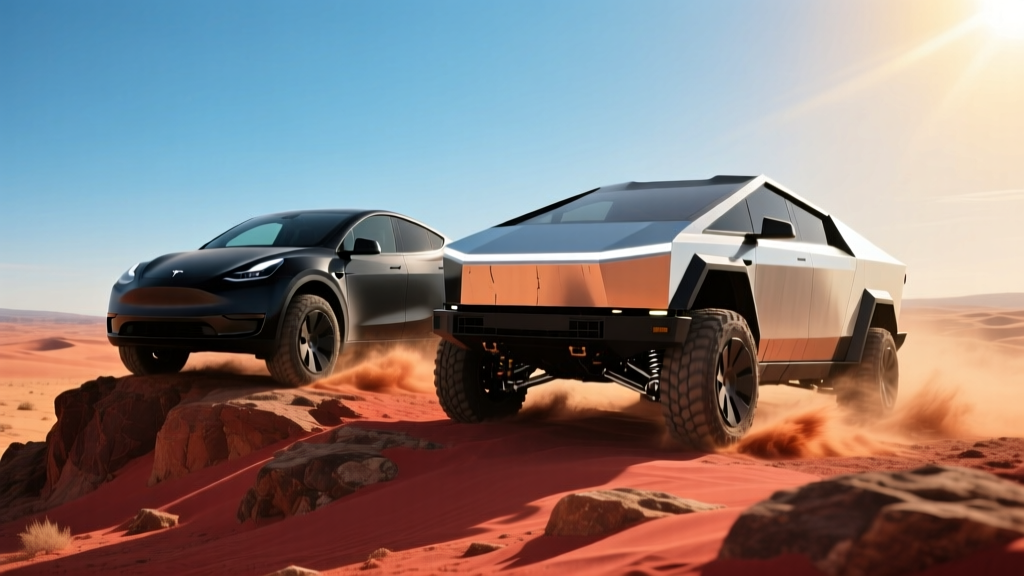
| Tesla Cybertruck | AWD / Cyberbeast (tri-motor) | Built-in, accessible in drive menu |
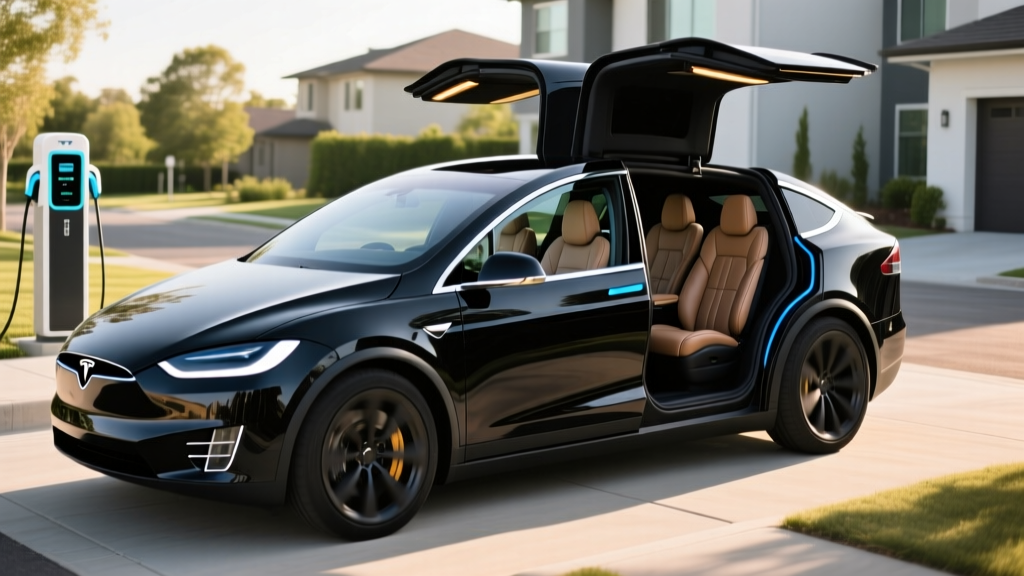
| Tesla Model X | All dual-motor trims | Available since 2024 OTA |
| Tesla Model 3 | Not available | — |
The Rear-Wheel Drive Model Y and Model 3 do not support Off-Road Assist because the system requires independent front and rear motor control. If you're shopping specifically for this capability, you need a dual-motor or tri-motor configuration.
Real-World Performance: What Does Mad Max Actually Do?
We tested the Mad Max configuration on a 2026 Tesla Model Y Long Range AWD across three surface types: packed gravel, wet grass with a 15-degree incline, and deep sand. Here's what changes when you engage Off-Road Assist:
- Throttle mapping: Pedal travel is remapped to be less aggressive in the first 30% of travel, giving you finer control over torque delivery on loose surfaces.
- Torque vectoring: The system uses brake-based torque vectoring at individual wheels combined with motor-level torque redistribution. In practice, a wheel lifted off the ground or spinning freely will receive near-zero torque within about 100 milliseconds.
- Regen behavior: Regenerative braking is reduced to prevent abrupt deceleration that could unsettle the vehicle on downhill gravel.
- Ride height: On the Model Y, ride height remains fixed (no air suspension). On the Cybertruck, adaptive air suspension raises the body an additional 1.5 inches in Off-Road mode for improved ground clearance.
The result is surprisingly competent for a crossover not marketed as an off-roader. The Model Y handled moderate ruts, a sandy wash, and a muddy 12% grade without issue. However, ground clearance remains the limiting factor — at 6.6 inches for the Model Y, it cannot match the 9.3 inches of a Rivian R1S or 11.5 inches of a Ford Bronco.
Range Impact: Does Off-Road Mode Drain Your Battery Faster?
Yes, and the impact is significant enough that you should plan accordingly.
EPA Estimated Range: 320 miles
Real-World Highway (70 mph): ~275-290 miles
Real-World Off-Road (Mad Max mode): ~160-190 miles equivalent (high torque demand, low speed, frequent stops/starts)
Cold-Weather (32°F, highway): ~240-260 miles
Off-road driving is inherently inefficient. Low speeds mean less regenerative braking recovery, soft surfaces increase rolling resistance dramatically, and the constant torque redistribution draws more energy from the 75 kWh (usable) NMC battery pack. If you're planning a trail excursion, budget roughly 1 mile of range for every 0.5-0.6 miles of actual off-road travel.
| Spec | 2026 Model Y LR AWD | 2026 Cybertruck AWD |
|---|---|---|
| Battery Capacity (usable) | 75 kWh (NMC) | 123 kWh (NMC) |
| EPA Range | 320 mi | 340 mi |
| Efficiency (combined) | 122 MPGe / 28 kWh/100mi | 87 MPGe / 39 kWh/100mi |
| 0-60 mph | 4.8 sec | 3.9 sec |
| Horsepower | 384 hp | 600 hp |
| Ground Clearance | 6.6 in | 16.0 in (max raise) |
Charging Speed: Getting Back on the Grid After the Trail
After an off-road session, you'll likely need a significant charge. Here's what to expect from the Model Y Long Range AWD:
| Charging Level | Power / Rate | Time / Recovery |
|---|---|---|
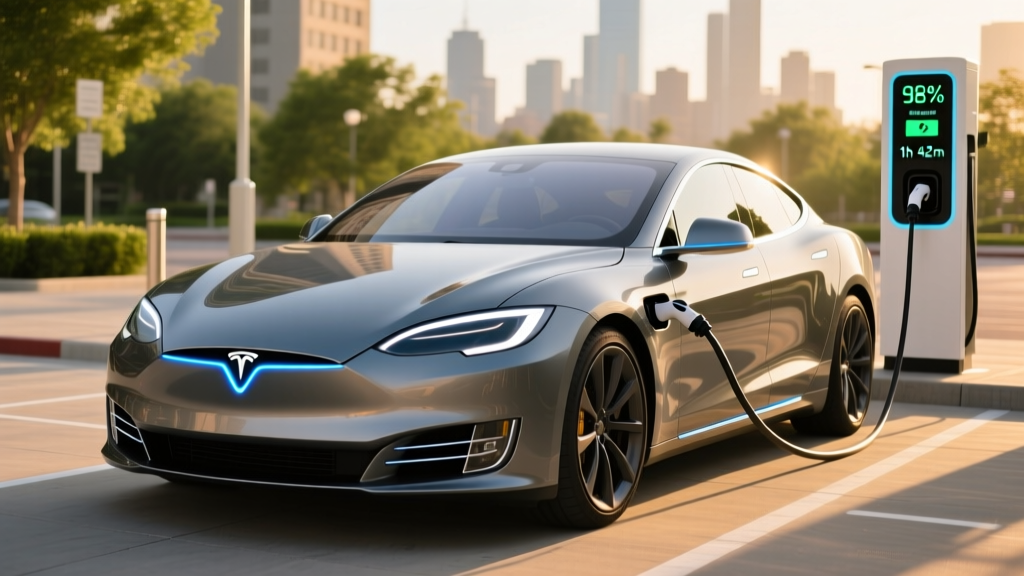
| Level 1 (120V household) | 1.4 kW | ~3-4 mi/hr of range |
| Level 2 (240V, 48A home charger) | 11.5 kW | ~36 mi/hr; full charge in ~7 hrs |
| DC Fast Charge (V3 Supercharger) | Peak 250 kW | 10-80% in ~22 min |
| DC Fast Charge (V4 Supercharger) | Peak 250 kW (Model Y limited) | 10-80% in ~22 min |
A key reality of DC fast charging: the 250 kW peak rate is only sustained between roughly 10-30% state of charge. Above 50%, the charge curve tapers significantly, dropping to ~60 kW by 80%. This is why the 10-80% metric is the industry standard — charging from 80-100% can take as long as the 10-80% session.
Trail tip: Always precondition the battery by navigating to a Supercharger in the Tesla app or in-car navigation before arriving. This warms the battery to optimal charging temperature and can reduce your 10-80% time by 3-5 minutes, especially in cold weather.
Pricing, Trims & Federal Tax Credit Eligibility
| Trim | MSRP (2026) | Est. After §30D Credit | Mad Max Support |
|---|---|---|---|
| Model Y Long Range AWD | $44,990 | ~$37,490* | ✅ Yes |
| Model Y Performance | $48,990 | ~$41,490* | ✅ Yes |
| Cybertruck AWD | $79,990 | Not eligible (MSRP cap) | ✅ Yes |
| Model X Long Range | $79,990 | Not eligible (MSRP cap) | ✅ Yes |
*Tax credit estimate assumes full $7,500 §30D eligibility. Actual credit depends on buyer income, battery component sourcing, and MSRP caps. See IRS clean vehicle credit rules for current requirements.
Under current IRS §30D rules, the federal EV tax credit has several requirements that affect Tesla buyers:
- MSRP cap: SUVs/pickups must have an MSRP at or below $80,000; sedans at or below $55,000. The Model Y qualifies; the Cybertruck and Model X do not.
- Income cap: Modified adjusted gross income must not exceed $150,000 (single), $225,000 (head of household), or $300,000 (joint).
- Battery sourcing: A percentage of critical minerals and battery components must be sourced from the U.S. or free-trade-agreement partners. Tesla's supply chain has been shifting to comply, but specific eligibility can change by production batch. Verify at the point of sale.
- Point-of-sale transfer: As of 2024, buyers can transfer the credit to the dealer at purchase, effectively reducing the purchase price upfront rather than waiting for a tax refund.
Tech, Interior & Practicality
The 2026 Model Y Juniper refresh brought meaningful updates to the interior that affect its off-road and adventure utility:
- Cargo space: 30.2 cu ft behind the second row, 72.1 cu ft with seats folded. The front trunk (frunk) adds 4.1 cu ft — useful for muddy gear you don't want in the main cabin.
- Infotainment: 15.4-inch center touchscreen running Tesla's latest software. Off-Road Assist is accessed through the driving menu. There are no physical buttons, which can be frustrating when gloved.
- Driver assistance: Autopilot comes standard (SAE Level 2 — driver must remain engaged). FSD (Supervised) is a $8,000 option but is explicitly not supported in Off-Road mode.
- Towing: 3,500 lbs maximum for the Model Y Long Range AWD. The Cybertruck rates at 11,000 lbs, making it a genuine work-capable option.
- Camp Mode: Maintains climate control and powers accessories overnight — drawing roughly 1-1.5 kWh per hour, or about 12-15 kWh for an 8-hour night. Useful for overlanding.
Pros, Cons & Verdict
Pros
- Supercharger network access — unmatched for remote travel
- Instant torque vectoring reacts faster than mechanical differentials
- Over-the-air updates continuously improve the system
- Low center of gravity from floor-mounted battery improves stability on slopes
- Camp Mode enables overnight off-grid stays with climate control
- Model Y qualifies for $7,500 federal tax credit (income/sourcing dependent)
Cons
- Ground clearance (6.6 in on Model Y) limits serious off-road use
- No dedicated off-road tires from factory — all-season tires limit traction
- Range drops 40-50% in sustained off-road driving
- No low-range gearing — not designed for rock crawling
- Touchscreen-only controls are impractical with gloves or muddy hands
- Cybertruck and Model X miss the MSRP cap for the federal tax credit
Is It Worth It vs. the Competition?
If off-road capability is a primary use case, the Tesla Mad Max setting is a bonus feature, not a reason to buy. Here's how it compares to purpose-built alternatives:
| Vehicle | Ground Clearance | EPA Range | Starting Price |
|---|---|---|---|
| Tesla Model Y LR AWD | 6.6 in | 320 mi | $44,990 |
| Rivian R1S Dual-Motor | 9.3 in (14.9 max) | 352 mi | $79,900 |
| Ford Bronco (gas) | 11.5 in | ~370 mi (tank) | $39,995 |
| Jeep Wrangler 4xe | 10.8 in | 22 mi (electric) + gas | $51,795 |
The Model Y wins on daily-driving efficiency, charging speed, and technology. The Rivian R1S wins on genuine off-road capability with air suspension and 14.9 inches of max ground clearance. The Bronco and Wrangler remain the most capable off-road but sacrifice EV efficiency and running costs.
Frequently Asked Questions
Can I activate the Mad Max setting on any Tesla?
No. It requires a dual-motor or tri-motor Tesla with Off-Road Assist software. The Model 3 (all trims) and rear-wheel-drive Model Y do not support it. You need a Model Y Long Range/Performance, Model X, or Cybertruck.
Does using Mad Max mode void my Tesla warranty?
No. Off-Road Assist is a factory software feature included in the vehicle. However, damage caused by off-road use (underbody impacts, water intrusion beyond wading depth) may not be covered under the Tesla New Vehicle Limited Warranty. The battery and drive unit carry an 8-year/120,000-mile warranty (Model Y) or 8-year/150,000-mile warranty (Cybertruck).
How much range will I lose driving off-road?
Expect 40-50% range reduction compared to EPA estimates during sustained off-road driving. A Model Y with 320 miles of EPA range will effectively deliver 160-190 miles of off-road range. Plan your route accordingly and identify charging options before heading out.
Is the Tesla Mad Max setting good for snow and ice?
Yes — this is arguably its strongest real-world use case. The torque vectoring and softened throttle response provide excellent traction management on snow-covered roads. Combined with winter tires, a dual-motor Tesla in Off-Road Assist is one of the most capable snow vehicles in its class.
Does the Cybertruck's Mad Max mode include armor protection?
The Cybertruck's stainless steel exoskeleton provides inherent body protection against scratches and dents from brush and rocks. However, the undercarriage still relies on standard skid plates. For serious rock crawling, aftermarket underbody armor is recommended.
Will Tesla add Mad Max to the Model 3?
There is no indication that Tesla plans to add Off-Road Assist to the Model 3, which is offered in rear-wheel-drive and dual-motor configurations. The dual-motor Model 3 could theoretically support it, but Tesla has not announced such an update.