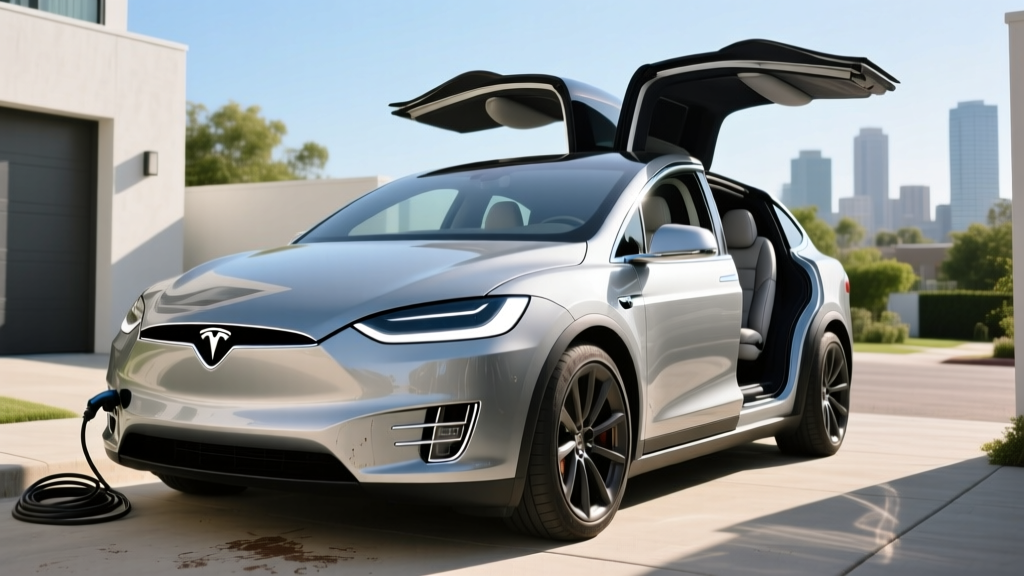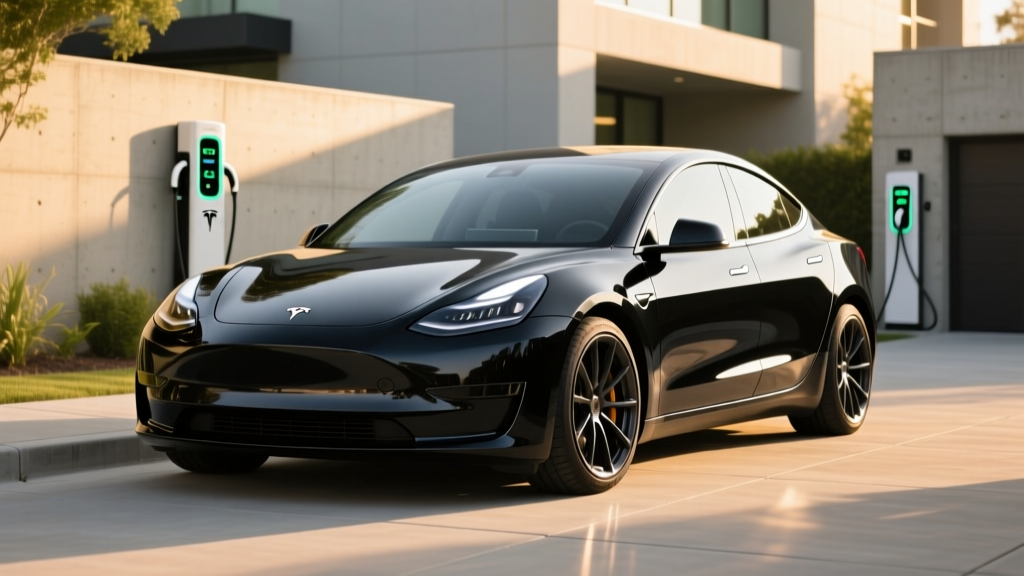
The Tesla Model 3 Performance—known in enthusiast circles as the M3P—remains one of the most compelling packages in the electric sedan segment. It pairs supercar-rivaling acceleration with a usable daily range, access to the Supercharger network, and a starting price that undercuts German performance sedans by tens of thousands. For 2026, Tesla continues to refine the "Highland" refresh that debuted for the 2024 model year, adding incremental software and efficiency tweaks. But does the M3P still hold up against the Hyundai Ioniq 6 N, BMW i4 M50, and Polestar 2 BST?
This review breaks down every number that matters: real-world range versus the EPA sticker, the actual charging curve (not just the peak kW marketing claim), ownership costs, and whether you'll actually qualify for the federal tax credit under current IRS §30D rules.
2026 Tesla M3P at a Glance: Full Spec Sheet
| Spec | Value |
|---|---|
| EPA Range | 315 miles |
| Battery (usable) | ~79 kWh, NMC (nickel manganese cobalt) |
| Drivetrain | Dual-motor AWD |
| Horsepower | 510 hp (combined) |
| 0–60 mph | 2.9 seconds (with rollout) |
| Top Speed | 163 mph |
| EPA Efficiency | 118 MPGe combined / 28 kWh/100 mi |
| Max DC Fast Charge | 250 kW peak (V3 Supercharger / CCS) |
| 10–80% DC Charge Time | ~25 minutes (preconditioned) |
| Level 2 Home Charge Rate | 11.5 kW (~44 mi/hr on 48A circuit) |
| Cargo Volume | 23 cu ft (trunk + frunk combined) |
| Rear Legroom | 34.9 inches |
| Battery Warranty | 8 years / 120,000 miles (70% retention) |
| Base MSRP | $54,990 (before destination) |
Range Reality Check: EPA Sticker vs. What You'll Actually Get
Real-World Highway (70 mph, 68°F): ~260–280 miles
Real-World Highway (32°F, winter): ~210–235 miles
Mixed Commute (city + suburban): ~290–310 miles
The 315-mile EPA figure is achievable in moderate temperatures with a mix of city and suburban driving, where regenerative braking recaptures energy. On a pure 70-mph highway run in warm weather, expect roughly 260–280 miles before you hit 10% State of Charge (SoC). Cold weather compounds the loss: battery resistance increases, cabin heating draws power (the M3P uses a heat pump, which helps but doesn't eliminate the penalty), and you'll see closer to 210–235 miles at freezing temperatures on the highway.
According to fueleconomy.gov, the Model 3 Performance achieves 118 MPGe combined (28 kWh per 100 miles). That efficiency figure is among the best for any AWD performance sedan, thanks to Tesla's drivetrain efficiency and the car's low drag coefficient (~0.219 Cd). For context, the BMW i4 M50 rates at roughly 97 MPGe combined.
Charging Speeds: DC Fast, Level 2, and the Curve Nobody Talks About
| Level | Power / Rate | Miles Added per Hour | Notes |
|---|---|---|---|
| Level 1 (120V, 12A) | ~1.4 kW | ~5 mi/hr | Emergency/top-off only |
| Level 2 (240V, 48A) | 11.5 kW | ~44 mi/hr | Full charge in ~7 hours |
| DC Fast (V3 Supercharger) | 250 kW peak | ~1,000 mi/hr (peak) | 10–80% in ~25 min |
| DC Fast (CCS station) | Up to 250 kW | Varies | Requires NACS-to-CCS adapter or CCS port |
The 250 kW peak charge rate sounds impressive, but the charge curve tells the real story. The M3P sustains roughly 230–250 kW between 10% and 30% SoC when the battery is properly preconditioned (navigate to a Supercharger via the built-in nav and the car warms the pack automatically). From 30% to 60%, the rate tapers to approximately 150–180 kW. Above 80%, it drops sharply to under 50 kW to protect cell longevity—this is normal for NMC chemistry and why Tesla (and most automakers) quote 10–80% times rather than 10–100%.
At home on a 48-amp Level 2 circuit (requiring a 60-amp breaker), the onboard 11.5 kW charger adds roughly 44 miles of range per hour. A full 10–100% charge takes about 7 hours, easily accomplished overnight. If your home has a 200-amp electrical panel with spare capacity, installation typically runs $800–$2,000 for the circuit and Tesla Wall Connector. Homes needing a panel upgrade to 200A can see costs jump to $3,000–$5,000+.
One practical advantage: the M3P uses Tesla's NACS connector natively, meaning direct access to the entire Supercharger network without an adapter. As of 2026, that network includes over 20,000 V3 (250 kW) and V4 stalls in North America, consistently ranking highest in reliability among DC fast-charging providers.
Performance: 2.9 Seconds That Recontextualize the Price
The M3P's dual-motor all-wheel-drive powertrain produces 510 horsepower and launches the car from 0–60 mph in 2.9 seconds (with the standard 1-foot rollout subtracted, as Tesla reports it). That puts it in the territory of a Porsche 911 Carrera S or a Lamborghini Huracán LP 580-2 in straight-line acceleration—for roughly one-third the price.
But the numbers only tell half the story. The new-for-Highland adaptive dampers (a significant upgrade from the previous generation's passive setup) give the M3P a genuinely compliant ride in its comfort setting while still flattening body roll in Sport. The steering remains quick and direct, though some enthusiasts note the yoke-style or round wheel (your choice) still filters out some road texture compared to a BMW M3.
Track Mode, a Performance-trim exclusive, allows you to adjust the front/rear torque split, regen strength, and stability control intervention. It also routes battery cooling more aggressively for sustained lapping—though you'll still see power derating after 3–4 hot laps at a typical road course, a limitation shared by virtually every EV not purpose-built for track use.
Interior, Tech, and the Minimalist Bet
The Highland refresh brought meaningful interior improvements: ventilated front seats, ambient lighting, rear-seat ventilation controls, an 8-inch rear touchscreen, and significantly improved cabin noise isolation (Tesla claims ~30% reduction in road and wind noise versus the pre-2024 model).
The 15.4-inch center touchscreen remains the command hub for everything—climate, mirrors, glovebox, navigation, media. There are no physical stalks; turn signals live on the steering wheel rim (or yoke). This minimalist approach divides opinion: some owners adapt within days and appreciate the clean aesthetic, while others find the lack of physical controls frustrating, particularly for turn signals and wipers.
Autopilot and FSD (Supervised): Every M3P ships with Basic Autopilot (lane centering + adaptive cruise). The $8,000 Full Self-Driving (Supervised) upgrade adds automatic lane changes, traffic light/stop sign recognition, and city-street navigation. Important: this remains a SAE Level 2 system—meaning the driver must remain fully engaged, hands on the wheel, eyes on the road. It is not autonomous driving. Tesla's camera-only "Tesla Vision" approach performs well in clear conditions but can struggle in heavy rain, construction zones, and faded lane markings.
Pricing, Trims, and Federal Tax Credit Eligibility
| Item | Amount |
|---|---|
| Base MSRP (M3P AWD) | $54,990 |
| Destination Fee | $1,390 |
| As-Tested (with FSD + Ultra Red paint) | ~$65,380 |
| Federal Tax Credit (§30D) — Maximum | $7,500 |
| Effective Price (after max credit) | ~$48,880 |
The M3P starts at $54,990, which falls under the IRS §30D $55,000 MSRP cap for sedans (SUVs and trucks have a higher $80,000 cap). However, eligibility for the full $7,500 credit depends on several factors that change periodically:
- Buyer Income Cap: Modified AGI must not exceed $150,000 (single), $225,000 (head of household), or $300,000 (joint filers).
- MSRP Cap: Vehicle base MSRP must be ≤ $55,000 for sedans. The M3P at $54,990 clears this—but adding options does not change the MSRP calculation for credit purposes (destination and options are excluded from the cap calculation per IRS guidance).
- Battery Sourcing: The credit splits into two halves—$3,750 for critical minerals and $3,750 for battery component assembly. Both must meet escalating domestic-content thresholds. Tesla has historically sourced enough to qualify for the full $7,500, but the IRS publishes a list of eligible vehicles that updates periodically. Always verify current eligibility before purchase.
- Point-of-Sale Transfer: As of 2024, you can transfer the credit to the dealer at purchase, reducing your out-of-pocket cost immediately rather than waiting to claim it on your tax return.
Note: Tax credit rules are subject to legislative and regulatory changes. Consult a tax professional and verify eligibility at irs.gov before making a purchase decision.
M3P vs. the Competition: Is It Still the One to Beat?
The performance EV sedan space has grown considerably. Here's how the M3P stacks up against its closest rivals:
| Spec | Tesla M3P | Hyundai Ioniq 6 N | BMW i4 M50 | Polestar 2 BST |
|---|---|---|---|---|
| EPA Range | 315 mi | ~260 mi | 269 mi | 270 mi |
| 0–60 mph | 2.9 sec | 3.25 sec | 3.7 sec | 4.1 sec |
| Horsepower | 510 hp | 640 hp (N Grin Boost) | 536 hp | 476 hp |
| Max DC Charge | 250 kW | 350 kW | 205 kW | 205 kW |
| Base MSRP | $54,990 | ~$52,000 | ~$70,000 | ~$69,900 |
| Federal Credit Eligible? | Yes (verify) | No (Korea-built) | No (Germany-built) | Partial (China-built) |
The M3P's edge: It offers the best combination of range, acceleration, price, and charging infrastructure access. No competitor matches 315 miles of range with a sub-3-second 0–60 time at this price point. The Supercharger network remains a decisive advantage for road-trippers.
Where competitors win: The Ioniq 6 N charges faster (350 kW peak, ~18 min 10–80%) and offers a more engaging "fake shift" driving experience for enthusiasts. The BMW i4 M50 has a more traditional luxury interior with physical controls. The Polestar 2 BST offers Öhlins dampers and a more analog feel.
Pros and Cons: The Honest Scorecard
✅ Pros
- 2.9-second 0–60 mph at a $55K price point
- 315-mile EPA range — class-leading for a performance AWD sedan
- Native NACS / Supercharger network access
- Over-the-air updates continuously add features
- Adaptive dampers (new for Highland) transform ride quality
- Low running costs: ~$0.04–0.06/mile on home charging
- Excellent IIHS Top Safety Pick+ rating
❌ Cons
- No physical controls (stalks, buttons) — steep adaptation curve
- Rear seat space is tight for adults over 6 feet (34.9" legroom)
- Turn signals on the steering wheel rim are controversial
- FSD (Supervised) is $8,000 and still requires full driver attention
- 250 kW peak charge rate trails Hyundai/Kia's 350 kW architecture
- Insurance premiums run 20–40% higher than average sedans
- Service center wait times can stretch weeks in some metro areas
Who Should Buy the Tesla M3P?
Choose the M3P if:
- You want supercar acceleration with daily-driver practicality and range
- You road-trip regularly and value the Supercharger network
- You can charge at home (Level 2) and want minimal fuel costs
- You're comfortable with a screen-centric interface and minimal physical controls
- You qualify for the §30D tax credit, bringing the effective price under $49K
Look elsewhere if:
- You frequently carry rear-seat adults (consider the Model S or Ioniq 6 for more room)
- You prefer physical buttons and a traditional luxury interior (BMW i4 M50)
- Maximum DC charging speed is your top priority (Ioniq 6 N at 350 kW)
- You want a manual-feeling driver's car with simulated gear shifts (Ioniq 6 N)
Frequently Asked Questions
What is the real-world range of the Tesla M3P?
The EPA rates it at 315 miles. In real-world highway driving at 70 mph in moderate temperatures, expect 260–280 miles. In freezing weather on the highway, that drops to approximately 210–235 miles. City driving with regenerative braking gets you closer to the EPA number.
How fast does the M3P charge at home and on the road?
On a 48-amp Level 2 home charger (240V), it charges at 11.5 kW, adding about 44 miles per hour—a full charge takes roughly 7 hours. On a V3 Supercharger (DC fast), it peaks at 250 kW and charges from 10–80% in approximately 25 minutes when preconditioned. Above 80%, the charge rate tapers significantly.
Does the Tesla M3P qualify for the $7,500 federal EV tax credit?
The M3P at $54,990 MSRP falls under the §30D sedan cap of $55,000, making it potentially eligible for the full $7,500 credit. However, you must also meet income limits ($150K single / $300K joint) and the vehicle must meet current battery-sourcing requirements. Always check the IRS eligible vehicle list and consult a tax professional before purchasing.
Is the M3P worth buying over the Ioniq 6 N or BMW i4 M50?
If your priorities are range, price, and charging infrastructure, the M3P wins. It delivers the longest range (315 vs. ~260 miles), the lowest price ($54,990 vs. $52K–$70K), and Supercharger access. The Ioniq 6 N charges faster (350 kW) and offers a more visceral driving experience. The BMW i4 M50 provides a more traditional luxury interior but costs ~$15K more and isn't eligible for the federal credit (built in Germany).
What battery chemistry does the M3P use, and how long will it last?
The M3P uses NMC (nickel manganese cobalt) chemistry, which offers higher energy density than LFP but is more sensitive to sustained high SoC storage. Tesla's battery warranty covers 8 years or 120,000 miles with a guaranteed minimum 70% capacity retention. Real-world data from Tesla's fleet suggests typical degradation of ~10–12% over the first 100,000 miles, with the curve flattening significantly afterward. For longevity, avoid routinely charging to 100%—set your daily limit to 80–90%.
How much does it cost to charge the M3P versus filling a gas car?
At the U.S. average electricity rate of ~$0.16/kWh, a full home charge (79 kWh usable) costs roughly $12.64 for 315 miles—about $0.04 per mile. Supercharger pricing varies by location but averages ~$0.30–$0.35/kWh, or about $0.08–$0.10 per mile. A comparable gas performance sedan getting 22 mpg at $3.50/gallon costs ~$0.16 per mile. Over 15,000 miles/year, home charging saves roughly $1,800 annually versus gasoline.