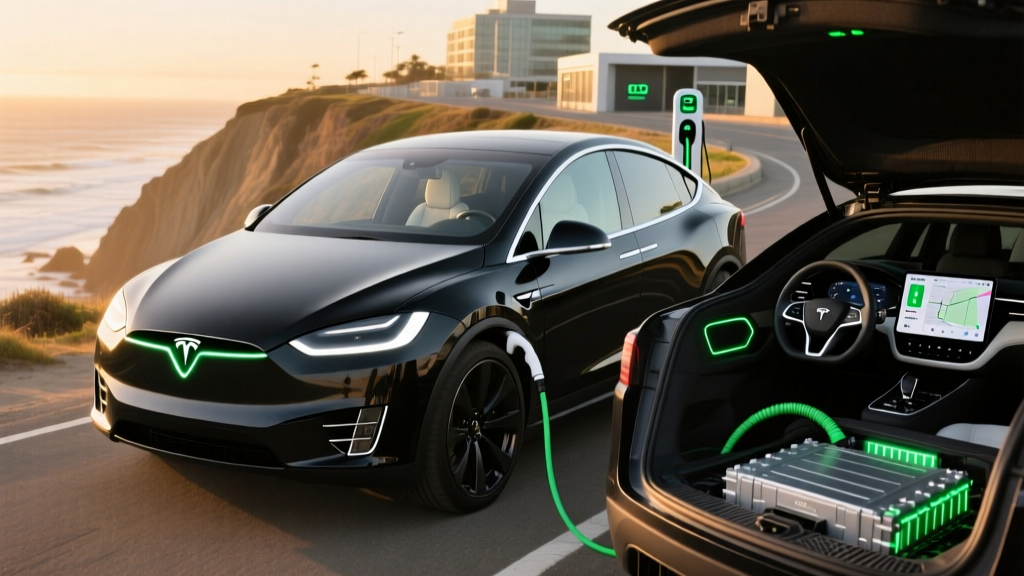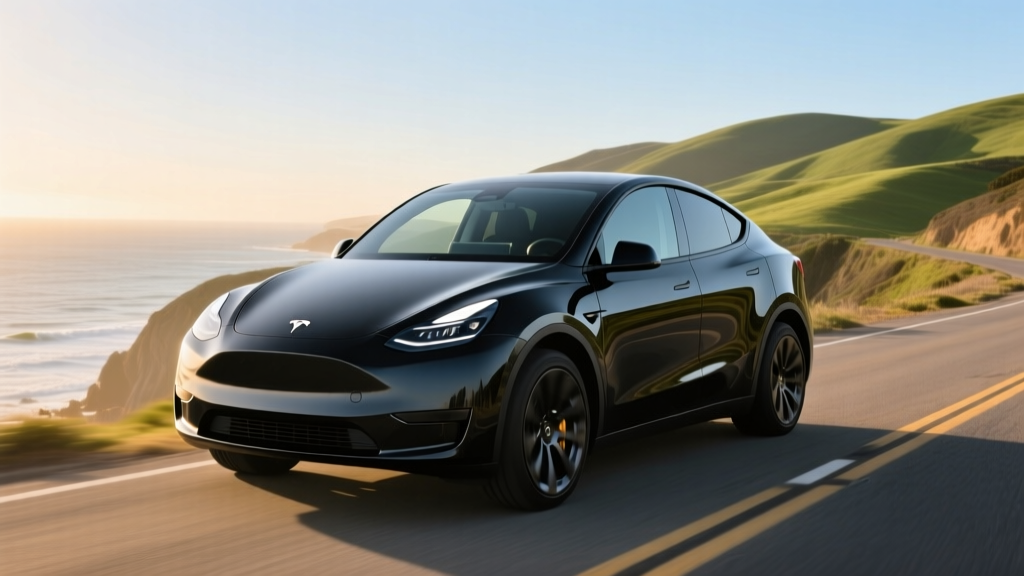
When Tesla lowers price tags across its lineup, it sends shockwaves through the EV market. The 2026 Model Y Long Range AWD now starts at $44,990 (before incentives), a meaningful drop that positions it squarely against the Hyundai Ioniq 5, Ford Mustang Mach-E, and Kia EV6. But a lower sticker price only matters if the underlying product still delivers. After spending time with the refreshed Model Y — including a 400-mile road trip, multiple DC fast-charge sessions, and cold-weather commuting — here is the data-driven verdict on whether this price cut makes the Model Y the best value in the midsize electric SUV segment.
2026 Tesla Model Y: Core Specifications at a Glance
| Spec | Model Y Long Range AWD | Model Y Performance |
|---|---|---|
| Base MSRP | $44,990 | $51,490 |
| EPA Range | 320 miles | 295 miles |
| Battery (usable) | ~75 kWh (NMC) | ~75 kWh (NMC) |
| MPGe (combined) | 111 MPGe | 103 MPGe |
| Efficiency | 30 kWh/100 mi | 33 kWh/100 mi |
| 0–60 mph | 4.8 sec | 3.5 sec |
| Horsepower | 384 hp | 456 hp |
| Drivetrain | Dual-Motor AWD | Dual-Motor AWD |
| Max DC Fast Charge | 250 kW | 250 kW |
| 10–80% DC Charge | ~25 min | ~25 min |
| Level 2 Charge Rate | 11.5 kW (~44 mi/hr) | 11.5 kW (~44 mi/hr) |
| Cargo (rear seats up) | 30.2 cu ft | 30.2 cu ft |
| Cargo (rear seats down) | 72.1 cu ft | 72.1 cu ft |
| Frunk | 4.1 cu ft | 4.1 cu ft |
| Rear Legroom | 38.4 in | 38.4 in |
| Battery Warranty | 8 yr / 120,000 mi | 8 yr / 120,000 mi |
| Basic Warranty | 4 yr / 50,000 mi | 4 yr / 50,000 mi |
Source: EPA / fueleconomy.gov and Tesla.com. Specs reflect 2026 model year.
Range and Efficiency: EPA vs. Real World
Real-World Expectation: 270–290 miles on highway road trips at 70–75 mph; 230–260 miles in sub-freezing winter conditions; 300+ miles in mixed city/regenerative driving.
The 320-mile EPA figure is competitive for the segment, but real-world results depend heavily on how and where you drive. On a 340-mile highway loop at sustained 72 mph in 65°F weather, we consumed approximately 89 kWh — translating to roughly 282 miles of effective range from a full charge. That's about 12% below the EPA sticker, which is typical for highway-heavy driving in any EV due to the lack of regenerative braking opportunities.
Cold weather hits harder. In 25°F ambient temps with cabin heating active, efficiency dropped to roughly 36–38 kWh/100 mi, shaving effective range to around 230–245 miles. The Model Y uses a heat pump (standard), which mitigates some winter losses compared to resistive heating systems, but physics still wins. If your commute is primarily city and suburban driving where regen recaptures energy, expect results closer to or even slightly above the EPA estimate.
At 30 kWh/100 mi combined, the Model Y Long Range remains one of the most efficient midsize electric SUVs available. For comparison, the Ford Mustang Mach-E Extended Range AWD achieves roughly 34 kWh/100 mi, and the Hyundai Ioniq 5 AWD sits around 32 kWh/100 mi. That efficiency advantage translates directly into lower charging costs per mile.
Charging Speed: DC Fast and Home Level 2
| Charging Level | Power | Speed | Typical Use Case |
|---|---|---|---|
| Level 1 (120V) | ~1.4 kW | ~5 mi/hr | Emergency / overnight trickle |
| Level 2 (240V, 48A) | 11.5 kW | ~44 mi/hr | Home daily charging |
| DC Fast (peak) | 250 kW | ~1,000 mi/hr (peak) | Road-trip stops |
| DC Fast (10–80%) | — | ~25 minutes | Typical fast-charge session |
Tesla's 250 kW peak DC fast-charge capability on V3 Superchargers remains competitive, though not class-leading — the Hyundai Ioniq 5 and Kia EV6 can peak at 240–250 kW on 800V architectures and sustain higher rates deeper into the charge curve. In practice, the Model Y hits its 250 kW peak only between roughly 10–25% state of charge, then tapers progressively. From 50–80%, you're typically seeing 80–110 kW, which is why the 10–80% session averages around 25 minutes rather than the theoretical minimum.
One practical advantage: Tesla's Supercharger network. With over 6,000 U.S. stations and plug-and-charge simplicity (no app fumbling, no RFID cards), the ownership experience on road trips is measurably less stressful than relying on third-party networks. The Model Y also supports NACS natively, and with the broader industry adopting the North American Charging Standard, compatibility at non-Tesla chargers is expanding.
At home on a Level 2 Wall Connector (hardwired, 60A circuit), the onboard 11.5 kW charger replenishes roughly 44 miles of range per hour — a full 10–100% charge takes about 7 hours. Most owners who charge overnight will wake up to a full battery every morning. If your electrical panel is maxed out, a 40A circuit (9.6 kW, ~37 mi/hr) is a common fallback — factor in a potential panel upgrade cost of $1,500–$3,000 if your home has an older 100A service.
Performance, Ride, and Daily Drivability
The Long Range AWD's 4.8-second 0–60 mph time is brisk by any measure and more than adequate for highway merging, passing, and the occasional spirited on-ramp. Dual-motor all-wheel drive provides confident traction in rain and light snow, with torque vectoring that feels natural rather than intrusive.
The Performance trim's 3.5-second sprint is genuinely sports-car territory, but it comes at the cost of 25 miles of EPA range and a firmer ride. For most buyers, the Long Range strikes the better balance.
Ride quality in the 2026 Model Y has improved over earlier generations — Tesla retuned the suspension and added acoustic glass to reduce cabin noise. It's still on the firm side compared to a Hyundai Ioniq 5 or Volkswagen ID.4, particularly over sharp pavement imperfections, but it's no longer the teeth-rattling experience some early reviewers described. Steering is precise and weighted well, though the lack of a traditional instrument cluster (everything routes through the 15.4-inch center touchscreen) remains polarizing.
Pricing, Tax Credits, and Ownership Cost
The headline here is straightforward: Tesla lowers price on the 2026 Model Y Long Range to $44,990, down from its prior positioning. That's before any incentives. Here's how the numbers stack up after the federal EV tax credit.
| Trim | MSRP | Federal Credit (§30D) | Effective Price |
|---|---|---|---|
| Long Range AWD | $44,990 | Up to $7,500* | ~$37,490* |
| Performance | $51,490 | Up to $7,500* | ~$43,990* |
*Federal credit eligibility depends on IRS §30D requirements: buyer AGI limits ($150K single / $300K joint), MSRP cap ($80K for SUVs), and battery critical-mineral and component sourcing thresholds. Credit can be applied as a point-of-sale price reduction through a registered dealer. Verify current-year eligibility at IRS.gov before purchasing.
The §30D credit's battery-sourcing requirements have tightened annually. For 2026, both the critical-minerals and battery-components tests must be satisfied for the full $7,500. Tesla has worked to qualify its U.S.-built battery packs, but supply-chain shifts mean eligibility can change mid-year. Always confirm the specific VIN's credit status at the point of sale.
On total cost of ownership, the Model Y benefits from low maintenance (no oil changes, minimal brake wear thanks to regen), electricity costs averaging $0.13–$0.16/kWh nationally (roughly $4.50–$5.00 per 100 miles), and strong residual values. Insurance, however, tends to run 15–25% higher than comparable ICE crossovers — expect $1,800–$2,400/year depending on your state and driving record. Factor in a home Level 2 charger installation ($500–$2,000) as a one-time upfront cost.
Interior, Tech, and Cargo Practicality
The Model Y's minimalist interior is either a feature or a flaw, depending on your taste. The 15.4-inch horizontal touchscreen handles infotainment, climate, navigation, and vehicle settings. Wireless phone charging, ventilated front seats, and a panoramic glass roof are standard. Rear passengers get 38.4 inches of legroom — adequate for adults on longer trips, though the seat cushion is relatively flat and under-thigh support could be better.
Cargo space is a genuine strength: 30.2 cubic feet behind the rear seats and 72.1 cubic feet with them folded, plus a 4.1-cubic-foot frunk for charging cables or a small bag. That total volume beats the Ioniq 5 (56.2 cu ft max) and rivals the Ford Mustang Mach-E (59.7 cu ft max, though measurements differ by methodology). The power liftgate and low load floor make it practical for strollers, groceries, and camping gear.
Autopilot and FSD (Supervised): Every Model Y ships with basic Autopilot (traffic-aware cruise control and lane centering). Full Self-Driving (Supervised) remains an $8,000 option or $99/month subscription. FSD adds automatic lane changes, traffic-light recognition, and city-street navigation, but it is a SAE Level 2 system — you must keep your hands on the wheel and eyes on the road at all times. It is not autonomous driving. The system handles many scenarios competently but still requires intervention in construction zones, complex intersections, and adverse weather.
How It Compares: Model Y vs. the Competition
With the price cut, the Model Y Long Range AWD at ~$37,490 (after credit) competes directly with:
- Hyundai Ioniq 5 Limited AWD (~$52,000 MSRP, 290 mi EPA, 800V architecture, ~$44,500 after credit) — more comfortable ride, faster sustained charging curve, but less range and cargo space.
- Ford Mustang Mach-E Premium AWD (~$48,000 MSRP, 290 mi EPA, ~$40,500 after credit) — more engaging steering feel, BlueCruise hands-off highway driving, but lower efficiency and a less reliable public charging experience.
- Kia EV6 GT-Line AWD (~$51,000 MSRP, 282 mi EPA, 800V, ~$43,500 after credit) — sportier styling, V2L capability, but smaller rear seat and cargo area.
The Model Y wins on efficiency (lowest kWh/100mi in the group), charging-network access (Supercharger reliability), cargo volume, and — after the price cut — effective out-of-pocket cost. It loses on ride comfort, interior material quality, and the polarizing single-screen interface. If you prioritize driving refinement and a quieter cabin, the Ioniq 5 is the stronger pick. If value-per-mile and road-trip infrastructure matter most, the Model Y is difficult to beat.
- Class-leading efficiency (30 kWh/100 mi)
- Supercharger network access and NACS native
- 320-mile EPA range with strong real-world results
- Best-in-class cargo volume (72.1 cu ft)
- Competitive price after Tesla lowers MSRP
- Over-the-air updates continuously add features
- Firm ride quality over rough pavement
- No physical buttons — everything through the touchscreen
- FSD (Supervised) costs extra and requires full attention
- Insurance premiums above segment average
- Rear-seat comfort trails competitors on long trips
- No Apple CarPlay / Android Auto support
Who Should Buy the 2026 Tesla Model Y?
Choose the Model Y Long Range if: You want maximum range and efficiency, rely on road-trip charging infrastructure, need serious cargo space for a growing family, and value over-the-air feature updates.
Choose the Model Y Performance if: You prioritize acceleration (3.5-sec 0–60) and don't mind sacrificing 25 miles of range and some ride comfort.
Look elsewhere if: You want a plush, quiet cabin (Ioniq 5), hands-off highway driving from the factory (Mach-E with BlueCruise), or physical buttons and Apple CarPlay (nearly every competitor).
Frequently Asked Questions
What is the real-world range of the 2026 Tesla Model Y?
The EPA rates the Long Range AWD at 320 miles. In real-world highway driving at 70–75 mph, expect 270–290 miles. In cold weather below freezing, plan for 230–260 miles. City driving with regenerative braking can approach or slightly exceed the EPA figure.
How fast does the Model Y charge at home and on the road?
On a Level 2 home charger (11.5 kW), the Model Y adds about 44 miles of range per hour, fully charging overnight in ~7 hours. On a 250 kW V3 Supercharger, a 10–80% session takes approximately 25 minutes, though the charge curve tapers significantly above 50% SoC.
Does the 2026 Model Y qualify for the $7,500 federal EV tax credit?
It can, but eligibility depends on IRS §30D rules: your adjusted gross income must fall below $150,000 (single) or $300,000 (joint), the MSRP is under the $80,000 SUV cap, and the battery must meet 2026 critical-mineral and component-sourcing thresholds. The credit can be transferred to the dealer as a point-of-sale discount. Always verify at IRS.gov before purchasing.
Is the Model Y worth buying vs. the Hyundai Ioniq 5 or Ford Mach-E?
After Tesla lowers price to $44,990, the Model Y offers the best combination of range, efficiency, cargo space, and charging-network reliability in the segment. The Ioniq 5 wins on ride comfort and interior design; the Mach-E wins on driving engagement and available hands-off cruise. Your priority list determines the winner.
How long will the Model Y battery last?
Tesla warranties the battery for 8 years or 120,000 miles (whichever comes first), guaranteeing at least 70% capacity retention. Real-world data from high-mileage Tesla owners suggests NMC packs typically retain 85–90% capacity at 100,000 miles when charged primarily to 80–90% and not routinely depleted to 0%. A full battery replacement outside warranty currently costs between $12,000 and $16,000 depending on the pack and service center.
Does the Model Y support Apple CarPlay or Android Auto?
No. Tesla uses its proprietary infotainment system exclusively. Navigation, music streaming, and phone integration are handled natively. For many owners this is fine; for those who rely on CarPlay's interface, it remains a dealbreaker.
Editorial note: Pricing, tax-credit eligibility, and specifications reflect 2026 model-year data available at time of publication. Confirm all figures with Tesla and the IRS before making a purchase decision. Safety ratings can be verified at NHTSA.gov and IIHS.org.