What Is the Tesla Loop Las Vegas?
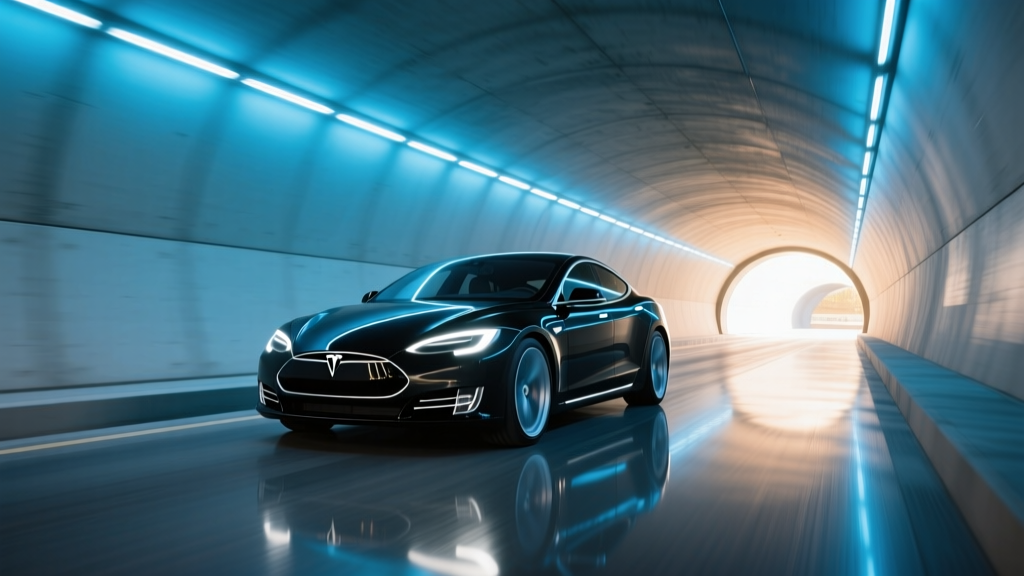
If you've searched for Tesla Loop Las Vegas, you're likely trying to understand what this underground transit system actually is, whether you can drive your own EV through it, and how it connects to the broader Tesla ecosystem. The Tesla Loop—officially the Vegas Loop—is not a new Tesla vehicle. It's a network of underground tunnels built by The Boring Company that ferries passengers beneath the Las Vegas Convention Center (LVCC) and, increasingly, across the Strip in modified Tesla Model Y crossovers.
For EV shoppers and owners, the Tesla Loop matters for two reasons: it's a live demonstration of Tesla's autonomous-adjacent transit ambitions, and it puts the Model Y's real-world performance, range, and charging infrastructure in the spotlight. This guide breaks down what the Vegas Loop is in 2026, the EVs that power it, and what that means if you're considering a Tesla purchase.
Vegas Loop Routes and Expansion Status
As of early 2026, the Vegas Loop operates primarily beneath the Las Vegas Convention Center, connecting the South, Central, and West halls across roughly 1.7 miles of tunnel. Riders board at designated stations and are driven by Tesla operators in Model Y vehicles to their destination in minutes—far faster than walking the sprawling campus.
The Boring Company has announced expansion plans to connect Harry Reid International Airport, the Strip resort corridor, Allegiant Stadium, and downtown Las Vegas. However, as of this writing, those extensions remain in various stages of permitting and construction. The LVCC loop is the only fully operational segment.
The Tesla Model Y: The EV Powering the Loop
Since the Tesla Loop runs Model Ys exclusively, understanding this vehicle's specs is essential—both for evaluating the transit experience and for deciding whether the Model Y belongs in your driveway. Here's the full 2026 Model Y Long Range AWD profile.
| Spec | Value |
|---|---|
| EPA Estimated Range | 310 miles |
| Real-World Range (highway/cold) | ~255–280 mi highway; ~220–245 mi cold weather (below 32°F) |
| Battery Capacity | 75 kWh usable (NMC chemistry) |
| Drivetrain | Dual-motor AWD |
| Horsepower | 384 hp (combined) |
| 0–60 mph | 4.8 seconds |
| Max DC Fast Charge | 250 kW (peak) |
| 10–80% DC Fast Charge | ~22 minutes |
| Level 2 Home Charging | 11.5 kW (~44 miles/hr) |
| MPGe (combined) | 116 MPGe |
| Efficiency | 28 kWh/100 mi |
| Cargo Volume | 30.2 cu ft (rear seats up) / 72.1 cu ft (folded) |
| Rear Legroom | 36.5 inches |
| Base MSRP | $44,990 |
| Battery Warranty | 8 years / 120,000 miles |
Charging: DC Fast, Supercharger Network, and Home Setup
The Model Y's charging capability is one of its strongest selling points—both for Vegas Loop fleet operators and private owners.
| Charging Level | Power | Speed (miles added) | Notes |
|---|---|---|---|
| Level 1 (120V outlet) | ~1.4 kW | ~4–5 mi/hr | Emergency/trickle only |
| Level 2 (240V home) | 11.5 kW | ~44 mi/hr | Full charge overnight (~7 hrs) |
| DC Fast (Supercharger V3) | 250 kW peak | ~162 mi in 15 min | 10–80% in ~22 min; tapers above 80% |
| DC Fast (Supercharger V4) | Up to 325 kW* | Comparable; curve-dependent | *V4 rollout ongoing; Model Y may not sustain peak rate |
The Model Y uses the NACS (North American Charging Standard) connector natively—the same plug now adopted by Ford, GM, Rivian, Hyundai, and most major automakers. This means Tesla owners have access to the Supercharger network (20,000+ stalls in North America) plus growing third-party NACS-compatible chargers.
Charging curve reality: The Model Y peaks at 250 kW only at low states of charge (roughly 10–30% SoC). By 50% SoC, the rate drops to ~150 kW, and above 80% it slows dramatically to protect battery health. Plan road-trip stops around 10–80% for the fastest sessions.
Tesla Loop vs. Driving Yourself: What Vegas Visitors Should Know
If you're visiting Las Vegas and wondering whether the Tesla Loop changes your transportation calculus, here's the practical breakdown:
- Convention Center attendees: The Vegas Loop is free for LVCC visitors and shaves 15–20 minutes off cross-campus travel. It's efficient and air-conditioned—worth using.
- Strip travelers: Until the expanded Vegas Loop connects major resorts, you'll still rely on rideshares, the Monorail, or your own vehicle. If you're renting an EV, Las Vegas has robust public charging through Electrify America, EVgo, and Tesla Superchargers at several casino properties.
- Personal EV owners: You cannot use the Loop tunnels. However, the presence of Tesla Superchargers at Vegas properties (including the Wynn, Fashion Show Mall, and LVCC) makes EV road trips to Las Vegas practical.
Pricing, Tax Credits, and Ownership Economics
If the Model Y's Vegas Loop cameo has you considering a purchase, here's the financial picture for 2026.
| Trim | MSRP | Est. After §30D Credit |
|---|---|---|
| Long Range AWD | $44,990 | ~$37,490 (if eligible) |
| Performance AWD | $48,990 | ~$41,490 (if eligible) |
- Buyer AGI: ≤$150,000 (single) / ≤$300,000 (joint)
- Vehicle MSRP: ≤$80,000 for SUVs/crossovers (Model Y qualifies)
- Battery sourcing: Critical minerals and battery components must meet phased-in domestic-content thresholds per IRS §30D rules — verify current-year compliance at purchase
- Point-of-sale transfer: Eligible buyers can apply the credit at the dealer, reducing the purchase price directly
- Final assembly: Must occur in North America (Model Y built in Fremont, CA and Austin, TX — qualifies)
Credit eligibility rules change frequently. Confirm current requirements with your tax professional and the IRS before purchasing.
Tech, Driver Assistance, and Autonomous Ambitions
The Model Y comes standard with Tesla's 15-inch touchscreen, over-the-air updates, and Basic Autopilot (SAE Level 2 driver assistance). Optional Full Self-Driving (Supervised) adds automated lane changes, traffic-light recognition, and navigation-guided steering—but the driver must remain fully engaged at all times.
The Boring Company's long-term vision involves autonomous Tesla vehicles running through tunnels without drivers—a Level 4 or Level 5 scenario. As of 2026, Vegas Loop vehicles still have human operators behind the wheel.
Pros and Cons: Tesla Model Y (and Loop Context)
- 310 mi EPA range; strong real-world efficiency
- 250 kW DC fast charging; Supercharger network access
- Spacious cargo area (72.1 cu ft folded)
- OTA updates continuously improve the vehicle
- Qualifies for §30D credit (verify sourcing rules)
- Strong resale value relative to EV segment
- Minimalist interior lacks physical buttons (climate, mirrors)
- FSD ($8,000 add-on) is not true self-driving
- No Apple CarPlay or Android Auto
- Ride quality firm on rough pavement
- Rear-seat comfort trails competitors (Hyundai Ioniq 5, Ford Mustang Mach-E)
- Vegas Loop itself is limited to LVCC — not a Strip-wide solution yet
Is the Model Y Worth It vs. Key Competitors?
The Model Y competes directly with the Hyundai Ioniq 5 (305 mi EPA, 350 kW charging), Ford Mustang Mach-E (312 mi Extended Range), and the Kia EV6 (310 mi, 800V architecture). The Model Y's advantages remain the Supercharger network, cargo space, and software ecosystem. Its weaknesses are interior refinement and ride comfort.
If you're buying specifically for Las Vegas commuting or road trips through the Southwest, the Model Y's range and Supercharger density along I-15 (Los Angeles to Vegas corridor has 10+ Supercharger stations) make it a compelling choice.
Frequently Asked Questions
Can I drive my own Tesla through the Las Vegas Loop?
No. The Vegas Loop is a closed system operated by The Boring Company using a dedicated fleet of Model Y vehicles. Personal vehicles are not permitted in the tunnels.
Is the Tesla Loop free to ride?
Yes, the LVCC Campus Loop is free for convention center visitors. Expanded routes to the Strip and airport may introduce fares in the future.
Does the 2026 Tesla Model Y qualify for the $7,500 federal tax credit?
The Model Y is assembled in the US and falls under the $80,000 MSRP cap for SUVs. Eligibility depends on your income (≤$300,000 joint AGI), battery-sourcing compliance, and current IRS §30D rules. Verify at point of sale.
How many Superchargers are between Los Angeles and Las Vegas?
The I-15 corridor has over 10 Tesla Supercharger stations, including Barstow, Baker, and Primm. A Model Y Long Range can complete the ~270-mile trip without stopping, but most drivers top up at Barstow or Baker for comfort.
Will the Vegas Loop expand to the Strip and airport?
The Boring Company has announced plans to connect Harry Reid Airport, major Strip resorts, and Allegiant Stadium. As of 2026, these extensions are in permitting or early construction. No firm completion date has been published.
What's the real-world range of the Model Y in Las Vegas heat?
In sustained 100°F+ Las Vegas summer conditions, expect a 5–8% range reduction from the 310-mile EPA figure—roughly 285–295 miles—due to cabin cooling demands and battery thermal management. This is less severe than cold-weather losses in northern states.