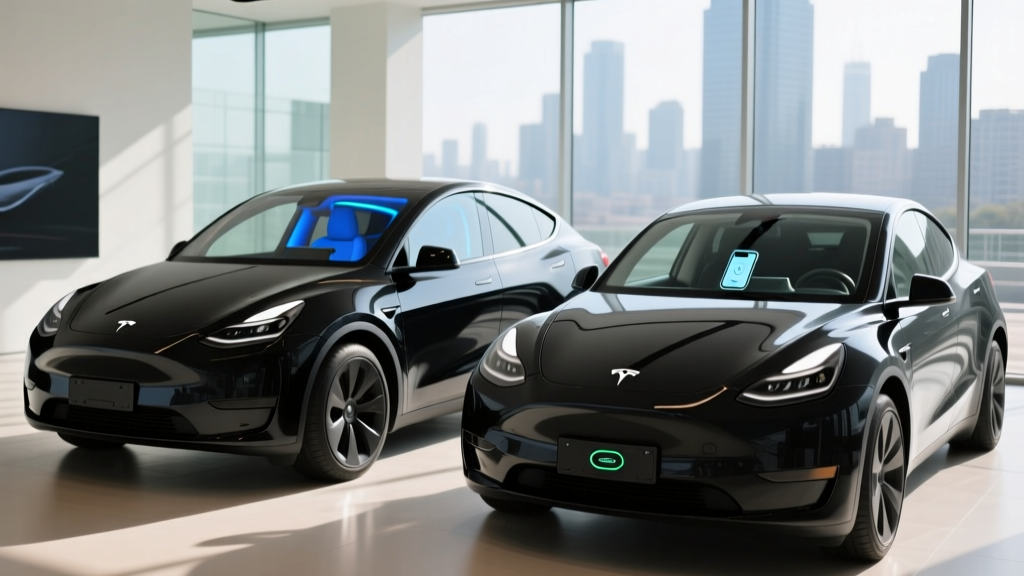
Search "tesla license plate" and you'll find thousands of owners wrestling with one surprisingly contentious topic: where and how to mount a front license plate on a Tesla without compromising the car's sleek front fascia, Autopilot sensors, or resale value. The 2026 Tesla Model Y remains the best-selling EV in the United States, and whether you're taking delivery next week or optimizing a current build, this review covers the vehicle's specs alongside the license plate hardware, legal requirements, and mounting realities every Tesla owner should know.
2026 Tesla Model Y: Quick Verdict
The refreshed Model Y (codenamed Juniper) delivers a quieter cabin, a redesigned interior with ventilated seats, ambient lighting, and a rear touchscreen, plus modest range and efficiency gains over the prior generation. It remains the default recommendation for buyers wanting a spacious, tech-forward electric crossover with access to the Supercharger network. The front-end redesign, however, moved the tow-hook access point and eliminated the factory-drilled front bumper holes that earlier models shipped with in plate-required states — making aftermarket "no-drill" Tesla license plate brackets a necessity for most 2026 buyers.
| Spec | Long Range AWD | Performance |
|---|---|---|
| EPA Range | 320 miles | 295 miles |
| Battery (usable) | ~78 kWh, NMC | ~78 kWh, NMC |
| Drivetrain | Dual-Motor AWD | Dual-Motor AWD |
| Horsepower | ~384 hp | ~456 hp |
| 0-60 mph | 4.8 sec | 3.5 sec |
| Peak DC Charge | 250 kW | 250 kW |
| 10-80% DC Time | ~27 min | ~27 min |
| Level 2 (11.5 kW) | ~44 mi/hr | ~44 mi/hr |
| MPGe (combined) | 111 MPGe | 102 MPGe |
| Efficiency | 28 kWh/100 mi | 31 kWh/100 mi |
| Cargo (rear seats up) | 30.2 cu ft | 30.2 cu ft |
| Cargo (seats folded) | 72.1 cu ft | 72.1 cu ft |
| Base MSRP | $48,990 | $53,990 |
Real-World Range: What the EPA Number Doesn't Tell You
EPA Sticker: 320 miles (Long Range AWD)
Real-World Expectation: 270-290 miles highway at 70 mph; 230-250 miles in freezing temperatures with cabin heat; 300+ miles in mild city/suburban driving with regen.
Tesla's NMC pack delivers strong energy density, but like all lithium-ion chemistries, it's sensitive to temperature and speed. On a 75°F day at 65 mph, expect to nearly match the EPA sticker. Push 80 mph on the interstate and you'll see a 10-15% reduction. Winter driving below 32°F is the biggest variable — cold-soaked batteries and resistive heating loads can shave 20-30% off range, though the Model Y's heat pump (standard on Juniper) mitigates this better than older PTC-heated Teslas.
Per fueleconomy.gov, the Long Range AWD posts 111 MPGe combined. That translates to roughly $0.045 per mile at the national average electricity rate of $0.17/kWh — about one-third the per-mile fuel cost of a comparable gas crossover.
Charging Speed: Supercharger Network Advantage
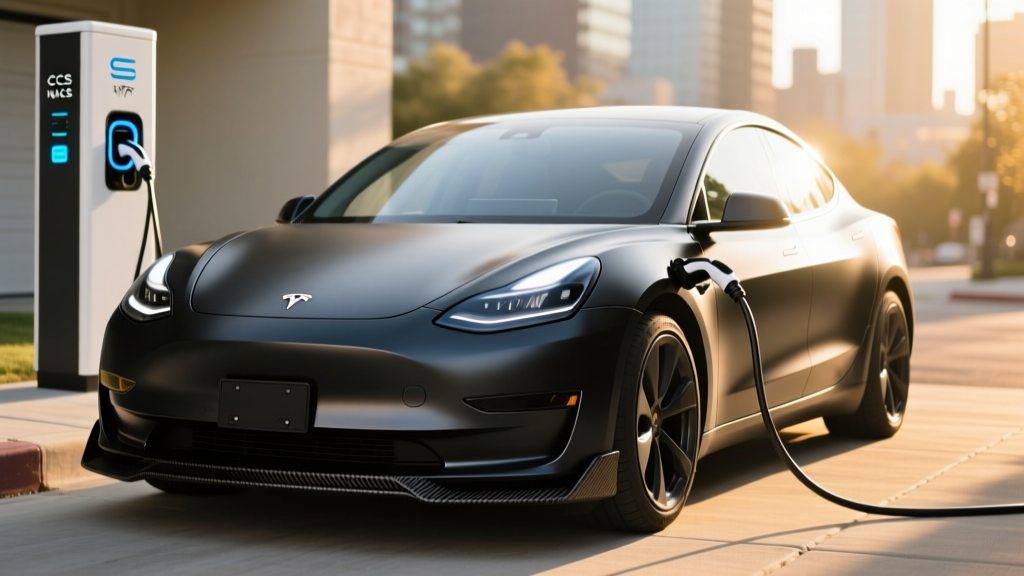
The 2026 Model Y retains the 250 kW peak DC fast-charge rate on V3 and V4 Superchargers via the native NACS connector — no adapter required. That peak is only sustained briefly at low state of charge (SoC); the charge curve tapers progressively above 50% SoC and drops sharply past 80% to protect the NMC cells.
| Level | Power | Speed | Use Case |
|---|---|---|---|
| Level 1 (120V) | ~1.4 kW | ~4-5 mi/hr | Emergency / overnight trickle |
| Level 2 (240V, 48A) | 11.5 kW | ~44 mi/hr | Home daily charging |
| DC Fast (Supercharger) | Peak 250 kW | 10-80% in ~27 min | Road trips |
| DC Fast (CCS station w/ adapter) | Up to 150 kW | Varies by station | Non-Tesla networks |
Home charging reality: A Tesla Wall Connector on a 60A circuit delivers the full 11.5 kW (48A continuous), adding roughly 44 miles of range per hour — enough to replenish a daily commute overnight. Installation typically runs $500-$1,500 depending on panel proximity; a 200A panel upgrade adds $1,500-$3,000 if your home needs it.
The Tesla License Plate Problem: Front Mount Explained
Thirty-one U.S. states plus Washington D.C. require a front license plate. Tesla does not drill front bumper holes at the factory for most markets, and the 2026 Model Y's refreshed Juniper front fascia — with its repositioned cameras and smoother bumper line — makes the old adhesive-mount solutions less reliable.
Mount Options for 2026 Model Y
- OEM Front Plate Bracket (Tesla Part): Available through Tesla service centers; uses existing bumper mounting points. ~$35-50 installed. Cleanest look but requires minor hardware.
- No-Drill Tow-Hook Mount: Aftermarket brackets (e.g., EVANNEX, Teslanaut) that thread into the front tow-hook receiver. $40-$80. Removable, no body modification, but offsets the plate slightly to one side.
- Adhesive/3M-Mount Brackets: Budget option ($15-$30). Risk of paint damage on removal; less secure at highway speeds or in car washes.
- Custom Bumper-Integrated Mount: Body-shop installation drilling into the lower bumper grille area. Most permanent; may affect resale or lease return condition.
Key caution: Any front plate mount must not obstruct the Model Y's front-facing Autopilot camera (mounted behind the windshield, not the bumper) or the forward radar/sensor area in the lower grille. Tow-hook mounts positioned too low can partially block the lower camera view on some trims — verify clearance before tightening.
Rear Plate: Straightforward
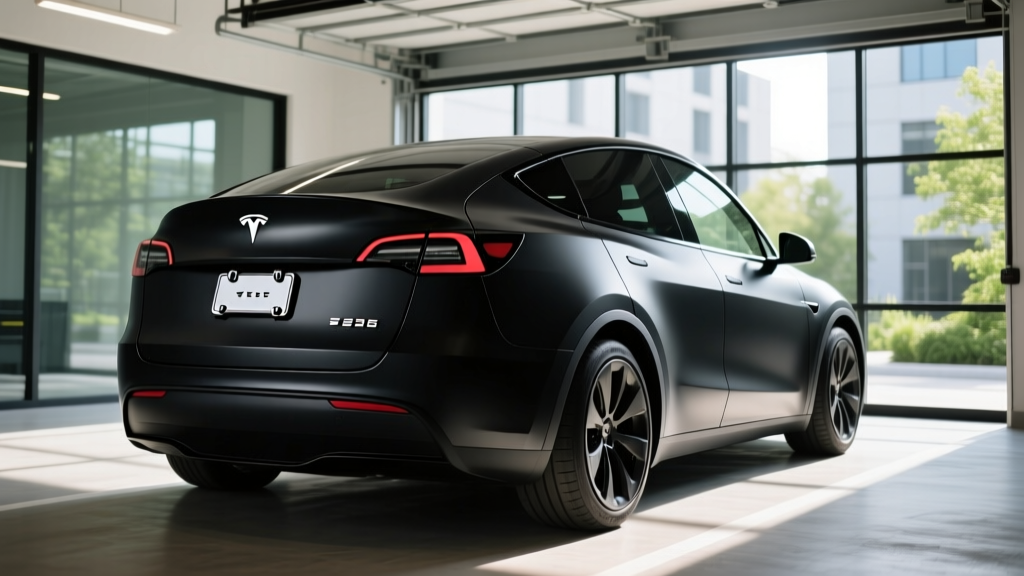
The rear bumper has a standard recessed plate area with pre-drilled holes. A quality stainless-steel or carbon-fiber frame ($15-$40) with anti-rattle pads prevents the buzzing common on frameless installs. Tesla's rear camera and trunk release are unaffected by standard frames.
Pricing, Trims & Federal Tax Credit Eligibility
| Trim | Base MSRP | As-Tested (common config) | §30D Credit Eligible? |
|---|---|---|---|
| Long Range AWD | $48,990 | $51,490 (w/ FSD, wheels) | Yes — up to $7,500 |
| Performance | $53,990 | $56,990 | Yes — up to $7,500 |
Under current IRS §30D rules, the Model Y qualifies for the full $7,500 federal tax credit (split as $3,750 for battery components + $3,750 for critical minerals sourcing). Key eligibility requirements:
- MSRP cap: SUVs/crossovers must be ≤$80,000 — both trims clear this easily.
- Buyer income cap: AGI ≤$300,000 (married filing jointly), ≤$225,000 (head of household), ≤$150,000 (single).
- Battery sourcing: Must meet phased-in critical mineral and battery component requirements — Tesla's U.S.-assembled packs currently comply.
- Point-of-sale transfer: You can apply the $7,500 as an immediate price reduction at delivery rather than waiting for a tax refund.
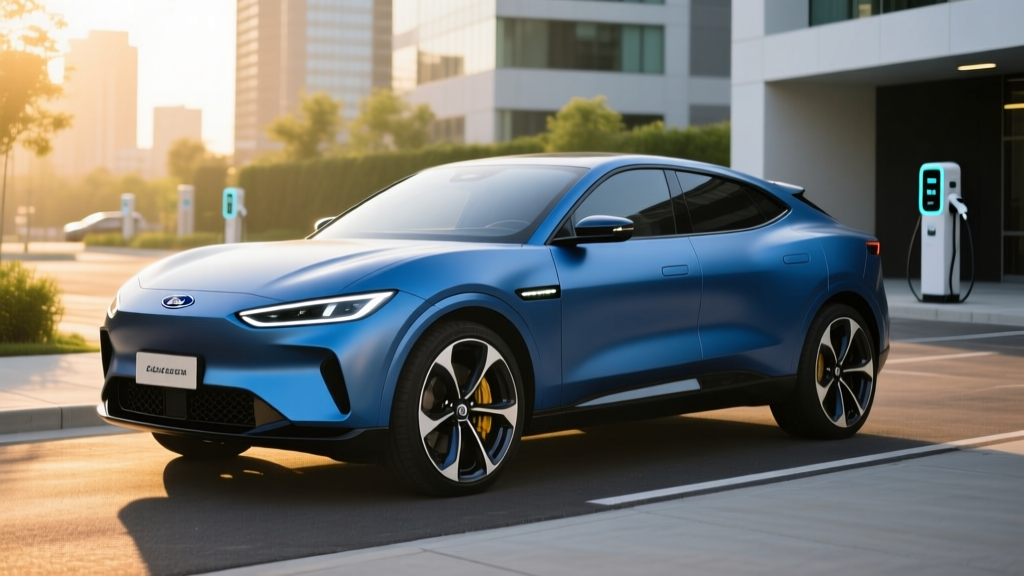
Effective price after credit: The Long Range AWD drops from $48,990 to approximately $41,490 — placing it in direct competition with the Hyundai Ioniq 5 and Ford Mustang Mach-E on price, but with Supercharger access and superior cargo volume.
Tech, Interior & Driver Assistance
The Juniper refresh brought the Model Y's interior closer to the Model 3 Highland: ventilated front seats, ambient lighting strips, power-folding second row, an 8-inch rear touchscreen for passengers, and improved acoustic glass reducing cabin noise by roughly 2-3 dB at highway speed.
Autopilot & FSD (Supervised): Standard Autopilot includes adaptive cruise and lane centering. The $8,000 FSD (Supervised) upgrade adds city-street navigation, traffic-light recognition, and automated parking. This is SAE Level 2 — you must remain engaged, hands on or near the wheel, and eyes on the road at all times. It is not self-driving.
Pros
- Access to 6,000+ Supercharger stalls (most reliable DC network in the U.S.)
- Class-leading cargo volume (72.1 cu ft) and front trunk (frunk)
- Over-the-air updates continuously add features post-purchase
- Strong resale value relative to non-Tesla EVs
- Heat pump standard — better winter efficiency
Cons
- No physical stalks — turn signals and wipers via steering-wheel buttons
- FSD ($8,000) remains Level 2 despite the name
- Front plate mounting requires aftermarket solution in 31 states
- No Apple CarPlay or Android Auto
- Insurance premiums 15-25% higher than comparable gas crossovers
Warranty & Long-Term Ownership
Tesla covers the Model Y with a 4-year/50,000-mile limited vehicle warranty and an 8-year/120,000-mile battery and drive unit warranty (whichever comes first). The battery warranty guarantees retention of at least 70% of original capacity during the coverage period. Real-world data from high-mileage Tesla owners suggests NMC packs in the Model Y typically retain 85-90% capacity at 100,000 miles when charged primarily to 80-90% daily and DC fast-charged moderately.
Who the 2026 Model Y Suits Best
Ideal for: Families needing 3-across second-row seating and 70+ cu ft of cargo; commuters in states with front-plate laws who want a proven, no-drama EV; road-trippers who value Supercharger reliability over peak charging speed.
Consider alternatives if: You want physical controls (Hyundai Ioniq 5), need a third row (Kia EV9), or want faster peak charging (Hyundai/Kia's 800V architecture charges 10-80% in ~18 minutes at 350 kW stations).
What is the real-world range of the 2026 Tesla Model Y?
The EPA rates the Long Range AWD at 320 miles. Expect 270-290 miles on highway road trips at 70 mph, and 230-250 miles in freezing weather. City driving in mild conditions can exceed 300 miles.
How fast does the Model Y charge at home and on the road?
At home on a Level 2 Wall Connector (11.5 kW), it adds ~44 miles per hour — a full overnight charge. On a 250 kW Supercharger, 10-80% takes approximately 27 minutes, tapering significantly above 80% SoC.
How much does the Model Y cost after the federal tax credit?
The Long Range AWD starts at $48,990. With the $7,500 §30D credit (applied at point of sale), the effective price drops to ~$41,490 before destination and state incentives.
Does the 2026 Model Y qualify for the federal EV tax credit?
Yes, both trims qualify for the full $7,500 under current IRS §30D rules, provided the buyer meets income caps ($150K single / $300K joint) and the vehicle's battery sourcing continues to meet critical-mineral requirements. Verify current eligibility at fueleconomy.gov before purchase.
How do I mount a front license plate on the 2026 Model Y?
The most reliable options are Tesla's OEM bracket (through service) or an aftermarket no-drill tow-hook mount ($40-$80). Avoid adhesive-only mounts — they fail in car washes and extreme heat. Ensure the plate doesn't obstruct the lower front camera or grille sensors.
Is the Model Y worth buying vs. the Ioniq 5 or Mach-E?
The Model Y wins on cargo space, Supercharger access, and software. The Ioniq 5 charges faster (800V) and has physical controls. The Mach-E offers a more traditional driving feel. All three qualify for the $7,500 credit. Your priority — charging speed vs. network reliability vs. interior ergonomics — should drive the decision.