What Does "Tesla Lemon" Actually Mean?
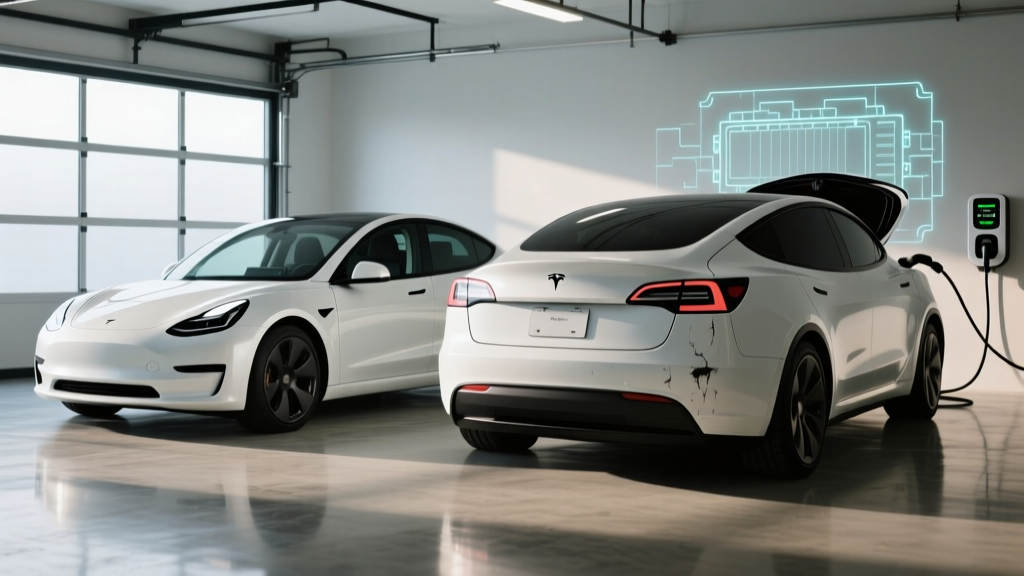
The phrase "Tesla lemon" surfaces frequently in owner forums and search queries, but it rarely refers to a single catastrophic defect. Instead, it describes a pattern: a new or used Tesla that requires repeated dealership visits for the same unresolved issue within the first year or two of ownership. Whether it's panel gaps, phantom braking, suspension noise, or 12V battery failures, the concern is legitimate — and it's one every prospective buyer should investigate before signing a delivery agreement.
This guide examines the real reliability data behind Tesla's most popular models, explains how state lemon laws apply to EVs, and gives you a concrete pre-delivery and post-purchase checklist to protect your investment. We'll also review the current 2026 Model 3 and Model Y specs so you can weigh reliability risk against the performance and efficiency you're getting.
Tesla Reliability Data: What the Numbers Show
Consumer Reports' most recent Annual Auto Reliability Survey places Tesla in the middle of the pack — an improvement from earlier years but still behind brands like Lexus, Toyota, and even some domestic competitors. The most frequently reported problem areas across the Model 3 and Model Y include:
- Build quality: Panel misalignment, paint defects, and interior trim rattles, particularly on vehicles produced at Giga Texas and Giga Berlin in early production ramps.
- Suspension and steering: Premature wear on control arm bushings and reports of knocking sounds at low speeds.
- Climate system: Heat pump failures on 2021–2023 Model Y units, though Tesla issued a service bulletin addressing the most common failure mode.
- Electronics: Touchscreen delamination on older Model 3 units and intermittent Bluetooth connectivity drops.
- Drive unit noise: Some dual-motor owners report a whining sound from the front induction motor at highway speeds.
It's worth noting that Tesla's over-the-air update capability means some "defects" are software-related and can be patched remotely — a genuine advantage over legacy automakers. However, hardware issues like suspension wear or panel gaps require physical service center visits, and Tesla's service network remains strained in many metro areas.
| Spec | Value |
|---|---|
| EPA Range | 341 miles |
| Battery (usable) | 75 kWh, NMC (nickel manganese cobalt) |
| Peak DC Fast Charge | 250 kW (V3 Supercharger) |
| 10–80% DC Charge Time | ~25 minutes |
| Level 2 Home Charge Rate | 11.5 kW (~44 mi/hr) |
| 0–60 mph | 4.2 seconds |
| Horsepower | 346 hp (dual motor) |
| Drivetrain | AWD (permanent magnet rear + induction front) |
| EPA Efficiency | 132 MPGe / 25 kWh/100mi |
| Cargo Volume | 23 cu ft (rear trunk + frunk) |
| Rear Legroom | 35.2 inches |
| Base MSRP | $47,740 (including destination) |
| Battery Warranty | 8 years / 120,000 miles (70% capacity retention) |
| Basic Vehicle Warranty | 4 years / 50,000 miles |
Real-World Range vs. EPA Sticker: What Owners Actually See
EPA Estimate: 341 miles (Model 3 Long Range AWD)
Real-World Expectation: 280–310 miles on mixed highway driving at 70–75 mph. In cold weather (below 32°F), expect 230–270 miles due to battery resistance and cabin heating load. City driving with frequent regenerative braking can approach or even exceed the EPA number.
Tesla's efficiency remains among the best in the segment. The Model 3 Long Range achieves 25 kWh per 100 miles on the EPA combined cycle, meaning you're extracting more miles per kilowatt-hour than nearly any competing sedan. The heat pump, standard since 2021, significantly reduces cold-weather range loss compared to resistive heating systems — but physics still applies. If you live in Minnesota or Maine, budget for 20–30% range reduction in January.
Charging Speed: Supercharger Network and Home Setup
Tesla's charging ecosystem remains its strongest competitive moat. The Supercharger network now exceeds 60,000 connectors globally, and with NACS adoption by Ford, GM, Rivian, and others, Tesla has opened select stations to non-Tesla EVs — though Tesla owners still enjoy seamless plug-and-charge functionality and lower per-kWh pricing at most locations.
| Charging Level | Power | Miles Added per Hour | Use Case |
|---|---|---|---|
| Level 1 (120V household) | ~1.4 kW | ~5 mi/hr | Emergency / overnight trickle |
| Level 2 (240V, 48A Wall Connector) | 11.5 kW | ~44 mi/hr | Daily home charging |
| DC Fast (V3 Supercharger) | Peak 250 kW | ~170 mi in 15 min | Road trips |
| DC Fast (V4 Supercharger) | Peak 250+ kW | Similar to V3 for Model 3 | Newer stations |
A critical nuance: the 250 kW peak rate applies only when the battery is preconditioned (navigating to a Supercharger triggers this automatically) and the state of charge is below ~50%. Above 80%, charging tapers sharply — going from 80% to 100% can take as long as 10% to 80%. For road trips, plan your stops around 10–80% increments to minimize total travel time.
How Lemon Laws Apply to Tesla: State-by-State Variations
Every U.S. state has a lemon law, but the specifics vary significantly. Most state lemon laws cover new vehicles (including EVs) for a defined period — typically 18–24 months or 18,000–24,000 miles from delivery. The general framework requires:
- Substantial defect: A problem that impairs use, value, or safety. Cosmetic issues like minor panel gaps may not qualify unless they affect structural integrity or water sealing.
- Reasonable repair attempts: Typically 3–4 attempts for the same issue, or the vehicle being out of service for 30+ cumulative days.
- Manufacturer notification: You must give Tesla (or any manufacturer) the opportunity to fix the defect before pursuing a claim.
California's Song-Beverly Consumer Warranty Act is among the strongest, covering leased vehicles and allowing attorney fee recovery. Texas's lemon law is narrower, requiring arbitration through the Texas DMV before litigation. New York's law mandates a 60-day "out of service" threshold or 4 repair attempts.
If you believe your Tesla qualifies as a lemon, document every service visit meticulously — keep work orders, note dates, mileage, and the specific complaint. Tesla's mobile service visits count as repair attempts. Consult a lemon law attorney in your state; many work on contingency and recover fees from the manufacturer. Check your state's attorney general page or the FTC's consumer guidance on lemon laws for jurisdiction-specific details.
Federal Tax Credit: Does the 2026 Model 3 Qualify?
The 2026 Tesla Model 3 Long Range AWD is eligible for up to $7,500 under IRS §30D, but eligibility depends on your income, the vehicle's MSRP, and battery sourcing requirements that tighten annually.
| Trim | MSRP (incl. destination) | Max §30D Credit | Effective Price (if eligible) |
|---|---|---|---|
| Model 3 RWD | $40,240 | $7,500 | $32,740 |
| Model 3 Long Range AWD | $47,740 | $7,500 | $40,240 |
| Model 3 Performance | $54,240 | $7,500 | $46,740 |
Key eligibility rules for 2026:
- MSRP cap: Sedans must be under $55,000. All Model 3 trims currently qualify.
- Buyer income cap: Modified adjusted gross income must not exceed $150,000 (single), $225,000 (head of household), or $300,000 (joint).
- Battery sourcing: Increasing percentages of critical minerals and battery components must be sourced from the U.S. or free-trade-agreement partners. Tesla's shift toward LFP chemistry for RWD models (sourced primarily from CATL in China) has complicated credit eligibility for the base trim in prior years. Verify current-year sourcing compliance on the IRS qualified vehicles list before purchasing.
- Point-of-sale transfer: You can transfer the credit to the dealer at purchase, reducing your out-of-pocket cost immediately rather than waiting for a tax refund.
Is a Tesla Worth the Risk? Comparing Model 3 to Key Competitors
The reliability question doesn't exist in a vacuum — it must be weighed against what you're getting and what alternatives offer. Here's how the Model 3 Long Range stacks up against its primary rivals:
- Hyundai Ioniq 6 Long Range AWD: 316 miles EPA, 800V architecture enabling 10–80% in ~18 minutes at a 350 kW charger. Stronger IIHS safety ratings. Less mature charging network access. Better initial build quality reports.
- BMW i4 eDrive40: 307 miles EPA, premium interior, traditional dealer service network. Higher base price (~$57,000). Slower DC charging (~200 kW peak).
- Polestar 2 Long Range Dual Motor: 276 miles EPA, Google Automotive OS, strong safety record. Smaller Supercharger-equivalent network. More conventional service experience.
The Model 3's advantages — Supercharger access, OTA updates, efficiency, and acceleration — remain compelling. But if build quality consistency is your top priority, the Ioniq 6 and i4 have stronger initial-quality track records in J.D. Power and Consumer Reports data.
Pre-Delivery Inspection Checklist: Protect Yourself Before Accepting
Tesla's delivery process is streamlined, but that efficiency can work against you if you don't inspect carefully. Before signing:
- Panel gaps: Check the hood-to-fender, trunk-to-quarter-panel, and door seams. Gaps should be uniform within ~1mm. Use a flashlight at an angle to spot misalignment.
- Paint quality: Inspect under direct sunlight or a bright LED. Look for orange peel, runs, dust inclusions, or color mismatch between bumper and body panels.
- Interior trim: Press on dashboard and door panel edges — no rattles or loose clips. Check seat bolsters for wrinkles or uneven stitching.
- Functionality test: Operate every window, the charge port door, the frunk, and the trunk. Test all cameras, turn signals, and the horn. Pair your phone via Bluetooth.
- Test drive: Listen for suspension knocks over speed bumps. Test regenerative braking at various intensities. Verify steering tracks straight on a flat road.
- Software version: Confirm the vehicle has received the latest firmware. Some delivery units sit for weeks and may need an immediate OTA update.
If you spot issues, document them with photos and request that Tesla address them before you accept delivery. You are not obligated to take the vehicle if it doesn't meet your standards — Tesla will reschedule delivery after repairs.
Biggest Pros and Cons of the 2026 Tesla Model 3
Pros
- Best-in-class efficiency (25 kWh/100mi) maximizes range per dollar of electricity
- Supercharger network remains the most reliable and widespread DC fast-charging option in North America
- Over-the-air updates continuously add features and fix software bugs
- Strong acceleration (4.2s 0–60) and low center of gravity provide engaging dynamics
- Minimal scheduled maintenance — no oil changes, brake fluid lasts years with regen use
- Excellent cargo capacity (23 cu ft) for a compact sedan, including a usable frunk
Cons
- Build quality inconsistency remains a concern — panel gaps and paint defects still appear on new deliveries
- Service center wait times can stretch to weeks in underserved metro areas
- No Apple CarPlay or Android Auto — Tesla's native infotainment is capable but closed
- Rear seat comfort is adequate but not class-leading; headroom is tight for taller passengers
- Phantom braking events reported by some Autopilot users, though frequency has decreased with FSD v13+
- Insurance premiums run 15–30% higher than comparable ICE sedans in most states
Who Should Buy the Model 3 (and Who Shouldn't)
Best for: Commuters with home Level 2 charging access, tech-forward buyers who value OTA updates and minimal maintenance, and road-trippers who want reliable DC fast-charging infrastructure. The Model 3's efficiency and Supercharger access make it one of the most practical EVs for drivers covering 15,000+ miles annually.
Think twice if: You lack home charging access and rely entirely on public infrastructure (Tesla's network is strong, but apartment-dwellers without workplace charging will find ownership frustrating). If premium interior materials and dealer-service convenience are priorities, the BMW i4 or Mercedes EQB may suit you better. And if you need maximum rear-seat space for car seats or tall teenagers, the Model Y or a midsize SUV is a better fit.
Frequently Asked Questions
What is the real-world range of the 2026 Tesla Model 3 Long Range?
The EPA rates it at 341 miles. In real-world highway driving at 70–75 mph, expect 280–310 miles. Cold weather (below freezing) reduces this to 230–270 miles. City driving with regenerative braking can match or slightly exceed the EPA estimate.
How fast does the Model 3 charge at home and on the road?
At home with a Tesla Wall Connector on a 60A circuit, you'll add ~44 miles of range per hour (11.5 kW). A full overnight charge from 20% to 90% takes about 6–7 hours. On a V3 Supercharger, you can add ~170 miles in 15 minutes when charging from a low state of charge, with 10–80% taking approximately 25 minutes.
How much does the Model 3 cost after the federal tax credit?
If you qualify for the full $7,500 §30D credit (based on income, MSRP, and battery sourcing), the Model 3 Long Range AWD effectively drops from $47,740 to $40,240. The base RWD model can reach as low as $32,740. Verify current-year eligibility on the IRS qualified vehicles list, as battery sourcing rules tighten annually.
Does the 2026 Model 3 qualify for the federal EV tax credit?
Yes, all Model 3 trims are under the $55,000 sedan MSRP cap. However, your personal eligibility depends on modified adjusted gross income (under $150K single / $300K joint) and whether the specific battery pack meets 2026 critical-mineral and component-sourcing thresholds. Always check the IRS qualified clean vehicles page for the most current list before purchasing.
Is the Tesla Model 3 worth buying vs. competitors?
If Supercharger access, efficiency, and software updates are your top priorities, yes — it remains the segment benchmark. If build quality consistency, traditional dealer service, or Apple CarPlay integration matter more, consider the Hyundai Ioniq 6, BMW i4, or Polestar 2. Test-drive all three and compare real ownership costs in your state.
What are the most common Tesla Model 3 problems that could trigger a lemon law claim?
Repeated, unresolved issues with suspension components, drive unit noise, heat pump failures, or touchscreen delamination have formed the basis of successful lemon claims. Cosmetic issues like panel gaps are harder to qualify unless they affect safety or value substantially. Document every service visit and consult a lemon law attorney if you've had 3+ unsuccessful repair attempts for the same defect.
What is Tesla's battery warranty, and what does it cover?
The Model 3 Long Range battery is warranted for 8 years or 120,000 miles, whichever comes first, with a capacity retention threshold of 70%. If your battery degrades below 70% of its original capacity within that window, Tesla will repair or replace it at no cost. This covers manufacturing defects and abnormal degradation but not damage from accidents, flooding, or improper charging practices.