The Short Answer: Tesla Does Not Use Real Leather
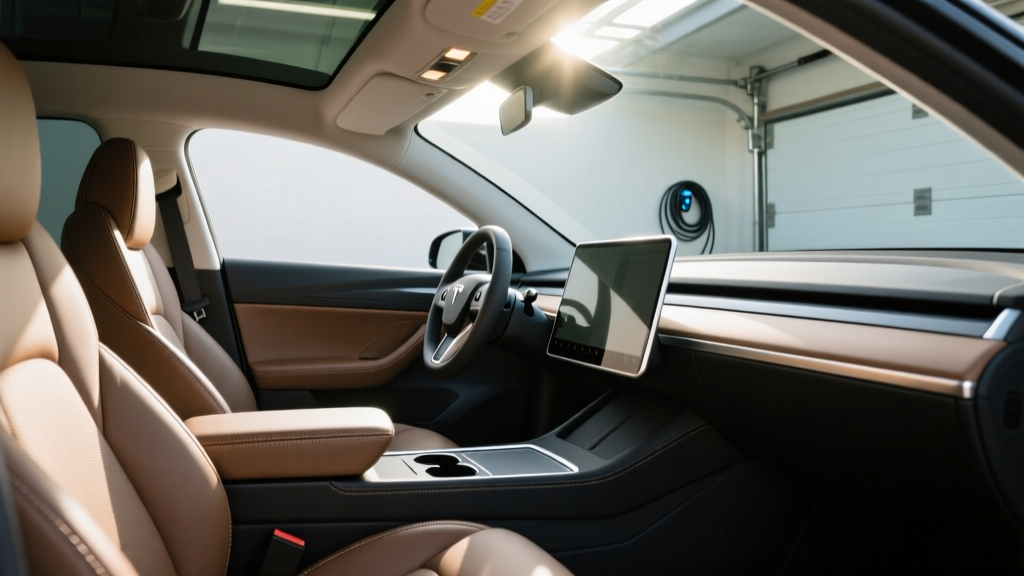
Tesla has not offered genuine animal leather in any of its vehicles since late 2017. Every current Tesla—Model 3, Model Y, Model S, Model X, and Cybertruck—uses a proprietary synthetic material Tesla calls "vegan leather." This is a polyurethane-based (PU) upholstery that mimics the look and feel of traditional leather while avoiding animal hides entirely. The decision aligns with Tesla's sustainability branding and responds to years of requests from animal-welfare organizations.
For buyers searching whether Tesla has leather seats, the practical answer is: you get a leather-like material that is durable, stain-resistant, and standard across every trim. There is no upgrade path to genuine leather, and no Tesla trim level offers it as an option. Below, we examine what this material means for ownership and then profile the full 2026 Tesla lineup with the exact specs buyers need.
What Is Tesla's Vegan Leather, Exactly?
Tesla's vegan leather is a petroleum-derived polyurethane composite applied over a fabric backing. It is not a bio-based or plant-derived material despite the "vegan" label—the term refers to the absence of animal products, not environmental origin. Here is how it compares to traditional automotive leather and competing synthetics:
| Material | Source | Durability | Stain Resistance | Heat Retention |
|---|---|---|---|---|
| Tesla Vegan Leather (PU) | Synthetic polyurethane | High — resists cracking 5+ yrs | Excellent — wipes clean | Moderate — less than real leather |
| Traditional Automotive Leather | Animal hide, coated | Very high — 10+ yrs with care | Good — needs conditioning | High — absorbs and holds heat |
| BMW Veganza / MB-Tex | Synthetic PU/PVC blend | High | Excellent | Moderate |
| Ultrafabrics (Rivian, others) | Synthetic PU, multi-layer | Very high | Excellent | Low — designed for breathability |
In real-world ownership, Tesla's vegan leather holds up well against daily use. Common owner reports after 50,000+ miles show minimal cracking on seat bolsters, though the white interior option does show denim dye transfer from dark jeans if not wiped promptly. The material does not require conditioning treatments the way real leather does—a damp microfiber cloth is sufficient for routine cleaning.
Pros of Tesla Vegan Leather
- No animal products used
- Stain-resistant and easy to clean
- No conditioning or leather-specific maintenance required
- Lighter weight than traditional leather hides
- Standard on all trims—no upcharge for the material itself
Cons of Tesla Vegan Leather
- White seats prone to denim dye transfer
- Not bio-based—still a petroleum-derived PU product
- Less breathable than perforated real leather in summer heat
- Long-term (10+ year) aging data still limited vs. decades of leather data
- No genuine leather option for buyers who prefer it
2026 Tesla Lineup: Full Specs, Range, and Pricing
Since the seat material question applies across the entire fleet, here is a comprehensive spec breakdown for every current Tesla model. These figures reflect 2026 model-year data.
| Spec | Model 3 (Long Range AWD) | Model Y (Long Range AWD) | Model S (Long Range) | Model X (Long Range) | Cybertruck (AWD) |
|---|---|---|---|---|---|
| EPA Range | 363 mi | 320 mi | 402 mi | 335 mi | 340 mi |
| Battery (usable kWh) | ~79 kWh (NMC) | ~79 kWh (NMC) | ~100 kWh (NMC) | ~100 kWh (NMC) | ~123 kWh (NMC) |
| Drivetrain | Dual-Motor AWD | Dual-Motor AWD | Dual-Motor AWD | Dual-Motor AWD | Tri-Motor AWD (Beast) / Dual-Motor |
| Horsepower | ~384 hp | ~384 hp | ~670 hp | ~670 hp | 600 hp (AWD) / 845 hp (Beast) |
| 0-60 mph | 4.2 sec | 4.8 sec | 3.1 sec | 3.8 sec | 3.9 sec (AWD) / 2.6 sec (Beast) |
| Max DC Fast Charge | 250 kW | 250 kW | 250 kW | 250 kW | 250 kW |
| 10-80% DCFC Time | ~25 min | ~27 min | ~30 min | ~32 min | ~35 min |
| Level 2 Home Charge | 11.5 kW (~44 mi/hr) | 11.5 kW (~44 mi/hr) | 11.5 kW (~34 mi/hr) | 11.5 kW (~30 mi/hr) | 11.5 kW (~30 mi/hr) |
| Efficiency (MPGe) | 134 MPGe combined | 122 MPGe combined | 124 MPGe combined | 109 MPGe combined | ~115 MPGe combined (est.) |
| Cargo Volume (rear seats up) | 23 cu ft | 30 cu ft | 28 cu ft | ~44 cu ft (trunk + frunk) | ~34 cu ft (bed + frunk) |
| Rear Legroom | 35.2 in | 40.5 in | 35.4 in | 40.9 in | ~38 in (est.) |
| Base MSRP | $47,740 | $49,630 | $79,990 | $84,990 | $79,990 |
| Federal Tax Credit (§30D) | $7,500 eligible* | $7,500 eligible* | Not eligible (MSRP cap) | Not eligible (MSRP cap) | $7,500 eligible* |
| Battery/Drive Warranty | 8 yr / 120,000 mi | 8 yr / 120,000 mi | 8 yr / 150,000 mi | 8 yr / 150,000 mi | 8 yr / 120,000 mi |
*§30D credit eligibility depends on buyer income caps (AGI ≤$150K single / $300K joint), battery critical-mineral and component sourcing requirements, and point-of-sale transfer availability. Verify current rules at irs.gov. Model S and Model X exceed the $55,000 sedan / $80,000 SUV MSRP cap.
Real-World Range: What the EPA Sticker Doesn't Tell You
EPA vs. Reality
Model 3 Long Range: EPA 363 mi — expect ~290-310 mi at sustained highway speeds (75 mph), and ~240-260 mi in sub-30°F winter conditions. City driving with regen braking can match or slightly exceed the EPA figure.
Model Y Long Range: EPA 320 mi — expect ~260-280 mi highway, ~215-235 mi in cold weather. The taller, heavier crossover profile creates more aero drag at speed.
Model S Long Range: EPA 402 mi — expect ~330-350 mi highway. Tesla's 100 kWh pack and efficient dual-motor system deliver strong real-world results, but cold weather still cuts 15-20%.
Model X Long Range: EPA 335 mi — expect ~275-295 mi highway. Falcon-wing doors add weight; towing drops range by 40-50%.
Cybertruck AWD: EPA 340 mi — expect ~270-290 mi highway. The angular stainless-steel body creates significant aero drag above 70 mph, and cold-weather loss can reach 25%.
Tesla's range estimates are among the more optimistic in the industry. Independent testing by fueleconomy.gov and third-party evaluators consistently show Tesla vehicles delivering 80-90% of EPA range at highway speeds in moderate temperatures. The key variables are speed (efficiency drops sharply above 70 mph), temperature (lithium-ion batteries lose efficiency and increase cabin-heating demand below freezing), and elevation changes.
One practical note: Tesla's navigation system includes battery preconditioning when you route to a Supercharger. This warms the battery to optimal temperature for fast charging, but it consumes some range en route. Always factor in a 5-10% buffer beyond what the trip planner shows.
Charging Speed and Infrastructure: The Tesla Advantage
| Charging Level | Power | Miles Added per Hour | Where You'll Use It |
|---|---|---|---|
| Level 1 (120V) | ~1.4 kW | ~3-5 mi/hr | Emergency / trickle top-off |
| Level 2 (240V, 48A) | 11.5 kW | 30-44 mi/hr (model dependent) | Home daily charging, workplace |
| DC Fast Charge (Supercharger V3) | Up to 250 kW | ~1,000+ mi/hr at peak | Road trips, long-distance travel |
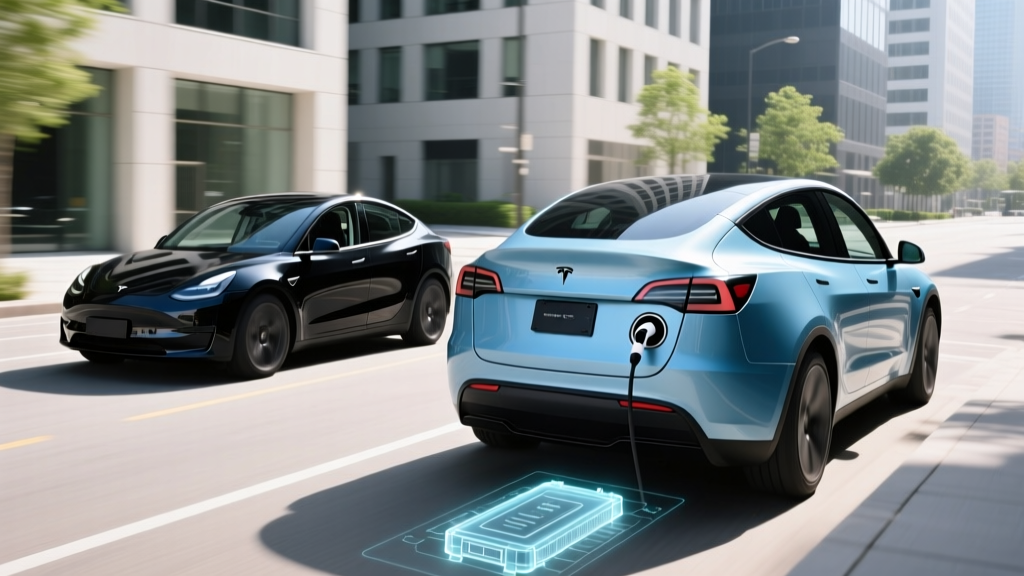
All current Teslas use the North American Charging Standard (NACS) connector natively—Tesla designed it, and it has since been adopted by Ford, GM, Rivian, and most major automakers. This means Teslas access the full Supercharger network without adapters, which remains the most reliable DC fast-charging network in the U.S. with over 6,000 stations and 60,000+ connectors as of early 2026.
Charging curve reality: Tesla's 250 kW peak rate is just that—a peak. On a Model 3 Long Range, you will see 250 kW only between roughly 10-30% State of Charge (SoC). The rate tapers to ~150 kW by 50% SoC, ~100 kW by 65%, and drops below 50 kW above 80%. This is why Tesla quotes 10-80% times rather than 0-100%: the final 20% can take as long as the first 70%. For road trips, plan to charge from 10-80% and skip the slow top-off unless you need every mile for the next leg.
Home charging with a Tesla Wall Connector on a 60A circuit (48A continuous) delivers 11.5 kW, adding roughly 35-44 miles of range per hour depending on the model. A full overnight charge from 20% to 80% takes approximately 4-5 hours. Installation costs for a 240V/60A circuit typically range from $800-$2,500 depending on panel proximity and local permit fees. Always consult a licensed electrician for final specs.
Tax Credit Eligibility and True Cost of Ownership
| Model | Base MSRP | §30D Credit Eligible? | Est. Price After Credit | Notes |
|---|---|---|---|---|
| Model 3 RWD | $40,240 | Yes* | ~$32,740 | LFP battery — sourcing rules may affect eligibility |
| Model 3 Long Range AWD | $47,740 | Yes* | ~$40,240 | NMC battery — check current sourcing status |
| Model Y Long Range AWD | $49,630 | Yes* | ~$42,130 | Most popular Tesla — strong credit eligibility |
| Model Y Performance | $54,490 | Yes* | ~$46,990 | Under $80K SUV cap |
| Model S Long Range | $79,990 | No | $79,990 | Exceeds $55K sedan MSRP cap |
| Model X Long Range | $84,990 | No | $84,990 | Exceeds $80K SUV MSRP cap |
| Cybertruck AWD | $79,990 | Yes* | ~$72,490 | Classified as truck — $80K MSRP cap applies |
*Under IRS §30D, eligibility requires buyer AGI within limits ($150K single / $225K head of household / $300K joint), vehicle MSRP within caps ($55K sedans / $80K SUVs, vans, trucks), and battery component and critical-mineral sourcing thresholds that change annually. Credits can be transferred to the dealer at point of sale as of 2024+. Confirm details at irs.gov before purchasing.
Beyond the purchase price, Tesla ownership economics benefit from lower fueling costs. At the U.S. average electricity rate of ~$0.17/kWh, charging a Model 3 Long Range from 0-100% costs roughly $13.40—compared to ~$50+ for a comparable gasoline sedan at $3.50/gallon and 28 MPG. Over 15,000 annual miles, that translates to approximately $1,300-$1,800 in annual fuel savings. Insurance premiums, however, tend to run 15-30% higher than equivalent gas vehicles due to repair costs and parts pricing.
Standout Tech and Notable Drawbacks
Every Tesla shares a common tech architecture centered around a 15.4-inch (Model 3/Y) or 17-inch (Model S/X/Cybertruck) touchscreen that controls virtually every vehicle function. There is no traditional instrument cluster—speed and navigation appear on the main screen or, in the refreshed Model 3, on a secondary rear passenger screen.
Key tech features:
- Autopilot (standard): SAE Level 2 driver-assistance with adaptive cruise control, lane centering, and automatic emergency braking. Requires continuous driver supervision—hands on wheel, eyes on road.
- Full Self-Driving (Supervised): Optional $8,000 upgrade (or $99/month subscription) adding automatic lane changes, traffic-light recognition, and Navigate on Autopilot. Still SAE Level 2—the driver is fully responsible at all times. Despite the name, this is not autonomous driving.
- Over-the-air updates: Tesla pushes regular software updates that can add features, improve efficiency, and update the UI without a service-center visit.
- Sentry Mode: 360-degree camera surveillance while parked, recording incidents and alerting via the mobile app.
- Supercharger network integration: Automatic routing, preconditioning, and plug-to-charge with no app or RFID card needed at Tesla stations.
⚠️ Autopilot / FSD Limitations
Tesla Autopilot and Full Self-Driving (Supervised) are SAE Level 2 driver-assistance systems. They do NOT make the vehicle self-driving. The driver must remain fully engaged, keep hands on the steering wheel, and be prepared to take over instantly. NHTSA has issued multiple investigations into Autopilot-related incidents. Never use these systems as a substitute for attentive driving.
Notable drawbacks across the lineup:
- Minimalist interior isn't for everyone: No physical buttons for climate, wipers, or glove-box release. Everything goes through the touchscreen, which can require taking your eyes off the road for simple adjustments.
- Phantom braking: Multiple owners and NHTSA reports document instances of unexpected deceleration on Autopilot, particularly in low-light conditions or near overpasses.
- Service center wait times: Tesla's service network, while expanding, still has longer wait times for body repair and non-warranty work compared to legacy dealer networks in many metro areas.
- No Apple CarPlay or Android Auto: Tesla uses its proprietary infotainment system exclusively. If you rely on phone mirroring, this is a dealbreaker.
- Build quality variability: While improved significantly since 2023, panel-gap inconsistency and minor interior trim misalignment still appear in some delivery inspections—less frequently than earlier years, but still more common than at Lexus or BMW.
Which Tesla Fits Your Use Case?
Decision Framework
Choose Model 3 if: You want the best value in the lineup, commute under 60 miles daily, and prioritize efficiency (134 MPGe combined). The Long Range AWD at ~$40,240 after the federal credit is the sweet spot for range-per-dollar.
Choose Model Y if: You need family-friendly cargo space (30 cu ft rear seats up, 76 cu ft folded), easier rear-seat access, and the most popular Tesla for resale value. It is the best-selling EV in the U.S. for good reason.
Choose Model S if: You want 400+ miles of range, luxury-sedan performance (3.1 sec 0-60), and don't mind the $80K price tag with no federal credit. Best for high-mileage commuters who want minimal charging stops.
Choose Model X if: You need three-row seating (6-7 passengers), falcon-wing doors for tight parking, and can absorb the premium. Towing capacity reaches 3,500 lbs, but expect range to drop to ~180-200 mi while towing.
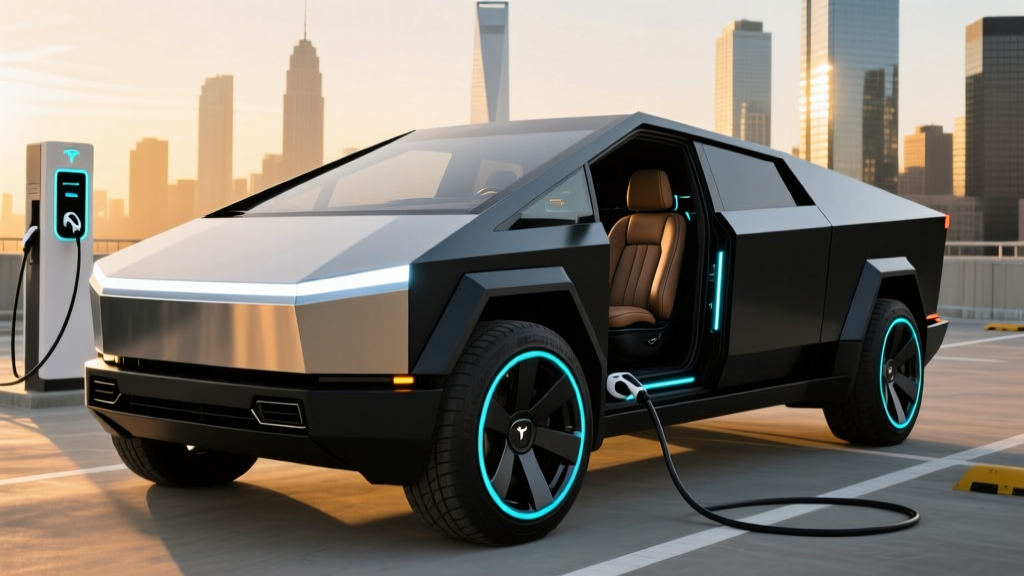
Choose Cybertruck if: You need a truck bed, want 499 cu ft of total storage volume (bed + frunk + vault), and value the stainless-steel exoskeleton. Practical towing is rated at 11,000 lbs, but range under load drops sharply.
Competitor Comparison: How Does Tesla Stack Up?
The Tesla lineup faces real competition in 2026. Here is how key rivals compare on the metrics that matter:
| Vehicle | EPA Range | Max DCFC kW | Base MSRP | §30D Credit |
|---|---|---|---|---|
| Tesla Model Y LR AWD | 320 mi | 250 kW | $49,630 | $7,500* |
| Hyundai Ioniq 5 (LR AWD) | 290 mi | 240 kW | $49,500 | $7,500* |
| Ford Mustang Mach-E (ER AWD) | 312 mi | 150 kW | $52,995 | $7,500* |
| BMW iX xDrive50 | 324 mi | 200 kW | $87,250 | No (MSRP cap) |
| Rivian R1S (Dual-Motor) | 316 mi | 220 kW | $79,900 | $7,500* |
Tesla's advantages remain the Supercharger network, efficiency per kWh, and software integration. Competitors like the Ioniq 5 close the gap on charging speed and interior quality, but none yet match Tesla's charging-network reliability or over-the-air update cadence.
Frequently Asked Questions
Does Tesla have leather seats in any model?
No. Tesla has not used genuine animal leather in any vehicle since 2017. All current models use synthetic vegan leather (polyurethane-based) as standard. There is no option to upgrade to real leather on any trim.
Is Tesla's vegan leather durable?
Yes, for typical ownership periods of 5-8 years. The material resists cracking, staining, and UV fading better than many expect. However, the white interior option is susceptible to dye transfer from dark denim and should be wiped regularly. Unlike real leather, it does not require conditioning.
Can I install aftermarket leather seats in a Tesla?
Technically, third-party upholstery shops can retrim Tesla seats in genuine leather. However, this voids the seat warranty, may interfere with seat-mounted airbags and occupancy sensors, and will likely reduce resale value. It is not recommended.
What is the real-world range of a Tesla Model Y?
The 2026 Model Y Long Range AWD carries an EPA rating of 320 miles. In real-world highway driving at 75 mph in moderate temperatures, expect approximately 260-280 miles. In sub-freezing conditions, range can drop to 215-235 miles due to battery chemistry limitations and cabin-heating energy draw.
How fast does a Tesla charge at home?
With a Tesla Wall Connector on a 60A/240V circuit, all current Teslas charge at up to 11.5 kW, adding approximately 30-44 miles of range per hour depending on the model. A typical overnight session from 20% to 80% takes about 4-5 hours.
Does the Tesla Model 3 qualify for the $7,500 federal tax credit?
The Model 3 Long Range AWD ($47,740 MSRP) is generally eligible for the full $7,500 §30D credit, provided the buyer meets income caps (AGI ≤$150K single / $300K joint) and the vehicle meets current-year battery sourcing requirements. The base RWD model with LFP battery may have different sourcing eligibility. Always verify current rules at irs.gov before purchase.
Is Tesla's Autopilot self-driving?
No. Autopilot and Full Self-Driving (Supervised) are both SAE Level 2 driver-assistance systems. The driver must remain fully engaged and is legally responsible for the vehicle at all times. Only Level 4 systems, such as Waymo's robotaxi service, operate without a human driver—and those are limited to specific geofenced areas.
How does Tesla's warranty compare to competitors?
Tesla covers the battery and drive unit for 8 years / 120,000 miles on Model 3/Y/Cybertruck and 8 years / 150,000 miles on Model S/X, with a minimum 70% capacity retention guarantee. The basic vehicle warranty is 4 years / 50,000 miles. This is competitive with Hyundai's 10-year/100,000-mile battery warranty on the shorter side, but Tesla's track record shows typical degradation of only 10-12% at 150,000 miles based on fleet data.