Why Tesla's Leasing Incentive Changes the Math in 2026
If you've been watching Tesla's pricing page lately, you may have noticed something unusual: lease offers that seem significantly cheaper than buying, even after accounting for equity. The reason is structural. Under current IRS rules, many Tesla configurations no longer qualify for the full $7,500 federal EV tax credit when purchased outright due to battery-sourcing and critical-mineral requirements. But when leased, a different section of the tax code applies — and Tesla can pass those savings directly into your monthly payment.
This is what the industry calls the "lease loophole" or, more accurately, the commercial clean vehicle credit (§45W). When you lease a Tesla, the lessor (the financing entity) claims the credit and typically applies it as a capitalized-cost reduction, lowering your effective lease price. For 2026, this Tesla leasing incentive remains one of the most reliable ways to access the full $7,500 benefit on a Model Y or Model 3, regardless of your personal income or the vehicle's battery sourcing.
Below, we break down exactly how this works, what it costs, and whether leasing a Tesla in 2026 makes more financial sense than buying — paired with the real-world range, charging, and ownership data you need to decide.
2026 Tesla Model Y: Specs, Range, and Real-World Efficiency
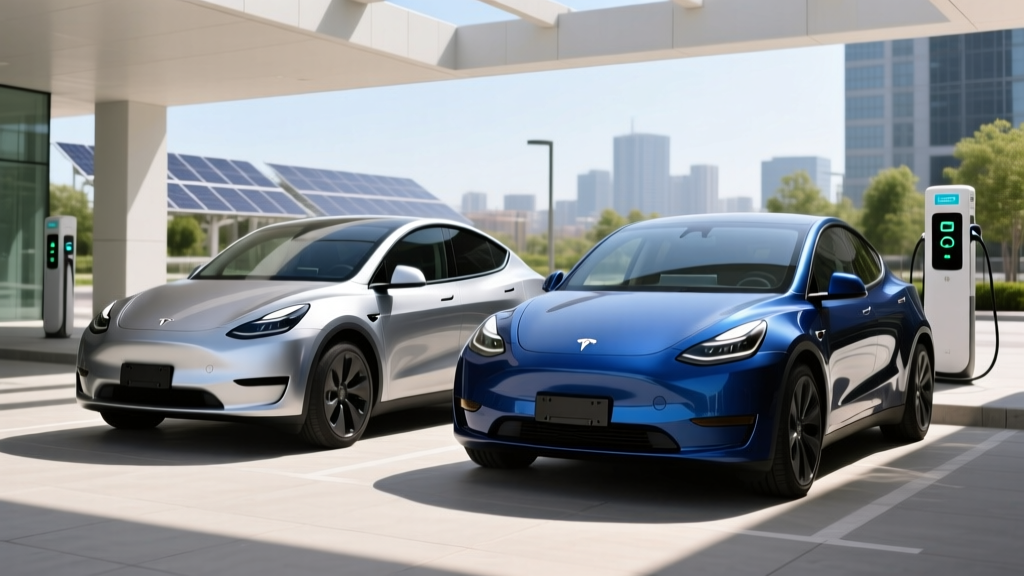
The 2026 Model Y remains Tesla's volume leader and the best-selling EV in the U.S. Here's the full spec breakdown for the two most popular trims:
| Spec | Long Range AWD | Performance AWD |
|---|---|---|
| EPA Range | 320 miles | 298 miles |
| Battery (usable) | ~75 kWh (NMC) | ~75 kWh (NMC) |
| Drivetrain | Dual-motor AWD | Dual-motor AWD |
| Horsepower | 384 hp | 456 hp |
| 0-60 mph | 4.8 sec | 3.5 sec |
| Efficiency | 122 MPGe / 28 kWh/100mi | 111 MPGe / 30 kWh/100mi |
| Max DC Fast Charge | 250 kW | 250 kW |
| 10-80% DCFC Time | ~27 min | ~27 min |
| Level 2 Home Charge | 11.5 kW (~44 mi/hr) | 11.5 kW (~44 mi/hr) |
| Cargo Volume | 76 cu ft (rear seats folded) | 76 cu ft (rear seats folded) |
| Rear Legroom | 41.6 in | 41.6 in |
| Base MSRP | $44,990 | $48,990 |
| Battery Warranty | 8 yr / 120,000 mi | 8 yr / 120,000 mi |
The EPA rates the Model Y Long Range at 320 miles. In real-world highway driving at 70-75 mph, expect approximately 265-285 miles in mild temperatures. In cold weather (below 32°F), range drops to roughly 220-250 miles due to battery resistance and cabin heating demands. City driving with regenerative braking recovers energy and can push you closer to or even above the EPA sticker. Plan road trips around ~250 miles of usable range per charge to stay comfortable.
2026 Tesla Model 3: The Efficiency Champion
The refreshed Model 3 ("Highland" and its 2025-2026 successors) offers better range per kWh than the Model Y and a quieter, more refined cabin. It's the sedan alternative for buyers who don't need crossover cargo space.
| Spec | Long Range RWD | Long Range AWD |
|---|---|---|
| EPA Range | 363 miles | 346 miles |
| Battery (usable) | ~75 kWh (NMC) | ~75 kWh (NMC) |
| Drivetrain | Single-motor RWD | Dual-motor AWD |
| Horsepower | 271 hp | 346 hp |
| 0-60 mph | 5.8 sec | 4.2 sec |
| Efficiency | 132 MPGe / 26 kWh/100mi | 125 MPGe / 27 kWh/100mi |
| Max DC Fast Charge | 250 kW | 250 kW |
| 10-80% DCFC Time | ~25 min | ~25 min |
| Level 2 Home Charge | 11.5 kW (~44 mi/hr) | 11.5 kW (~44 mi/hr) |
| Cargo Volume | 23 cu ft (trunk + frunk) | 23 cu ft (trunk + frunk) |
| Rear Legroom | 35.4 in | 35.4 in |
| Base MSRP | $42,490 | $47,490 |
| Battery Warranty | 8 yr / 120,000 mi | 8 yr / 120,000 mi |
The Model 3 Long Range RWD achieves an impressive 363 miles EPA — among the highest of any EV in its class. Real-world highway driving yields approximately 300-320 miles in moderate weather. Cold-weather highway range settles around 260-285 miles. The RWD variant's single-motor efficiency is genuinely outstanding; if you live in a mild climate and don't need AWD traction, it's the efficiency pick.
How the Tesla Leasing Incentive Actually Works
Here's the mechanism behind the 2026 Tesla leasing incentive, step by step:
- You lease, not buy. The vehicle is titled to Tesla's financing entity (the lessor), not to you.
- The lessor claims the credit. Under IRS rules for clean vehicle credits, a leased EV is treated as a "commercial" vehicle under §45W, which does not have the same MSRP caps, buyer income limits, or battery-sourcing restrictions that apply to the §30D purchase credit.
- The savings pass to you. Tesla applies the $7,500 as a capitalized-cost reduction (cap cost reduction), which directly lowers the amount being financed in the lease. This translates into a lower monthly payment.
- You pay no federal income tax on the credit. Unlike a purchased-vehicle credit that reduces your tax liability, the lease credit operates at the lessor level and flows through as a price reduction.
Not every lease automatically passes the full $7,500 to the lessee. The lessor is legally entitled to keep some or all of the credit. In practice, Tesla has been passing the full amount through as a cap cost reduction on most Model Y and Model 3 leases in 2026 — but always verify the specific lease terms before signing. The money factor (lease interest rate) and residual value also determine your actual monthly payment.
Lease vs. Buy: Estimated Monthly Cost Comparison
| Cost Factor | Lease (with $7,500 incentive) | Purchase (if credit qualifies) | Purchase (no credit) |
|---|---|---|---|
| Vehicle Price | $44,990 | $44,990 | $44,990 |
| Federal Credit Applied | -$7,500 (cap cost reduction) | -$7,500 (tax liability reduction) | $0 |
| Effective Capitalized Cost | $37,490 | $44,990 | $44,990 |
| Estimated Monthly Payment | ~$499/mo | ~$599/mo (6.5% APR, 72 mo) | ~$699/mo (6.5% APR, 72 mo) |
| Equity at End | $0 (return vehicle) | ~$18,000 equity | ~$18,000 equity |
| Total Out-of-Pocket (36 mo) | ~$17,964 | ~$21,564 | ~$25,164 |
The lease wins on monthly cash flow and total out-of-pocket over three years. The purchase wins on long-term equity — especially if you plan to keep the vehicle past the loan term. The critical variable: do you qualify for the §30D purchase credit? If battery-sourcing rules disqualify your configuration, the lease route becomes the only way to access the $7,500 benefit.
Charging Speed: What to Expect at Home and on the Road
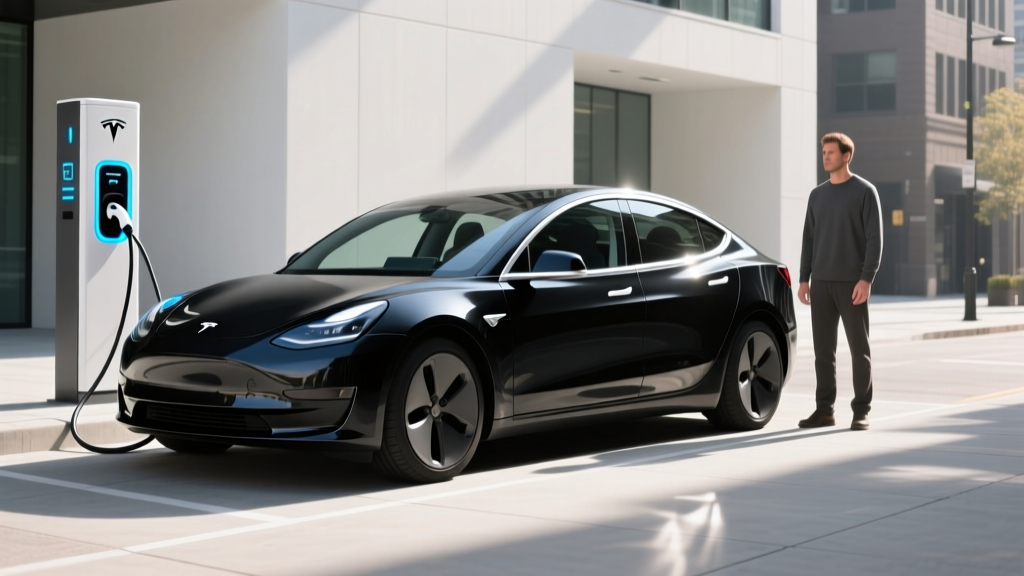
Charging infrastructure remains Tesla's strongest competitive advantage. The Supercharger network is the most reliable DC fast-charging network in North America, and with the NACS connector now adopted industry-wide, Tesla's charging ecosystem is only getting stronger.
| Charging Level | Power | Speed | Best For |
|---|---|---|---|
| Level 1 (120V outlet) | ~1.4 kW | ~3-5 mi/hr | Overnight trickle / emergency |
| Level 2 (240V, 48A) | 11.5 kW | ~44 mi/hr | Daily home charging |
| DC Fast (Supercharger V3) | 250 kW peak | ~175 mi in 15 min | Road trips |
| DC Fast (Supercharger V4) | Up to 350 kW (future) | Faster (model-dependent) | Newer corridor stations |
Charging curve reality: The Model Y and Model 3 peak at 250 kW on V3 Superchargers, but only between roughly 10-30% State of Charge (SoC). The rate tapers progressively: ~150 kW by 50% SoC, ~80 kW by 70%, and ~40 kW above 85%. A 10-80% session takes about 25-27 minutes, but an 80-100% top-off can add another 20+ minutes. For road trips, the most time-efficient strategy is to charge to 80% and move on to the next Supercharger.
Home charging setup: Tesla's Wall Connector ($420) delivers up to 11.5 kW on a 60A circuit (48A continuous). A typical installation by a licensed electrician runs $500-$2,000 depending on panel proximity and whether your home's electrical panel needs an upgrade from 100A to 200A service. At 11.5 kW, a full Model Y charge takes about 7 hours — easily done overnight.
Tech, Driver Assistance, and Interior
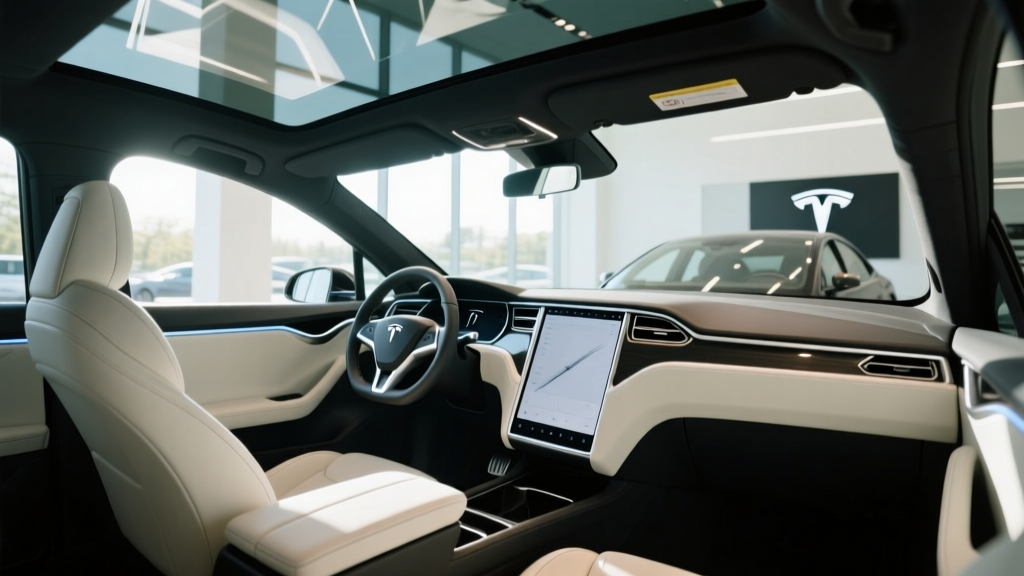
Tesla's interior remains minimalist: a 15.4-inch center touchscreen handles nearly all vehicle functions, including climate controls, glovebox release, and mirror adjustment. There is no instrument cluster; speed and navigation info appear on the top-left corner of the main display.
Standard Tech Features
- 15.4-inch touchscreen with Tesla OS (streaming, navigation, gaming)
- Over-the-air (OTA) software updates
- Tesla mobile app with remote climate, location, and Sentry Mode
- 8 camera system for Autopilot and available FSD (Supervised)
- HEPA air filtration (Model Y; Bioweapon Defense Mode)
- Front and rear heated seats, heated steering wheel
Driver Assistance: Autopilot and FSD
Tesla Autopilot and Full Self-Driving (Supervised) are Level 2 driver-assistance systems, per SAE International's automation framework. This means the driver must remain fully engaged, hands on or near the wheel, and eyes on the road at all times. These systems do NOT make the vehicle self-driving. FSD (Supervised) can navigate intersections, make turns, and handle highway on/off-ramps — but it makes errors and requires constant supervision.
Autopilot (basic traffic-aware cruise and lane-keeping) is standard. FSD (Supervised) costs $8,000 as a one-time purchase or $99/month as a subscription. Given the monthly subscription option, most lessees are better off subscribing for the lease term rather than purchasing outright.
Notable Drawbacks
- No physical buttons for climate or volume — everything is screen-based
- Turn signal stalk removed on refreshed Model 3 (steering-wheel buttons instead); polarizing for many drivers
- No Apple CarPlay or Android Auto — Tesla's native system only
- Rear-seat comfort and headroom are adequate but not class-leading vs. Hyundai Ioniq 5 or Kia EV6
- Panel gap quality has improved but still inconsistent across units
Federal Tax Credit Eligibility: Purchase vs. Lease
This is where the Tesla leasing incentive becomes critical. Here's the current eligibility landscape for 2026:
Buying (IRS §30D — Clean Vehicle Credit)
- Maximum credit: $7,500
- MSRP cap: $55,000 for sedans (Model 3), $80,000 for SUVs/trucks (Model Y)
- Buyer income cap: $150,000 single / $300,000 joint (modified AGI)
- Battery sourcing: Critical minerals and battery components must meet escalating domestic-content thresholds — some Tesla configurations may not fully qualify depending on the production month and supply chain
- Point-of-sale transfer available (dealer applies credit at purchase, reducing out-of-pocket)
Check current eligibility on the fueleconomy.gov tax credit database, which lists qualifying VINs and configurations.
Leasing (§45W — Commercial Clean Vehicle Credit)
- Maximum credit: $7,500
- No MSRP cap
- No buyer income cap
- No battery-sourcing restrictions
- Credit goes to the lessor, who may pass savings to the lessee
The lease path effectively sidesteps every restriction that limits the purchase credit. If you earn above the income cap, or if your desired Tesla configuration doesn't meet battery-sourcing rules, leasing is the most straightforward way to access the full $7,500 benefit in 2026.
Is a Tesla Lease Worth It vs. Competitors?
The Model Y and Model 3 compete in an increasingly crowded segment. Here's how they stack up against key rivals:
- Supercharger network access (most reliable DCFC in North America)
- Best-in-class efficiency (kWh/100mi)
- OTA updates add features over time
- Strong resale value / residual
- Lease incentive bypasses §30D sourcing restrictions
- No physical controls — steep learning curve
- No CarPlay/Android Auto
- Rear seat comfort trails Ioniq 5, EV6
- FSD is expensive and not truly autonomous
- Service center wait times can be long in some markets
Key Competitor Comparison
| Spec | Tesla Model Y LR | Hyundai Ioniq 5 | Kia EV6 | Ford Mustang Mach-E |
|---|---|---|---|---|
| EPA Range | 320 mi | 305 mi | 310 mi | 312 mi |
| Max DCFC | 250 kW | 238 kW | 238 kW | 150 kW |
| 10-80% Time | ~27 min | ~18 min | ~18 min | ~39 min |
| 0-60 mph | 4.8 sec | 5.1 sec | 4.5 sec | 5.1 sec |
| Base MSRP (AWD) | $44,990 | $49,950 | $48,700 | $46,995 |
| Charging Network | Supercharger (native) | NACS adapter available | NACS adapter available | NACS adapter available |
The Ioniq 5 and EV6 charge faster (10-80% in ~18 minutes vs. Tesla's ~27 minutes) thanks to their 800V architecture. The Mach-E lags significantly in charging speed. But Tesla's Supercharger advantage — native, plug-and-charge reliability across thousands of stations — remains hard to replicate even as competitors gain NACS adapter access.
Who Should Lease a Tesla in 2026?
- You want the lowest monthly payment by leveraging the full $7,500 leasing incentive
- You exceed the §30D income cap or your desired configuration doesn't meet battery-sourcing rules
- You value Supercharger network reliability for frequent road trips
- You prefer OTA software updates that add features over time
- You want to drive an EV for 2-3 years without long-term battery degradation concerns
- You live in a region with strong Tesla service center coverage
- You plan to keep the vehicle 5+ years and want to build equity
- You strongly prefer physical buttons, CarPlay, or a traditional instrument cluster
- You need best-in-class rear-seat comfort (look at Ioniq 5 or EV6)
- Your local Tesla service infrastructure is limited
- You want 800V ultra-fast DC charging (Ioniq 5, EV6, or Porsche Taycan)
Frequently Asked Questions
What is the real-world range of the 2026 Tesla Model Y?
The EPA rates the Model Y Long Range AWD at 320 miles. In real-world highway driving at 70-75 mph, expect 265-285 miles in mild weather and 220-250 miles in freezing temperatures. City driving with regenerative braking can match or slightly exceed the EPA estimate.
How fast does a Tesla Model 3 or Model Y charge?
Both vehicles peak at 250 kW on Tesla V3 Superchargers, achieving a 10-80% charge in approximately 25-27 minutes. At home on a 240V Level 2 charger (11.5 kW), you'll add about 44 miles of range per hour — a full overnight charge takes 7-8 hours. The charge curve tapers significantly above 80% SoC, so the last 20% takes disproportionately longer.
How much does a Tesla cost after the leasing incentive?
With the $7,500 leasing incentive applied as a cap cost reduction, a 2026 Model Y Long Range AWD (MSRP $44,990) can lease for approximately $499/month on a 36-month term with no money down (estimates vary by region, money factor, and residual). A Model 3 Long Range RWD (MSRP $42,490) can lease for approximately $449/month under similar terms. Always confirm the exact cap cost reduction and money factor with Tesla's financing team.
Does the Tesla Model Y qualify for the federal EV tax credit if I buy instead of lease?
It depends on your specific configuration and production batch. The §30D purchase credit requires the vehicle to meet battery-sourcing and critical-mineral thresholds, and the buyer must fall under the income cap ($150K single / $300K joint). Some Model Y configurations qualify for the full $7,500, others for $3,750, and some for $0. Check your VIN on fueleconomy.gov before committing. Leasing bypasses these restrictions entirely via the §45W commercial credit.
Is leasing a Tesla better than buying in 2026?
For cash-flow-conscious buyers, leasing typically delivers a lower monthly payment because the $7,500 incentive is more reliably applied (no sourcing restrictions) and the residual value absorbs a significant portion of the vehicle cost. However, you build no equity and face mileage limits (typically 10,000-15,000 mi/yr). If you drive under 12,000 miles annually and like upgrading every 3 years, leasing is the stronger financial play. If you drive more or plan to keep the car long-term, buying is better despite the credit uncertainty.
What happens at the end of a Tesla lease?
Tesla leases typically offer a purchase option at the residual value stated in your contract. You can also return the vehicle with no further obligation (subject to excess wear and mileage charges). Unlike some legacy automakers, Tesla has historically allowed third-party purchase at lease-end, though terms can change — confirm your options at signing.