Is a Tesla Lease the Smartest Way to Drive Electric in 2026?
For many shoppers, the sticker price of a new Tesla is the biggest hurdle to going electric. While prices have dropped significantly since 2022, a new Model 3 or Model Y still represents a major financial commitment. This is where Tesla leasing deals come into play, offering a lower barrier to entry with monthly payments that often undercut traditional financing.
However, a Tesla lease is not a simple transaction. Unlike many legacy automakers, Tesla's leasing structure has unique rules regarding the federal tax credit, mileage limitations, and end-of-lease options. In this 2026 guide, we analyze the real math behind Tesla leases to help you decide if it's the right move for your garage.
Real-World Range Reality Check
EPA Estimate: Up to 363 miles (Model 3 Long Range RWD).
Real-World Expectation: Expect 290–320 miles in mixed driving. Highway speeds (75+ mph) reduce range by ~15%. In freezing temperatures (below 32°F), range can drop by 20–30% due to battery conditioning and cabin heating demands.
Current Tesla Lease Pricing and Structure
As of early 2026, Tesla primarily offers leases on the Model 3 and Model Y. These are typically 36-month terms with annual mileage options of 10,000, 12,000, or 15,000 miles. Unlike third-party dealerships, Tesla leases are often "closed-end," meaning you cannot purchase the vehicle at the end of the term—a critical factor for those looking to build long-term equity.
| Model & Trim | Estimated Monthly Lease (36 mo/10k) | Due at Signing | EPA Range | 0-60 mph |
|---|---|---|---|---|
| Model 3 RWD | $399 - $449 | $4,500 - $6,000 | 272 mi | 5.8 sec |
| Model 3 Long Range AWD | $499 - $579 | $5,000 - $7,500 | 363 mi | 4.2 sec |
| Model Y Long Range AWD | $549 - $629 | $5,500 - $8,000 | 320 mi | 4.8 sec |
Note: Pricing varies by region, credit tier, and current Tesla incentives. Always check the Tesla design studio for real-time local offers.
The Tax Credit "Lease Loophole" Explained
One of the most complex parts of Tesla leasing deals is the federal EV tax credit. Under IRS §30D, the $7,500 credit is technically available to the entity that owns the vehicle. In a lease, the leasing company (Tesla) is the owner.
Fortunately, Tesla typically "passes through" this credit as a capitalized cost reduction, which lowers your monthly payment. However, this means you do not need to meet the personal income caps (e.g., $150k single/$300k joint) that apply to buyers. This "commercial lease loophole" makes leasing a Tesla an attractive option for high-income earners who would otherwise be ineligible for the tax credit when purchasing.
Battery Chemistry and Long-Term Health
Most 2026 Model 3 RWD and Model Y Standard Range units use Lithium Iron Phosphate (LFP) batteries. LFP is heavier and has slightly lower energy density than Nickel Manganese Cobalt (NMC), but it offers superior longevity and safety. Tesla recommends charging LFP batteries to 100% at least once a week to maintain calibration. For lessees, this is ideal: you can charge to full without the degradation anxiety associated with NMC batteries, which are better kept between 20-80% for daily use.
| Charging Level | Power Output | Speed (Miles per Hour) | Time 10-80% |
|---|---|---|---|
| Level 1 (120V) | 1.4 kW | 3-4 mi/hr | N/A (Days) |
| Level 2 (240V/48A) | 11.5 kW | 44 mi/hr | ~8 hours |
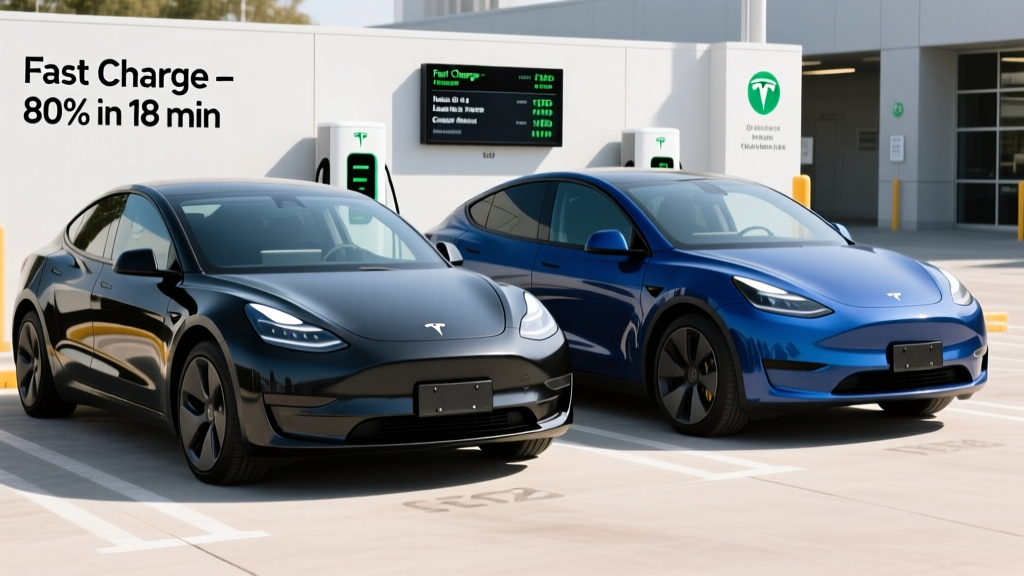
| DC Fast (Supercharger) | Peak 170-250 kW | ~1,000 mi/hr (peak) | 25-30 min |
Pros and Cons of Leasing a Tesla
Pros
- Lower Upfront Cost: Significantly lower due-at-signing compared to a down payment on a loan.
- Tax Credit Access: High-income earners can still benefit from the $7,500 credit via the lease pass-through.
- Tech Refresh: Tesla's hardware evolves quickly; leasing allows you to upgrade to the next generation of FSD hardware or battery tech every 3 years.
- Warranty Coverage: Your entire lease term is covered under the 4-year/50,000-mile basic warranty and 8-year battery warranty.
Cons
- No Purchase Option: Most Tesla leases do not allow you to buy the car at the end of the term.
- Mileage Penalties: Excess mileage fees can be steep (typically $0.20-$0.25 per mile).
- Wear and Tear: Tesla is strict about cosmetic damage; you may face charges for wheel rash or interior wear.
- No Equity: You are renting the depreciation; you walk away with nothing but a payment history.
Who Should Lease vs. Buy?
A Tesla lease is best for: High-income earners who don't qualify for the tax credit on a purchase, corporate users who want a simplified expense, and tech enthusiasts who want to stay on the cutting edge of Tesla's hardware updates. It is also a smart move for those who lack home charging and want to try the EV lifestyle without a 7-year commitment.
Conversely, high-mileage commuters (over 15,000 miles/year) and customizers (those who want to wrap or modify the car) should buy, as leases prohibit modifications and penalize excess driving.
Frequently Asked Questions
Can I negotiate a Tesla lease?
Generally, no. Tesla uses a fixed pricing model. However, you can influence the monthly cost by adjusting the down payment (capitalized cost reduction) and choosing a lower mileage tier.
Does a Tesla lease include insurance?
No, you must provide your own insurance. Tesla offers its own insurance product in many states, which uses real-time driving data to calculate premiums, often resulting in lower rates for safe drivers.
What happens if I crash a leased Tesla?
You are responsible for the insurance deductible and any damage that exceeds "normal wear and tear." Because Tesla requires specific approved body shops for structural and battery work, repair times can sometimes be longer than legacy vehicles.
Is the $7,500 credit guaranteed on a lease?
It is not a legal guarantee but a business practice. Tesla has consistently passed the credit to lessees to remain competitive, but they reserve the right to change this policy at any time.