Tesla Leasing Cost 2026: Model 3 & Model Y Lease Breakdown
For many buyers, the decision to go electric isn't about whether they want a Tesla, but how they want to pay for it. While purchasing offers long-term equity, the Tesla leasing cost has become an increasingly popular entry point for those wanting to experience the latest battery tech and software updates without the long-term commitment of ownership. In 2026, Tesla’s leasing programs for the Model 3 and Model Y provide a unique financial landscape shaped by federal incentives, residual value projections, and the brand's direct-to-consumer model.
As an analyst who has tracked the EV market for a decade, I’ve found that Tesla leases are rarely straightforward. Unlike traditional dealerships that use leasing as a tool to hit monthly sales quotas, Tesla treats leasing as a fixed financial product. This guide provides a data-driven look at what you will actually pay to lease a Tesla in 2026, the technical specs of the vehicles you’ll be driving, and the ownership economics that should guide your decision.
The 2026 Tesla Lease Matrix: Model 3 vs. Model Y
Tesla's leasing terms are typically offered in 36-month terms with 10,000, 12,000, or 15,000 annual mileage options. The monthly cost is heavily influenced by the "money factor" (the lease equivalent of an interest rate) and the residual value—the projected worth of the car at the end of the term. In 2026, Tesla's direct leasing model means there is no dealer negotiation; the price you see on the configurator is the price you get.
| Model | Trim Level | MSRP (approx.) | Est. Monthly Cost | Due at Signing |
|---|---|---|---|---|
| Model 3 | Long Range RWD | $44,130 | $489 - $539 | $4,500 - $7,500 |
| Model 3 | Performance AWD | $52,130 | $619 - $679 | $5,500 - $8,500 |
| Model Y | Long Range AWD | $49,130 | $549 - $599 | $5,000 - $8,000 |
| Model Y | Performance AWD | $54,130 | $669 - $729 | $6,000 - $9,000 |
Note: These figures are estimates based on typical 2026 money factors and do not include state-specific taxes or registration fees. The "Due at Signing" amount can often be reduced by applying the federal tax credit as a capital cost reduction.
Model 3 & Model Y Technical Specifications
To understand if the Tesla leasing cost is justified, you must look at the hardware. The 2026 Model 3 "Highland" refresh and the "Juniper" Model Y represent the pinnacle of Tesla’s efficiency engineering. The shift toward Lithium Iron Phosphate (LFP) batteries in standard-range models has changed the longevity equation, while Long Range models continue to use Nickel-Manganese-Cobalt (NMC) chemistry for maximum energy density.
| Feature | Model 3 Long Range | Model Y Long Range |
|---|---|---|
| EPA Estimated Range | 363 miles | 320 miles |
| Battery Capacity (Usable) | 79 kWh (NMC) | 78.1 kWh (NMC) |
| 0-60 mph | 4.1 seconds | 4.8 seconds |
| Horsepower | 346 hp | 384 hp |
| Drivetrain | Dual-Motor AWD | Dual-Motor AWD |
| Peak DC Charge Rate | 250 kW | 250 kW |
| 10-80% Charge Time | ~25 minutes | ~27 minutes |
| Cargo Volume | 23 cu ft (rear) + Frunk | 76 cu ft (max) + Frunk |
Real-World Range Reality Check
While the EPA provides a standardized benchmark, real-world results vary. For the 2026 Model 3 Long Range, expect approximately 290-310 miles during steady 75 mph highway driving in moderate temperatures. In cold weather (below 32°F), range can drop by 15-20% due to cabin heating and battery internal resistance, bringing the realistic winter road-trip range to roughly 250-270 miles. City drivers utilizing regenerative braking will often see figures closer to or even exceeding the EPA estimate.
Charging Infrastructure and Speed
A major component of the Tesla value proposition is the Supercharger network. When you lease a Tesla, you are essentially buying into a proprietary ecosystem that remains the most reliable public charging option in North America.
- Level 1 (120V): ~3-4 miles of range per hour (emergency/trickle charging).
- Level 2 (240V/48A): ~44 miles of range per hour. A full charge takes roughly 8-9 hours.
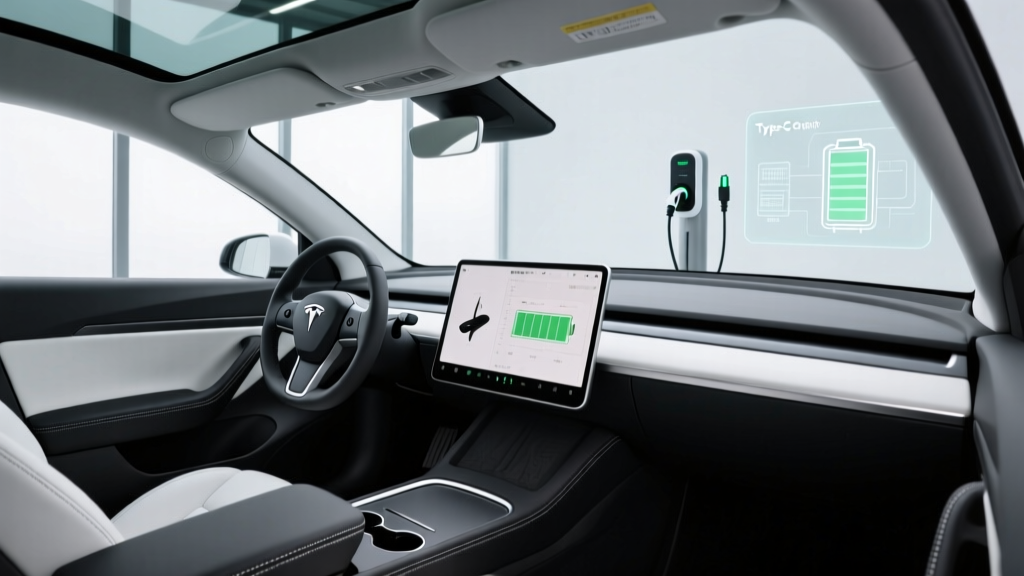
- DC Fast Charging (V3 Supercharger): Peaks at 250 kW. The charge curve is aggressive, maintaining high speeds until approximately 50% state of charge before tapering to protect the battery.
For lessees who cannot install a home charger, the Supercharger network is a necessity. However, it is important to remember that unlike some competitors who offer free charging credits, Tesla typically charges market rates for Supercharging, which can range from $0.25 to $0.50 per kWh depending on location and time of day.
Tax Credits and Lease Economics
The interaction between the Tesla leasing cost and the federal §30D tax credit is the most complex part of the transaction. According to the IRS, the tax credit is technically available to the lessor (the finance company) rather than the lessee. However, Tesla Financial Services typically passes this benefit to the consumer as a "capital cost reduction," effectively lowering the amount financed and thus the monthly payment.
- Eligibility: Both the Model 3 and Model Y currently qualify for the full $7,500 credit, provided the lessee meets income caps ($150k single / $300k joint) and the vehicle is assembled in North America.
- Point-of-Sale Transfer: While the purchase transfer is common, lease credits are handled internally by Tesla Financial. Ensure your lease agreement explicitly shows the $7,500 reduction in the "Capitalized Cost" section.
- State Incentives: Many states (like Colorado and California) offer additional rebates that may apply to leases, further lowering the entry cost.
Pros and Cons of Leasing a Tesla
Pros
- Software Upgrades: Leasing allows you to cycle into newer hardware as Tesla's AI and FSD capabilities evolve.
- Warranty Coverage: The 4-year/50,000-mile bumper-to-bumper and 8-year/120,000-mile battery warranty covers the entire lease term.
- Supercharger Access: Seamless integration with the most robust DC fast-charging network in the US.
- Lower Upfront Cash: Applying the tax credit as a cap reduction significantly lowers the "drive-off" cost.
Cons
- Mileage Restrictions: Excess mileage fees (typically $0.25/mile) can be costly for long-distance commuters.
- No Purchase Option: In many current Tesla lease agreements, there is no option to buy the vehicle at the end of the term.
- Insurance Premiums: Teslas often carry higher insurance rates than comparable ICE vehicles due to repair costs.
- Modification Limits: You cannot modify the vehicle (wraps, wheels) without risking lease-end penalties.
Is Leasing the Right Move for You?
The Tesla leasing cost is most attractive to urban professionals and tech-focused commuters who drive between 10,000 and 12,000 miles a year and have access to Level 2 charging at home or work. If you are a road-trip enthusiast or a high-mileage driver (over 15k/year), the excess mileage penalties and the lack of a purchase option at the end of the lease may make financing a more logical choice.
Furthermore, if you are interested in the "Full Self-Driving" (FSD) capability, leasing is a smart way to test the technology without committing $8,000 to a feature that is still considered a Level 2 driver-assist system and requires constant supervision.
Frequently Asked Questions
Can I negotiate the Tesla leasing cost?
No. Tesla operates on a direct-sales model with fixed pricing. The money factor and residual value are set by Tesla Financial Services and are non-negotiable.
Does the Tesla lease include free Supercharging?
No. Most 2026 leases do not include free Supercharging credits. You will pay per kWh or per minute for public charging.
What happens if I damage the Tesla at the end of the lease?
Tesla follows standard lease-end inspection guidelines. Minor wear and tear is usually acceptable, but body damage or excessive interior wear will result in a charge from the lessor.
Can I buy my Tesla at the end of the lease?
As of 2026, most Tesla leases for Model 3 and Model Y do not include a purchase option. You must return the vehicle to Tesla at the end of the term.