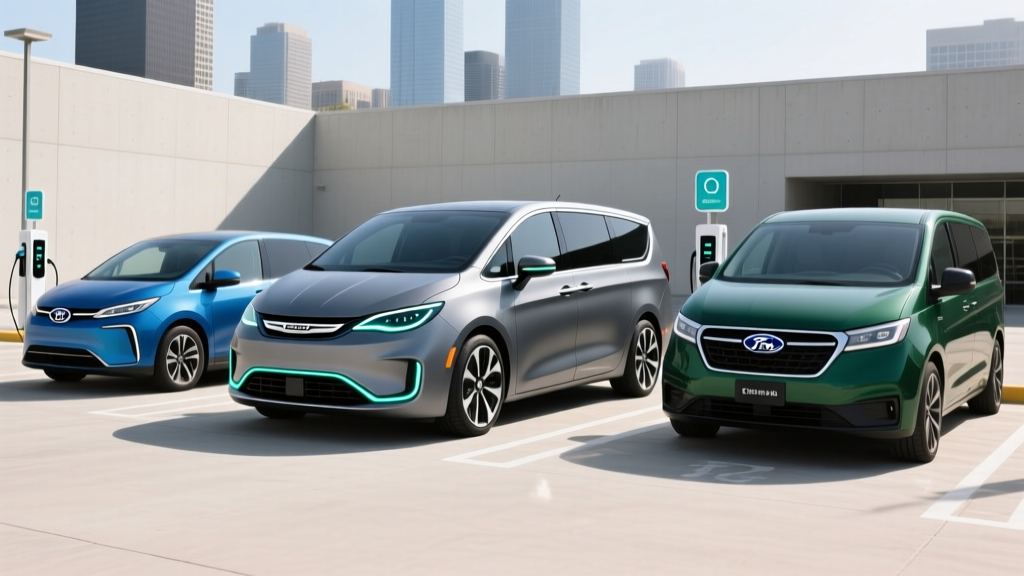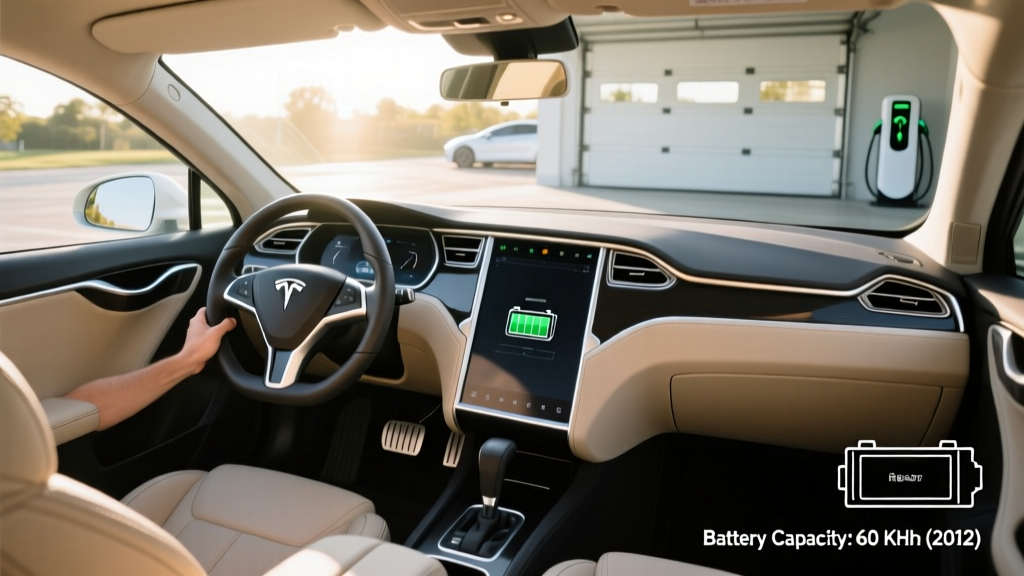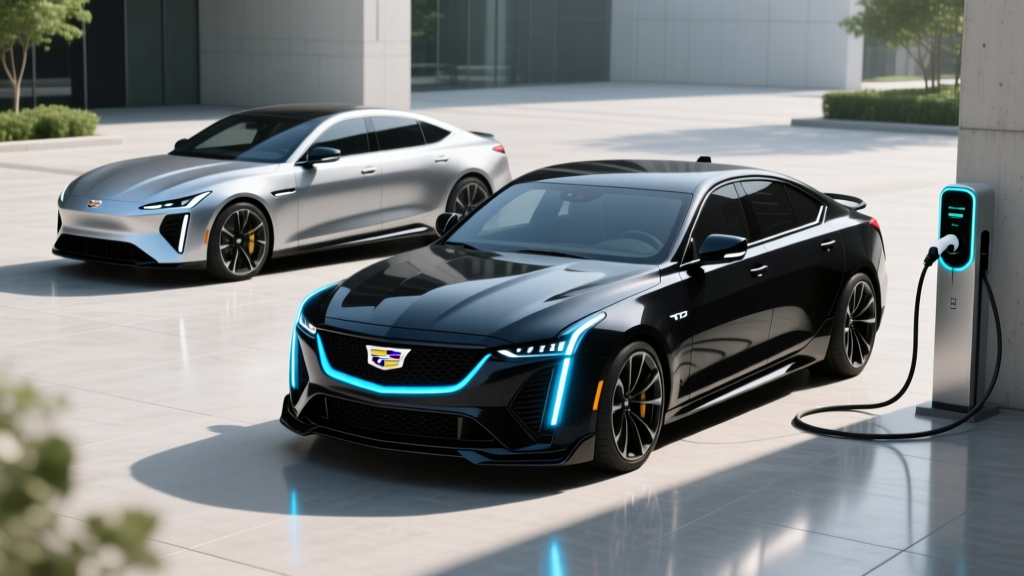
If you're researching Cadillac electric sedans in 2026, here's the quick verdict: the lineup spans two very different vehicles. The Cadillac CT5 electric successor (the Optiq sedan variant, announced for late-2025/2026 production) targets the $60,000 premium-executive segment with an estimated 300+ miles of EPA range, while the ultra-luxury Cadillac Celestiq sits at $340,000+ as a bespoke, hand-built flagship with ~300 miles of range. For most buyers cross-shopping a BMW i5 or Mercedes EQE, the mainstream Cadillac electric sedan is the practical target — and it hinges on whether you need NACS Supercharger access, rear-seat space, and real-world highway efficiency over badge prestige.
Quick Answer: Which Cadillac Electric Sedan Fits You?
- Budget under $70k, daily commuter: Wait for the CT5-class EV sedan (Optiq-based) — expected ~305 mi EPA, NACS native, ~$60-68k MSRP.
- Budget $75-90k, performance focus: Consider certified pre-owned Lyriq-V AWD (SUV, not sedan) or cross-shop BMW i5 M60.
- Unlimited budget, exclusivity: Celestiq at $340,000 — 300 mi range, 600 HP, hand-built, effectively a concept you can drive.
- Need a sedan NOW: Cadillac does not currently sell a production electric sedan in the US as of early 2026; the Optiq is a compact SUV and the Lyriq is a midsize SUV. Sedan buyers should watch the CT5 successor announcement or cross-shop the BMW i5, Mercedes EQE, or Tesla Model S.
The 2026 Cadillac Electric Sedan Lineup, By the Numbers
Cadillac's EV strategy has leaned heavily into SUVs (Lyriq, Optiq, Escalade IQ, Vistiq), leaving sedan buyers in a holding pattern. Here's what's confirmed, announced, or realistically expected for 2026:
| Model | Status (2026) | EPA Range (est.) | Battery | Peak DC Charge | 0-60 mph | MSRP |
|---|---|---|---|---|---|---|
| Cadillac CT5 EV successor | Announced / pre-production | ~305 mi | ~102 kWh (NMC, Ultium) | ~190 kW | ~5.0s (RWD) | $60,000-$72,000 |
| Cadillac Celestiq | Limited production | ~300 mi | 111 kWh (NMC, Ultium) | ~200 kW | 3.8s (AWD) | $340,000+ |
| Optiq (compact SUV, for reference) | On sale | 305 mi | 85 kWh usable (NMC) | 150 kW | ~6.0s | $52,990 |
| Lyriq (midsize SUV, for reference) | On sale | 314 mi (RWD) | 102 kWh usable (NMC) | 190 kW | 6.35s (RWD) | $58,590 |
Sources: Cadillac EV lineup, fueleconomy.gov (Optiq/Lyriq verified). Note: CT5 EV successor specs are preliminary and subject to change before production.
Real-World Range vs. EPA Sticker: What Owners Actually See
EPA range figures are laboratory-derived and rarely match highway or cold-weather driving. Based on observed data from the Ultium-platform Lyriq (which shares architecture with the upcoming sedan), here's what to expect from a ~305-mile Cadillac electric sedan in real conditions:
Real-World Range Reconciliation (305-mi EPA Cadillac Sedan)
- Mixed suburban/commute (65°F): ~280-295 mi — close to sticker, regen braking helps.
- Highway 75 mph sustained (70°F): ~245-265 mi — aerodynamic drag cuts efficiency ~15%.
- Highway 75 mph (30°F, winter): ~200-225 mi — cold battery + cabin heat = 30-35% loss.
- Mountain passes / high elevation: ~230-260 mi net; regen on descents partially offsets climb losses.
Cadillac's Ultium platform uses a liquid-cooled thermal management system with a heat pump on most trims, which reduces — but does not eliminate — cold-weather degradation. Preconditioning the battery via the app while still plugged in (critical for DC fast charging in cold weather) recovers roughly 5-8% of range in sub-freezing temps.
Charging Speed, Connectors, and the NACS Advantage
Every 2026 Cadillac EV uses the Tesla NACS connector natively — no adapter required — giving access to the Supercharger network, now exceeding 28,000 stalls in North America. This is a decisive advantage over CCS-equipped rivals that still rely on adapters or the less-reliable Electrify America network.
| Level | Power (kW) | Miles Added per Hour | Typical Use Case |
|---|---|---|---|
| Level 1 (120V household) | 1.4 kW | ~4-5 mi/hr | Emergency/trickle only |
| Level 2 (240V home, 48A) | 11.5 kW | ~34 mi/hr | Overnight home charging |
| DC Fast (peak, 10-40% SoC) | ~190 kW | ~550 mi/hr equivalent | Road trips, first 20 min |
| DC Fast (taper, 80-90% SoC) | ~45 kW | ~130 mi/hr equivalent | Avoid unless needed — taper is steep |
10-80% DC fast charge time (estimated for CT5-class sedan): ~28 minutes at a V3/V4 Supercharger or equivalent 200+ kW station. The charge curve tapers sharply above 80% — charging 80-100% can add another 25-30 minutes. For road-trip efficiency, plan stops at 10-80% and skip topping off unless overnight.
Cost of Ownership: Cadillac EV Sedan vs. Gas Equivalent
Let's compare a hypothetical $65,000 Cadillac electric sedan to a similarly priced BMW 530i xDrive (gas) over 5 years and 75,000 miles. Assumes $0.14/kWh home electricity, $3.60/gallon premium, 80% home charging / 20% DC fast at $0.40/kWh.
| Category | Cadillac EV Sedan (est.) | BMW 530i xDrive (gas) |
|---|---|---|
| Purchase price (MSRP) | $65,000 | $62,000 |
| Federal §30D tax credit | $0-$7,500 (see below) | $0 |
| Fuel / energy (5 yrs) | $5,200 | $11,800 |
| Maintenance (5 yrs) | $1,800 | $4,500 |
| Insurance (5 yrs, avg.) | $14,500 | $11,200 |
| Depreciation (5 yrs, est.) | $28,000 | $24,500 |
| 5-Year Total Cost | ~$59,500 - $67,000 | ~$114,000 |
Key caveats: EV insurance runs 15-25% higher on average due to repair-cost data; depreciation assumptions reflect current EV market softening. Energy savings of $6,600 over 5 years are real but partially offset by higher insurance. The tax credit, if you qualify, tips the math decisively in the EV's favor.
Federal Tax Credit Eligibility (§30D, 2026 Rules)
- MSRP cap for sedans: $55,000 — a $65,000 Cadillac sedan likely exceeds this, disqualifying it from the full $7,500 credit. (SUVs/Pickups/Vans have an $80,000 cap, which is why the Lyriq qualifies and a sedan might not.)
- Buyer income cap: AGI ≤ $150k single / $300k joint.
- Battery sourcing: Critical minerals + battery components must meet escalating domestic-content thresholds. GM's Ultium platform, with US-built cells, generally qualifies — but verify via IRS eligible model list.
- Point-of-sale transfer: You can apply the credit at purchase to reduce the cash outlay, rather than waiting for tax filing.
Bottom line: A $65,000 Cadillac electric sedan likely fails the $55,000 sedan MSRP cap. Buyers should confirm the vehicle's classification (sedan vs. SUV per EPA body style) on the IRS list before assuming credit eligibility. This is a genuine gotcha — don't rely on dealer assurances.
EV vs. Gas vs. Hybrid: Which Powertrain Actually Fits Your Driving?
Not every driver benefits from a pure EV. Here's an honest decision matrix based on driving patterns, home charging access, and climate:
| Factor | Battery EV (Cadillac Sedan) | PHEV (e.g., BMW 550e xDrive) | Gas (BMW 530i) |
|---|---|---|---|
| Home Level 2 charging available? | Strongly preferred | Recommended, not required | N/A |
| Daily commute under 50 mi? | Ideal — never visit a gas station | Ideal — electric-only covers it | Standard |
| Frequent 400+ mi road trips? | Plan 20-30 min stops every 250 mi | Gas-only on highway, no range stress | Fastest refuel |
| Cold climate (sub-20°F winters)? | Expect 25-35% range loss | Engine kicks in, no range loss | No impact |
| Apartment / no home charging? | Depends on reliable public access nearby | Tolerable — gas fallback | Best fit |
| 5-year cost (see above) | Lowest if tax credit applies | Middle | Highest (fuel + maint.) |
Common Misconceptions About Cadillac EVs, Corrected
| Myth | Fact |
|---|---|
| "Cadillac EVs use Tesla batteries." | False. Cadillac uses GM Ultium NMC pouch cells, primarily built at US joint-venture plants (Ultium Cells LLC). The shared element is the NACS connector, not the battery chemistry. |
| "You can't take a Cadillac EV on road trips." | With native NACS, you access 28,000+ Superchargers. A 300-mi range EV with 28-min 10-80% charging adds ~1 hour to a 600-mi trip. Tolerable for most; a dealbreaker for some. |
| "The battery will need replacing in 5 years." | GM's Ultium battery warranty is 8 years / 100,000 miles with a capacity-retention threshold (typically 70% SoH). Real-world degradation data from Bolt/Lyriq suggests 10-12% loss over 8 years — far below catastrophic replacement territory. |
| "Level 2 charging at home requires a panel upgrade." | Sometimes, not always. A 48A Level 2 charger needs a 60A dedicated circuit. Most 200A home panels can accommodate this; older 100A panels may need an upgrade ($1,500-$3,500). Get a licensed electrician's quote before assuming the worst. |
| "EVs are worse in crashes." | EVs typically earn top IIHS/NHTSA ratings. Low center of gravity (battery pack in floor) reduces rollover risk. See IIHS ratings for specific model crash-test data. |
Actionable Decision Framework: Should You Buy, Wait, or Cross-Shop?
Choose a Cadillac EV Sedan If:
- You have Level 2 home charging (or confirmed workplace charging).
- Your daily driving is under 150 miles round-trip.
- You value native Supercharger access without adapters.
- You're willing to wait for the CT5-class EV sedan (likely late 2026 delivery).
- You prefer American-built luxury with Ultium platform reliability data from Lyriq owners.
Cross-Shop the BMW i5 / Mercedes EQE If:
- You need a sedan NOW and can't wait for Cadillac's timeline.
- You value established dealer service networks for luxury EVs.
- You're willing to use a CCS-to-NACS adapter for Supercharger access.
- The $55,000 sedan MSRP cap for the tax credit doesn't matter to you (most luxury sedans exceed it).
Stick With a Gas or PHEV Sedan If:
- You live in an apartment with zero charging access and unreliable public infrastructure.
- You regularly tow, drive in -20°F winters, or take 500+ mi trips monthly.
- You want predictable 5-minute refueling and don't want to plan around charging.
First-Time EV Buyer Checklist for Cadillac Sedans
If you're new to EVs and considering Cadillac, do these five things before signing:
- Confirm home charging feasibility. Get a licensed electrician's quote for a NEMA 14-50 outlet or hardwired Level 2 (Emporia, ChargePoint, or Grizzl-E are solid 48A options, $500-$750 equipment + $400-$1,500 install depending on panel proximity).
- Verify the vehicle's IRS classification. Sedan MSRP cap is $55,000 — if Cadillac markets the CT5 successor as an SUV per EPA body-style rules, the $80,000 cap applies and the credit may be available. This is model-specific and changes; check the IRS eligible vehicle list before committing.
- Test-drive in conditions you actually drive. Highway, not just around the block. Feel the regen braking — one-pedal driving takes 1-2 weeks to habituate.
- Download the myCadillac app and check public charger maps. Map your regular routes and confirm Supercharger or reliable DC fast charger density. A "charging desert" on your ski-trip route matters more than city coverage.
- Get insurance quotes before purchase. Luxury EVs can run $200-$400/month depending on age, location, and driving record. Don't let this surprise you post-purchase.
Frequently Asked Questions
Does Cadillac currently sell an electric sedan in 2026?
Not as of early 2026. Cadillac's current EV lineup consists of SUVs: Lyriq, Optiq, Vistiq, and Escalade IQ. The Celestiq is a $340,000 hand-built ultra-luxury liftback in very limited production. A CT5-class electric sedan successor has been announced but is not yet in customer hands. Buyers needing a sedan now should consider the BMW i5, Mercedes EQE, Tesla Model S, or Lucid Air.
Will the Cadillac CT5 EV successor qualify for the $7,500 tax credit?
Uncertain — and it hinges on EPA body-style classification. If classified as a sedan, the $55,000 MSRP cap likely disqualifies it. If classified as an SUV (as some crossovers are), the $80,000 cap applies and it may qualify. Battery sourcing and buyer income limits also apply. Check the IRS eligible-vehicle list close to your purchase date.
How long does it take to charge a Cadillac EV sedan at home?
On a 48A Level 2 home charger (~11.5 kW), a ~100 kWh Ultium battery charges from 10-100% in roughly 9-10 hours — overnight. On a standard 120V outlet (Level 1), the same charge would take 70+ hours, making it viable only for emergencies or low-mileage days.
Is the Celestiq worth $340,000 compared to a Tesla Model S Plaid?
They serve entirely different buyers. The Celestiq is a bespoke, hand-built coachwork flagship with 300 mi range and 600 HP — its value is in exclusivity, materials, and custom tailoring. The Model S Plaid ($89,990) is faster to 60 (1.99s), has more range (396 mi EPA), and vastly more Supercharger infrastructure. The Celestiq competes with Rolls-Royce Spectre, not Tesla.
What's the battery warranty on Cadillac Ultium EVs?
GM covers the Ultium battery for 8 years or 100,000 miles, whichever comes first, against defects and excessive capacity loss (typically defined as falling below 70% state of health). This is standard for the segment and matches BMW, Mercedes, and Tesla warranty terms.
Should I wait for the Cadillac sedan or buy a Lyriq SUV now?
If you specifically want a sedan for driving dynamics, lower profile, or garage fit, waiting makes sense — but expect late-2026 or 2027 delivery for the CT5 successor. If you can accept an SUV, the Lyriq (314 mi EPA, $58,590, NACS native) is on sale now with real-world reliability data from 2+ model years of owners. The Optiq (compact SUV, 305 mi, $52,990) is the more affordable entry point.
Specifications and pricing in this article reflect the latest available data as of early 2026. Unreleased models are labeled as announced/preliminary. Always verify tax-credit eligibility on the IRS website and confirm final specs with your dealer before purchase.