If you're approaching the end of a Tesla lease, you're not alone: a wave of Model 3 and Model Y leases signed in 2023 and 2024 are maturing in 2026, and the math around Tesla lease buyouts has shifted dramatically. Vehicle prices have dropped, the federal §30D tax credit landscape has tightened, and Tesla's own buyout pricing (the residual value set at lease signing) often doesn't match today's market. This guide walks you through the numbers you need — range, charging, battery health, tax-credit eligibility, and total cost — to decide whether buying out your Tesla makes financial sense or whether it's time to hand back the keys.
Understanding Tesla Lease Buyout Pricing in 2026
Tesla's lease agreements set a residual value (also called the purchase-option price) at signing. For 2023–2024 Model 3 and Model Y leases, those residuals were often calculated on MSRPs that were significantly higher than today's prices. A Model Y Long Range leased in early 2023 might carry a buyout price around $41,000–$44,000, even though a brand-new 2026 Model Y Long Range AWD starts near $42,990 before incentives — and often transacts lower with Tesla's frequent referral or inventory discounts.
Here's the critical wrinkle: Tesla does not allow third-party buyouts the way many legacy automakers do. You must process the buyout directly through Tesla Finance, which means you cannot shop the buyout to Carvana, CarMax, or a local dealer for a competing offer. You either buy the car from Tesla at the contract residual, or you return it.
Tesla also historically restricted lease buyouts on certain lease terms, though as of 2025–2026 the company has generally allowed purchase-option exercise at lease end for standard 36-month agreements. Always confirm your specific contract language in your Tesla app under Manage Lease → Purchase Option.
Real-World Range and Efficiency: What You Actually Have
Before deciding whether to keep the car, understand what you're keeping. The two most commonly leased Teslas — the Model 3 Rear-Wheel Drive and Model Y Long Range AWD — deliver very different real-world experiences.
Model Y Long Range AWD (2024–2026): EPA-estimated 308–320 miles depending on wheel size (19" vs 20"). Real-world expectation: ~250–275 miles highway; ~210–240 miles in cold weather. NMC chemistry provides higher energy density.
Source: fueleconomy.gov
Efficiency matters for buyout economics because it determines your per-mile charging cost. The Model 3 RWD achieves roughly 132 MPGe combined (about 25 kWh/100 mi), while the Model Y Long Range sits around 122 MPGe combined (about 27–28 kWh/100 mi). At a national average residential electricity rate of ~$0.16/kWh, that translates to roughly $4.00–$4.50 per 100 miles of home charging — a fraction of a comparable gas car's fuel cost.
Battery Chemistry, Degradation, and Warranty Remaining
This is where Tesla lease buyout decisions get technical — and where most buyers lack good information.
| Spec | Model 3 RWD (Highland) | Model Y Long Range AWD |
|---|---|---|
| Battery Capacity (usable) | ~60 kWh | ~75 kWh |
| Chemistry | LFP (Lithium Iron Phosphate) | NMC (Nickel Manganese Cobalt) |
| EPA Range | 341 mi | 308–320 mi |
| Max DC Fast Charge | 170 kW | 250 kW |
| 10–80% DCFC Time | ~25 min | ~27 min |
| Level 2 Home Charge Rate | 11.5 kW (~44 mi/hr) | 11.5 kW (~44 mi/hr) |
| 0–60 mph | 5.8 sec | 4.8 sec |
| Horsepower | 271 hp | 384 hp |
| Drivetrain | RWD (single motor) | AWD (dual motor) |
| Battery Warranty | 8 yr / 100,000 mi | 8 yr / 120,000 mi |
| Drivetrain Warranty | 8 yr / 100,000 mi | 8 yr / 120,000 mi |
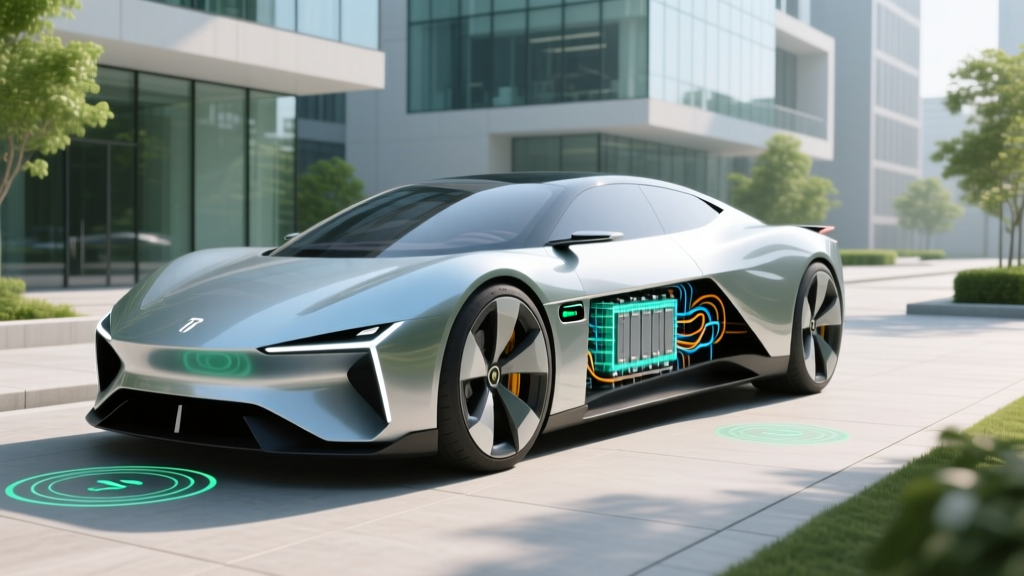
Why chemistry matters for buyouts: LFP batteries (Model 3 RWD) degrade more slowly over time and can be charged to 100% daily without accelerating wear — a significant advantage for commuters. Tesla's own data suggests LFP packs retain roughly 90%+ capacity after 200,000 miles. NMC packs (Model Y Long Range) offer higher energy density but Tesla recommends charging to 80% for daily use, reserving 100% for road trips. Typical NMC degradation is around 10–12% over the first 100,000 miles, then it flattens.
If your 36-month lease ends with 30,000–40,000 miles on the odometer, you likely have 4–5 years and 60,000–80,000 miles of battery warranty remaining. That's meaningful coverage — Tesla's warranty guarantees the battery retains at least 70% of original capacity, and real-world data shows most packs far exceed that threshold. A replacement battery, should you ever need one out of warranty, currently costs between $12,000–$16,000 depending on the pack — a number worth factoring into long-term ownership projections.
Charging Reality: Home Setup and Public Network Access
One of the strongest arguments for a Tesla lease buyout is the charging ecosystem. Tesla Superchargers remain the most reliable public DC fast-charging network in the U.S., and as a Tesla owner you retain seamless plug-and-charge access. If you return your Tesla and switch to a non-Tesla EV, you'll gain access to Tesla Superchargers via the NACS adapter (standard on most 2025+ EVs), but the in-car navigation integration and automatic billing won't match the native Tesla experience.
| Level | Power (kW) | Connector | Speed (mi/hr added) | Use Case |
|---|---|---|---|---|
| Level 1 (120V) | ~1.4 kW | NACS / J1772 adapter | 3–5 mi/hr | Overnight trickle, emergencies |
| Level 2 (240V home) | 7.6–11.5 kW | NACS (Tesla Wall Connector) | 30–44 mi/hr | Daily home charging |
| DC Fast Charge | 170–250 kW | NACS (Supercharger) | ~800+ mi/hr (peak) | Road trips, quick top-ups |
For home Level 2 charging, Tesla's Wall Connector ($420 for the unit) on a 60-amp circuit delivers the full 11.5 kW (48 amps continuous). Installation typically runs $800–$2,000 depending on whether your electrical panel needs an upgrade. Over a 5-year ownership horizon, home charging a Model Y Long Range at 12,000 miles/year costs roughly $2,300–$2,700 in electricity — compared to $6,000–$8,000 in gasoline for a similarly sized gas SUV at 25 MPG and $3.50/gallon.
On the road, a 10–80% Supercharger session takes about 25–27 minutes. Note that the charge curve tapers significantly above 80%: going from 80–100% can add another 15–20 minutes, which is why Tesla's navigation automatically preconditions the battery when routing to a Supercharger. Without preconditioning (for example, if you navigate to a Supercharger via a third-party app), peak charge rates can be substantially lower — sometimes 50–80 kW instead of the rated 250 kW.
The Tax Credit Question: Does a Buyout Qualify?
This is the most common question around Tesla lease buyouts, and the answer requires precision.
- Credit amount: Up to $7,500 for new qualifying EVs; up to $4,000 for used EVs (§25E).
- Buyout classification: A lease buyout is treated as a used vehicle purchase under IRS rules, meaning it qualifies for the §25E used-EV credit (up to $4,000 or 30% of sale price, whichever is less), NOT the §30D new-vehicle credit.
- Income caps (§25E used credit): $75,000 single / $112,500 head of household / $150,000 joint filers (modified AGI).
- Sale price cap (§25E): Vehicle must be sold for $25,000 or less to qualify — this is a significant barrier, as most Tesla lease buyouts exceed this threshold.
- Dealer requirement: Must be purchased from a licensed dealer; Tesla Finance buyouts may qualify as dealer sales, but confirm with a tax professional.
- Point-of-sale transfer: Available for §25E as of 2024+, reducing the purchase price at closing.
Here's the practical upshot: most Tesla lease buyouts will NOT qualify for any federal tax credit because the residual value exceeds the $25,000 sale-price cap for the used-vehicle credit. If your buyout price is $35,000, you're ineligible. This is a crucial factor that many lessees overlook — and it changes the buyout-vs-return calculus substantially.
| Scenario | Buyout Price | Federal Credit | Effective Cost |
|---|---|---|---|
| Model 3 RWD (2023 lease) | ~$32,000–$35,000 | $0 (exceeds $25K cap) | $32,000–$35,000 |
| Model Y LR AWD (2023 lease) | ~$41,000–$44,000 | $0 (exceeds $25K cap) | $41,000–$44,000 |
| Model 3 RWD (2024 lease, lower MSRP) | ~$28,000–$31,000 | $0 (exceeds $25K cap) | $28,000–$31,000 |
| New 2026 Model 3 RWD (purchase) | ~$38,990 MSRP | Up to $7,500 (§30D) | ~$31,490 (if eligible) |
| New 2026 Model Y LR AWD (purchase) | ~$42,990 MSRP | Up to $7,500 (§30D) | ~$35,490 (if eligible) |
This table reveals a painful reality: in many cases, buying a brand-new 2026 Tesla after applying the §30D credit costs less than buying out a 2023 lease. A new 2026 Model 3 RWD with the full $7,500 credit nets to ~$31,490 — potentially lower than your 3-year-old lease buyout price for a car with 35,000 miles on it. This pricing inversion is the single biggest factor working against Tesla lease buyouts in 2026.
Always consult a tax professional to verify your specific eligibility. State incentives vary by jurisdiction and may offer additional credits that shift the math.
Interior, Tech, and Daily Livability
If the numbers alone don't settle your decision, the ownership experience might. Tesla's software ecosystem remains best-in-class among EVs. Over-the-air updates continue to add features years after purchase — your leased Model 3 or Y will keep receiving updates whether you buy it out or not (as long as you maintain Tesla connectivity).
Model 3 Highland (2024–2026) interior highlights:
- 15.4" central touchscreen (no separate instrument cluster)
- Ventilated front seats, ambient lighting, rear-seat touchscreen (Highland refresh)
- Improved NVH (noise/vibration/harshness) vs. pre-2024 models
- Cargo: 23 cu ft trunk + 3.1 cu ft frunk (total ~26 cu ft)
- Rear legroom: 35.2 inches — adequate for adults on shorter trips, tight for tall passengers on long drives
Model Y (2024–2026 Juniper refresh) interior highlights:
Driver assistance: Both models come with Tesla's Basic Autopilot (lane centering, adaptive cruise). Enhanced Autopilot ($6,000) and Full Self-Driving (Supervised) ($8,000 or $99/month) are optional. FSD remains a SAE Level 2 system — the driver must remain fully engaged and supervise at all times. It is not self-driving. Tesla's FSD has improved significantly with v12+ neural-net-based driving, but it still requires active monitoring and will not handle all scenarios without intervention.
Pros and Cons of Buying Out Your Tesla Lease
✅ Reasons to Buy Out
- You know the car's full history — no hidden accident damage or abuse
- LFP battery (Model 3 RWD) offers exceptional longevity with minimal degradation
- Remaining battery/drivetrain warranty (4–5 years / 60,000–80,000 mi)
- Tesla Supercharger network access remains the gold standard for road trips
- No mileage penalties or wear-and-tear charges at lease return
- OTA updates continue; car improves over time
- Low operating costs: ~$0.04/mi for home electricity vs. ~$0.12–0.15/mi for gas
❌ Reasons to Return
- Buyout price often exceeds the cost of a new Tesla after §30D credit
- No federal tax credit on most buyouts (residual exceeds $25K used-EV cap)
- 2026 models (Highland/Juniper) offer meaningfully improved interiors and NVH
- Insurance premiums on older Teslas can be higher than on new ones with latest safety tech
- Tesla does not allow third-party buyouts — you can't shop the price
- Depreciation risk: EV resale values remain volatile and may fall further
- Out-of-warranty battery replacement ($12K–$16K) is a long-tail financial risk
Competitor Comparison: What Else Could You Get?
If you return your Tesla, here's what the competitive landscape looks like in 2026 for similar money (after credits):
- Hyundai Ioniq 5 (2026): ~$42,500 MSRP, up to $7,500 credit → ~$35,000. EPA 305+ mi range, 800V architecture for ultra-fast 10–80% charging in ~18 min, NACS port standard. Strong warranty (10yr/100,000 mi battery).
- Ford Mustang Mach-E (2026): ~$39,995 MSRP, up to $7,500 credit → ~$32,495. EPA 290–320 mi depending on trim, NACS adapter included. More traditional interior layout appeals to some switchers.
- Chevrolet Equinox EV (2026): ~$33,000 MSRP, up to $7,500 credit → ~$25,500. EPA 319 mi range (LT2 trim). Budget-friendly option, though less performance and tech polish.
- New Tesla Model 3 RWD (2026): ~$38,990 MSRP, up to $7,500 credit → ~$31,490. 341 mi EPA, LFP battery, latest Highland interior. Often cheaper than buying out a 2023 lease.
The uncomfortable truth for many lessees: a brand-new 2026 Tesla Model 3 RWD, after the federal credit, often costs less than buying out a three-year-old Model 3 lease — and you get a full 8-year/100,000-mile warranty, the latest Highland interior improvements, and zero miles on the odometer.
Decision Framework: Buy Out or Return?
- Your residual value is below $25,000 AND you qualify for the §25E used-EV credit (rare but possible on low-mileage Model 3 Standard Range leases from 2024)
- You've driven fewer than 25,000 miles and the car is in excellent condition
- You have home Level 2 charging and your commute fits comfortably within real-world range
- You value knowing the vehicle's complete history over getting the latest model
- You plan to keep the car 5+ more years, amortizing the buyout cost over a long horizon
- Your buyout price exceeds $31,000 (Model 3) or $35,000 (Model Y) — new alternatives are cheaper after credits
- You want the latest Highland/Juniper interior improvements and full warranty coverage
- You don't have reliable home charging and rely heavily on public infrastructure
- You drive more than 15,000 miles/year and want to avoid out-of-warranty battery risk
- You're considering switching to a competitor with better cargo space, ride comfort, or 800V charging
Frequently Asked Questions
Can I negotiate the Tesla lease buyout price?
No. Tesla's buyout price is the residual value set in your lease contract at signing. Unlike some legacy automakers, Tesla does not negotiate residuals or allow third-party buyouts. The price is fixed, and you either exercise the purchase option or return the vehicle.
Does my Tesla lease buyout qualify for the $7,500 federal tax credit?
No. A lease buyout is classified as a used-vehicle purchase under IRS rules. The §25E used-EV credit caps at $4,000 and requires a sale price of $25,000 or less. Since most Tesla lease residuals exceed $25,000, the vast majority of buyouts are ineligible for any federal credit. Always verify with a tax professional and consult IRS guidelines.
What happens to my FSD subscription if I buy out the lease?
If you purchased FSD outright (a one-time purchase), it transfers with the vehicle to your ownership. If you have FSD as a monthly subscription ($99/month), it continues as long as you maintain the subscription. If FSD was included in your lease as a trial, you'll need to purchase or subscribe to continue using it after the lease converts to ownership.
How much will my Tesla battery have degraded at lease end?
Typical degradation at 30,000–40,000 miles (common for a 36-month lease) is 5–8% for NMC packs and 3–5% for LFP packs. You can check your battery's State of Health in the Tesla app or via third-party tools like Tessie or Recurrent. Most leased Teslas retain 92–97% of original capacity at return — well above the 70% warranty threshold.
Is it cheaper to charge at home or use Superchargers?
Home Level 2 charging at $0.16/kWh costs roughly $0.04 per mile in a Model Y. Supercharger pricing varies by location and time of day but typically ranges from $0.25–$0.40/kWh, translating to $0.07–$0.11 per mile. If you have home charging, it's roughly 2–3x cheaper than Supercharging and 3–4x cheaper than gasoline per mile.
What are the biggest risks of buying out a used Tesla?
The primary risks are: (1) out-of-warranty battery replacement cost ($12,000–$16,000) if the pack fails after 8 years/100,000–120,000 miles; (2) continued depreciation if EV prices fall further; (3) insurance costs, which tend to be higher for Teslas than comparable gas vehicles; and (4) potential repair costs for the touchscreen, drive unit, or suspension components after the basic 4-year/50,000-mile warranty expires.
Can I sell my Tesla immediately after buying out the lease?
Yes, but Tesla's own trade-in values are typically below private-party market value, and third-party buyers (Carvana, CarMax) will appraise based on current market conditions. Given that new Tesla prices have dropped significantly, the used market is soft. Run a trade-in quote from Tesla and a CarMax appraisal before committing to the buyout to understand your exit options.
Final Verdict: Run Your Own Numbers
The Tesla lease buyout decision in 2026 is fundamentally a math problem, not an emotional one. Pull your contract's residual value, check current new-Tesla pricing with available credits, and compare honestly. For many lessees — particularly those with Model Y Long Range leases carrying $41,000+ residuals — the numbers point toward returning the lease and purchasing a new 2026 model at a lower effective price with a full warranty.
For Model 3 RWD lessees with lower residuals and LFP batteries, the buyout can make sense if the price is competitive and you plan to drive the car for many more years. The LFP chemistry's longevity and the remaining powertrain warranty provide genuine peace of mind.
Whatever you decide, verify your specific numbers in the Tesla app, consult a tax professional about credit eligibility, and get a pre-buyout inspection to document the vehicle's condition. The data — not the hype — should drive your decision.