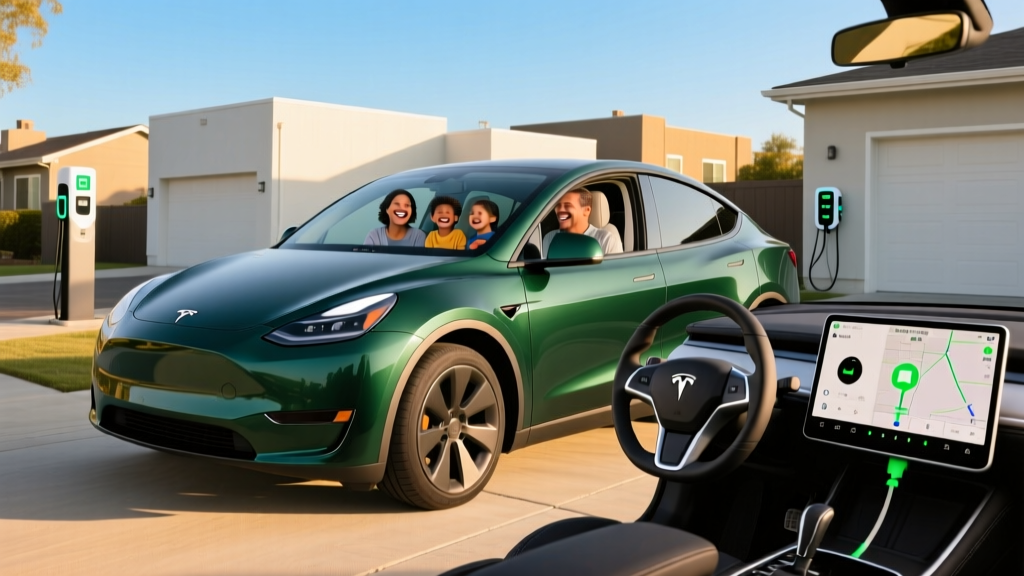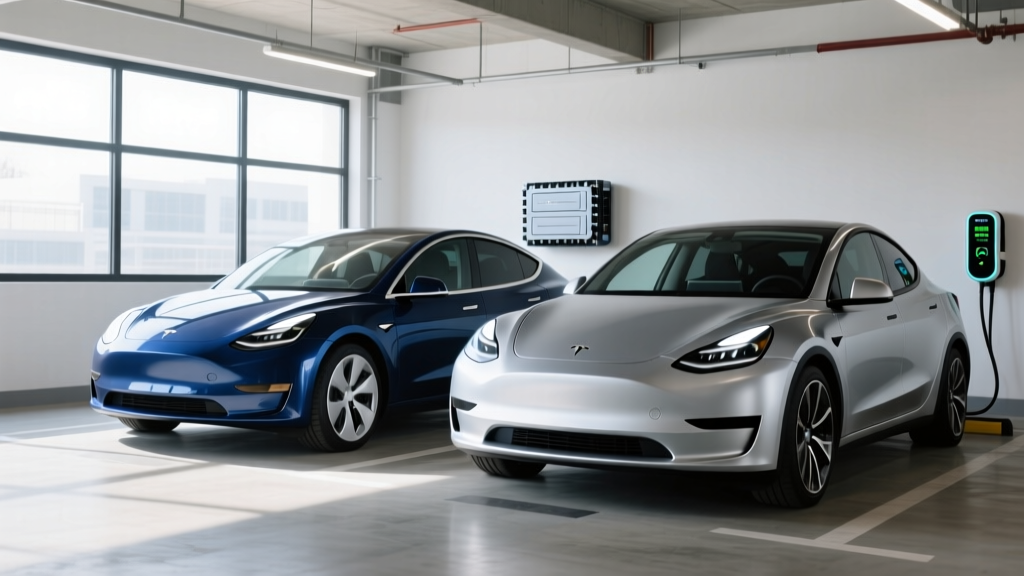
If your Tesla lease is approaching maturity in 2026, you're facing a decision that hinges on hard numbers rather than brand loyalty: Is executing a Tesla lease buyout financially and practically superior to walking away and ordering new? The answer depends on your specific vehicle's residual value, current market pricing, the state of federal incentives, and—critically—the real-world performance of the car sitting in your driveway. This guide breaks down the exact specs, ownership costs, and decision framework you need for the most common leased models: the Model 3 and Model Y.
The Tesla Lease Buyout Equation: Residual vs. Reality
Unlike many legacy automakers, Tesla Financial Services historically restricted lease buyouts, though policies have evolved. If your lease contract includes a purchase option, your buyout price is the predetermined residual value plus any fees. To determine if this makes sense, you must compare that number against both the current new-vehicle MSRP (factoring in incentives) and the used-EV market.
- Execute the buyout if: Your residual price is at least $5,000–$8,000 below a comparably equipped new model (after credits), AND your battery State of Health (SoH) remains above 92%, AND you qualify for the used-EV tax credit (§25E) of up to $4,000.
- Walk away if: The residual is within $3,000 of new pricing, your vehicle lacks the latest HW4 sensor suite, or battery degradation exceeds 10% (measured via the car's energy screen or third-party OBD-II scan).
2026 Model 3: Specs That Define the Buyout Value
The Model 3 remains Tesla's volume sedan, and understanding its exact 2026 specifications is essential for evaluating whether your leased unit holds up against the current generation. The Highland refresh brought meaningful improvements in cabin isolation, suspension tuning, and the removal of stalks for a minimalist steering-wheel-controlled interface.
| Attribute | Long Range RWD | Long Range AWD | Performance |
|---|---|---|---|
| EPA Range | 363 mi | 346 mi | 315 mi |
| Battery (Usable) | ~75 kWh (NMC) | ~75 kWh (NMC) | ~75 kWh (NMC) |
| 0–60 mph | 5.8 sec | 4.2 sec | 2.9 sec |
| Horsepower | 271 hp | 346 hp | 510 hp |
| Peak DC Charge | 170 kW | 170 kW | 250 kW |
| Base MSRP | $42,380 | $47,380 | $52,380 |
2026 Model Y: The Family Hauler Under the Microscope
The Model Y crossover is the most-leased Tesla, and the 2026 Juniper update (phased in through 2025–2026) brought a redesigned interior, ambient lighting, a rear touchscreen, and refined aerodynamics. If you leased a 2023 or 2024 Model Y, your vehicle predates some of these changes—a critical factor in buyout valuation.
| Attribute | Long Range AWD | Performance |
|---|---|---|
| EPA Range | 320 mi | 295 mi |
| Battery (Usable) | ~75 kWh (NMC) | ~75 kWh (NMC) |
| 0–60 mph | 4.8 sec | 3.5 sec |
| Horsepower | 384 hp | 510 hp |
| Peak DC Charge | 250 kW | 250 kW |
| Cargo Volume | 72 cu ft (rear seats folded) | 72 cu ft |
| Base MSRP | $46,380 | $51,380 |
Efficiency for the Long Range AWD sits at 28 kWh/100 mi (approximately 120 MPGe combined), per fueleconomy.gov. That translates to roughly $0.05–$0.07 per mile on a national-average residential electricity rate of $0.16/kWh—a figure that holds whether you buy out your lease or purchase new.
Charging Speed: The Spec That Ages a Lease
Charging infrastructure and vehicle charge acceptance have advanced rapidly. A 2023-leased Model Y with 250 kW peak acceptance remains competitive in 2026, but older Model 3 Standard Range units (capped at ~170 kW) now charge noticeably slower at V3 and V4 Superchargers compared to newer platforms like the Hyundai Ioniq 5 (350 kW peak) or the refreshed Porsche Macan EV (270 kW sustained).
| Charge Level | Power / Rate | Time / Miles Added |
|---|---|---|
| Level 1 (120V household) | 1.4 kW | ~3–5 mi/hr |
| Level 2 (240V, 48A Wall Connector) | 11.5 kW | ~44 mi/hr; full in ~7 hr |
| DC Fast (Model 3 LR) | Peak 170 kW | 10–80% in ~30 min |
| DC Fast (Model Y / M3 Perf.) | Peak 250 kW | 10–80% in ~22 min |
Charge-curve reality: Peak kW is not sustained kW. A Model Y at a V3 Supercharger will pull 250 kW only between roughly 10% and 30% State of Charge (SoC). By 60% SoC, the rate tapers to ~120 kW, and above 80%, it drops below 50 kW to protect the NMC cells. This means a 10–80% session takes 22 minutes, but 10–95% takes closer to 45 minutes. If your leased vehicle has high mileage and frequent DC fast-charging history, expect slightly slower charge acceptance due to cell resistance increase—a measurable factor in buyout value.
Federal Tax Credits: The Buyout Wildcard
Tax credit eligibility is where lease buyouts diverge sharply from new purchases. Under IRS §30D, the new-vehicle credit of up to $7,500 requires meeting battery critical-mineral and component sourcing thresholds, buyer income caps ($150K single / $300K joint AGI), and MSRP limits ($55,000 sedans / $80,000 SUVs/trucks). The Model 3 Long Range AWD at $47,380 clears the MSRP cap, but sourcing compliance varies by production batch—Tesla's website lists current eligibility per configuration.
- MSRP ≤ $55,000 (sedans like Model 3) or ≤ $80,000 (SUVs like Model Y)
- Buyer AGI ≤ $150K (single), $225K (head of household), $300K (joint)
- Battery critical minerals ≥ 60% from FTA countries (phased threshold)
- Battery components ≥ 80% manufactured/assembled in North America
- Vehicle final assembly in North America (all US-market Teslas qualify)
The lease loophole advantage: When you leased your Tesla, the $7,500 commercial clean-vehicle credit (§45W) was likely captured by Tesla Financial and passed to you as a lease cash incentive (often called "lease cash" or capitalized-cost reduction). This means your lease already benefited from the credit. If you buy out the lease, you cannot claim the §30D new-vehicle credit again. However, if you instead sell or trade the vehicle and purchase a used EV, you may qualify for the §25E used-EV credit (up to $4,000, capped at 30% of sale price, with lower income limits of $75K/$150K).
Battery Health & Warranty: The Long-Term Bet
The single largest variable in a Tesla lease buyout is battery State of Health (SoH). Tesla's NMC cells in the Model 3/Y Long Range typically exhibit 5–8% degradation over the first 50,000 miles, then stabilize at approximately 1–2% loss per subsequent year under normal use. Vehicles charged primarily on Level 2 with occasional DC fast-charging and SoC maintained between 20–80% daily tend to show the best retention.
| Component | Coverage | Capacity Retention Threshold |
|---|---|---|
| Battery (Model 3/Y) | 8 years / 120,000 mi (LR/AWD) | ≥ 70% of original capacity |
| Drive Unit | 8 years / 120,000 mi | N/A |
| Basic Vehicle | 4 years / 50,000 mi | N/A |
If your leased Model 3 has 36 months and 30,000 miles, you likely have 60 months and 90,000 miles of battery warranty remaining post-buyout—a substantial safety net. To verify SoH before committing, use the in-car energy graph (navigate to Energy > Trip > Average) or request a third-party diagnostic via an OBD-II dongle and apps like Tessie or TeslaFi that log lifetime kWh throughput and projected range at 100% SoC.
Driver Assistance: Autopilot and FSD Supervised
Your leased Tesla likely includes Basic Autopilot (Traffic-Aware Cruise Control and Autosteer) as standard. If you paid extra for Full Self-Driving (Supervised) at $8,000 or $99/month, note that FSD transfers with the vehicle on buyout—unlike a new purchase where you'd pay again. This is a meaningful value-add worth $8,000 on the buyout ledger.
Both Autopilot and FSD (Supervised) are SAE Level 2 driver-assistance systems. They require continuous driver supervision, hands on or near the wheel, and eyes on the road. They are not self-driving. Tesla's camera-only vision stack handles highway lane-keeping, adaptive cruise, and some city-street navigation, but disengagements are frequent in construction zones, heavy rain, or unmapped areas. Only Level 4 robotaxis (Waymo, Zoox) operate without a human driver.
- Operate without driver supervision (you remain legally liable)
- Navigate unmapped roads or private driveways reliably
- Handle severe weather (heavy snow, fog, torrential rain)
- Recognize all temporary construction-zone lane shifts
- Replace attentive driving — NHTSA continues to investigate Level 2 system misuse incidents
Pros and Cons: The Buyout Scorecard
- FSD ($8K value) transfers at no additional cost
- No disposition fee ($350–$500 savings)
- Remaining battery warranty (typically 5+ years left)
- Supercharger network access remains intact (NACS standard)
- Known vehicle history — you controlled charging habits
- OTA updates continue for the vehicle's lifetime
- Cannot claim §30D new-vehicle credit on buyout
- Older HW3 sensor suite (if 2023 model) vs HW4 on 2026 new
- Pre-Highland/Juniper cabin lacks latest NVH improvements
- Insurance premiums remain elevated (~$2,200–$2,800/yr national avg)
- Depreciation curve steepens after year 4 for early-gen Teslas
- No trade-in leverage vs negotiating a new order
Who Should Execute the Buyout?
The Tesla lease buyout makes strongest financial sense for three buyer profiles:
- The high-mileage commuter driving 18,000+ miles/year who would face steep excess-mileage penalties ($0.20–$0.25/mi over the 36,000–45,000 mi lease allowance). At 55,000 actual miles, that's $2,000–$3,500 in penalties avoided.
- The FSD subscriber who paid $8,000 upfront for the package. Walking away means losing that investment; buying out preserves it.
- The home-charger-equipped owner with a Level 2 setup already installed ($500–$1,500 sunk cost in equipment and electrical work). Transitioning to a different brand may require adapter purchases (CCS-to-NACS) or new charger installation.
Frequently Asked Questions
Can I negotiate my Tesla lease buyout price?
No. Tesla Financial Services sets the residual value at lease signing, and this figure is non-negotiable at maturity. Unlike some legacy lenders who adjust residuals based on market conditions, Tesla's buyout price is contractually fixed. Your only leverage is the decision to execute or walk away.
Does my leased Tesla qualify for the $7,500 tax credit if I buy it out?
No. The §30D new clean-vehicle credit applies only to the original purchase, not a lease buyout. The commercial credit (§45W) was already claimed by Tesla Financial at lease inception and typically passed through as a cap-cost reduction. You cannot claim it a second time. Consult a tax professional regarding your specific situation.
How do I check my Tesla's battery health before buying out the lease?
Charge the vehicle to 100% (using the charge-limit slider) and note the displayed estimated range. Compare this to the original EPA range for your trim. A 2023 Model 3 Long Range that displayed 358 mi new should still show 320–340 mi at 100% after 30,000 miles. For a more precise SoH percentage, use a third-party app (Tessie, TeslaFi) that reads the BMS via the vehicle's API or an OBD-II adapter.
What happens to FSD if I don't buy out the lease?
FSD (Supervised) is tied to the vehicle, not the driver. If you return the car, FSD stays with it. If you paid $8,000 upfront, that investment is forfeited. If you subscribed at $99/month, you simply cancel. Tesla has occasionally offered FSD transfer promotions to new vehicle purchases, but these are not guaranteed—check current policy before your lease matures.
Is a 2023 Model Y buyout worth it vs. a 2026 Juniper model?
It depends on the price delta. A 2023 Model Y Long Range with a $32,000 buyout residual saves ~$14,000 vs. a $46,380 new 2026 Juniper. However, the 2026 model gains the rear touchscreen, ventilated front seats, improved acoustic glass, and HW4 sensors with higher-resolution cameras. If NVH (noise/vibration/harshness) and the latest safety hardware matter to you, the premium may be justified. If pure cost-per-mile is your metric, the buyout wins.