The Lease-End Crossroads: Buy Out Your Tesla or Walk Away?
For thousands of drivers reaching the end of a 36-month Tesla Model Y lease in 2026, the decision isn't just emotional — it's a financial calculation involving residual values, loan rates, battery health, and shifting federal incentives. Tesla lease buyout financing has become a hot topic as lessees weigh whether their current EV still represents good value against a new crop of competitors offering aggressive pricing and updated platforms.
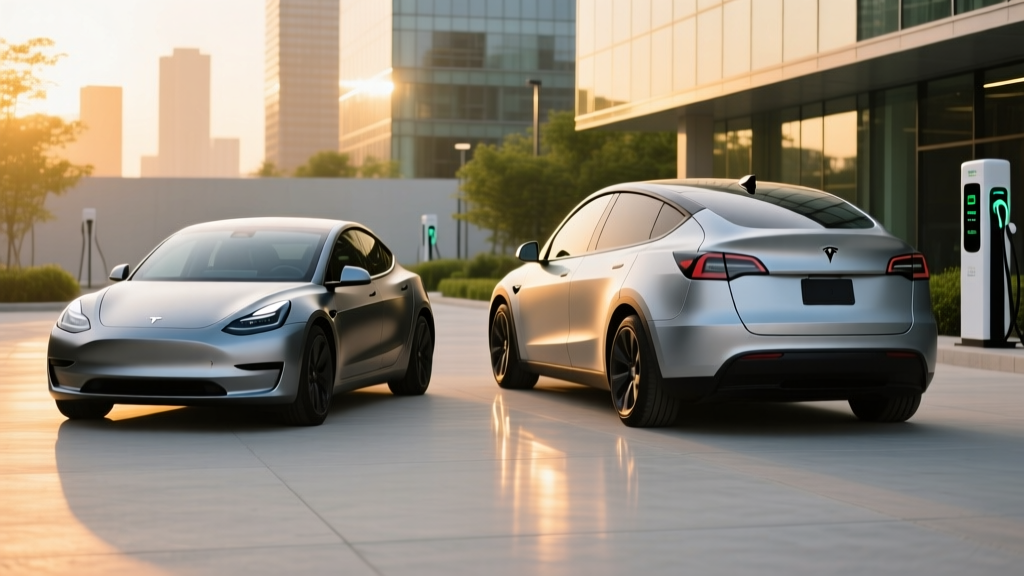
This review uses the 2026 Tesla Model Y Long Range AWD as the reference vehicle — the most commonly leased variant — to help you decide whether buying out your lease makes financial and practical sense. We'll cover real-world range, charging infrastructure, total cost of ownership, and how the buyout math compares to starting fresh with a new EV.
2026 Tesla Model Y Long Range: Core Specifications
| Specification | Value |
|---|---|
| EPA Estimated Range | 320 miles |
| Battery Capacity (Usable) | ~75 kWh, NMC chemistry |
| Drivetrain | Dual-Motor All-Wheel Drive |
| Horsepower | 384 hp combined |
| 0–60 mph | 4.8 seconds |
| Peak DC Fast Charge Rate | 250 kW (V3 Supercharger) |
| 10–80% DC Fast Charge Time | ~27 minutes |
| Level 2 Home Charge Rate | 11.5 kW (~44 miles/hour) |
| EPA Efficiency | 122 MPGe combined (28 kWh/100 mi) |
| Cargo Volume (rear seats up) | 30.2 cu ft |
| Cargo Volume (rear seats folded) | 72.0 cu ft |
| Base MSRP (2026 Long Range AWD) | $48,990 |
| Battery & Drive Unit Warranty | 8 years / 120,000 miles (whichever comes first) |
Data sourced from fueleconomy.gov and Tesla's official specifications. Real-world results will vary based on driving style, climate, and terrain.
Real-World Range: What the EPA Sticker Doesn't Tell You
Real-World Expectation: 260–290 miles highway (70–75 mph); 220–250 miles in sub-freezing temperatures; up to 310+ miles in moderate city driving with regenerative braking engaged.
The Model Y Long Range's 320-mile EPA estimate is achievable under ideal conditions: moderate temperatures (60–75°F), mixed city/highway driving at moderate speeds, and minimal climate-control load. However, lithium-ion NMC batteries lose efficiency in cold weather due to increased internal resistance and the energy cost of cabin and battery heating.
In sustained highway driving at 75 mph — the kind of trip where range matters most — expect roughly 260–290 miles before needing to stop. In winter conditions below 32°F, that figure can drop to 220–250 miles. Tesla's heat pump, standard on the refreshed Model Y, mitigates some of this loss compared to older resistance-heating systems, but physics still applies.
If your lease included frequent road trips and you regularly saw 250+ miles of practical range, the vehicle is performing within expected parameters for its chemistry and age.
Charging Speed and Infrastructure: The Supercharger Advantage
| Charging Level | Power (kW) | Miles Added per Hour | Typical Use Case |
|---|---|---|---|
| Level 1 (120V household) | ~1.4 kW | ~4–5 mi/hr | Emergency / overnight trickle |
| Level 2 (240V home wall connector) | 11.5 kW | ~44 mi/hr | Daily home charging |
| DC Fast (Tesla V3 Supercharger) | Up to 250 kW | ~1,000 mi/hr (peak) | Road trips; 10–80% in ~27 min |
| DC Fast (CCS adapter, non-Tesla) | Up to ~150–250 kW | Varies by station | Electrify America, EVgo, etc. |
Tesla's Supercharger network remains the most reliable DC fast-charging ecosystem in the U.S., with over 6,000 V3 stalls (250 kW) nationwide. The Model Y's charge curve peaks near 250 kW at low state of charge but tapers significantly above 50–60%, which is typical for NMC chemistry. The 10–80% time of approximately 27 minutes assumes preconditioning is active and battery temperature is optimal.
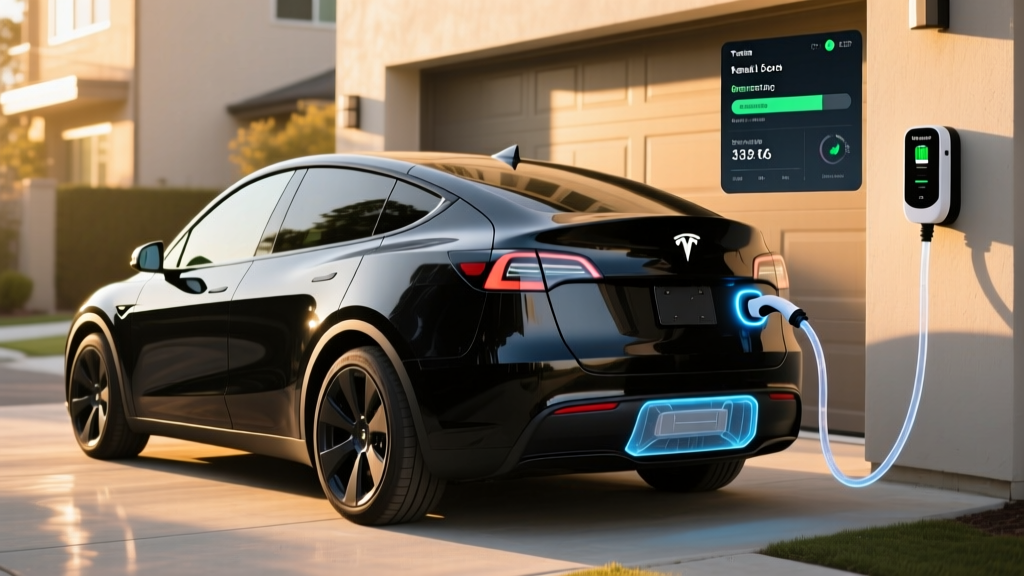
For home charging, the Tesla Wall Connector at 11.5 kW (48A on a 60A circuit) adds roughly 44 miles of range per hour — enough to fully replenish a depleted battery overnight. Installation costs typically range from $500 to $2,000 depending on panel capacity and wiring distance, according to industry electricians.
Since 2024, Tesla has opened portions of its Supercharger network to non-Tesla EVs via the Magic Dock adapter and NACS standard adoption. For Model Y owners, this means the network is busier at peak travel times, but Tesla vehicles still benefit from native plug-and-charge integration and battery preconditioning that non-Tesla EVs cannot match on the same network.
Tesla Lease Buyout Financing: The Financial Picture
Tesla changed its lease buyout policy in 2024, allowing lessees to purchase their leased vehicles — a reversal of its earlier stance that prohibited buyouts for Model Y and Model 3 leases. As of 2026, Tesla Financial Services facilitates the buyout process, and third-party lenders (credit unions, banks) also offer competitive auto loan rates for lease buyouts.
How the Buyout Price Is Determined
Your lease agreement includes a residual value — the predetermined purchase price at lease end. For a 2023 Model Y Long Range leased at an MSRP of approximately $52,990 with a typical 55–60% residual, the buyout price would fall between $29,145 and $31,794. This figure is fixed in your contract and does not fluctuate with market conditions.
Financing Options and Rates (2026)
- Tesla Financial Services: Rates typically range from 5.99% to 8.49% APR depending on credit tier, for terms up to 72 months.
- Credit unions: Many offer EV-specific loan products at 5.49%–7.25% APR, sometimes with rate discounts for automatic payments.
- Traditional banks: Major lenders like Capital One and Chase offer lease buyout loans, generally at 6.25%–8.99% APR.
On a $30,000 buyout financed at 6.5% APR over 60 months, your monthly payment would be approximately $587. Compare this to a new 2026 Model Y Long Range lease, which typically runs $499–$599/month with $4,500–$7,500 due at signing, depending on promotions.
Federal Tax Credit and the Buyout Question
This is where the math gets nuanced. Under IRS §30D rules, the federal clean vehicle credit applies to new clean vehicles placed in service. A lease buyout is generally treated as a purchase of a used vehicle for tax purposes, which means:
- The $7,500 new vehicle credit (§30D) does NOT apply to a lease buyout.
- The up to $4,000 used EV credit (§25E) may apply if the buyout price is $25,000 or less, the vehicle is at least two model years old, and the buyer meets income caps ($75,000 single / $150,000 married filing jointly).
- If your residual value exceeds $25,000 (common for Model Y), the used EV credit is unavailable.
This is a critical factor: if you originally leased your Tesla and did not claim the new-vehicle credit at lease signing (because the leasing entity claimed it), you cannot retroactively claim it at buyout. Consult a tax professional to confirm your specific situation.
Battery Health and Long-Term Ownership Value
A three-year-old Model Y with 30,000–45,000 miles will have experienced some battery degradation. Tesla's NMC batteries typically lose 5–10% capacity in the first three years, with the curve flattening significantly afterward. Most owners report State of Health (SoH) readings of 90–95% at the 36-month mark.
The 8-year / 120,000-mile battery and drive unit warranty remains in effect after buyout and transfers to the new owner (you). Tesla defines warranty-covered degradation as falling below 70% retention — a threshold very few vehicles hit in normal use. According to Tesla's 2024 Impact Report, the fleet averages approximately 12% degradation at 150,000 miles.
For buyout decision-making: if your vehicle's displayed range at 100% charge is still above 290 miles (from the original 320), your battery is performing within normal parameters and should provide reliable service for years to come.
Pros and Cons of Buying Out Your Tesla Lease
Pros
- Known vehicle history — you've maintained it since day one
- Residual may be below current market value if EV prices have risen
- No new down payment or acquisition fee (unlike a new lease)
- Remaining battery warranty (5+ years typically left)
- Supercharger network access and NACS native compatibility
- Avoid mileage penalties if you exceeded your lease allowance
Cons
- No federal new-vehicle tax credit on buyout
- Used EV credit (§25E) likely unavailable if residual exceeds $25,000
- Older hardware (HW3 vs HW4) may limit future FSD features
- Out-of-warranty repairs begin after 4yr/50,000-mi basic warranty expires
- 2026 Model Y refresh offers updated interior, better efficiency, and new features
- Insurance premiums on older Teslas remain above industry average
Competitive Comparison: Buyout vs. Switching to a Rival EV
If you're considering walking away from your lease and purchasing a new EV instead, here's how the buyout stacks up against leading 2026 alternatives:
| Factor | Buyout (3-yr Model Y LR) | New 2026 Hyundai Ioniq 5 | New 2026 Ford Mustang Mach-E |
|---|---|---|---|
| Approximate Cost | $29,000–$32,000 | $42,400 MSRP (SEL) | $43,995 MSRP (Premium) |
| Federal Tax Credit | None (or up to $4,000 used) | Up to $7,500 (§30D eligible) | Up to $7,500 (§30D eligible) |
| Net Cost After Credit | $29,000–$32,000 | ~$34,900 | ~$36,495 |
| EPA Range | 320 mi (new, now ~295–305) | 318 mi | 320 mi (Ext. Range) |
| Warranty Remaining | ~5 yr / 75,000+ mi (battery) | 10 yr / 100,000 mi (full new) | 8 yr / 100,000 mi (battery, full new) |
| Charging Standard | NACS (native) | NACS (2026 models) | NACS (2026 models) |
The buyout often wins on pure upfront cost, especially if your residual is favorable. However, new competitors offer full factory warranties, the latest hardware, and access to the $7,500 federal credit — narrowing the gap considerably. Hyundai's 10-year battery warranty is a notable advantage for long-term peace of mind.
Who Should Buy Out Their Tesla Model Y Lease?
The buyout makes the strongest financial sense for drivers who:
- Have a residual below $30,000 — creating meaningful equity vs. new EV pricing.
- Drive 12,000+ miles annually — where a new lease's mileage restrictions and disposition fees would be costly.
- Have installed home Level 2 charging — meaning your infrastructure investment continues to pay dividends.
- Value the Supercharger network — and take regular road trips where Tesla's charging ecosystem still leads.
- Are satisfied with current Autopilot hardware — and don't need HW4's improved camera resolution for FSD (Supervised).
Conversely, walking away makes more sense if your residual is above $35,000, you want the latest technology, you qualify for the full $7,500 new-vehicle credit on a competitor, or you prefer the security of a full new-vehicle warranty.
Frequently Asked Questions
Can I negotiate the Tesla lease buyout price?
No. The residual value is fixed in your original lease contract. Tesla Financial Services does not negotiate buyout prices. However, you can shop financing rates among Tesla Financial, credit unions, and banks to minimize interest costs.
Does my leased Tesla qualify for the federal EV tax credit when I buy it out?
Generally, no. A lease buyout is treated as a used vehicle purchase under IRS rules. The §30D new vehicle credit ($7,500) does not apply. The §25E used EV credit (up to $4,000) may apply only if the sale price is $25,000 or less and you meet income requirements — a threshold most Model Y residuals exceed. Always consult a tax professional and review current rules at irs.gov.
How do I check my Tesla's battery health before deciding to buy out?
Navigate to Controls > Software on your touchscreen to view battery health metrics, or use the Tesla app's vehicle health section. You can also request a battery health report from Tesla Service. A State of Health (SoH) above 90% at 36 months is typical and indicates normal degradation.
What happens if I've exceeded my lease mileage allowance?
Tesla leases typically charge $0.20–$0.25 per excess mile. If you've driven 45,000 miles on a 36,000-mile lease, you'd owe approximately $1,800–$2,250 at turn-in. Buying out the lease eliminates this penalty entirely, which can make the buyout financially attractive even if the residual is slightly above market value.
Is the 2026 Model Y refresh significantly better than my 2023 lease vehicle?
The refreshed Model Y (introduced in 2025) features a revised interior with ambient lighting, ventilated front seats, a rear touchscreen, improved suspension tuning, and slightly better aerodynamic efficiency. The powertrain and battery are largely carried over. If these features matter to you, the refresh may justify walking away and purchasing new — but the core driving experience remains very similar.
Can I refinance my Tesla lease buyout loan later?
Yes. Once you own the vehicle, you can refinance the auto loan with another lender if interest rates drop or your credit improves. Most lenders require at least 6–12 months of payment history before approving a refinance.