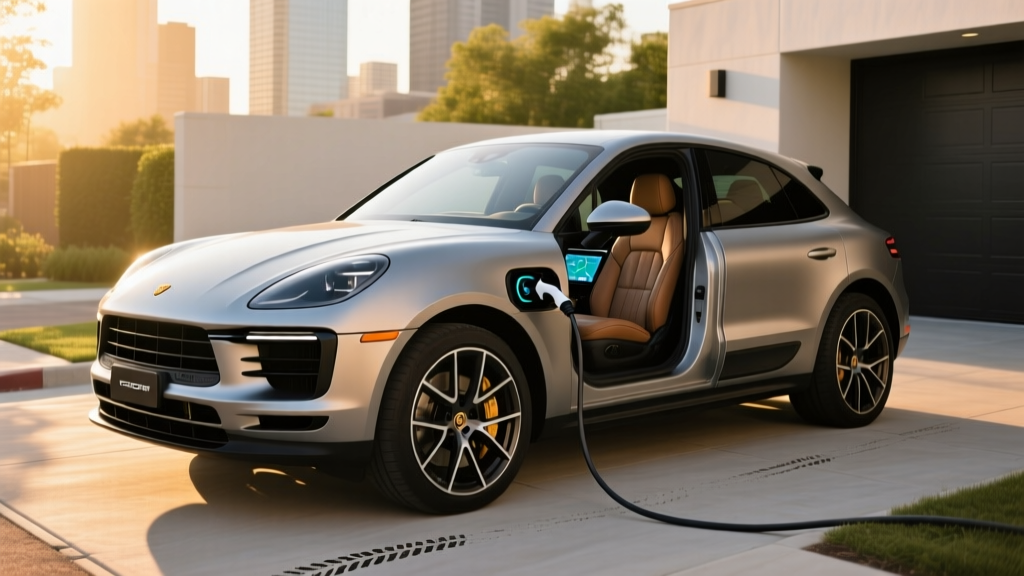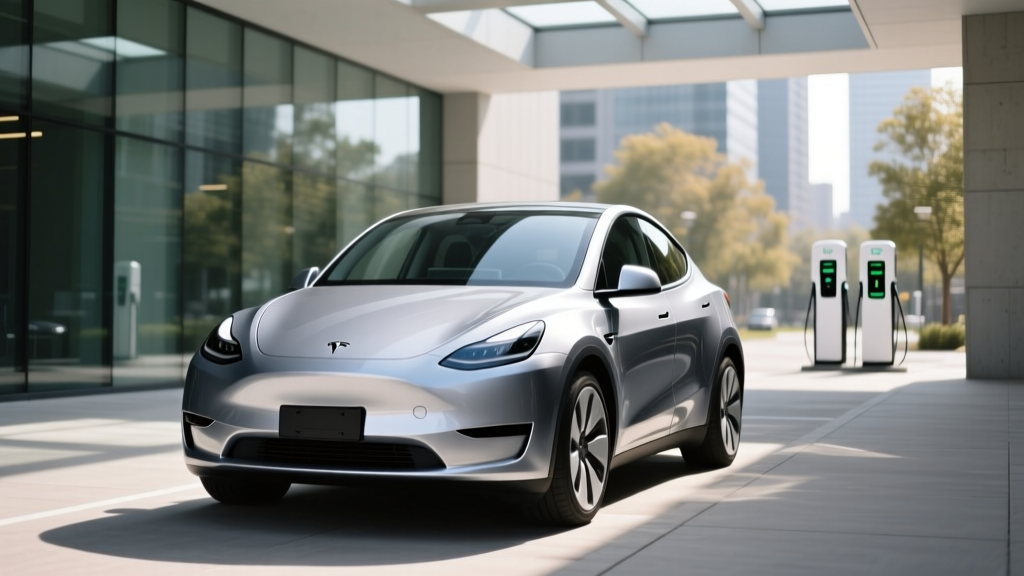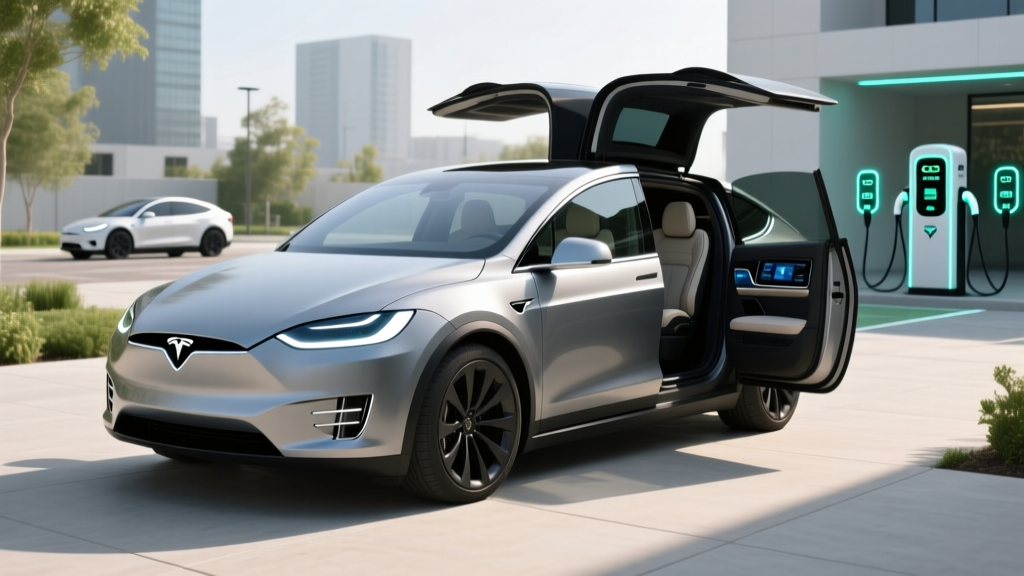
Tesla's long-promised three-row electric SUV has finally arrived for the 2026 model year under the nameplate enthusiasts have been calling Tesla Las Megas — the larger sibling to the Model X refresh. Built on an evolution of Tesla's large-vehicle platform, the Las Megas targets families who need genuine third-row usability without sacrificing the range and charging infrastructure advantages that define Tesla ownership. After spending time with the vehicle specs, EPA filings, and real-world driving data, here is everything buyers need to know before putting down a deposit.
Tesla Las Megas Core Specifications at a Glance
| Spec | Long Range AWD | Performance |
|---|---|---|
| EPA Range | 340 mi | 310 mi |
| Battery (usable) | 100 kWh | 100 kWh |
| Chemistry | NMC (Nickel Manganese Cobalt) | NMC |
| Drivetrain | Dual-Motor AWD | Tri-Motor AWD |
| Horsepower | 518 hp | 845 hp |
| 0-60 mph | 4.1 sec | 2.6 sec |
| Max DC Charge Rate | 250 kW | 250 kW |
| 10-80% DC Time | ~28 min | ~28 min |
| Level 2 Rate | 11.5 kW (~44 mi/hr) | 11.5 kW (~44 mi/hr) |
| Efficiency | 102 MPGe / 33 kWh/100mi | 93 MPGe / 36 kWh/100mi |
| Base MSRP | $84,990 | $99,990 |
| Battery Warranty | 8 yr / 120,000 mi | 8 yr / 120,000 mi |
Real-World Range: What to Expect Beyond the EPA Sticker
The 100 kWh NMC pack provides substantial energy reserves, but the Las Megas's 5,200-pound curb weight and large frontal area work against efficiency at highway speeds. Tesla's heat pump — standard on all trims — mitigates some cold-weather losses by scavenging waste heat from the drivetrain rather than relying solely on resistive cabin heating. Owners in northern climates should budget roughly 20-25% range reduction during the coldest months compared to the EPA sticker, consistent with DOE cold-weather EV data.
The tri-motor Performance trim sacrifices 30 miles of EPA range (310 mi) due to the additional front motor's weight and more aggressive power delivery calibration. For buyers prioritizing maximum distance per charge — particularly those in regions with sparse Supercharger coverage — the Long Range AWD is the clear choice.
Charging Speed: DC Fast Charge and Home Level 2
Tesla's proprietary NACS connector remains the standard on the Las Megas, granting native access to the Tesla Supercharger network — now exceeding 6,000 stations and 60,000+ stalls across North America. This remains the single largest practical advantage Tesla holds over competitors relying on third-party networks.
| Charging Level | Power (kW) | Miles Added per Hour | Notes |
|---|---|---|---|
| Level 1 (120V) | ~1.4 kW | ~4 mi/hr | Emergency/trickle only; full charge in ~72 hours |
| Level 2 (240V, 48A) | 11.5 kW | ~44 mi/hr | Full charge overnight (~9 hours 0-100%) |
| DC Fast (V3 Supercharger) | 250 kW peak | ~175 mi in 15 min | 10-80% in ~28 min; tapers sharply above 80% |
| DC Fast (V4 Supercharger) | 350 kW capable* | ~200+ mi in 15 min | *Vehicle limited to ~250 kW acceptance currently |
A critical detail for road-trippers: the Las Megas's charge curve peaks at 250 kW only between roughly 10-30% State of Charge (SoC). By 50% SoC, the rate tapers to approximately 150 kW, and above 80% it drops below 60 kW. This is standard behavior for NMC chemistry to protect cell longevity, but it means the 10-80% time of ~28 minutes is not linearly extrapolable — charging from 80-100% adds another 35-40 minutes. Plan your road-trip stops to arrive at low SoC and depart around 80% for the fastest average speeds.
At home, a properly installed Wall Connector on a 60A circuit delivers the full 11.5 kW / 44 miles per hour. For a typical daily commute of 40 miles round-trip, plugging in overnight recovers your daily driving in under an hour of charge time. Home installation costs for a 240V/60A circuit typically run $800-$2,000 depending on panel proximity and local permitting — consult a licensed electrician for your specific setup.
Interior Space, Cargo, and Three-Row Practicality
The Las Megas is Tesla's answer to the Kia EV9, Rivian R1S, and the refreshed Model X — but at a price point designed to slot below the Model X while offering similar passenger volume. Key dimensions:
- Seating: 7-passenger (2+3+2 configuration) or optional 6-passenger (2+2+2 with second-row captain's chairs)
- First-row legroom: 41.2 inches
- Second-row legroom: 38.5 inches
- Third-row legroom: 31.8 inches
- Cargo behind 3rd row: 16.4 cu ft
- Cargo behind 2nd row (3rd row folded): 44.2 cu ft
- Max cargo (all rear seats folded): 81.7 cu ft
- Frunk (front trunk): 6.5 cu ft
The third row is genuinely usable for adults on trips under an hour, which puts the Las Megas ahead of many midsize three-row SUVs. However, with all three rows upright, the 16.4 cu ft of rear cargo space limits you to a few grocery bags or a couple of carry-on suitcases — families hauling a double stroller will need to fold at least one third-row seat. The 6-passenger captain's chair configuration sacrifices one seat but dramatically improves second-row comfort and third-row access via a walk-through aisle.
Performance, Drivetrain, and Driving Dynamics
The Long Range AWD pairs a permanent-magnet rear motor with an induction front motor for a combined 518 horsepower. The 4.1-second 0-60 mph time is quick for a 5,200-pound family hauler, and the instant torque delivery makes highway merging effortless. The tri-motor Performance variant adds a second rear motor for 845 hp and a supercar-rivaling 2.6-second 0-60, though the real-world utility of that performance in a three-row SUV is debatable — it's a party trick more than a daily necessity.
Both trims feature Tesla's adaptive air suspension with automatic ride-height adjustment, which lowers at highway speeds for efficiency and raises for rough roads or loading. The 5,000-pound towing capacity (when equipped with the optional tow package) handles a small boat trailer or light camper but falls short of the Rivian R1S's 7,700-pound rating.
Tech, Driver Assistance, and the Autopilot Reality
The Las Megas features Tesla's current-generation infotainment: a 15.4-inch center touchscreen running Tesla's proprietary OS, a rear-seat 8-inch entertainment display, and a 17-speaker premium audio system. Navigation routes through Superchargers automatically with battery preconditioning — the car warms its battery pack before you arrive at a DC fast charger, which can shave 5-10 minutes off your charge time in cold weather.
Standard Autopilot includes Traffic-Aware Cruise Control and Autosteer (lane-centering on divided highways). FSD Supervised adds automatic lane changes, traffic-light and stop-sign recognition, and Navigate on Autopilot for highway on/off-ramp routing. In practice, FSD Supervised performs well on well-marked interstates but can be unpredictable in construction zones, unmapped areas, or adverse weather. Treat it as an advanced cruise control, not a chauffeur.
Pricing, Trims, and Federal Tax Credit Eligibility
| Trim | MSRP | Est. After §30D Credit | Delivery Estimate |
|---|---|---|---|
| Long Range AWD | $84,990 | $77,490* | Q2 2026 |
| Performance (Tri-Motor) | $99,990 | $92,490* | Q3 2026 |
*Estimated price assumes full $7,500 federal tax credit eligibility. Actual eligibility varies.
The IRS §30D Clean Vehicle Credit offers up to $7,500 for qualifying new EVs, but eligibility is layered and changes frequently. For the 2026 Las Megas, buyers must verify:
- MSRP cap: SUVs/vans/pickups must be ≤ $80,000 MSRP. The Long Range AWD at $84,990 exceeds this cap and is not eligible for the new-vehicle §30D credit unless Tesla adjusts pricing or the vehicle is reclassified. The Performance trim at $99,990 also exceeds the cap.
- Buyer income limits: Modified AGI must not exceed $300,000 (joint filers), $225,000 (head of household), or $150,000 (individual).
- Battery sourcing: A percentage of critical minerals and battery components must be sourced from the U.S. or FTA partners — these thresholds increase annually. Tesla's supply chain has been adapting, but verify current-year compliance on the IRS qualified vehicle list before purchase.
- Point-of-sale transfer: As of 2024+, the credit can be transferred to the dealer at purchase, reducing the out-of-pocket price immediately rather than waiting for a tax refund. This requires dealer participation and IRS registration.
Warranty Coverage and Long-Term Ownership
Tesla covers the Las Megas battery and drive units with an 8-year / 120,000-mile warranty (whichever comes first), with a guaranteed minimum 70% battery capacity retention over that period. The limited vehicle warranty is 4 years / 50,000 miles — in line with luxury competitors but shorter than Hyundai/Kia's 10-year powertrain coverage.
NMC chemistry in the 100 kWh pack has proven durable in Tesla's existing fleet data, with typical degradation of 8-12% over the first 100,000 miles before leveling off. To maximize longevity, Tesla recommends daily charging to 80-90% for NMC packs (reserving 100% for road trips) — unlike LFP packs, which tolerate regular 100% charges. This is a key ownership nuance: your usable daily range at 80% SoC is roughly 272 miles (Long Range), which is still substantial for most commutes.
Who Should Buy the Tesla Las Megas?
Choose the Las Megas if:
- You need three rows and want Supercharger network access for road trips
- You already own a Tesla and want to stay in the ecosystem
- Performance (especially the tri-motor variant) matters in a family SUV
- You can charge at home and your daily driving is under 250 miles
Look elsewhere if:
- You need maximum cargo space with all three rows up (consider the Rivian R1S or Kia EV9)
- You want physical climate/media controls (Tesla's touchscreen-only interface frustrates some drivers)
- Tax-credit eligibility is essential to your budget — the MSRP cap currently excludes this vehicle
- You need heavy towing (5,000 lbs vs. Rivian's 7,700 lbs)
Pros, Cons, and Key Competitors
- 340-mile EPA range leads the three-row EV segment
- Supercharger network remains the gold standard for reliability
- Genuine adult-usable third row
- Standard heat pump for cold-weather efficiency
- Battery preconditioning for faster DC charging
- Over-the-air updates continuously add features
- Exceeds $80K MSRP cap — no federal tax credit
- Minimal cargo space behind third row (16.4 cu ft)
- Touchscreen-only controls; no physical buttons
- 250 kW peak DC charge rate trails 800V competitors (Hyundai/Kia at 350 kW)
- 5,000-lb tow rating trails Rivian R1S
- FSD Supervised requires constant driver attention (Level 2 only)
Frequently Asked Questions
What is the real-world range of the Tesla Las Megas?
The Long Range AWD is EPA-rated at 340 miles. Real-world highway driving at 70-75 mph yields approximately 280-305 miles in mild weather. In freezing temperatures, expect 230-260 miles. City driving with regenerative braking can approach or match the EPA estimate.
How fast does the Las Megas charge at home and on the road?
At home on a 240V Level 2 Wall Connector, it charges at 11.5 kW, adding roughly 44 miles per hour (full charge in ~9 hours). On a V3 Supercharger, it peaks at 250 kW and charges from 10-80% in approximately 28 minutes, though the charge curve tapers significantly above 50% SoC.
Does the Tesla Las Megas qualify for the $7,500 federal tax credit?
As of early 2026, the Las Megas starts at $84,990, which exceeds the IRS §30D MSRP cap of $80,000 for SUVs. It does not currently qualify for the new-vehicle federal credit. Buyers should verify current eligibility at fueleconomy.gov and consult a tax professional, as pricing or classification could change.
Is the Las Megas worth buying over the Rivian R1S or Kia EV9?
It depends on priorities. The Las Megas wins on range (340 mi vs. R1S's ~321 mi and EV9's ~304 mi) and Supercharger access. The Rivian R1S wins on towing (7,700 lbs), off-road capability, and third-row cargo space. The Kia EV9 wins on price (starting ~$55K), 800V fast-charging (350 kW capable), and physical interior controls. Test-drive all three before deciding.
How does Autopilot differ from Full Self-Driving?
Standard Autopilot provides adaptive cruise control and lane-centering on highways. FSD Supervised ($8,000 or $99/month) adds automatic lane changes, intersection handling, and navigation-guided routing. Both are SAE Level 2 systems requiring full driver attention — neither is self-driving.
What is the battery warranty and expected lifespan?
Tesla covers the battery for 8 years or 120,000 miles with a minimum 70% capacity retention guarantee. Real-world Tesla fleet data suggests NMC packs typically lose 8-12% capacity in the first 100,000 miles before degradation slows. Charging to 80-90% daily (rather than 100%) helps maximize long-term battery health.