Tesla's July 2026 Incentive Landscape: What Buyers Actually Get
Tesla's mid-year pricing strategy has become one of the most closely watched events in the EV market. For July 2026, the automaker is layering federal tax credit eligibility, limited-time referral discounts, and favorable lease terms across the Model 3 and Model Y lineup. But parsing the real value requires looking past headline numbers to understand exactly what you'll pay, what you'll drive, and whether the math works for your situation.
This profile breaks down the current Tesla July incentives with the precision EV buyers need — exact pricing by trim, IRS §30D tax credit eligibility with all caveats, real-world range and charging data, and a clear verdict on whether now is the right time to buy.
2026 Tesla Model 3: Range, Battery, and Efficiency
Model 3 Long Range AWD: EPA 341 miles. Real-world highway (75 mph, 70°F): ~290–310 miles. Cold-weather highway (30°F): ~240–265 miles. The heat pump helps, but lithium-ion chemistry inherently loses efficiency below freezing.
Model 3 RWD: EPA 272 miles. Real-world highway: ~230–250 miles. Cold-weather highway: ~190–210 miles.
The 2026 Model 3 Long Range AWD carries a 75 kWh usable battery (NMC chemistry — nickel manganese cobalt), delivering higher energy density than LFP but requiring more careful state-of-charge management for longevity. Tesla recommends daily charging to 80% for NMC packs, reserving 100% for road trips. The RWD variant uses a 60 kWh LFP (lithium iron phosphate) battery, which Tesla explicitly allows owners to charge to 100% regularly — a meaningful advantage for daily commuters who want full usable capacity.
| Spec | Model 3 RWD | Model 3 Long Range AWD | Model 3 Performance |
|---|---|---|---|
| EPA Range | 272 mi | 341 mi | 315 mi |
| Battery (usable) | 60 kWh (LFP) | 75 kWh (NMC) | 75 kWh (NMC) |
| Efficiency | 132 MPGe / 25 kWh/100mi | 134 MPGe / 25 kWh/100mi | 122 MPGe / 27 kWh/100mi |
| 0–60 mph | 5.8 sec | 4.2 sec | 2.9 sec |
| Horsepower | 271 hp | 346 hp | 510 hp |
| Drivetrain | RWD | Dual-Motor AWD | Dual-Motor AWD |
| Base MSRP | $38,990 | $42,490 | $52,490 |
Efficiency across the lineup remains among the best in the segment. At 25 kWh per 100 miles, the Long Range AWD converts electricity to distance more effectively than competitors like the Hyundai Ioniq 6 (27 kWh/100mi) or BMW i4 (28 kWh/100mi), according to fueleconomy.gov. That translates to lower per-mile charging costs whether you're on a home Level 2 or a public DC fast charger.
Charging Speed: DC Fast Charge and Home Level 2
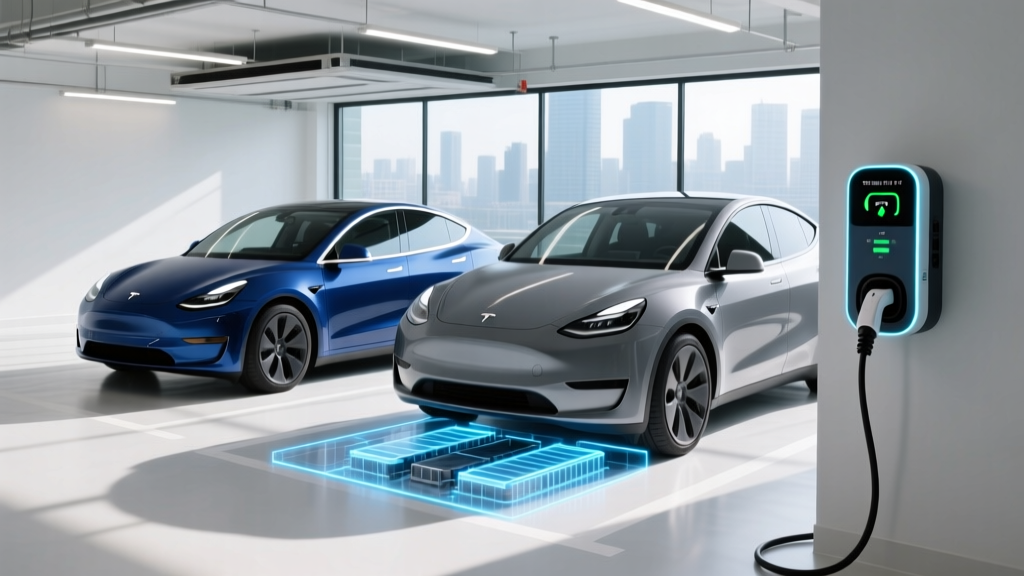
Charging speed is where Tesla's Supercharger network advantage meets hardware reality. The 2026 Model 3 Long Range AWD supports a peak DC fast-charge rate of 250 kW on V3 Superchargers. In controlled testing with a preconditioned battery, the 10–80% charge completes in approximately 25 minutes. However, the charge curve tapers significantly above 80% — expect an additional 15–20 minutes to reach 100% at the same stall. This is standard lithium-ion behavior, not a Tesla-specific limitation.
The RWD (LFP) variant peaks at 170 kW, with a 10–80% time of roughly 30 minutes. LFP chemistry accepts charge more slowly at high states of charge, which is a trade-off for its cycle-life longevity and 100% daily charging tolerance.
| Charging Level | Model 3 RWD (LFP) | Model 3 Long Range AWD (NMC) |
|---|---|---|
| Level 1 (120V, 12A) | ~3 mi/hr (1.4 kW) | ~4 mi/hr (1.4 kW) |
| Level 2 (240V, 48A) | ~30 mi/hr (11.5 kW) | ~33 mi/hr (11.5 kW) |
| DC Fast (peak) | 170 kW | 250 kW |
| 10–80% DC Fast Time | ~30 min | ~25 min |
| Connector | NACS (native) | NACS (native) |
For home charging, a 48-amp Level 2 wall connector on a 60-amp circuit adds roughly 30–33 miles of range per hour. Most owners charging overnight (8–10 hours) wake to a full or near-full battery regardless of trim. Installation costs for a Level 2 home setup typically range from $500 (simple outlet near panel) to $2,000+ (panel upgrade, long conduit runs). Always get a quote from a licensed electrician before committing.
2026 Tesla Model Y: Family-Focused Specs
The Model Y remains Tesla's volume leader and America's best-selling EV. The 2026 refresh carries over the updated styling introduced in early 2025, with improved cabin insulation, ventilated front seats, and a rear touchscreen for passengers.
Long Range AWD: EPA 320 miles. Real-world highway (75 mph): ~270–290 miles. Cold-weather highway: ~225–250 miles.
RWD: EPA 260 miles. Real-world highway: ~220–240 miles. Cold weather: ~185–205 miles.
| Spec | Model Y RWD | Model Y Long Range AWD | Model Y Performance |
|---|---|---|---|
| EPA Range | 260 mi | 320 mi | 293 mi |
| Battery (usable) | 60 kWh (LFP) | 75 kWh (NMC) | 75 kWh (NMC) |
| 0–60 mph | 6.6 sec | 4.8 sec | 3.5 sec |
| Cargo Volume | 30.2 cu ft (rear seats up) / 72.1 cu ft (rear seats folded) | ||
| Rear Legroom | 41.6 in | ||
| Towing Capacity | 3,500 lbs (Long Range & Performance) | ||
| Base MSRP | $44,990 | $47,490 | $52,490 |
The Model Y's crossover form factor delivers practical advantages: 30.2 cubic feet of cargo space behind the rear row (72.1 cu ft with seats folded), standard 3,500-pound towing on Long Range and Performance trims, and an available third-row seat (though it's best suited for small children). For families weighing EV options, the cargo and passenger dimensions compete directly with the Ford Mustang Mach-E (29.7 cu ft cargo) while edging ahead on range.
Tesla July Incentives 2026: Pricing and Federal Tax Credit Breakdown
Here's where the July incentive picture gets specific. Tesla's current offers stack multiple savings layers, but each comes with eligibility requirements that buyers must verify independently.
| Model / Trim | Base MSRP | Federal §30D Credit | Effective Price (if eligible) | Tesla Referral Discount |
|---|---|---|---|---|
| Model 3 RWD | $38,990 | $7,500 | $31,490 | -$500 (varies) |
| Model 3 Long Range AWD | $42,490 | $7,500 | $34,990 | -$500 |
| Model 3 Performance | $52,490 | $7,500 | $44,990 | -$500 |
| Model Y RWD | $44,990 | $7,500 | $37,490 | -$500 |
| Model Y Long Range AWD | $47,490 | $7,500 | $39,990 | -$500 |
| Model Y Performance | $52,490 | $7,500 | $44,990 | -$500 |
Critical §30D eligibility requirements (per IRS.gov):
- Income caps: Modified AGI must not exceed $300,000 (married filing jointly), $225,000 (head of household), or $150,000 (single).
- MSRP caps: Vehicle base MSRP must not exceed $55,000 for sedans (Model 3 qualifies on all trims) or $80,000 for SUVs/trucks (Model Y qualifies on all trims).
- Battery sourcing: A percentage of critical minerals must be sourced from the US or free-trade-agreement countries, and battery components must be manufactured or assembled in North America. Tesla's supply chain has largely met these thresholds for 2026, but always verify the specific VIN's eligibility at purchase.
- Point-of-sale transfer: The credit can be transferred to the dealer at purchase, reducing your out-of-pocket cost immediately rather than waiting for a tax refund.
Beyond the federal credit, Tesla's July 2026 incentives include a $500 referral discount (applied at checkout when using an existing owner's referral code) and 0.99% APR financing for 36–60 months on select Model 3 and Model Y trims — a significant subsidy in a rate environment where auto loans average 6–7%. Some regions also see complimentary Supercharging credits (typically 1,000–2,000 miles), though this varies by market and changes frequently.
Always confirm current incentive details on Tesla's website at the time of order, as mid-month adjustments are common.
Driver Assistance, Tech, and Ownership Experience
Every 2026 Model 3 and Model Y ships with Basic Autopilot — a Level 2 driver-assistance system providing adaptive cruise control and lane-centering on marked highways. The optional Full Self-Driving (Supervised) package ($8,000 one-time or $99/month) adds automatic lane changes, traffic-light recognition, and Navigate on Autopilot. However, FSD remains a SAE Level 2 system requiring continuous driver attention and hands-on-wheel supervision. It is not autonomous driving.
Autopilot and FSD (Supervised) do NOT make Tesla vehicles self-driving. The driver must remain alert, keep hands on the steering wheel, and be prepared to take over instantly. Performance degrades in construction zones, heavy rain, faded lane markings, and unmapped areas. NHTSA continues to investigate Autopilot-related incidents. Treat these as convenience features, not replacements for attentive driving.
The infotainment system runs on a 15.4-inch central touchscreen (Model 3) or 15-inch (Model Y), with no physical instrument cluster. All vehicle controls, navigation, media, and climate settings live on this screen — a minimalist approach that some buyers love and others find distracting. Over-the-air updates regularly add features, and the integrated Supercharger routing with battery preconditioning remains one of the most seamless charging experiences in the industry.
Warranty, Longevity, and Total Cost of Ownership
Tesla's warranty coverage is straightforward:
- Basic vehicle: 4 years / 50,000 miles
- Battery and drive unit: 8 years / 100,000 miles (RWD) or 8 years / 120,000 miles (Long Range & Performance)
- Battery retention threshold: Tesla warrants that the battery will retain at least 70% of its original capacity during the warranty period
Real-world battery degradation data from large Tesla owner surveys shows approximately 10–12% capacity loss at 100,000 miles for NMC packs, with LFP packs showing slightly slower degradation curves. Battery replacement outside warranty currently ranges from $12,000 to $16,000 depending on the pack — a worst-case scenario that remains rare within the first decade of ownership.
For total cost of ownership, the Model 3 Long Range AWD at $34,990 (after federal credit) costs approximately $0.04–$0.05 per mile to fuel on residential electricity ($0.14/kWh national average), versus $0.12–$0.15 per mile for a comparable 30 MPG gas sedan at $3.50/gallon. Over five years and 75,000 miles, that's roughly $6,000–$7,500 in fuel savings — before factoring in lower maintenance costs (no oil changes, reduced brake wear from regenerative braking). Insurance premiums, however, tend to run 15–25% higher than equivalent gas vehicles. Get quotes before purchasing.
Pros and Cons: Tesla Model 3 and Model Y in 2026
- Class-leading efficiency (25 kWh/100mi) lowers charging costs
- Supercharger network: 50,000+ stalls globally, native NACS, most reliable public charging
- Over-the-air updates continuously improve the vehicle post-purchase
- Strong §30D tax credit eligibility across all trims
- LFP option allows 100% daily charging for maximum usable range
- 0.99% APR financing offer dramatically reduces monthly payments
- No physical controls — all climate, mirrors, and glovebox via touchscreen
- Rear-seat comfort and visibility still trail competitors like the Ioniq 5
- FSD ($8,000) remains Level 2 despite the "Full Self-Driving" name
- Insurance costs 15–25% higher than gas equivalents
- Model Y RWD range (260 mi EPA) may be insufficient for frequent road-trippers
- Minimal dealer network — service relies on mobile rangers and limited service centers
Who Should Buy, and Is July 2026 the Right Time?
You commute 30–60 miles daily, take regular road trips, want dual-motor AWD for weather confidence, and qualify for the full §30D credit. At ~$35,000 effective price, it's one of the best value-per-mile EVs available.
Choose the Model Y Long Range AWD if:You need cargo space for a family, tow occasionally (up to 3,500 lbs), and want crossover ride height. The $39,990 effective price undercuts most electric SUV competitors with comparable range.
Choose the RWD (LFP) trims if:You primarily drive in-city, can charge at home nightly, want the lowest purchase price, and prefer LFP's 100% daily charging tolerance and longer cycle life over maximum range.
Consider competitors if:You want a traditional instrument cluster (Hyundai Ioniq 6), hands-free Level 2 driving on mapped highways (Ford Mach-E with BlueCruise, GM with Super Cruise), or a more cushioned ride (BMW i4).
July 2026 represents a strong buying window for Tesla shoppers. The combination of the full $7,500 federal tax credit (via point-of-sale transfer), 0.99% financing, and referral discounts creates effective pricing that may not persist into Q4 when Tesla typically adjusts pricing for end-of-year delivery targets. If you've verified your §30D eligibility with a tax professional and have home charging access, the numbers are compelling.
Frequently Asked Questions
What is the real-world range of the 2026 Tesla Model 3 Long Range?
Expect approximately 290–310 miles on the highway at 75 mph in moderate temperatures. In cold weather (below 35°F), highway range drops to roughly 240–265 miles due to battery chemistry limitations and cabin heating demands. City driving with regenerative braking can exceed the EPA estimate of 341 miles.
How fast does the Tesla Model 3 charge at home and on DC fast chargers?
On a 48-amp Level 2 home charger, the Model 3 Long Range adds about 33 miles of range per hour (11.5 kW), fully charging overnight in 7–8 hours. On a V3 Supercharger (250 kW peak), a 10–80% charge takes approximately 25 minutes with a preconditioned battery. Charging slows substantially above 80% — plan to charge to 80% on road trips for the fastest stops.
How much does a Tesla Model 3 cost after federal tax credits in July 2026?
The Model 3 RWD starts at $38,990 MSRP and drops to approximately $31,490 after the $7,500 §30D federal tax credit (if eligible). The Long Range AWD effectively costs ~$34,990. Eligibility depends on your income (single filers must earn under $150,000 MAGI), the vehicle's MSRP (under $55,000 for sedans), and battery-sourcing requirements. Consult a tax professional and verify VIN eligibility at purchase.
Is the Tesla Model 3 worth buying vs. the Hyundai Ioniq 6 or BMW i4?
The Model 3 wins on charging infrastructure (Supercharger network), efficiency (25 kWh/100mi), and effective price after incentives. The Ioniq 6 offers a more traditional cockpit with physical buttons and competitive range (361 mi EPA on Long Range). The BMW i4 provides a more premium interior and conventional driving feel but costs significantly more. If Supercharger access and lowest cost-per-mile matter most, the Model 3 is the stronger choice.
Does the Tesla Model Y qualify for the $7,500 federal EV tax credit?
Yes — all 2026 Model Y trims qualify for the full $7,500 §30D credit, provided the buyer meets income caps ($300,000 joint / $150,000 single) and the vehicle meets battery-sourcing requirements (which Tesla's current supply chain satisfies). The credit can be applied at point of sale, reducing your purchase price immediately. Always confirm eligibility with your tax advisor before ordering.
What's the biggest drawback of owning a Tesla in 2026?
The most common owner complaints center on the touchscreen-only interface (no physical buttons for climate, mirrors, or glovebox), higher-than-average insurance premiums, and limited service center availability in rural areas. FSD's $8,000 price tag for a Level 2 system also frustrates buyers expecting autonomous capability. For most owners, these are manageable trade-offs for the efficiency and charging network advantages.