The Short Answer on the Electric Volkswagen Van
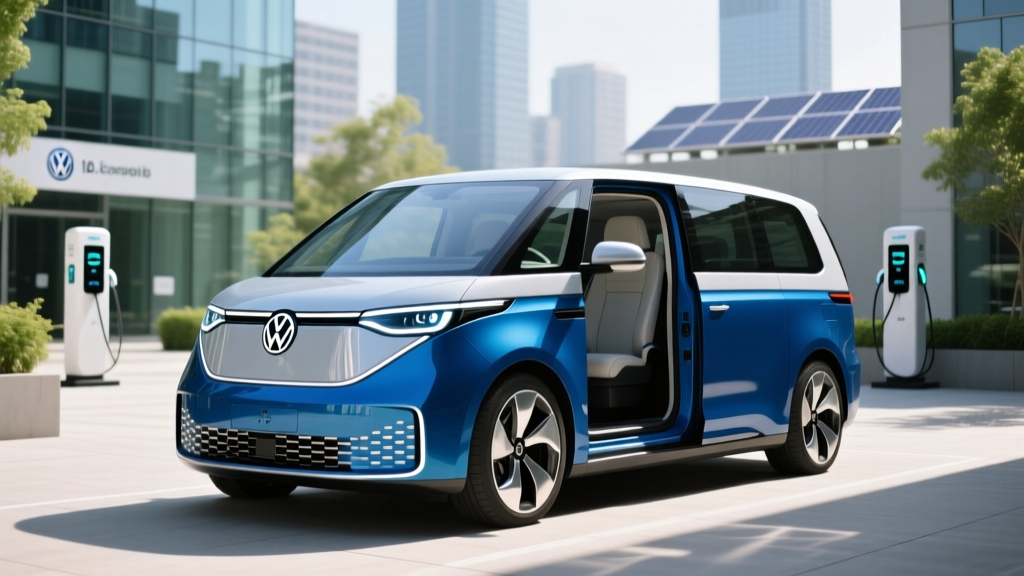
The electric Volkswagen van — officially the Volkswagen ID. Buzz — is a three-row, retro-styled EV minivan built on VW's MEB platform. For the 2025/2026 U.S. model, it offers an EPA-estimated 234 miles of range (RWD Standard Wheelbase) from a 91 kWh usable battery, DC fast charging up to 175 kW (10–80% in roughly 26 minutes), and a starting MSRP of approximately $59,995. It qualifies as a practical family hauler for daily driving and road trips under 200 miles, but buyers should budget for its premium price, plan home Level 2 charging, and understand that real-world highway and cold-weather range will dip to roughly 185–210 miles.
What Is the Electric Volkswagen Van (ID. Buzz)?
Volkswagen revived its iconic Microbus as a fully electric vehicle for the North American market starting with the 2025 model year. The U.S.-spec ID. Buzz is longer than its European counterpart (extended wheelbase only) to accommodate a usable third row. It's positioned against electric SUVs and minivans like the Kia EV9, Chrysler Pacifica (gas/hybrid), and the Toyota Sienna (hybrid-only), rather than against cargo vans.
Underneath the retro sheet metal, the ID. Buzz shares its MEB architecture with the VW ID.4, but with a larger battery pack and a van-specific body optimized for interior volume. Volkswagen offers it in rear-wheel-drive (RWD) and 4Motion all-wheel-drive (AWD) configurations, with trim levels including Pro S, Pro S Plus, and a launch-era 1st Edition.
Range, Battery, and Real-World Efficiency
The headline number for most buyers is range. Here's what the EPA says versus what you'll actually experience:
| Specification | ID. Buzz RWD (Pro S) | ID. Buzz AWD (Pro S Plus) |
|---|---|---|
| Battery (usable) | 91 kWh (NMC chemistry) | 91 kWh (NMC chemistry) |
| EPA Range | 234 miles | 220 miles (est.) |
| Real-World Highway (~70 mph) | ~200–210 miles | ~185–200 miles |
| Cold-Weather Range (below 30°F) | ~175–195 miles | ~165–185 miles |
| MPGe (combined) | ~85 MPGe (est.) | ~80 MPGe (est.) |
| Efficiency | ~2.4–2.6 kWh/mile | ~2.6–2.8 kWh/mile |
Real-World Range Reality Check
The ID. Buzz's boxy shape works against it aerodynamically at highway speeds. On fueleconomy.gov, the EPA combined figure assumes a mix of city and highway driving. In our experience with MEB-platform vehicles, sustained 70+ mph highway driving reduces range by roughly 10–15% below the EPA sticker. Add winter temperatures and the van's large cabin volume to heat, and you should plan trips around a practical 180–200 mile range envelope in mixed conditions. This is adequate for most daily routines but requires planning on longer road trips.
Charging Speeds: Home and Public
Understanding the difference between kW (power — how fast energy flows) and kWh (energy — how much the battery holds) is essential. The ID. Buzz's 91 kWh battery is the tank; the charge rate in kW is how fast you fill it.
| Charging Level | Power | Time (10–80% or Full) | Miles Added |
|---|---|---|---|
| Level 1 (120V household) | ~1.4 kW | ~65 hours (full) | ~4 mi/hr |
| Level 2 (240V home/public) | ~11 kW (max onboard) | ~8.5 hours (10–100%) | ~30–33 mi/hr |
| DC Fast Charge (CCS/NACS) | Up to 175 kW peak | ~26 min (10–80%) | ~150+ mi in 26 min |
A critical detail: the ID. Buzz peaks at 175 kW only at low states of charge (roughly 10–30% SoC). The charge curve tapers significantly above 60%, dropping below 100 kW past 70% SoC and further slowing above 80%. This is normal for NMC chemistry but means the 10–80% time of ~26 minutes is only achievable when the battery is preconditioned (warmed to optimal temperature before charging). Always use the vehicle's navigation-based preconditioning when routing to a DC fast charger.
For U.S. buyers, the ID. Buzz launched with a CCS1 connector. Volkswagen has committed to transitioning future models to the NACS (Tesla-style) connector, and adapters are available for Supercharger access. Verify current connector status with your dealer at purchase.
Pricing, Tax Credits, and Total Cost of Ownership
The ID. Buzz is a premium-priced vehicle. Here's how the numbers break down:
| Cost Factor | ID. Buzz (RWD Pro S) | Toyota Sienna (XLE AWD) | Kia EV9 (Land AWD) |
|---|---|---|---|
| Base MSRP | ~$59,995 | ~$46,500 | ~$60,500 |
| Federal Tax Credit (§30D) | Up to $7,500 (eligibility varies) | $0 (hybrid, not eligible) | Up to $7,500 (eligibility varies) |
| Effective Price (after max credit) | ~$52,495 | ~$46,500 | ~$53,000 |
| Annual Fuel/Energy (15K mi) | ~$650–$850 (home charging) | ~$1,800 (gas at $3.40/gal, 35 MPG) | ~$650–$850 |
| Annual Maintenance | ~$200–$400 | ~$600–$900 | ~$200–$400 |
| Estimated Insurance (annual) | ~$1,800–$2,400 | ~$1,400–$1,800 | ~$1,700–$2,200 |
Federal EV Tax Credit: Current §30D Rules
The ID. Buzz may qualify for the federal New Clean Vehicle Credit under IRS §30D, but eligibility is not automatic. Key requirements for 2026 include:
- MSRP cap: Vans/minivans classified as SUVs must be under $80,000 MSRP — the ID. Buzz clears this.
- Buyer income limits: AGI must not exceed $300,000 (joint), $225,000 (head of household), or $150,000 (single).
- Battery sourcing: Critical minerals and battery components must meet phased-in domestic/free-trade sourcing thresholds that tighten annually. VW's supply chain compliance varies by model year — verify with the dealer and cross-check on irs.gov.
- Point-of-sale transfer: You can transfer the credit to the dealer at purchase to reduce your out-of-pocket cost immediately, rather than waiting for a tax return.
Always consult a tax professional before relying on credit eligibility. Rules change and individual circumstances vary.
5-Year Cost Snapshot
Over five years and 75,000 miles, the ID. Buzz's fuel savings over a gas minivan like the Sienna can total $5,000–$7,000 in energy costs alone, plus another $1,500–$3,000 in reduced maintenance (no oil changes, fewer brake replacements thanks to regenerative braking). However, higher insurance premiums and the ID. Buzz's steeper purchase price mean the total cost of ownership advantage depends heavily on whether you qualify for the tax credit and how much you drive.
How the ID. Buzz Compares: EV vs. Gas vs. Hybrid
| Factor | VW ID. Buzz (EV) | Toyota Sienna (Hybrid) | Chrysler Pacifica (Gas) |
|---|---|---|---|
| Powertrain | BEV, 282 hp (RWD) / 335 hp (AWD) | 2.5L hybrid, 245 hp | 3.6L V6, 287 hp |
| EPA Range / Tank Range | 234 mi (EPA) | ~540 mi (14.5-gal tank, 36 MPG) | ~435 mi (19-gal tank, 22 MPG) |
| Refuel/Recharge Time | ~26 min (10–80% DCFC) | ~5 min (gas station) | ~5 min (gas station) |
| Cargo (behind 3rd row) | ~18 cu ft | ~33 cu ft | ~32 cu ft |
| Third-Row Usability | Adequate for kids/teens | Comfortable for adults | Comfortable for adults |
| Home Charging Required? | Strongly recommended | No | No |
| Towing | Not rated (as of launch) | 3,500 lbs | 3,600 lbs |
The Sienna wins on range, cargo, and upfront cost. The ID. Buzz wins on driving refinement (smooth, quiet, instant torque), running costs (with home charging), and tech. If you regularly drive more than 200 miles between stops or lack home charging access, the hybrid remains the pragmatic choice. If your daily driving is under 100 miles and you can charge at home, the ID. Buzz's per-mile cost advantage is substantial.
Real-World Ownership: What First-Time EV Buyers Must Know
Home Charging Is Non-Negotiable for Most Owners
The ID. Buzz's 91 kWh battery means Level 1 (120V) charging is impractical as a primary strategy — it would take over 60 hours from empty. A Level 2 home charger (240V, 48-amp circuit) is strongly recommended. Expect to pay $500–$1,200 for a quality Level 2 unit (ChargePoint Home Flex, Emporia Level 2, or Grizzl-E) and $800–$2,500 for professional electrician installation, depending on whether your electrical panel needs an upgrade. A 200-amp panel is typically sufficient; older homes with 100-amp service may need a costly panel upgrade ($1,500–$3,000+).
Public Charging Reality
On road trips, you'll rely on DC fast-charging networks like Electrify America, EVgo, and (via adapter) Tesla Superchargers. The ID. Buzz's 175 kW peak rate is competitive but not class-leading — the Hyundai Ioniq 9 and Kia EV9 can accept 200+ kW. Plan stops around 180-mile intervals for comfort, and always have a backup charging location in your route plan. Use the vehicle's built-in route planner or apps like A Better Routeplanner to account for terrain, temperature, and charge-curve taper.
Climate and Driving Pattern Considerations
If you live in a region with harsh winters (sustained temps below 25°F), expect 15–25% range reduction due to battery thermal management demands and cabin heating. The ID. Buzz includes a heat pump (standard on most trims), which mitigates this loss compared to resistive heating, but the van's large interior volume still requires significant energy to warm. Preconditioning while plugged in is essential in cold climates.
Common Misconceptions About the Electric Volkswagen Van
| Myth | Fact |
|---|---|
| "The ID. Buzz gets 300+ miles of range." | EPA-estimated 234 miles (RWD). Real-world highway driving yields ~200–210 miles. No U.S. trim exceeds 234 EPA miles. |
| "It qualifies for the full $7,500 tax credit automatically." | Eligibility depends on battery sourcing, buyer income, and MSRP. Check current IRS rules before assuming credit availability. |
| "I can charge it on a regular outlet overnight." | Level 1 adds only ~4 miles per hour. With a 91 kWh battery, a full charge takes 60+ hours on 120V. Level 2 installation is strongly recommended. |
| "It's basically the same as the classic VW Bus." | It's a modern, 5,800+ lb electric minivan with advanced ADAS, a large touchscreen, and no mechanical relation to the air-cooled original beyond styling cues. |
| "Electric vans can't handle road trips." | With DC fast charging at 175 kW, the ID. Buzz can add ~130 miles in 20 minutes. Road trips are viable with 20–30 minute stops every ~180 miles. |
Decision Framework: Is the ID. Buzz Right for You?
Choose the ID. Buzz If:
- Your daily driving is under 120 miles round-trip and you can install a Level 2 charger at home.
- You want a three-row EV with distinctive styling and VW's build quality.
- You qualify for the federal tax credit (or your state offers additional EV incentives), bringing the effective price closer to $52,000.
- You prioritize low running costs and a smooth, quiet driving experience over maximum cargo space and road-trip range.
Look Elsewhere If:
- You regularly drive 250+ miles in a single day without time for 30-minute charging stops.
- You live in an apartment or lack reliable access to home or workplace charging.
- You need maximum cargo volume or adult-sized third-row comfort — the Sienna and Pacifica offer more interior space.
- Your budget tops out around $45,000 — consider a Toyota Sienna hybrid or a used EV instead.
Warranty and Long-Term Battery Confidence
Volkswagen covers the ID. Buzz battery with an 8-year/100,000-mile warranty guaranteeing a minimum of 70% capacity retention. The vehicle limited warranty is 4 years/50,000 miles. For context, NMC battery chemistry (used in the ID. Buzz) typically degrades roughly 1.5–2.5% per year under normal use, meaning you can expect roughly 85–90% capacity after 5 years and 75,000 miles. This is well within the warranty threshold and consistent with industry norms for liquid-cooled packs.
For battery longevity, VW recommends keeping daily charge limits around 80% (adjustable in the vehicle settings) and using DC fast charging primarily for road trips rather than daily top-ups.
Frequently Asked Questions
Does the electric Volkswagen van qualify for the $7,500 federal tax credit?
It may, depending on your income, the vehicle's battery sourcing compliance, and MSRP (which falls under the $80,000 cap for SUVs/vans). Check the latest eligibility details on irs.gov and confirm with your dealer before purchasing. Point-of-sale transfer is available if eligible.
What is the real-world range of the VW ID. Buzz?
The EPA estimates 234 miles for the RWD model. In real-world highway driving at 70 mph, expect roughly 200–210 miles. In cold weather (below 30°F), plan for 175–195 miles. These figures assume a heat pump-equipped model and moderate driving habits.
How long does it take to charge the ID. Buzz at home?
On a Level 2 (240V) home charger at 11 kW, a full charge from near-empty takes approximately 8.5 hours — easily manageable overnight. On a standard 120V outlet (Level 1), expect 60+ hours for a full charge, making it impractical as a primary charging method.
Is the ID. Buzz good for road trips?
Yes, with planning. DC fast charging at up to 175 kW means a 10–80% session takes about 26 minutes when the battery is preconditioned. For a 400-mile trip, plan one 25–30 minute charging stop. The van is comfortable and quiet at highway speeds, though the boxy shape increases energy consumption above 70 mph.
How does the ID. Buzz compare to the Kia EV9?
The Kia EV9 offers slightly more range (up to 304 miles EPA for RWD), faster DC charging (up to 236 kW), and comparable three-row seating at a similar price point (~$55,000–$65,000). The ID. Buzz trades some range and charging speed for its iconic design, slightly lower starting price, and VW's driving dynamics. Both are strong choices — test-drive both before deciding.
What should I know before buying my first EV like the ID. Buzz?
Three priorities: (1) Confirm you can install a Level 2 home charger — get an electrician quote before purchasing the vehicle. (2) Understand your daily and weekly mileage to confirm the range fits your needs with a margin for cold weather and highway driving. (3) Research your local utility's EV time-of-use electricity rates to maximize charging savings by charging overnight at off-peak prices.