Why Tesla Issues Still Dominate EV Conversations in 2026
Tesla sells more electric vehicles in the United States than any other automaker, and with that volume comes outsized scrutiny. Search forums, owner groups, or NHTSA databases and you'll find a steady stream of Tesla issues — ranging from panel-gap inconsistencies and phantom braking to 12V battery failures and Supercharger connector wear. But how much of the noise reflects genuine ownership pain, and how much is internet amplification of problems that affect a small percentage of vehicles?
This review audits the most frequently reported Tesla issues across the current Model 3 (Highland refresh) and Model Y (Juniper refresh), contextualizes them against the specs that matter — range, charging, pricing, and warranty — and gives you a clear-eyed framework for deciding whether a Tesla is the right EV for your garage in 2026.
Current Tesla Lineup: Model 3 and Model Y at a Glance
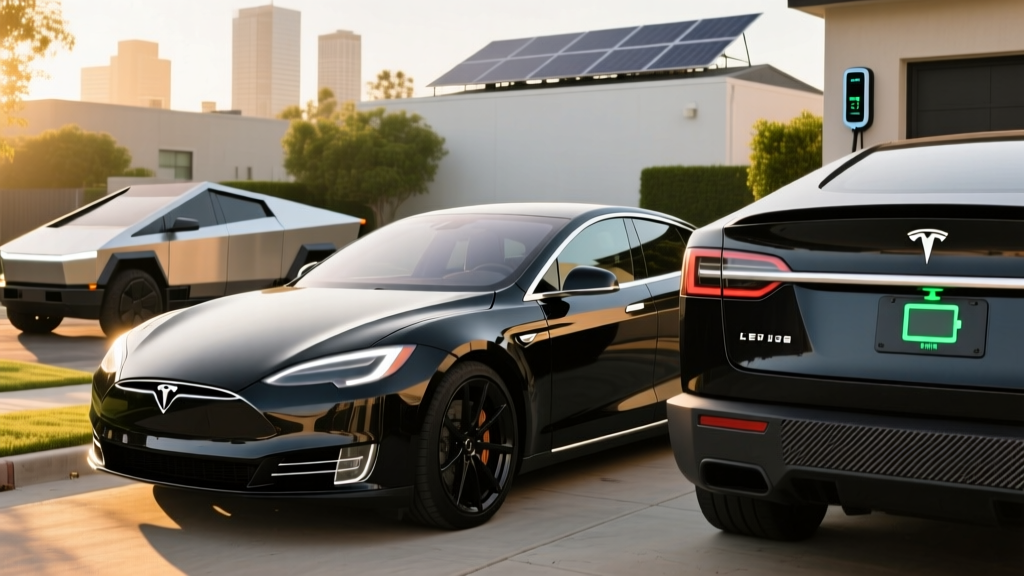
Tesla's 2026 U.S. lineup centers on two high-volume vehicles. The Model 3 sedan targets commuters and efficiency-focused buyers; the Model Y crossover adds cargo space and optional third-row seating for families. Both received major refreshes (Highland for Model 3, Juniper for Model Y) that addressed several legacy complaints — quieter cabins, ventilated seats, improved suspension tuning, and ambient lighting. But refreshes don't erase every issue, and some new ones have surfaced.
| Spec | Model 3 Long Range AWD | Model Y Long Range AWD |
|---|---|---|
| EPA Range | 341 miles | 320 miles |
| Battery (usable) | ~75 kWh (NMC) | ~75 kWh (NMC) |
| Drivetrain | Dual-motor AWD | Dual-motor AWD |
| 0-60 mph | 4.2 seconds | 4.8 seconds |
| Horsepower | ~346 hp | ~384 hp |
| Peak DC Fast Charge | 250 kW | 250 kW |
| 10-80% DC Time | ~25 minutes | ~27 minutes |
| Level 2 Home Charge | 11.5 kW (~44 mi/hr) | 11.5 kW (~44 mi/hr) |
| MPGe (combined) | 132 MPGe | 122 MPGe |
| Efficiency | 25 kWh/100 mi | 28 kWh/100 mi |
| Cargo (rear seats up) | 23 cu ft | 34 cu ft (76 cu ft folded) |
| Rear Legroom | 35.3 in | 41.6 in |
| Base MSRP | $47,740 | $49,630 |
| Battery Warranty | 8 yr / 120,000 mi | 8 yr / 120,000 mi |
Sources: fueleconomy.gov, Tesla.com specifications. Prices exclude destination fee. Specs reflect 2026 model year Long Range AWD trims.
The Real-World Range Picture: EPA Sticker vs What You'll Actually Get
Model 3 LR AWD: EPA 341 mi — expect ~280-300 mi on highway road trips at 70-80 mph; ~230-260 mi in sub-30°F winter conditions.
Model Y LR AWD: EPA 320 mi — expect ~260-280 mi highway; ~210-240 mi in cold weather with cabin heat running.
Tesla's efficiency remains among the best in the EV industry, thanks to strong thermal management and low rolling-resistance tuning. But the EPA combined cycle blends city regenerative braking with moderate highway speeds — a mix that flatters EVs. On a sustained 75 mph interstate run in 45°F weather with the heat pump active, both vehicles lose roughly 15-25% from their sticker range. That's not a Tesla-specific issue; it's physics. Lithium-ion cells deliver less energy at low temperatures, and aerodynamic drag scales with the square of speed.
The most common range-related complaint we see from new Tesla owners isn't degradation — it's expectation mismatch. Buyers see "341 miles" and plan 330-mile road trips without accounting for elevation changes, headwinds, or winter temperatures. The Tesla navigation trip planner is genuinely useful here: it accounts for terrain and temperature, and its arrival SoC estimates are typically within 2-3 percentage points of reality when you precondition the battery.
Charging Speed and Infrastructure: Where Tesla Still Leads — and Where It Doesn't
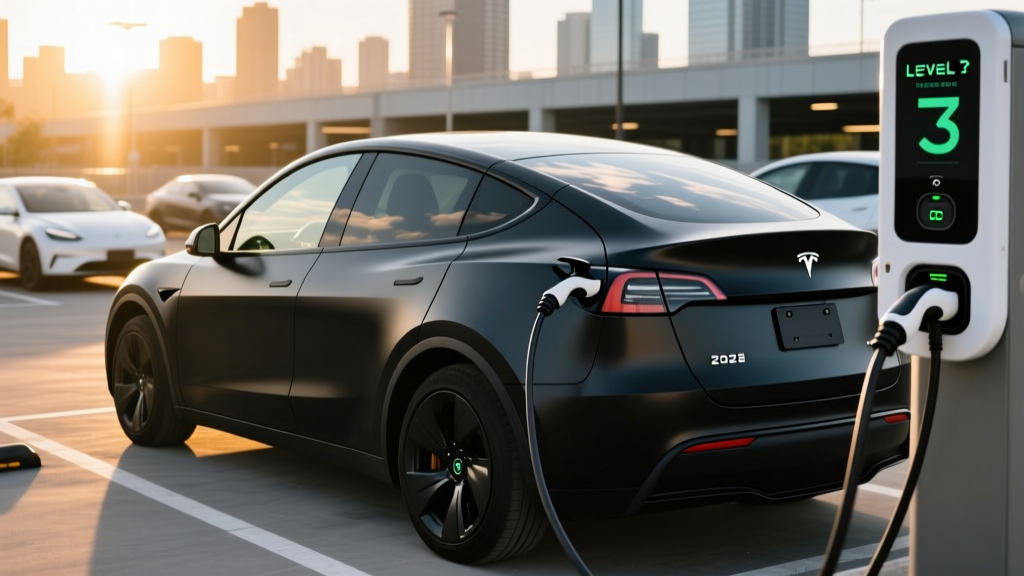
Both the Model 3 and Model Y peak at 250 kW on DC fast chargers using the NACS (North American Charging Standard) connector — which Tesla designed and which has now been adopted by Ford, GM, Rivian, Hyundai, and most major automakers. On a V3 or V4 Supercharger, you'll see 10-80% in roughly 25-27 minutes under ideal conditions.
Here's the charging-curve reality that spec sheets don't show: the 250 kW peak only holds between roughly 10-30% State of Charge. By 50% SoC, you're closer to 150 kW. By 80%, you've tapered to about 60-70 kW. This means the last 20% (80-100%) can take nearly as long as the first 60%. For road trips, the optimal strategy is to charge from 10-80% and drive on — never wait for a full charge unless you're at your overnight stop.
| Charging Level | Power | Miles Added per Hour | Use Case |
|---|---|---|---|
| Level 1 (120V outlet) | ~1.4 kW | ~5 mi/hr | Emergency/top-off only |
| Level 2 (240V, 48A) | 11.5 kW | ~44 mi/hr | Daily home charging |
| DC Fast (Supercharger V3/V4) | Up to 250 kW | ~200+ mi in 15 min | Road trips |
Home Level 2 charging requires a 60-amp dedicated circuit (to deliver 48 amps continuous to the vehicle). Installation costs typically run $800-$2,000 if your electrical panel has capacity, or $2,500-$5,000+ if you need a panel upgrade from 100A to 200A service. Always get a quote from a licensed electrician before purchasing a wall connector.
The NACS transition complication: As other automakers adopt NACS in 2025-2026, Supercharger stalls are seeing more non-Tesla vehicles. Tesla has opened portions of its network, and while this improves revenue per stall, it can mean longer waits at popular corridors during peak travel. Tesla owners still get priority pricing and, at many locations, integrated plug-and-charge billing that third-party EVs don't yet enjoy.
The Most Reported Tesla Issues in 2026: Separating Signal from Noise
Based on NHTSA complaint databases, owner forums (Tesla Motors Club, Reddit r/teslamotors), and IIHS service bulletins, here are the most frequently cited Tesla issues for the current-generation Model 3 and Model Y — ranked by prevalence and impact:
1. Panel Gaps and Paint Quality
The longest-running Tesla complaint. While the Highland and Juniper refreshes improved assembly consistency at Gigafactory Texas and Shanghai, uneven panel gaps (particularly around the trunk lid and front fenders) still appear on a meaningful percentage of new deliveries. Tesla's paint — especially the standard white and solid black — is thinner than legacy automaker finishes and more prone to rock chips. Many owners apply paint protection film (PPF) within the first month. Impact: cosmetic, not mechanical.
2. Phantom Braking on Autopilot/FSD
Both Autopilot and Full Self-Driving (Supervised) occasionally trigger unexpected deceleration on highways — typically when the vision system misidentifies shadows, overpasses, or roadside objects as obstacles. This is an SAE Level 2 system, meaning the driver must remain fully engaged with hands on the wheel and eyes on the road at all times. Tesla has issued multiple over-the-air software updates to reduce phantom braking frequency, but it has not been eliminated. NHTSA has investigated these incidents, and they remain one of the most safety-relevant complaints.
Tesla Autopilot and FSD (Supervised) are Level 2 driver-assistance systems. They handle steering, acceleration, and braking under specific conditions, but the driver is legally and practically responsible for the vehicle at all times. Tesla's "Full Self-Driving" branding is misleading — no Tesla vehicle sold today can operate without human supervision. True driverless operation (Level 4) is currently available only through robotaxi services like Waymo in limited metro areas.
3. 16V (LFP) Auxiliary Battery Failures
Tesla replaced the traditional 12V lead-acid battery with a lithium iron phosphate (LFP) 16V auxiliary battery in the refreshed Model 3 and Model Y. While LFP chemistry offers longer cycle life and lighter weight, early units experienced unexpected failures that stranded vehicles — the car couldn't "wake up" to engage the main traction battery. Tesla has issued firmware updates to improve monitoring and has been replacing failed units under warranty. Impact: moderate — a dead aux battery renders the car inoperable until replaced.
4. Touchscreen and MCU Glitches
Nearly all vehicle controls — climate, glovebox, mirrors, speedometer — route through the central touchscreen. When the screen freezes, reboots, or develops dead zones, the impact is far greater than a traditional infotainment glitch. Reports of screen delamination (bubbling at the edges) have decreased with the Highland/Juniper displays, but software-related freezes still occur, typically resolved by a two-button scroll-wheel reboot. Tesla's warranty covers screen defects for 4 years / 50,000 miles.
5. Tire Wear and Noise
EVs are heavy and deliver instant torque — both of which accelerate tire wear. Tesla owners report replacing tires at 20,000-30,000 miles, roughly half the lifespan of tires on comparable ICE vehicles. The OEM tires (typically Michelin Pilot Sport EV or Hankook iON) are optimized for low rolling resistance and noise reduction, but they're expensive to replace ($250-$350 per tire). Impact: ongoing ownership cost.
Pricing, Trims, and Federal Tax Credit Eligibility
| Trim | Base MSRP | §30D Credit Eligibility | Effective Price (est.) |
|---|---|---|---|
| Model 3 RWD | $38,990 | Up to $7,500 (if sourcing + income requirements met) | ~$31,490 |
| Model 3 Long Range AWD | $47,740 | Up to $7,500 | ~$40,240 |
| Model 3 Performance | $54,990 | Up to $7,500 | ~$47,490 |
| Model Y Long Range AWD | $49,630 | Up to $7,500 | ~$42,130 |
| Model Y Performance | $53,490 | Up to $7,500 | ~$45,990 |
Critical caveats on the §30D federal tax credit (source: IRS.gov):
- Income caps: Modified adjusted gross income must not exceed $150,000 (single), $225,000 (head of household), or $300,000 (joint filing).
- MSRP caps: Sedans (Model 3) must be under $55,000; SUVs/trucks/vans (Model Y) must be under $80,000. All current Tesla trims qualify.
- Battery sourcing: The full $7,500 requires meeting both critical-mineral and battery-component sourcing thresholds that increase annually. Tesla's U.S.-built vehicles with LFP RWD batteries (sourced from CATL in China) may face partial credit reduction depending on 2026 sourcing rules. Verify current-year eligibility on the IRS qualified vehicles list before purchasing.
- Point-of-sale transfer: As of 2024, buyers can transfer the credit to the dealer at purchase, reducing the upfront price rather than waiting for a tax refund. This effectively functions as a down-payment reduction.
Warranty, Long-Term Battery Health, and Maintenance Costs
Tesla's battery and drive unit warranty is competitive but not class-leading:
- Battery & Drive Unit: 8 years / 120,000 miles (whichever comes first), with a guaranteed minimum 70% capacity retention over the warranty period.
- Basic Vehicle: 4 years / 50,000 miles.
The 70% retention threshold is important: it means a Model 3 with 341 miles of EPA range could legally degrade to 239 miles before Tesla is obligated to intervene. Real-world data from high-mileage Teslas (tracked by communities like Teslanomics) shows that NMC batteries in Long Range models typically retain 85-90% capacity at 100,000 miles when owners avoid frequent 100% charges and Supercharging exclusively. The LFP battery in the RWD Model 3 is more tolerant of daily 100% charges and shows slower degradation curves, but at the cost of lower energy density and reduced range.
Maintenance on a Tesla is genuinely minimal compared to an ICE vehicle — no oil changes, no spark plugs, no transmission fluid. Cabin air filter replacement ($50-$80 every 2 years), wiper fluid, and tire rotations constitute most scheduled service. However, out-of-warranty repairs can be expensive: a touchscreen replacement runs $1,500-$2,500, and a drive unit swap can exceed $5,000. Tesla's mobile service and service-center wait times remain a pain point in some metro areas.
Pros, Cons, and the Verdict: Is a Tesla Still Worth It in 2026?
Pros
- Industry-leading efficiency (kWh/100 mi)
- Supercharger network — still the most reliable DC fast-charging ecosystem in North America
- Over-the-air updates add features post-purchase
- Strong resale value relative to most EVs
- Excellent performance per dollar (0-60 in 4.2s for $47,740)
- Class-leading cargo space in Model Y for the segment
- Integrated trip planner with accurate range prediction
Cons
- Build quality inconsistency (panel gaps, paint)
- Phantom braking on Autopilot/FSD remains unresolved
- 16V aux battery failures on refreshed models
- All controls through touchscreen — no physical backup
- Expensive tire replacement cycle
- Service center wait times in some markets
- FSD purchase ($8,000) or subscription ($99/mo) adds significant cost for a Level 2 system
Choose Tesla if: You prioritize charging-infrastructure reliability, want best-in-class efficiency and performance per dollar, rely on over-the-air updates, and can accept cosmetic build-quality variance. The Model 3 is ideal for single commuters and couples; the Model Y fits families needing cargo flexibility and optional third-row seating.
Look elsewhere if: Build quality and dealership service experience are top priorities (consider Hyundai Ioniq 5, BMW iX, or Ford Mustang Mach-E); you want a true hands-free highway driving system (GM Super Cruise on the Cadillac Lyriq or Equinox EV offers hands-off Level 2 on mapped highways); or you need a truck bed (Rivian R1T, Ford F-150 Lightning).
Frequently Asked Questions
What is the real-world range of the 2026 Tesla Model 3 and Model Y?
The Model 3 Long Range AWD carries an EPA rating of 341 miles, but expect 280-300 miles on sustained highway driving and 230-260 miles in freezing temperatures. The Model Y Long Range AWD rates at 320 miles EPA, with real-world highway range around 260-280 miles and cold-weather range of 210-240 miles. Preconditioning the battery and using seat heaters instead of cabin heat can recover 10-15 miles in winter.
How fast does a Tesla charge at home and on the road?
At home on a Level 2 Wall Connector (11.5 kW / 48A), both vehicles add roughly 44 miles of range per hour — an overnight charge from 20-80% takes about 5-6 hours. On a V3 or V4 Supercharger at peak 250 kW, 10-80% takes approximately 25-27 minutes, though the charge curve tapers significantly above 50% SoC.
Does the Tesla Model 3 or Model Y qualify for the $7,500 federal tax credit?
Both vehicles are below the MSRP cap ($55,000 for sedans, $80,000 for SUVs) and can qualify for up to $7,500 under IRS §30D — but eligibility depends on your income (must be below $150K/$225K/$300K thresholds), battery critical-mineral sourcing requirements, and component manufacturing rules that tighten annually. The RWD Model 3 with CATL-sourced LFP battery cells may see reduced credit eligibility. Always check the IRS qualified vehicles list before purchasing.
Is Tesla's Autopilot or FSD actually self-driving?
No. Both are SAE Level 2 driver-assistance systems that require continuous driver supervision — hands on the wheel, eyes on the road. FSD (Supervised) adds features like city-street navigation and traffic-light recognition, but it does not make the vehicle autonomous. The driver is legally liable for all driving decisions. Tesla's naming of "Full Self-Driving" has drawn criticism from safety advocates and regulatory scrutiny.
What are the biggest long-term ownership costs for Tesla owners?
Beyond the purchase price, budget for: tire replacement every 20,000-30,000 miles ($1,000-$1,400 for a set of four); potential out-of-warranty screen or electronics repairs ($1,500-$2,500); home charger installation ($800-$5,000 depending on panel capacity); and insurance premiums that run 15-30% higher than comparable ICE vehicles in most states due to repair costs. Electricity costs for charging vary widely — home charging at $0.13/kWh averages about $0.04 per mile, while Supercharger rates of $0.25-$0.40/kWh push costs to $0.08-$0.12 per mile.
How does Tesla reliability compare to Hyundai, Ford, and BMW EVs?
Tesla's powertrain and battery reliability are strong — the drive units and cells rarely fail prematurely. Where Tesla trails legacy automakers is in body build quality, interior material durability, and service-network accessibility. Hyundai/Kia EVs (Ioniq 5, EV6) offer comparable efficiency with more consistent panel fit and a 10-year/100,000-mile battery warranty. The Ford Mustang Mach-E and BMW iX provide more traditional dealership service experiences. Tesla wins on charging infrastructure and software; competitors win on fit-and-finish and warranty length.