If you're shopping for a Tesla in 2026, one practical concern probably crosses your mind: are Teslas easy to steal? The short answer is no — Teslas are among the most theft-resistant vehicles on the road, thanks to a layered security approach that combines always-on connectivity, GPS tracking, remote immobilization, and camera-based surveillance. But no car is completely theft-proof, and understanding how Tesla's security stack works (and where its gaps are) matters just as much as understanding its range or charging speed.
This guide breaks down Tesla theft statistics, the specific anti-theft technologies baked into every 2026 Model Y, Model 3, Model S, and Model X, and pairs that security analysis with a full review of the best-selling Model Y Long Range AWD — the trim most buyers actually purchase.
Tesla Theft Data: What the Numbers Actually Show
Tesla vehicles consistently rank among the least-stolen vehicles in their respective classes. According to data from the Insurance Institute for Highway Safety (IIHS) and the Highway Loss Data Institute (HLDI), Tesla models have some of the lowest theft claim frequencies in the industry. The HLDI has reported that the Tesla Model 3 and Model Y have theft loss rates substantially below the industry average — in some reporting periods, as low as 10-15% of the average for all vehicles.
Several structural reasons explain this:
- Always-connected GPS tracking: Every Tesla maintains a cellular connection. If the vehicle moves without an authenticated key, the owner and Tesla can track its location in real time via the mobile app.
- Phone-as-key authentication: Tesla's Bluetooth Low Energy (BLE) phone key requires cryptographic authentication. Unlike traditional key fobs, there's no physical key to copy or relay attack to exploit in the same way.
- Remote immobilization: Tesla can remotely disable a vehicle's ability to drive if it's reported stolen, working in coordination with law enforcement.
- Sentry Mode surveillance: External cameras record activity around the parked vehicle, capturing footage of would-be thieves.
- Parts ecosystem limitation: Tesla parts are VIN-locked and require Tesla-specific software to pair with another vehicle, making chop-shop resale of components more difficult than with legacy automakers.
That said, Teslas aren't immune. Relay attacks targeting the Bluetooth phone key signal have been documented, though Tesla's 2024-2026 software updates added BLE signal-strength validation and optional PIN-to-Drive features that significantly reduce this vector. Break-ins (smash-and-grab) for items inside the cabin are more common than full vehicle theft.
Tesla's Anti-Theft Security Stack Explained
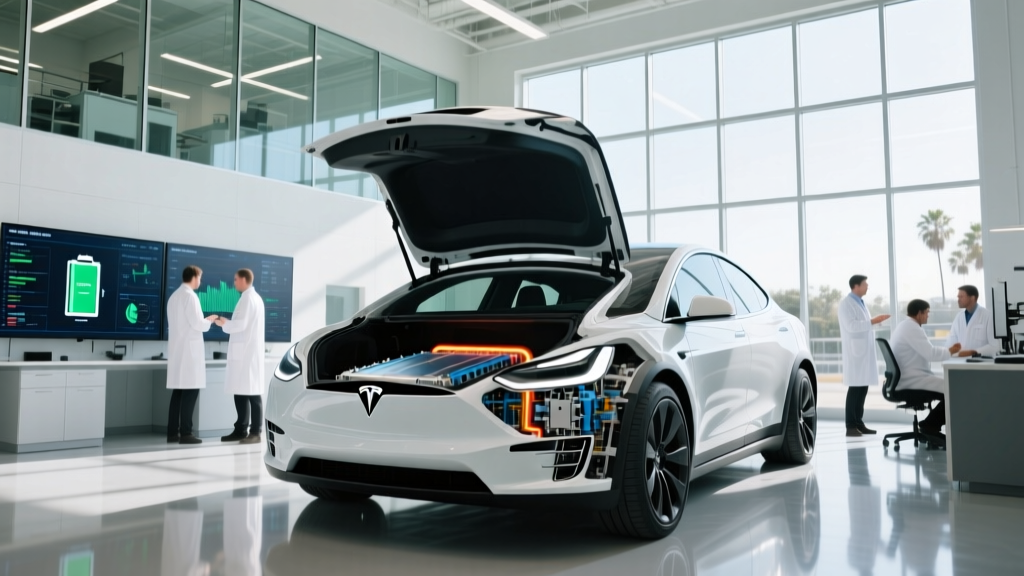
Tesla layers multiple security systems that work together. Here's what protects a 2026 Tesla when it's parked:
Sentry Mode
When enabled, Sentry Mode uses the vehicle's external cameras (front, sides, and rear) to monitor the surroundings. If it detects motion or a threat, it records video clips and saves them to a USB drive. A "standby" state watches for movement; an "alert" state triggers if someone leans on the car; an "alarm" state activates the horn, flashes lights, and sends a push notification to the owner's phone. Sentry Mode consumes roughly 1-2% of battery per day when active.
PIN to Drive
This optional feature requires the driver to enter a 4-digit PIN on the touchscreen before the vehicle can shift into Drive — even if an authenticated phone key is present. This is the strongest defense against relay attacks and unauthorized driving.
GPS Tracking and Remote Commands
The Tesla app shows real-time vehicle location, speed, and status. If your Tesla is stolen, you can share GPS coordinates directly with law enforcement and remotely lock the vehicle, disable driving, or trigger the horn and lights.
Walk-Away Door Lock
The vehicle automatically locks when your phone key moves beyond Bluetooth range. Combined with automatic window closure, this eliminates the most common human error that leads to theft.
2026 Tesla Model Y Long Range AWD: Full Review
The Model Y remains Tesla's volume leader and the best-selling EV globally. For 2026, the refreshed Model Y (internally called "Juniper") received updated styling, improved suspension tuning, a quieter cabin, and revised battery packaging. Here's what you need to know across every metric that matters.
| EPA Range | 320 miles |
| Battery Capacity | 78.1 kWh usable (NMC chemistry) |
| Max DC Fast Charge | 250 kW peak (V3 Supercharger) |
| 10-80% DC Charge Time | ~25 minutes |
| Level 2 Home Charging | 11.5 kW / 44 mi/hr (48A wall connector) |
| 0-60 mph | 4.8 seconds |
| Horsepower | 384 hp (dual motor) |
| Drivetrain | AWD (dual motor) |
| Efficiency | 122 MPGe combined / 27 kWh/100mi |
| Cargo Volume | 76 cu ft (rear seats folded), 30 cu ft behind 2nd row |
| Rear Legroom | 41.6 inches |
| Battery Warranty | 8 years / 120,000 miles (70% minimum retention) |
| Base MSRP | $47,990 (before incentives) |
Range and Efficiency: Real-World vs. EPA
Real-World Expectation: Expect approximately 270-290 miles on highway-heavy trips at 70-75 mph. In cold weather (below 30°F), plan for 220-260 miles due to battery heating demand and reduced regenerative braking efficiency. City driving with frequent regen can match or slightly exceed the EPA figure.
The Model Y Long Range's 78.1 kWh NMC (nickel manganese cobalt) battery pack delivers strong energy density, contributing to its class-leading 122 MPGe combined rating per fueleconomy.gov. NMC chemistry provides more range per kilogram than LFP (lithium iron phosphate), though it's more sensitive to repeated 100% charges — Tesla recommends daily charging to 80-90% for Long Range models and reserving 100% for road trips.
Efficiency is where Tesla's engineering advantage shows. At 27 kWh per 100 miles, the Model Y Long Range uses less energy per mile than most competitors in the midsize electric SUV segment. This translates directly to lower charging costs: at the US average residential electricity rate of ~$0.17/kWh, a full charge costs roughly $13.28 and yields ~270 real-world highway miles — approximately $0.049 per mile, compared to $0.12-0.15/mile for a comparable gas SUV.
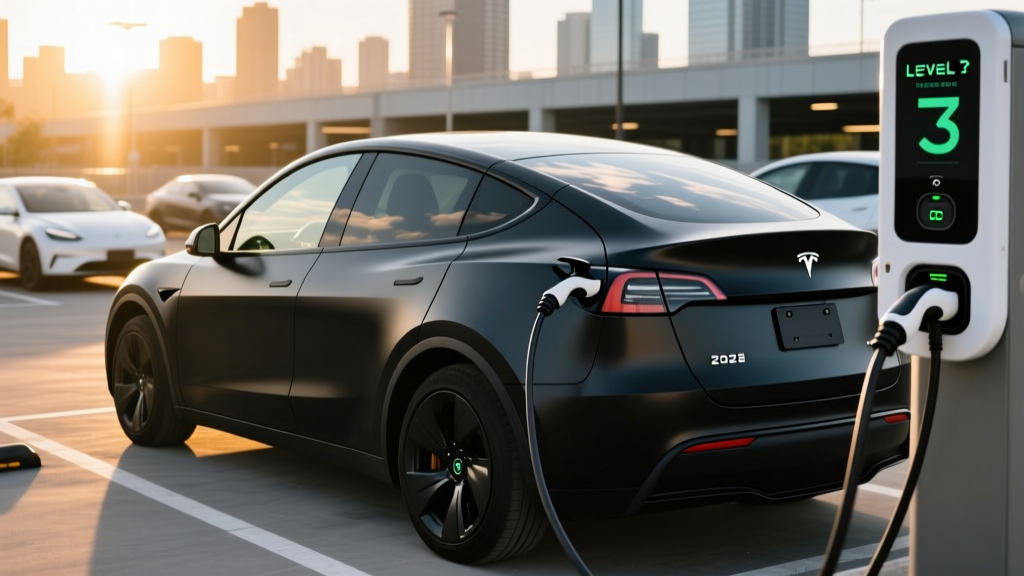
Charging Speed: DC Fast and Home Level 2
| Charging Level | Power | Miles Added per Hour | Notes |
|---|---|---|---|
| Level 1 (120V) | 1.4 kW | ~5 mi/hr | Emergency/trickle only |
| Level 2 (240V, 48A) | 11.5 kW | ~44 mi/hr | Full overnight charge in ~7 hrs |
| DC Fast (V3 Supercharger) | 250 kW peak | Up to 1,000 mi/hr (peak) | 10-80% in ~25 min; tapers above 80% |
| DC Fast (V4 Supercharger) | Up to 325 kW | Faster initial ramp | Model Y capped by onboard architecture |
A critical note on charging curves: the 250 kW peak rate is sustained only between roughly 10-40% state of charge. Above 60%, the rate tapers significantly — expect 80-100 kW in the 60-80% range and below 50 kW above 80%. This is why Tesla (and every EV maker) quotes 10-80% times rather than 0-100%. For road trips, charging from 10-80% at a V3 Supercharger takes approximately 25 minutes when the battery is preconditioned via the navigation system.
At home, the Tesla Wall Connector on a 60-amp circuit delivers 11.5 kW (48 amps continuous), adding roughly 44 miles of range per hour. A full charge from 10% to 90% takes about 6-7 hours — easily handled overnight. Home charging installation typically runs $800-$2,500 depending on panel capacity and conduit distance; a 200-amp electrical panel is usually sufficient without an upgrade.
Pricing, Tax Credits, and Ownership Cost
| Trim | MSRP | Est. Federal Credit | Effective Price |
|---|---|---|---|
| Long Range AWD | $47,990 | Up to $7,500* | ~$40,490* |
| Performance AWD | $52,490 | Up to $7,500* | ~$44,990* |
*Federal EV tax credit eligibility under IRS §30D depends on multiple requirements that change frequently:
- MSRP cap: SUVs must have an MSRP at or below $80,000 (Model Y qualifies on all trims)
- Buyer income cap: Modified AGI must not exceed $150,000 (single), $225,000 (head of household), or $300,000 (joint)
- Battery sourcing: A percentage of critical minerals and battery components must be sourced from the US or free-trade-agreement countries — these thresholds increase annually and may reduce the credit to $3,750 or eliminate it entirely depending on the specific build month
- Point-of-sale transfer: As of 2024+, buyers can transfer the credit to the dealer at purchase for an immediate price reduction rather than waiting for a tax refund
Always verify current credit eligibility on irs.gov or with a tax professional before purchasing, as battery sourcing requirements tighten each year.
Model Y vs. Key Competitors: Is It Worth Buying?
The Model Y Long Range competes directly with the Hyundai Ioniq 5, Ford Mustang Mach-E, Chevrolet Equinox EV, and the Volkswagen ID.4. Here's how it compares on the metrics buyers care about most:
- Range advantage: At 320 miles EPA, the Model Y Long Range beats the Ioniq 5 (305 mi), Mach-E Extended Range (312 mi), and ID.4 (291 mi). Only the Equinox EV 3RS (319 mi) comes close at a lower price point.
- Charging network: Tesla's Supercharger network remains the most reliable and widespread DC fast-charging network in North America, with over 25,000 stalls. Competitors now have NACS access to Superchargers, but Tesla vehicles still benefit from seamless plug-and-charge integration without app or payment-card fumbling.
- Efficiency: Tesla's 27 kWh/100mi is best-in-class. The Mach-E averages ~31 kWh/100mi and the ID.4 averages ~30 kWh/100mi, meaning higher charging costs over time.
- Interior quality: This is where the Model Y loses points. The minimalist interior lacks physical controls, and panel gap consistency still lags Hyundai and Ford. The 2026 Juniper refresh improved materials, but competitors offer more traditional luxury.
- ADAS: Tesla's Autopilot is standard; Full Self-Driving (Supervised) is an $8,000 add-on. Both are SAE Level 2 systems requiring driver engagement. Ford's BlueCruise and GM's Super Cruise offer hands-free driving on mapped highways — a meaningful advantage for frequent road-trippers, though still Level 2.
Choose a competitor if: You want a more traditional interior with physical controls (Hyundai Ioniq 5), hands-free highway driving (Ford Mach-E with BlueCruise), or a lower entry price (Chevrolet Equinox EV).
Pros, Cons, and Who the Model Y Suits Best
- Class-leading 320-mile EPA range
- Best-in-segment efficiency (27 kWh/100mi)
- Supercharger network with seamless plug-and-charge
- Excellent theft protection (GPS, Sentry Mode, PIN to Drive)
- Spacious cargo area (76 cu ft with seats folded)
- Strong resale value relative to EV competitors
- Continuous OTA updates add features post-purchase
- Minimalist interior lacks physical buttons and stalks
- FSD ($8,000) is Level 2 only — not autonomous driving
- No Apple CarPlay or Android Auto
- Ride quality firm on rough pavement (improved but not class-leading in 2026)
- Insurance premiums 15-25% higher than gas equivalents
- Panel gap quality inconsistent between vehicles
Best for: Daily commuters with home charging access, families needing cargo versatility, and road-trippers who value the Supercharger network. The Model Y is less ideal for buyers who prioritize a luxury-feeling interior, prefer physical controls, or want a true hands-free highway driving system without paying Tesla's FSD premium.
Frequently Asked Questions
Are Teslas easy to steal compared to other cars?
No. Teslas have among the lowest theft rates in the industry according to HLDI data. The combination of always-on GPS tracking, encrypted phone-key authentication, remote immobilization capability, and Sentry Mode camera recording makes them significantly harder to steal than most conventional vehicles. Enabling PIN to Drive adds a critical extra layer.
Can someone steal a Tesla using a relay attack?
Relay attacks targeting the Bluetooth phone key signal have been documented, but Tesla's recent software updates added signal-strength validation that makes this harder. Enabling PIN to Drive completely neutralizes this attack vector — even if someone clones your key signal, they cannot drive the car without the PIN.
What happens if my Tesla is stolen?
The Tesla app provides real-time GPS location that you can share with law enforcement. You can remotely lock the vehicle, disable driving, and activate the horn and lights. Tesla can also work with police to remotely immobilize the vehicle. Sentry Mode footage may capture the thief's identity.
Does Sentry Mode drain the battery significantly?
Sentry Mode consumes approximately 1-2% of battery per 24 hours when active. Over a week of parking, that's roughly 7-14% — noticeable but manageable if you charge at home nightly. You can schedule Sentry Mode to activate only at specific locations or times.
Does the 2026 Model Y qualify for the federal EV tax credit?
The Model Long Range AWD ($47,990 MSRP) falls well under the $80,000 SUV MSRP cap. However, eligibility also depends on your income (capped at $150K-$300K depending on filing status) and the specific battery sourcing compliance of your build month. Check current eligibility at irs.gov before purchasing, as critical mineral and component sourcing thresholds tighten annually.
What is the real-world highway range of the Model Y Long Range?
On highway-heavy trips at 70-75 mph, expect approximately 270-290 miles from a full charge. In cold weather below 30°F, plan for 220-260 miles. City driving with regenerative braking can match or slightly exceed the 320-mile EPA estimate.