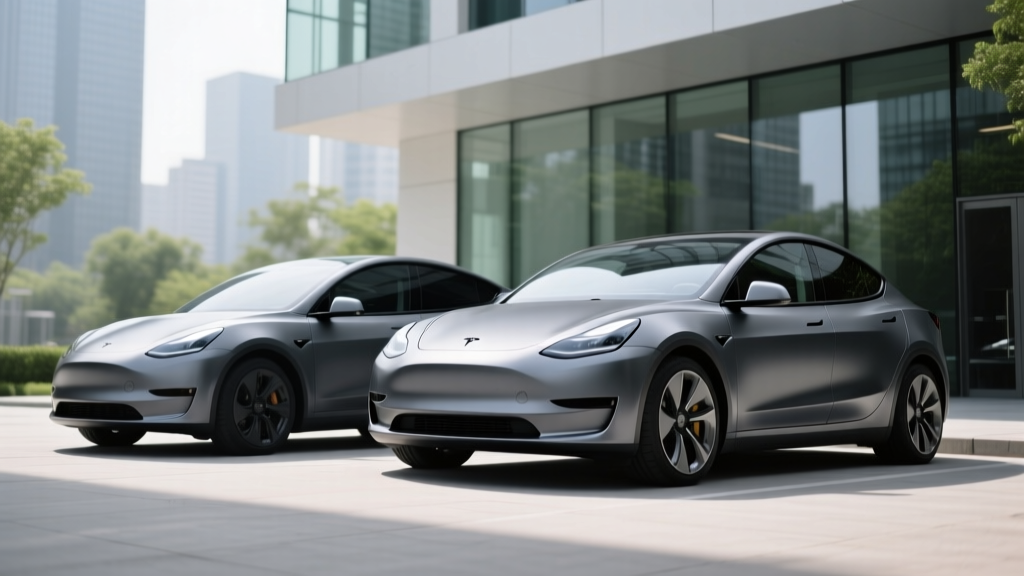
Tesla rarely offers traditional dealership haggling, but the automaker has increasingly leaned on Tesla inventory discounts to move specific configurations sitting on lots or in transit. For buyers in 2026, understanding how these price reductions work — and which models carry the deepest cuts — is the difference between paying full MSRP and saving thousands on an already price-competitive EV.
This guide walks you through the mechanics of Tesla's inventory pricing, the exact specs you're getting on discounted Model Y and Model 3 vehicles, and how to stack these deals with the federal §30D tax credit for maximum savings.
How Tesla Inventory Discounts Actually Work
Unlike legacy automakers that negotiate through dealers, Tesla sells direct. When a vehicle is built but not yet delivered — listed as "Inventory" on Tesla's website — the company may reduce its price to accelerate the sale. These discounts typically apply to:
- Demo and loaner vehicles with a few hundred to a few thousand miles
- Cancelled orders where a buyer backed out after production
- Configurations Tesla overproduced relative to regional demand
- End-of-quarter or end-of-year pushes to hit delivery targets
Discounts on new inventory vehicles in 2026 have ranged from $1,000 to $5,000+ depending on the model, trim, color, and how long the car has sat. Demo vehicles with 1,000–5,000 miles can see even steeper reductions — sometimes $6,000–$8,000 off MSRP. The catch? Inventory vehicles are pre-configured. You get the color, wheels, and interior Tesla built, not what you'd spec yourself.
2026 Model Y: The Discounted Family Hauler
The refreshed Model Y (often referred to as "Juniper") is Tesla's volume leader and the most common vehicle you'll find with inventory discounts. Here's what the 2026 lineup looks like at a glance:
| Spec | Long Range RWD | Long Range AWD | Performance |
|---|---|---|---|
| EPA Range | 320 mi | 308 mi | 280 mi |
| Battery (usable) | ~78 kWh, NMC | ~78 kWh, NMC | ~78 kWh, NMC |
| 0–60 mph | 5.8 sec | 4.6 sec | 3.5 sec |
| Horsepower | 346 hp | 384 hp | 456 hp |
| Drivetrain | RWD (single motor) | AWD (dual motor) | AWD (dual motor) |
| Max DC Fast Charge | 250 kW | 250 kW | 250 kW |
| 10–80% DC Time | ~25 min | ~25 min | ~25 min |
| Level 2 Home Rate | 11.5 kW (~44 mi/hr) | 11.5 kW (~44 mi/hr) | 11.5 kW (~44 mi/hr) |
| Efficiency | 123 MPGe / 27 kWh/100mi | 117 MPGe / 29 kWh/100mi | 111 MPGe / 30 kWh/100mi |
| Cargo (rear seats up) | 30.2 cu ft (76.2 cu ft folded) | ||
| Base MSRP | $44,990 | $47,990 | $52,490 |
2026 Model 3: Where the Deepest Discounts Hide
The Model 3 Highland refresh continues into 2026 with strong efficiency numbers and an entry price that already undercuts most competitors. Because Tesla produced high volumes of certain Model 3 configurations in late 2025, inventory discounts on this model have been more frequent and deeper than on the Model Y.
| Spec | RWD (Standard) | Long Range RWD | Long Range AWD |
|---|---|---|---|
| EPA Range | 272 mi | 363 mi | 346 mi |
| Battery (usable) | ~57.5 kWh, LFP | ~78 kWh, NMC | ~78 kWh, NMC |
| 0–60 mph | 5.8 sec | 5.2 sec | 4.2 sec |
| Horsepower | 271 hp | 346 hp | 384 hp |
| Drivetrain | RWD | RWD | AWD |
| Max DC Fast Charge | 170 kW | 250 kW | 250 kW |
| 10–80% DC Time | ~30 min | ~25 min | ~25 min |
| Level 2 Home Rate | 11.5 kW (~36 mi/hr) | 11.5 kW (~44 mi/hr) | 11.5 kW (~44 mi/hr) |
| Efficiency | 132 MPGe / 25 kWh/100mi | 132 MPGe / 25 kWh/100mi | 125 MPGe / 27 kWh/100mi |
| Cargo (trunk + frunk) | 23.0 cu ft total | ||
| Base MSRP | $38,990 | $42,990 | $47,490 |
The RWD Model 3 uses LFP (lithium iron phosphate) chemistry, which trades energy density for longevity and safety. LFP cells tolerate regular 100% charging without accelerated degradation, meaning daily commuters can charge to full without guilt. The trade-off: lower range (272 mi EPA) and slower DC charging (170 kW peak vs. 250 kW on NMC trims).
Charging Speed Breakdown: What Discounted Teslas Deliver
| Charging Method | Power (kW) | Miles Added per Hour | Best For |
|---|---|---|---|
| Level 1 (120V outlet) | ~1.4 kW | ~4–5 mi/hr | Overnight top-ups, emergencies |
| Level 2 (240V, Wall Connector) | 11.5 kW | ~36–44 mi/hr | Daily home charging |
| DC Fast (V3 Supercharger) | Up to 250 kW | ~1,000+ mi/hr (peak) | Road trips, rapid fills |
| DC Fast (V4 Supercharger) | Up to 325 kW* | ~1,200+ mi/hr (peak) | Newer corridor chargers |
*V4 Supercharger 325 kW peak is available at select 2026 installations; vehicle-side acceptance on Model Y/3 peaks at 250 kW.
A critical ownership insight: Tesla's charging curve tapers significantly above 80% State of Charge. You'll reach 80% in roughly 25 minutes on a V3 Supercharger, but filling from 80% to 100% can take nearly as long. For road trips, plan to hop between chargers at 80% rather than waiting for a full battery.
Tax Credit Stacking: Price After §30D Credit
The federal EV tax credit under IRS §30D remains a major purchase factor, but eligibility is not universal. Here's what you need to know before assuming a discounted Tesla nets you $7,500 off:
- MSRP cap: Sedans (Model 3) must be under $55,000; SUVs/trucks (Model Y) under $80,000 — all current 2026 Tesla trims qualify
- Buyer income cap: AGI must not exceed $150,000 (single), $225,000 (head of household), or $300,000 (joint) — per IRS §30D rules
- Battery sourcing: Critical minerals and battery components must meet phased percentage thresholds from US/free-trade partners — Tesla has largely localized supply chains for 2026
- Point-of-sale transfer: Eligible buyers can transfer the credit to the dealer (Tesla) at purchase, reducing the out-of-pocket price immediately
| Model / Trim | Base MSRP | Typical Inventory Discount | After §30D Credit* | Effective Price |
|---|---|---|---|---|
| Model 3 RWD | $38,990 | $1,500–$3,000 | −$7,500 | ~$28,490–$29,990 |
| Model 3 LR RWD | $42,990 | $2,000–$4,000 | −$7,500 | ~$31,490–$33,490 |
| Model Y LR RWD | $44,990 | $1,000–$3,000 | −$7,500 | ~$34,490–$36,490 |
| Model Y LR AWD | $47,990 | $1,500–$4,000 | −$7,500 | ~$36,490–$38,990 |
| Model Y Performance | $52,490 | $2,000–$5,000 | −$7,500 | ~$39,990–$42,990 |
*Assumes full $7,500 credit eligibility. Consult a tax professional to confirm your situation. Credit amounts and sourcing rules are subject to change — verify current-year rules at irs.gov.
Is a Discounted Tesla Worth It vs. Competitors?
At effective prices of $28K–$43K after credits and discounts, Tesla's value proposition is strong — but not unchallenged. Here's how the key rivals compare:
- Hyundai Ioniq 5 (2026): Starting ~$42,500. Offers 800V architecture for faster peak charging (~350 kW capable), a more conventional interior layout, and strong IIHS Top Safety Pick+ rating. Less charging infrastructure than Tesla's Supercharger network, though NACS adoption is expanding access.
- Ford Mustang Mach-E (2026): Starting ~$43,000. Competitive range (~320 mi EPA on Extended Range), but real-world charging speeds lag Tesla's V3 network. Ford's dealer network provides in-person service that Tesla's mobile-ranger model doesn't always match.
- Chevrolet Equinox EV (2026): Starting ~$33,000 before credits. Lower price floor, but range (~319 mi) comes with slower DC charging (~150 kW peak). Interior materials and infotainment responsiveness trail Tesla.
Tesla's enduring advantage remains the Supercharger network — over 25,000 stalls in North America with industry-leading uptime. Even as competitors gain NACS access, Tesla vehicles still enjoy the most seamless plug-and-charge experience. Per fueleconomy.gov, Tesla's efficiency ratings consistently lead their segments.
Pros, Cons, and Who Should Buy
- Industry-leading Supercharger network reliability
- Class-leading efficiency (kWh/100mi) across Model 3 and Model Y
- Over-the-air updates continuously add features post-purchase
- Inventory discounts + §30D credit can push effective prices below $30K
- Minimalist interior maximizes cabin and cargo space
- Strong Autopilot standard; FSD (Supervised) available for SAE Level 2 assist
- No physical buttons — all climate/media controls via touchscreen
- Build quality variance (panel gaps, paint) still reported on some units
- Service center wait times can stretch weeks in some metro areas
- FSD (Supervised) requires constant driver attention — it is NOT self-driving
- Insurance premiums tend to run 15–25% higher than equivalent ICE vehicles
- LFP battery on base Model 3 RWD means slower DC charging and less range
- Choose a discounted Model 3 RWD if: You're a commuter with home charging, drive under 250 miles daily, and want the lowest possible effective price (sub-$30K after credit).
- Choose a discounted Model 3 Long Range if: You take regular road trips and need 340+ miles of range with faster 250 kW charging.
- Choose a discounted Model Y LR AWD if: You need family cargo space (30+ cu ft), all-weather traction, and can't wait for custom orders.
- Look at competitors if: You prioritize dealership-style in-person service, want physical dashboard controls, or need 800V ultra-fast charging (Ioniq 5/6).
Tesla Inventory Discount FAQ
What is the real-world range of a discounted 2026 Model Y or Model 3?
The EPA rates the Model Y Long Range RWD at 320 miles and the Model 3 Long Range RWD at 363 miles. In real-world highway driving at 70–75 mph, expect roughly 85–90% of EPA (270–290 mi for Model Y LR, 310–330 mi for Model 3 LR). In cold weather below freezing, subtract another 15–20%.
How fast do discounted Teslas charge at home and on the road?
At home on a Level 2 Wall Connector (240V, 48A), both Model Y and Model 3 Long Range/Performance add roughly 44 miles of range per hour at 11.5 kW. On a V3 Supercharger, peak rates hit 250 kW, delivering a 10–80% charge in approximately 25 minutes. The base Model 3 RWD with LFP peaks at 170 kW DC, taking about 30 minutes for 10–80%.
Does a discounted Tesla still qualify for the $7,500 federal tax credit?
Generally yes, but eligibility depends on your income (AGI caps apply), the vehicle's MSRP (all 2026 Model 3 and Model Y trims fall under the $55K/$80K caps), and battery-component sourcing. Tesla's 2026 US-built vehicles have largely met critical-mineral and battery-component thresholds. Always verify current-year rules at irs.gov and consult a tax professional before relying on the credit.
How do I find current Tesla inventory discounts?
Visit Tesla.com and navigate to the "Inventory" section for your region. Filter by model, trim, color, and price. Discounts update frequently — sometimes daily — as vehicles are sold or reassigned. Third-party aggregators also track Tesla inventory price changes, but always confirm pricing directly on Tesla's site before ordering.
Is a Tesla inventory vehicle different from a custom order?
Mechanically, no. Inventory vehicles are identical to custom-built ones. The differences are cosmetic and logistical: you accept the pre-selected color, wheels, and interior, and the car may already be at a local service center or in transit. Demo or loaner vehicles in inventory will show mileage (typically 500–5,000 miles) and may carry slightly deeper discounts.
What warranty covers the battery on a discounted Tesla?
Tesla's battery and drive unit warranty covers 8 years or 100,000 miles (whichever comes first) on the Model 3 RWD, and 8 years or 120,000 miles on Model 3 Long Range, Model Y Long Range, and Model Y Performance. The warranty guarantees at least 70% battery capacity retention over that period. This warranty applies equally to inventory-discounted and custom-ordered vehicles. Per Tesla's warranty documentation, normal degradation is expected and covered only if it exceeds the 30% threshold.