The Tesla Interior Philosophy: Minimalism With a Purpose
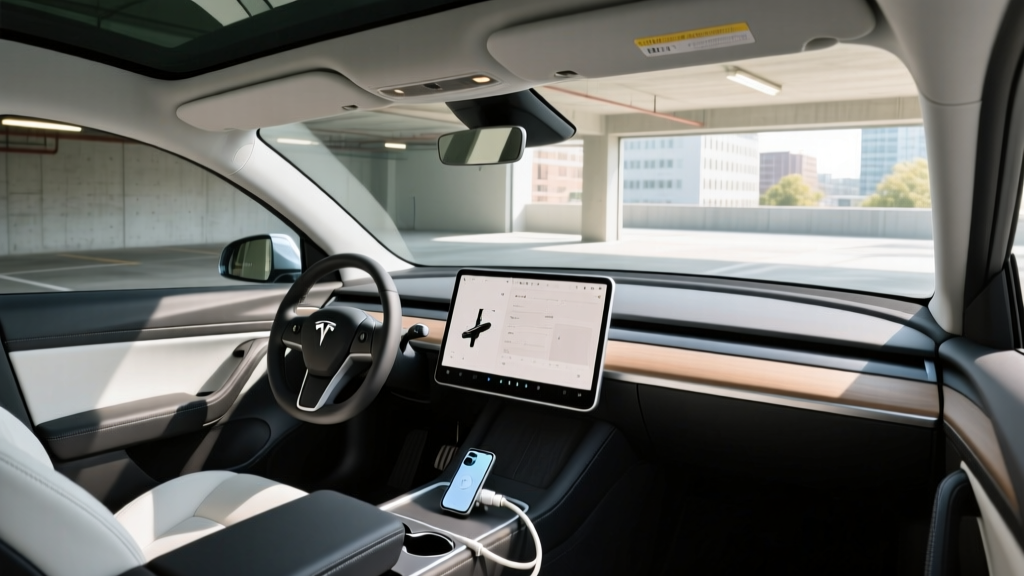
Walk up to any current Tesla and the cabin tells the same story: one screen, zero physical buttons, and a near-total absence of traditional switchgear. The Tesla interior across the Model 3 and Model Y has evolved significantly since the brand's early days, but the core philosophy remains — strip away everything non-essential and let software handle the rest. For 2026, both the refreshed Model 3 (dubbed "Highland" during its 2024 redesign) and the updated Model Y ("Juniper" refresh arriving for the 2025 model year) carry forward this ethos with meaningful material and technology upgrades that address years of criticism about build quality and cabin comfort.
But a cabin is more than aesthetics. Buyers researching the Tesla interior are usually weighing whether the minimalist approach works for their daily life — from family hauling and road-trip entertainment to daily commuting and cold-weather usability. This review breaks down every dimension, every surface, and every tech feature inside Tesla's two highest-volume vehicles, then pairs that with the hard numbers on range, charging, pricing, and tax credit eligibility you need to make an informed purchase.
Model 3 Interior: Compact Sedan, Surprising Refinement
The current-generation Model 3 interior represents a substantial leap over the pre-2024 versions. Tesla replaced the hard plastics and uneven panel gaps with softer-touch materials, ventilated front seats, ambient lighting integrated into the dashboard and door panels, and a rear-seat 8-inch touchscreen that lets passengers control climate, seat heating, and media independently.
The centerpiece remains the 15.4-inch center touchscreen (now slightly tilted toward the driver in the refreshed model), which handles everything from navigation and climate to glove-box release and mirror adjustment. There is no instrument cluster behind the steering wheel — speed, range, and navigation directions appear in the upper-left corner of the main display. This takes roughly a week of adaptation for most drivers transitioning from a traditional layout.
Notable interior specs for the 2026 Model 3:
- Front headroom: 40.3 inches
- Front legroom: 42.4 inches
- Rear headroom: 37.8 inches
- Rear legroom: 34.9 inches
- Cargo volume (trunk + frunk): 23.1 cu ft (21.0 trunk + 2.1 frunk)
- Seating capacity: 5 passengers
- Upholstery: Vegan leather (synthetic) standard across all trims
The rear-seat screen is a genuine differentiator versus competitors like the Hyundai Ioniq 6 and BMW i4, neither of which offers rear-passenger display control. However, the Model 3's rear legroom at 34.9 inches trails the Ioniq 6's 37.0 inches — taller passengers on longer trips will notice the difference.
Model Y Interior: Crossover Practicality for Families
The Model Y interior shares its dashboard architecture with the Model 3 but scales up where it counts: cargo capacity, rear-seat space, and overall versatility. The Juniper-refreshed Model Y (introduced for the 2025 model year and carried into 2026) added a more sculpted center console, revised ambient lighting, improved acoustic glass for a quieter cabin, and the same rear-seat 8-inch touchscreen found in the Model 3.
The Model Y's hatchback design is its defining interior advantage. With the rear seats upright, you get 30.2 cu ft of cargo space behind the second row. Fold those seats flat and the volume expands to 72.1 cu ft — enough to swallow a full set of furniture or serve as a flat sleeping platform for camping. The front trunk (frunk) adds another 4.1 cu ft of sealed, drainable storage ideal for charging cables or wet gear.
Model Y interior dimensions:
- Front headroom: 41.0 inches
- Front legroom: 41.8 inches
- Rear headroom: 39.4 inches
- Rear legroom: 37.0 inches (a meaningful 2.1-inch advantage over the Model 3)
- Optional third row: Available on select trims, best suited for children under 5'4"
The optional third row is a frequent question among family shoppers. In practice, it's viable only for short trips with small children. Adults in the third row face severely compromised headroom and essentially no cargo space behind them. Most buyers are better served by the five-seat configuration and the vastly superior cargo area it preserves.
Range, Battery, and Real-World Efficiency
The Tesla interior experience is inseparable from what powers it. Both the Model 3 and Model Y offer multiple powertrain configurations, each with distinct range and efficiency profiles. Here's what the EPA says — and what you should actually expect.
| Specification | Model 3 RWD | Model 3 Long Range AWD | Model Y Long Range AWD | Model Y Performance |
|---|---|---|---|---|
| EPA Range | 272 mi | 341 mi | 320 mi | 298 mi |
| Battery (usable) | ~57.5 kWh (LFP) | ~75 kWh (NMC) | ~75 kWh (NMC) | ~75 kWh (NMC) |
| MPGe (combined) | 132 MPGe | 125 MPGe | 117 MPGe | 111 MPGe |
| kWh/100 mi | 25 | 27 | 29 | 30 |
| 0-60 mph | 5.8 sec | 4.2 sec | 4.8 sec | 3.5 sec |
| Horsepower | 271 hp | 384 hp | 384 hp | 456 hp |
| Drivetrain | RWD | Dual-Motor AWD | Dual-Motor AWD | Dual-Motor AWD |
Real-World Range Reality: EPA estimates assume a mix of city and highway driving at moderate temperatures. In sustained 75-mph highway driving at 70°F, expect the Model 3 Long Range to deliver approximately 285–300 miles — about 12–16% below the 341-mile sticker. In freezing conditions (below 32°F), range drops further to roughly 240–265 miles due to battery heating demands and cabin climate load. The LFP-equipped Model 3 RWD is more resilient to calendar degradation over time but starts with fewer miles to lose.
The chemistry split matters for long-term ownership. Tesla's Standard Range / RWD trims use lithium iron phosphate (LFP) cells, which tolerate regular 100% charging and exhibit slower capacity degradation over hundreds of cycles. Long Range and Performance trims use nickel manganese cobalt (NMC) chemistry, which offers higher energy density (more range per kilogram) but benefits from daily charge limits of 80–90% to maximize longevity. According to fueleconomy.gov, the Model 3 Long Range AWD achieves 125 MPGe combined — among the best in its class.
Charging Speed: DC Fast Charging and Home Level 2
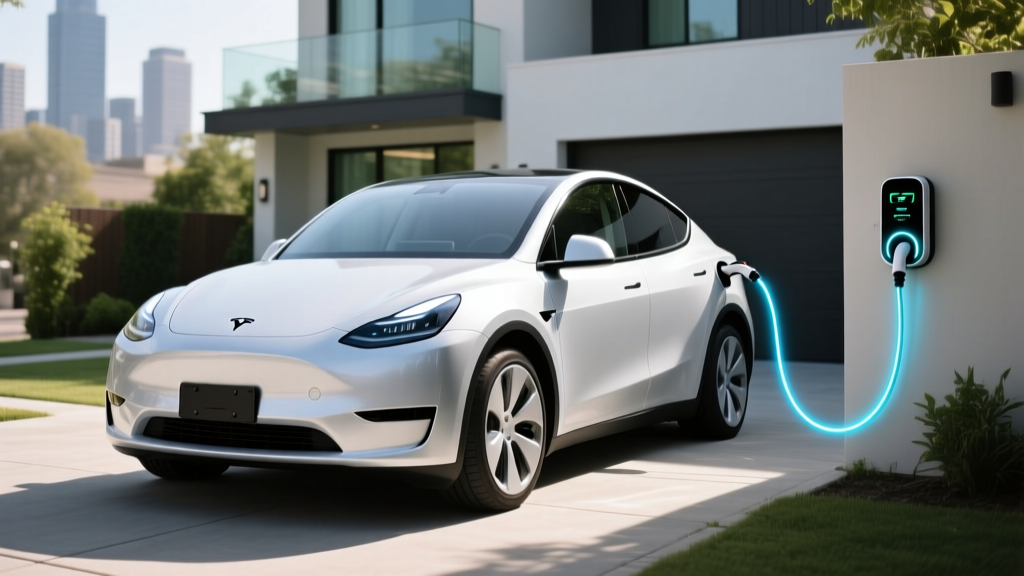
A Tesla interior may be minimalist, but the charging ecosystem behind it is anything but. Tesla's Supercharger network remains the most reliable public DC fast-charging infrastructure in North America, and both the Model 3 and Model Y leverage it with competitive charge rates.
| Charging Level | Power / Rate | Model 3 LR (10-80%) | Model Y LR (10-80%) | Miles Added per Hour |
|---|---|---|---|---|
| Level 1 (120V household) | ~1.4 kW | ~40 hours | ~44 hours | 3–5 mi/hr |
| Level 2 (240V home wall connector) | 11.5 kW | ~7.5 hours | ~8 hours | ~44 mi/hr |
| DC Fast Charge (V3 Supercharger) | Peak 250 kW | ~25 min | ~27 min | Up to ~1,000 mi/hr (at peak) |
A critical nuance: the 250 kW peak is just that — a peak. The actual charge curve tapers significantly above 60% state of charge (SoC). In real-world Supercharger sessions, you'll see sustained rates of 150–170 kW from 10–50%, then a progressive ramp-down to roughly 40–60 kW by the time you reach 80%. This is standard lithium-ion behavior, not a Tesla-specific limitation, but it means the last 20% of any charge session takes disproportionately longer.
For home charging, Tesla's Wall Connector at 48 amps (11.5 kW) on a 60-amp circuit adds approximately 44 miles of range per hour — enough to fully replenish either vehicle overnight. Installation costs typically range from $800 to $2,500 depending on your electrical panel's capacity and the distance from panel to charger location. Always get a quote from a licensed electrician; some older homes require a panel upgrade (200-amp service minimum recommended), which can add $1,500–$3,000.
Pricing, Trims, and Federal Tax Credit Eligibility
Tesla's pricing shifts frequently — sometimes weekly — in response to demand, incentive changes, and production costs. Below are the approximate base MSRPs for the 2026 model year as of early 2026, before destination fees and options.
| Trim | Base MSRP | Est. After §30D Credit | Federal Credit Eligible? |
|---|---|---|---|
| Model 3 RWD | $38,990 | ~$31,490 | Yes (up to $7,500)* |
| Model 3 Long Range AWD | $45,990 | ~$38,490 | Yes (up to $7,500)* |
| Model 3 Performance | $52,990 | ~$45,490 | Yes (up to $7,500)* |
| Model Y Long Range AWD | $44,990 | ~$37,490 | Yes (up to $7,500)* |
| Model Y Performance | $49,990 | ~$42,490 | Yes (up to $7,500)* |
*Critical tax credit caveats: The IRS §30D federal EV tax credit is not automatic for every buyer. To qualify for the full $7,500, you must meet all of the following requirements as outlined on irs.gov:
- Income caps: Modified adjusted gross income (MAGI) must not exceed $150,000 (single filers), $225,000 (head of household), or $300,000 (joint filers).
- MSRP caps: The vehicle's MSRP must not exceed $55,000 for sedans (Model 3) or $80,000 for SUVs/trucks (Model Y). All current trims clear this bar.
- Battery sourcing: A percentage of critical minerals and battery components must be sourced from the U.S. or free-trade-agreement partners. These thresholds increase annually. Tesla has maintained eligibility for most configurations, but verify current sourcing compliance at the point of sale — rules can shift mid-year.
- Point-of-sale transfer: As of 2024, buyers can transfer the credit to the dealer at purchase, reducing the sale price directly rather than waiting for a tax refund. This effectively functions as an instant discount if you qualify.
Always consult a tax professional before assuming eligibility. State and local incentives (California's CVRP, Colorado's tax credit, etc.) stack on top but vary by jurisdiction — check your state's energy office for current programs.
Driver Assistance, Tech, and What the Cabin Gets Right (and Wrong)
SAE Automation Level: Tesla's Autopilot and Full Self-Driving (Supervised) are Level 2 driver-assistance systems. The driver must remain fully engaged, hands on or near the wheel, and eyes on the road at all times. These systems do NOT make the vehicle self-driving. Only Level 4 services like Waymo operate without driver supervision — and those are geofenced robotaxis, not consumer vehicles.
Every Tesla ships with Basic Autopilot (adaptive cruise control + lane centering). The optional Full Self-Driving (Supervised) package, currently priced at $8,000 as a one-time purchase or $99/month, adds automatic lane changes, traffic-light and stop-sign recognition, and navigation-guided on-ramp-to-off-ramp highway driving. FSD has improved substantially in its "Supervised" rebrand, but it still requires active monitoring and occasional intervention — particularly in construction zones, unmapped areas, and heavy rain.
Standout tech features inside the Tesla cabin:
- Over-the-air (OTA) updates: Tesla pushes software updates that add features, improve efficiency, and refine the UI — no dealer visit required. This keeps the infotainment system current years after purchase.
- 15.4-inch touchscreen with integrated navigation, streaming, and gaming: Netflix, YouTube, and a growing library of games are available while parked. The built-in navigation includes real-time Supercharger availability and automatic battery preconditioning for faster charging on arrival.
- Dashcam and Sentry Mode: Eight external cameras double as a dashcam system and a parking surveillance mode that records incidents around the vehicle.
- Phone-as-key: Bluetooth proximity unlocks and starts the car without removing your phone from your pocket.
- Heat pump (standard): Both Model 3 and Model Y use a heat pump for cabin heating, significantly reducing range loss in cold weather compared to resistive heaters used in older EVs.
Notable Interior Drawbacks:
- No physical buttons for anything: Adjusting mirrors, opening the glove box, and changing climate settings all require navigating the touchscreen. This is distracting while driving and frustrating for passengers unfamiliar with the system.
- Turn signal stalks removed (Model 3 refresh): The refreshed Model 3 moved turn signals to steering-wheel buttons — a change that drew widespread criticism and requires adaptation.
- Limited rear-seat amenities: No rear USB-C ports in older builds (newer versions include them), no rear climate zone control beyond the touchscreen, and no panoramic sunroof shade — the glass roof can create noticeable cabin heat on hot days.
- No Apple CarPlay or Android Auto: Tesla's proprietary system is the only option. If you rely on CarPlay for navigation or media, this is a dealbreaker.
Pros, Cons, and Who Should Buy
Pros
- Best-in-class Supercharger network access with automatic preconditioning
- Class-leading efficiency (kWh/100 mi) translates to lower charging costs
- Continuous OTA updates keep software and features current
- Strong resale value relative to most EV competitors
- Excellent cargo versatility (Model Y hatchback + frunk)
- LFP battery option (RWD trims) offers long cycle life with 100% charging tolerance
Cons
- Zero physical controls — everything funnels through the touchscreen
- No Apple CarPlay / Android Auto support
- Rear-seat comfort trails competitors (especially Model 3 rear legroom)
- FSD (Supervised) remains a Level 2 system despite the name and $8,000 price tag
- Glass roof lacks a shade; cabin heat buildup in summer is a real complaint
- Insurance premiums are 20–40% higher than comparable non-Tesla vehicles in most states
Choose the Model 3 if: You prioritize efficiency and lower cost, commute solo or with one passenger, want the longest range per dollar (Model 3 LR at 341 mi EPA), and don't regularly carry bulky cargo.
Choose the Model Y if: You need family-friendly rear-seat space, hatchback cargo versatility, optional (child-sized) third-row seating, or simply prefer a higher seating position. The 37.0 inches of rear legroom and 72.1 cu ft of max cargo make it the pragmatic family pick.
Warranty and Long-Term Ownership
Tesla's warranty coverage is competitive but not class-leading:
- Basic vehicle limited warranty: 4 years / 50,000 miles
- Battery and drive unit warranty: 8 years / 100,000 miles (RWD trims) or 8 years / 120,000 miles (Long Range and Performance trims), with a minimum 70% capacity retention guarantee during the warranty period
- What this means in practice: If your battery degrades below 70% of its original capacity within the warranty window, Tesla will repair or replace it at no cost. Real-world degradation data from Tesla's fleet suggests most batteries retain 85–90% capacity after 100,000 miles, with LFP packs showing slightly better long-term retention.
According to NHTSA, both the Model 3 and Model Y have earned 5-star overall safety ratings, which factors into insurance and long-term ownership cost calculations.
Frequently Asked Questions
What is the real-world range of a Tesla Model 3 or Model Y?
The EPA rates the Model 3 Long Range at 341 miles and the Model Y Long Range at 320 miles. In real-world highway driving at 70–75 mph in moderate temperatures, expect roughly 285–300 miles from the Model 3 LR and 270–285 from the Model Y LR. In sub-freezing weather, subtract another 15–25%, bringing usable range down to approximately 240–265 miles for the Model 3 and 225–250 for the Model Y. Preconditioning the battery while plugged in mitigates some cold-weather loss.
How fast does a Tesla charge at home and on the road?
On a Tesla V3 Supercharger (250 kW peak), the Model 3 Long Range charges from 10–80% in approximately 25 minutes, and the Model Y Long Range in about 27 minutes. At home on a Level 2 Wall Connector (11.5 kW), both vehicles fully charge overnight in 7–8 hours, adding roughly 44 miles of range per hour. Level 1 charging on a standard 120V outlet is a trickle — 3–5 miles per hour — useful only for overnight top-ups or emergencies.
Does the Tesla Model 3 or Model Y qualify for the $7,500 federal tax credit?
As of 2026, most Model 3 and Model Y configurations remain eligible for up to $7,500 under IRS §30D, provided the buyer meets income thresholds ($150K single / $300K joint MAGI), the vehicle MSRP is under the cap ($55K sedans / $80K SUVs), and battery-sourcing requirements are satisfied at the time of purchase. The credit can be transferred at point of sale for an instant price reduction. Verify current eligibility on irs.gov and with your tax advisor, as sourcing rules tighten annually.
Is the Tesla interior better than competitors like the Hyundai Ioniq 5 or BMW i4?
It depends on your priorities. The Tesla interior wins on software integration, OTA update capability, Supercharger network access, and cargo versatility (Model Y). It loses to the Ioniq 5 on rear-seat comfort, physical button availability, 800V charging architecture, and Apple CarPlay support. The BMW i4 offers a more traditional luxury cabin with superior materials and iDrive infotainment but at a significantly higher price point and lower efficiency. If you value software-forward minimalism and charging infrastructure, Tesla leads. If you prefer physical controls and a conventional luxury feel, look at BMW or Hyundai.
Is Full Self-Driving (Supervised) worth the $8,000 cost?
For most buyers, no. FSD (Supervised) is a Level 2 system that still requires constant driver attention. Its highway lane-change and navigation features are convenient but not transformative enough to justify $8,000 over the included Basic Autopilot, which already handles adaptive cruise and lane centering competently. Tesla also offers FSD as a $99/month subscription — a lower-risk way to test the feature before committing. Unless you drive long highway stretches daily and find the assisted lane changes genuinely reduce fatigue, the standard Autopilot is the pragmatic choice.
What's the biggest surprise about living with a Tesla interior daily?
Most owners report that the absence of physical controls becomes second nature within two to three weeks — but the learning curve is genuinely frustrating at first, especially for adjusting mirrors or changing wiper settings while driving. The glass roof creates an airy feel but makes the cabin noticeably warmer in summer; many owners install aftermarket sunshades ($30–$60). The phone-as-key system works seamlessly 95% of the time; the other 5% you'll find yourself waiting for Bluetooth to connect. And the lack of CarPlay is either a non-issue (if you adapt to Tesla's native navigation and Spotify integration) or a dealbreaker (if you're deeply invested in Apple Maps or specific podcast apps).