The Essential Tesla Info Buyers Actually Need
If you're researching a Tesla purchase in 2026, you've likely encountered a flood of conflicting data — forum posts, YouTube speculation, and marketing copy that glosses over the numbers that matter. This guide cuts through the noise with verified, owner-relevant Tesla info covering the two highest-volume models: the refreshed Model Y and the Highland-generation Model 3. We'll walk through EPA range versus real-world expectations, exact charging curves, battery chemistry trade-offs, federal tax credit eligibility under current IRS §30D rules, and the ownership realities that don't make it into press releases.
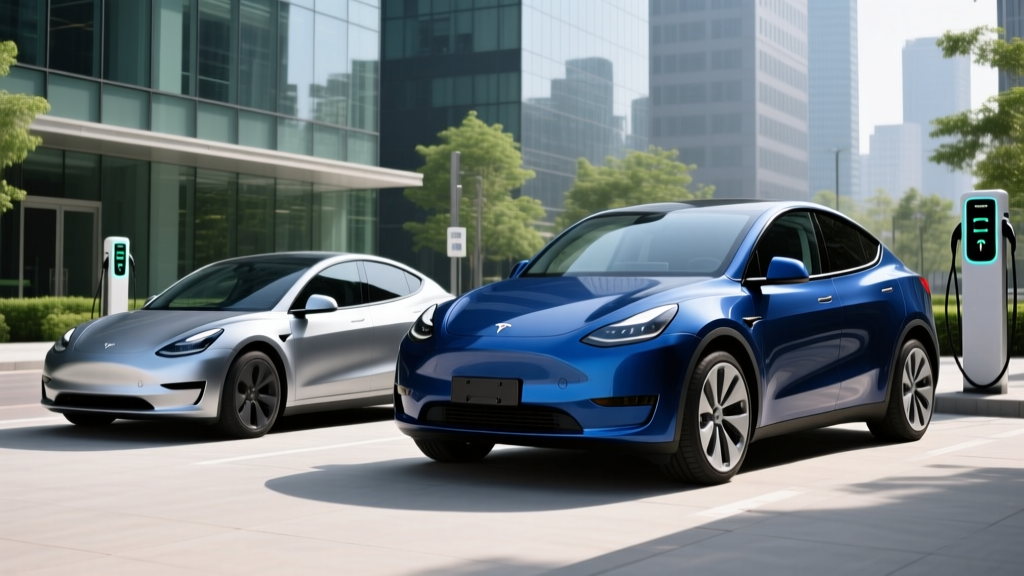
Both vehicles share Tesla's core architecture — a 400V electrical system, heat pump thermal management, and the proprietary NACS (North American Charging Standard) connector — but they diverge significantly in battery chemistry, range, cargo capacity, and pricing. Let's get into the data.
Spec Comparison: Model Y vs Model 3 at a Glance
| Specification | Model Y Long Range AWD | Model 3 Long Range AWD |
|---|---|---|
| EPA Range | 320 miles | 363 miles |
| Battery (usable) | ~78.1 kWh (NMC) | ~78.1 kWh (NMC) |
| Drivetrain | Dual-Motor AWD | Dual-Motor AWD |
| Horsepower | 384 hp | 384 hp |
| 0–60 mph | 4.8 seconds | 4.2 seconds |
| Efficiency | 28 kWh/100 mi (120 MPGe) | 25 kWh/100 mi (134 MPGe) |
| Max DC Fast Charge | 250 kW | 250 kW |
| 10–80% DCFC Time | ~27 minutes | ~27 minutes |
| Level 2 (Home) Rate | 11.5 kW (~44 mi/hr) | 11.5 kW (~48 mi/hr) |
| Cargo (rear seats up) | 30.2 cu ft | 23.0 cu ft |
| Cargo (rear seats down) | 72.1 cu ft | N/A (sedan trunk) |
| Front Trunk (Frunk) | 4.1 cu ft | 3.1 cu ft |
| Rear Legroom | 38.8 in | 35.2 in |
| Base MSRP | $47,990 | $47,740 |
| Battery Warranty | 8 yr / 120,000 mi | 8 yr / 120,000 mi |
Note: The Model Y received a significant refresh ("Juniper") for the 2025 model year with revised exterior styling, ventilated front seats, ambient lighting, and a rear touchscreen for passengers. The Model 3 "Highland" refresh arrived in late 2023 with improved NVH, a rear screen, and updated suspension tuning. Both are current for 2026.
Real-World Range: What the EPA Number Doesn't Tell You
Model Y Long Range: EPA 320 mi — expect ~280–300 mi in mixed driving, ~250–270 mi sustained highway at 75 mph, and ~210–240 mi in sub-freezing winter conditions.
Model 3 Long Range: EPA 363 mi — expect ~320–340 mi mixed, ~290–310 mi highway, and ~240–270 mi in cold weather.
EPA range estimates are generated on a dynamometer under controlled conditions that don't fully replicate sustained highway speeds, headwinds, elevation changes, or cold-weather battery chemistry behavior. The Model 3's efficiency advantage (25 vs 28 kWh/100 mi) comes down to its lower, more aerodynamic sedan profile — it simply pushes less air at highway speeds than the taller, boxier Model Y crossover.
Cold weather hits both models similarly. Tesla's heat pump is among the best in the industry at scavenging waste heat from the drivetrain and battery to warm the cabin, which reduces the range penalty compared to resistive-heater EVs. But lithium-ion cells still experience increased internal resistance in cold temperatures, and cabin heating still draws energy. In our experience with Tesla vehicles in 20–30°F conditions, preconditioning the battery while plugged in before departure recovers a meaningful portion of that lost range — always precondition if you can.
For context, fueleconomy.gov lists the Model 3 Long Range AWD at 134 MPGe combined. That efficiency figure is among the highest of any all-wheel-drive EV on the market, and it translates directly to lower per-mile charging costs.
Charging Speed and Infrastructure: DC Fast + Home Level 2
Tesla's 250 kW peak DC fast-charging rate is no longer class-leading — competitors like the Hyundai Ioniq 5 and Kia EV6 hit 350 kW on 800V architectures — but Tesla's advantage lies in the Supercharger network's reliability and density. When you pull up to a V3 Supercharger stall, the plug-and-charge experience is seamless: no app fumbling, no payment terminal, no adapter needed (NACS is native).
| Charging Level | Power / Rate | Miles Added | Notes |
|---|---|---|---|
| Level 1 (120V outlet) | ~1.4 kW | ~3–4 mi/hr | Emergency/trickle only |
| Level 2 (240V, 48A) | 11.5 kW | ~44–48 mi/hr | Full charge in ~7–8 hours |
| DC Fast (V3 Supercharger) | Peak 250 kW | ~175 mi in 15 min | 10–80% in ~27 min |
| DC Fast (CCS adapter) | Up to 250 kW | Varies by station | Requires Tesla CCS adapter ($175) |
A critical detail many spec sheets gloss over: the charge curve. Tesla's NMC batteries peak at 250 kW only at a low state of charge (roughly 10–20% SoC) with a preconditioned battery. As the battery fills, the charge rate tapers — by 60% SoC you're likely seeing ~120–150 kW, and above 80% it drops to under 50 kW. This is why the 10–80% metric matters more than peak kW: it captures the sustained charging speed you'll actually experience on a road trip.
For home charging, Tesla's Wall Connector ($425) delivers up to 11.5 kW on a 60-amp circuit (48 amps continuous). That adds roughly 44 miles of range per hour for the Model Y and 48 for the Model 3, meaning an overnight charge from 20% to 80% takes about 5 hours — plenty for daily replenishment. Installation cost for a dedicated 60A circuit typically runs $500–$2,000 depending on panel proximity and whether your home needs a panel upgrade. Always get a quote from a licensed electrician before committing.
Tesla also opened its Supercharger network to non-Tesla EVs (via built-in Magic Dock CCS adapters at select stations), which means the network is expanding its revenue base while remaining native and frictionless for Tesla owners. As of 2026, there are over 6,500 Supercharger stations in North America.
Battery Chemistry, Degradation, and Warranty
Both the Model Y Long Range and Model 3 Long Range AWD use NMC (nickel manganese cobalt) lithium-ion cells — specifically, Tesla's 4680-format cells manufactured at Giga Texas and by Panasonic. NMC chemistry offers higher energy density than LFP (lithium iron phosphate), which is why these Long Range variants achieve their higher EPA figures.
The trade-off: NMC cells degrade slightly faster than LFP over many charge cycles, and Tesla recommends daily charging to 80% for Long Range models (reserving 100% for trips). The Model 3 RWD and Model Y RWD trims, by contrast, use LFP batteries that Tesla says you can charge to 100% daily without accelerated degradation — a meaningful ownership convenience if you don't need maximum range.
Tesla's battery and drive unit warranty covers 8 years or 120,000 miles (whichever comes first) for Long Range models, with a minimum 70% capacity retention threshold over that period. Based on aggregated fleet data from sources like Recurrent Auto, Tesla NMC packs typically show ~10–12% degradation at 100,000 miles — well within warranty coverage. A full battery replacement outside warranty currently costs approximately $12,000–$16,000 depending on the pack, though most owners will never need one within a typical ownership cycle.
Pricing, Trims, and Federal Tax Credit Eligibility
| Model / Trim | Base MSRP | Est. As-Tested* | §30D Credit Eligible? | Effective Price** |
|---|---|---|---|---|
| Model 3 RWD | $38,990 | $39,990 | Yes (if income/sourcing met) | ~$31,490 |
| Model 3 Long Range AWD | $47,740 | $49,740 | Yes (if income/sourcing met) | ~$40,240 |
| Model 3 Performance | $54,990 | $56,990 | Yes (if income/sourcing met) | ~$47,490 |
| Model Y Long Range AWD | $47,990 | $49,990 | Yes (if income/sourcing met) | ~$40,490 |
| Model Y Performance | $52,490 | $54,490 | Yes (if income/sourcing met) | ~$44,990 |
*As-tested includes destination fee and common options. **Effective price assumes full $7,500 §30D credit applied at point of sale.
The IRS §30D federal tax credit offers up to $7,500 for qualifying new EVs, but eligibility hinges on several requirements that change periodically:
- MSRP Cap: SUVs (Model Y) must be under $80,000; sedans (Model 3) must be under $55,000. All current Model 3 and Model Y trims clear these caps.
- Buyer Income Cap: Modified AGI must not exceed $150,000 (single), $225,000 (head of household), or $300,000 (joint filers).
- Battery Sourcing: The $7,500 credit splits into two halves — $3,750 for critical minerals sourcing and $3,750 for battery component manufacturing. As of 2026, Tesla's US-built cells and North American mineral sourcing qualify most configurations for the full $7,500, but specific battery pack sourcing can vary by production batch.
- Point-of-Sale Transfer: Since 2024, buyers can transfer the credit to the dealer (Tesla) at purchase, reducing the purchase price directly rather than waiting for a tax refund.
Always verify current eligibility on the IRS clean vehicle credit page before ordering, as sourcing requirements tighten annually and specific configurations may qualify for only $3,750 or none at all depending on the battery pack's supply chain.
Tech, Driver Assistance, and Interior
Tesla's infotainment remains a 15.4-inch central touchscreen (Model Y) or 15.4-inch landscape display (Model 3 Highland) running Tesla's proprietary OS. There are no Apple CarPlay or Android Auto integrations — Tesla's system handles navigation, media (Spotify, Apple Music, Tidal), phone connectivity via Bluetooth, and vehicle controls natively. The interface is responsive and over-the-air updatable, but the lack of smartphone projection is a dealbreaker for some buyers accustomed to their phone's ecosystem.
Both models include a rear passenger touchscreen (added in the refresh cycles) for climate and media control — a useful addition for family use.
Tesla's Autopilot (standard) and Full Self-Driving Supervised ($8,000 option) are SAE Level 2 driver-assistance systems. This means the vehicle can manage steering, acceleration, and braking under certain conditions, but the driver must remain fully engaged and attentive at all times. FSD Supervised does not make the car self-driving. It is not SAE Level 3, 4, or 5. You are legally and operationally responsible for the vehicle.
Autopilot includes Traffic-Aware Cruise Control and Autosteer (lane centering) and works well on well-marked highways. FSD Supervised adds automatic lane changes, navigation-guided on/off-ramp transitions, traffic light and stop sign recognition, and city-street autosteer. FSD's performance has improved substantially through Tesla's end-to-end neural network approach, but it still requires active supervision — expect occasional disengagements in construction zones, complex intersections, or poor weather. For hands-free highway driving on mapped roads, GM's Super Cruise and Ford's BlueCruise offer comparable Level 2 functionality with driver-monitoring cameras that allow eyes-off (but not attention-off) operation on approved routes.
Interior build quality on the Juniper Model Y and Highland Model 3 is meaningfully improved over earlier Teslas — panel gaps are tighter, materials are softer, and cabin noise is noticeably reduced. The minimalist interior (no physical instrument cluster, no stalks — turn signals are on the steering wheel) takes adjustment. Some buyers love the simplicity; others find it frustrating. Test-drive before committing.
Pros, Cons, and Who Should Buy
- Best-in-class Supercharger network access (native NACS, no adapter)
- Top-tier efficiency — 25–28 kWh/100 mi depending on model
- Over-the-air updates continuously add features
- Strong resale value relative to most EVs
- Heat pump standard — better cold-weather range retention
- Class-leading cargo volume in Model Y (72.1 cu ft)
- Qualifies for full $7,500 federal credit (most configurations)
- No Apple CarPlay / Android Auto
- 400V architecture — DCFC peak (250 kW) trails 800V rivals
- FSD Supervised is expensive ($8,000) and still requires full attention
- Minimalist interior polarizing — no physical gauges or stalks
- Insurance premiums run 15–30% higher than comparable ICE vehicles
- Turn signals on steering wheel (not stalk) frustrate some drivers
- Service center wait times can be long in some metro areas
Who the Model Y suits best: Families and buyers who need crossover cargo space, higher seating position, and road-trip versatility. The 72.1 cu ft of cargo room (seats folded) and available towing capacity make it the more practical daily driver for households with kids, gear, or dogs. It's also the better choice if you frequently drive in snow — the AWD system and ground clearance help.
Who the Model 3 suits best: Commuters, couples, and efficiency-focused buyers who prioritize maximum range per kWh and a sportier driving feel. The Model 3 Long Range's 363-mile EPA range is among the highest of any EV under $50,000, and its lower, lighter body delivers sharper handling. If you don't need SUV cargo space, the Model 3 is the more efficient and engaging car.
Frequently Asked Questions
What is the real-world range of Tesla's current models?
The Model Y Long Range achieves 320 miles EPA, but expect 280–300 miles in real-world mixed driving and 250–270 miles on sustained highway trips. The Model 3 Long Range posts 363 miles EPA with roughly 320–340 miles achievable in mixed use. Cold weather (below freezing) reduces both figures by 15–25%. Preconditioning while plugged in mitigates some of this loss.
How fast do the Model Y and Model 3 charge?
Both peak at 250 kW on a V3 Supercharger, reaching 10–80% in approximately 27 minutes with a preconditioned battery. At home on a 240V/48A Level 2 circuit (11.5 kW), a full charge takes about 7–8 hours. The charge curve tapers significantly above 80% SoC — plan road-trip charging stops to 80% for optimal speed.
How much does a Tesla cost after the federal tax credit?
With the full $7,500 §30D credit applied at point of sale, a Model 3 RWD drops to roughly $31,490 and a Model Y Long Range AWD to roughly $40,490. Eligibility depends on buyer income (under $150K–$300K depending on filing status), MSRP caps (which all current trims meet), and battery sourcing compliance. Verify your specific eligibility on irs.gov before ordering.
Is a Tesla worth buying versus competitors like the Hyundai Ioniq 5 or Ford Mustang Mach-E?
Tesla's edge is the Supercharger network, efficiency, and software ecosystem. The Ioniq 5 charges faster (350 kW peak on 800V) and offers CarPlay; the Mach-E provides a more traditional interior layout. If reliable public fast-charging infrastructure is your top priority and you road-trip regularly, Tesla remains the strongest choice. If you prefer CarPlay, faster peak charging, or a more conventional cabin, the competitors deserve a serious look.
Does Tesla's battery warranty cover real-world degradation?
Yes. Tesla warrants the Long Range battery for 8 years or 120,000 miles with a minimum 70% capacity retention. Fleet data suggests typical NMC degradation of 10–12% at 100,000 miles, meaning most packs will remain within warranty coverage. Charging to 80% daily (rather than 100%) and avoiding frequent DC fast charging when Level 2 is available will help maximize long-term battery health.