Quick Verdict: The Lucid Air in 2026
The Lucid Air remains the efficiency and range benchmark among luxury electric sedans. For 2026, the lineup spans the $69,900 Pure to the $249,000 Sapphire, with the Grand Touring continuing to offer the longest EPA-estimated range of any production EV sold in the United States. Beyond the vehicles themselves, financial headlines around the Lucid convertible note offering have raised questions among prospective buyers about the company's stability and what debt financing means for long-term parts and service support. This review covers the full Air lineup — specs, real-world range, charging performance, pricing after federal tax credits, and what the convertible note offering actually signals for anyone considering a purchase.
| Spec | Pure RWD | Touring AWD | Grand Touring | Sapphire |
|---|---|---|---|---|
| EPA Range | 419 mi | 425 mi | 516 mi | 427 mi |
| Battery (usable) | 88 kWh (NMC) | 112 kWh (NMC) | 112 kWh (NMC) | 118 kWh (NMC) |
| Horsepower | 430 hp | 620 hp | 819 hp | 1,234 hp |
| 0–60 mph | 5.0 sec | 3.4 sec | 3.0 sec | 1.89 sec |
| Drivetrain | RWD (single motor) | AWD (dual motor) | AWD (dual motor) | AWD (tri-motor) |
| Max DC Charge | 220 kW | 300 kW | 300+ kW | 300+ kW |
| 10–80% DC Time | ~25 min | ~22 min | ~20 min | ~20 min |
| MPGe (combined) | 146 MPGe | 131 MPGe | 131 MPGe | 116 MPGe |
| Base MSRP | $69,900 | $87,400 | $125,600 | $249,000 |
Source: fueleconomy.gov and Lucid Motors official specifications. Real-world results vary with temperature, terrain, and driving style.
Range and Efficiency: EPA Numbers vs. Real-World Driving
EPA vs. Reality — Lucid Air Grand Touring
EPA estimated: 516 miles
Real-world highway (70 mph, mild weather): ~430–460 miles
Real-world highway (30°F or below): ~350–390 miles
Mixed city/highway commute: ~460–490 miles
The Grand Touring's 516-mile EPA figure is not marketing fiction — Lucid's powertrain efficiency, measured in watt-hours per mile, is class-leading. The Air achieves roughly 24–26 kWh/100 mi in mixed driving on the Grand Touring, a figure that rivals much smaller and lighter EVs. The Pure RWD, despite its smaller battery, returns an even more impressive 146 MPGe combined thanks to its single-motor configuration and lower mass.
However, EPA range is tested under specific laboratory conditions that favor low-speed city cycling with regenerative braking. On sustained highway runs at 70–75 mph, expect to use 75–85% of the EPA sticker. In freezing temperatures, lithium-ion internal resistance increases and cabin heating draws significant power — even with the Air's standard heat pump, cold-weather range loss of 20–30% is typical. This still leaves the Grand Touring with a usable ~350+ miles in winter highway driving, which exceeds the EPA numbers of most competitors' best trims.
The Air's efficiency edge comes from its proprietary miniaturized drive units, which Lucid developed in-house. These motors are physically smaller and lighter than comparable units from rivals, reducing both weight and energy loss. At 24 kWh/100 mi on the Grand Touring, you're looking at roughly $0.07–$0.09 per mile at the US average residential electricity rate of ~$0.17/kWh — dramatically cheaper than a comparable BMW 5 Series at current fuel prices.
Charging Speed: DC Fast Charging and Home Level 2
| Charging Level | Power / Rate | Miles Added per Hour | Notes |
|---|---|---|---|
| Level 1 (120V household) | ~1.4 kW | ~4–5 mi/hr | Emergency/trickle only |
| Level 2 (240V, 48A home) | ~11.5 kW | ~38–42 mi/hr | Full charge in ~10–12 hrs |
| Level 2 (240V, 80A home) | ~19.2 kW | ~65–70 mi/hr | Requires 100A circuit; full charge ~6 hrs |
| DC Fast (peak, 350 kW station) | Up to 300+ kW | ~200+ mi in 15 min | 10–80% in ~20 min (Grand Touring) |
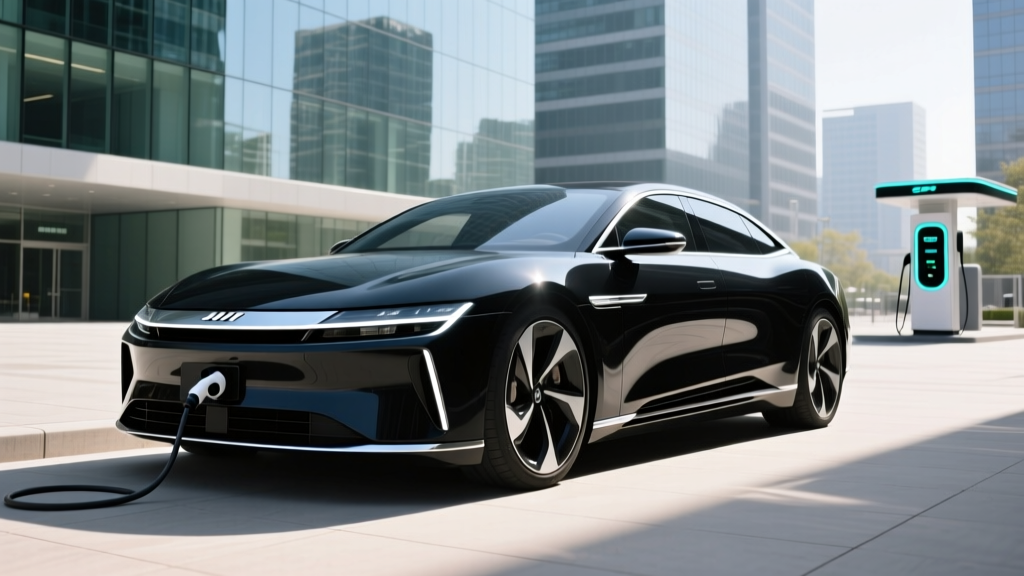
The Air's 900V+ electrical architecture is its charging secret weapon. Higher voltage allows the car to accept more power at lower current, reducing heat generation and sustaining peak charge rates longer. On a 350 kW Electrify America or Ionity charger, the Grand Touring and Touring trims can peak above 300 kW — though as with all EVs, the charge curve tapers significantly above 80% state of charge. The 10–80% sprint takes roughly 20 minutes under ideal battery-preconditioned conditions, but 80–100% can add another 25–30 minutes. For road-trip planning, plan stops around the 10–80% window.
At home, the Air's onboard charger supports up to 19.2 kW on Level 2 (240V, 80A). This requires a hardwired wall connector on a dedicated 100-amp circuit — a significant electrical upgrade for many homes. Most buyers opt for a 48A/11.5 kW setup on a 60A circuit, which adds roughly 40 miles of range per hour and fully replenishes the 112 kWh pack overnight. Budget $1,200–$3,500 for a professional Level 2 installation, depending on panel capacity and run length. If your home has a 100A main panel, a $2,000–$5,000 panel upgrade to 200A may be necessary.
The Air uses the CCS1 connector natively. As the industry shifts toward NACS (Tesla's connector standard), Lucid has confirmed NACS adapter support for Supercharger access, though native NACS port integration is expected in future model-year refreshes. Check current adapter availability before relying on the Tesla Supercharger network.
Performance, Handling, and Drivetrain
The Air Sapphire's 1.89-second 0–60 mph time places it among the fastest production cars ever built, period — electric or otherwise. Its tri-motor layout (one front, two rear) enables torque vectoring across the rear axle, giving the Sapphire cornering agility that belies its 5,200-pound curb weight.
For most buyers, the Touring's 620 hp and 3.4-second 0–60 is more than adequate. The dual-motor AWD system provides confident all-weather traction, and the Air's adaptive air suspension (standard on Touring and above) adjusts ride height and damping in real time. The Pure RWD, while the lightest and most efficient trim, still delivers 430 hp — enough for effortless highway merging and passing.
One-pedal driving via aggressive regenerative braking is available across all trims, though Lucid's regen feel is slightly less aggressive than Tesla's or BMW's iX. Some drivers appreciate the smoother coasting behavior; others may find themselves reaching for the brake pedal more often than in competing EVs.
Interior Space, Cargo, and Technology
The Air is a full-size luxury sedan, and its interior volume reflects that. Rear legroom measures 40.7 inches — competitive with the Mercedes EQS and significantly more than the Tesla Model S. The glass canopy roof (standard on Grand Touring, optional on Touring) creates an airy, open cabin but does reduce headroom slightly for taller passengers.
Cargo capacity is a standout: 32 cubic feet combined between the rear trunk (22 cu ft) and front trunk/frunk (10 cu ft). The trunk opening is wide and the load floor is flat, making the Air surprisingly practical for luggage on long road trips. The frunk is deep enough for a carry-on bag and charging cables.
The infotainment system runs on a 34-inch curved glass cockpit display spanning the driver's instrument cluster and center stack. A retractable lower touchscreen handles climate and secondary controls. The system is responsive but has drawn criticism for burying some commonly used functions (like drive mode selection) behind multiple taps. Wireless Apple CarPlay and Android Auto are standard. Over-the-air updates continue to refine the interface — Lucid has pushed several meaningful UX improvements through OTA since launch.
Driver assistance comes via Lucid's DreamDrive Pro system, which uses a combination of cameras, radar, and LiDAR (a roof-mounted unit standard on Grand Touring and Sapphire). DreamDrive Pro is a SAE Level 2 system — meaning the driver must remain fully engaged and hands-on at all times. It is not autonomous driving. Highway assist, lane centering, and adaptive cruise work well, but the system is less mature than Tesla's Autopilot or GM's Super Cruise in terms of hands-free capability. Lucid has not yet launched a hands-free highway driving mode comparable to Ford's BlueCruise or GM's Super Cruise.
SAE Automation Level Reminder: The Lucid Air's DreamDrive Pro is a Level 2 driver-assistance system. The driver is responsible for all vehicle operation and must monitor the road at all times. No production passenger vehicle sold today offers Level 3 or above autonomy for consumer use in the United States. Level 4 driverless operation is currently limited to geo-fenced commercial robotaxi services (Waymo, Zoox).
Pricing, Trims, and Federal Tax Credit Eligibility
| Trim | Base MSRP | Federal §30D Credit | Effective Price (est.) |
|---|---|---|---|
| Pure RWD | $69,900 | $0 (exceeds sedan MSRP cap) | $69,900 |
| Touring AWD | $87,400 | $0 (exceeds sedan MSRP cap) | $87,400 |
| Grand Touring | $125,600 | $0 (exceeds sedan MSRP cap) | $125,600 |
| Sapphire | $249,000 | $0 (exceeds sedan MSRP cap) | $249,000 |
Under current IRS §30D rules, the federal EV tax credit is capped at $55,000 MSRP for sedans (and $80,000 for SUVs, vans, and trucks). Every Lucid Air trim exceeds the sedan cap, meaning no Air qualifies for the $7,500 federal new-vehicle EV tax credit. Additionally, buyers must meet adjusted gross income thresholds ($150,000 single / $300,000 joint) and the vehicle's battery must satisfy critical-mineral and component-sourcing requirements — but the MSRP cap alone disqualifies the entire Air lineup regardless of buyer income.
Some buyers may be eligible for state-level incentives (California's CVRP, for example, or utility-company rebates), but these vary by jurisdiction. Check your state energy office or local utility for current programs. A qualified tax professional can advise on any applicable credits. See the IRS §30D guidance for full federal rules.
The Lucid Convertible Note Offering: What Buyers Should Know
In recent financing rounds, Lucid Group has issued convertible senior notes — a form of debt that can be converted into equity (stock shares) under predefined conditions. The Lucid convertible note offering is a capital-raising mechanism used to fund ongoing production, R&D for upcoming models (including the Gravity SUV and mid-size platform), and operational scaling.
For prospective Air buyers, the key question is whether this signals financial risk. A few considerations:
- Convertible debt is standard for growth-stage automakers. Tesla, Rivian, and NIO have all used convertible notes at various stages. It dilutes shareholders but does not inherently threaten production or warranty support.
- Lucid's majority shareholder is Saudi Arabia's Public Investment Fund (PIF), which holds a significant stake and has repeatedly injected capital. This backing provides a financial floor that most EV startups lack.
- Warranty obligations are legally binding regardless of a company's capital structure. The Air's 8-year/100,000-mile battery warranty and 4-year/50,000-mile vehicle warranty remain enforceable under US consumer protection law.
- Long-term parts and service availability is the more legitimate concern for any low-volume automaker. Lucid's service center network is expanding but remains far smaller than Tesla's or legacy luxury brands'. Buyers in rural areas should verify the nearest authorized service location before purchasing.
Bottom line: the convertible note offering is a financial instrument, not a product recall. It reflects the capital-intensive reality of scaling EV production, not an imminent solvency crisis. That said, buyers should weigh the service-network reality and Lucid's production volume against the security of buying from a larger OEM.
Warranty Coverage and Long-Term Ownership
| Coverage | Term |
|---|---|
| Basic Vehicle | 4 years / 50,000 miles |
| Battery & Drive Unit | 8 years / 100,000 miles |
| Battery Capacity Retention | Minimum 70% over warranty period |
| Roadside Assistance | 4 years / 50,000 miles |
The 70% capacity retention threshold is industry-standard, matching Tesla and most legacy OEMs. Lucid uses NMC (nickel manganese cobalt) chemistry across the Air lineup, which offers higher energy density than LFP (lithium iron phosphate) but is more sensitive to sustained high-state-of-charge storage. For maximum longevity, Lucid recommends setting daily charge limits to 80–90% and avoiding prolonged storage above 95% or below 10%. The battery's liquid thermal management system actively conditions cells during charging and driving, which helps mitigate degradation.
Battery replacement cost out of warranty is significant — estimated at $20,000–$35,000 depending on the pack size. However, industry degradation data for NMC packs with active thermal management suggests most will retain 85–90% capacity at 100,000 miles under normal use, making an out-of-warranty replacement unlikely for most first owners.
Lucid Air vs. Key Competitors
| Attribute | Lucid Air GT | Tesla Model S LR | BMW i5 eDrive40 | Mercedes EQS 450+ |
|---|---|---|---|---|
| EPA Range | 516 mi | 402 mi | 295 mi | 390 mi |
| Base MSRP | $125,600 | $79,990 | $66,800 | $104,400 |
| Max DC Charge | 300+ kW | 250 kW | 205 kW | 200 kW |
| 0–60 mph | 3.0 sec | 3.1 sec | 5.7 sec | 5.9 sec |
| Federal Credit | $0 | $0 (MSRP cap) | $0 (sourcing) | $0 (MSRP cap) |
| Service Network | Limited | Extensive | Extensive | Extensive |
The Air Grand Touring wins on range and efficiency by a wide margin. The Tesla Model S Long Range offers a more mature Supercharger network and broader service access at a lower price. The BMW i5 is the value pick — less range but traditional luxury build quality, a vast dealer network, and a price point $60,000 below the Air GT. The EQS 450+ competes most directly on luxury feel but falls short on range and charging speed. If range-per-dollar is your primary metric, the Air Pure at $69,900 for 419 miles is genuinely hard to beat in the luxury segment.
Pros
- Longest EPA range of any production EV (516 mi, Grand Touring)
- Class-leading efficiency (kWh/100 mi) across the lineup
- 900V architecture enables 300+ kW DC fast charging
- Spacious rear seat and generous 32 cu ft cargo volume
- Air suspension and refined ride quality on Touring and above
- PIF backing provides financial stability uncommon among EV startups
Cons
- No federal tax credit eligibility (all trims exceed sedan MSRP cap)
- Service center network still limited outside major metros
- Infotainment UX lags behind Tesla, BMW, and Mercedes
- DreamDrive Pro (Level 2) less polished than competitor driver-assist systems
- No hands-free highway driving mode yet
- High battery replacement cost out of warranty ($20K–$35K)
Who Should Buy the 2026 Lucid Air?
Choose the Lucid Air if:
- You want the longest range available and regularly drive 300+ miles between charges
- You value efficiency and want the lowest cost-per-mile in the luxury EV sedan class
- You live near a Lucid service center or are comfortable with mobile service for minor issues
- You prioritize a spacious rear seat for passengers (the Air's 40.7" rear legroom beats the Model S)
Look elsewhere if:
- You need the broadest possible charging and service network (consider Tesla Model S)
- You want a sub-$70K luxury EV with federal tax credit eligibility (the Air Pure misses the cap by ~$15K)
- Hands-free highway driving is a priority (GM Super Cruise or Ford BlueCruise vehicles)
- You want SUV cargo versatility (wait for the Lucid Gravity or consider the BMW iX)
Frequently Asked Questions
What is the real-world range of the Lucid Air?
The Grand Touring's EPA estimate is 516 miles. In real-world highway driving at 70 mph in mild weather, expect approximately 430–460 miles. In freezing temperatures, that drops to roughly 350–390 miles. The Pure RWD delivers a real-world ~350–380 miles on the highway despite its 419-mile EPA rating, owing to its lighter weight and single-motor efficiency.
How fast does the Lucid Air charge?
On a 350 kW DC fast charger, the Grand Touring and Touring peak above 300 kW and charge from 10–80% in approximately 20 minutes (with battery preconditioning active). At home on a 48A Level 2 charger (11.5 kW), expect roughly 40 miles of range per hour and a full overnight charge. The Pure RWD peaks at 220 kW DC, with a 10–80% time of about 25 minutes.
How much does the Lucid Air cost after tax credits?
No Lucid Air trim qualifies for the $7,500 federal §30D new-vehicle EV tax credit because all exceed the $55,000 MSRP cap for sedans. The effective purchase price is the MSRP plus destination charge, less any applicable state or utility incentives. The Pure RWD starts at $69,900; the Grand Touring at $125,600.
Does the Lucid Air qualify for the federal EV tax credit?
No. Under current IRS §30D rules, new clean vehicle credits are limited to sedans with an MSRP of $55,000 or less. Every Air trim exceeds this cap. Buyers should consult the IRS clean vehicle credit page and a tax professional for personalized guidance.
Is the Lucid Air worth buying vs. the Tesla Model S or BMW i5?
If maximum range and efficiency are your top priorities, the Air Grand Touring has no equal. If you value charging network breadth, service accessibility, and a lower entry price, the Tesla Model S Long Range or BMW i5 are compelling alternatives. The Air wins on paper specs; the Model S wins on ecosystem maturity; the i5 wins on value and dealer support.
What does the Lucid convertible note offering mean for buyers?
Convertible notes are a standard capital-raising tool for growth-stage companies. Lucid's majority backing by Saudi Arabia's PIF provides significant financial stability. Warranty obligations remain legally enforceable regardless of capital structure. The main practical consideration for buyers is Lucid's still-growing service network — verify service access in your area before committing.
What battery chemistry does the Lucid Air use?
All Air trims use NMC (nickel manganese cobalt) lithium-ion cells. NMC offers higher energy density than LFP, which is essential for the Air's range targets, but it is more sensitive to prolonged high-SoC storage. Lucid recommends daily charge limits of 80–90% for optimal battery longevity.