The Tesla HW4 Upgrade: What Changed and Why It Matters
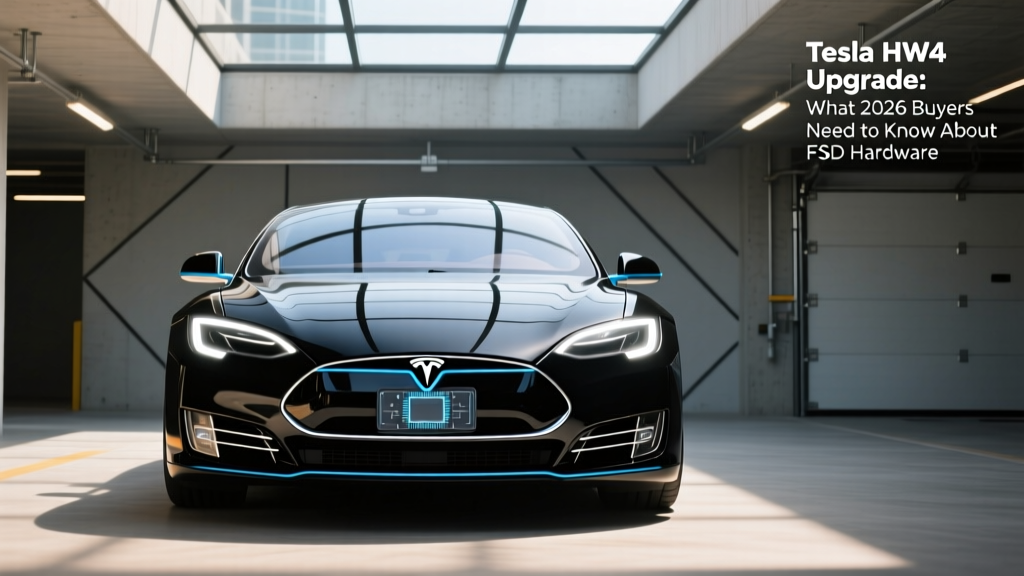
If you've browsed Tesla forums or owner groups lately, you've likely seen the phrase Tesla HW upgrade circulating — specifically the transition from Hardware 3 (HW3) to Hardware 4 (HW4), Tesla's latest onboard computer for its Autopilot and Full Self-Driving (Supervised) stack. Unlike a battery or motor refresh, this upgrade targets the vehicle's neural processing brain: the silicon that ingests camera feeds, runs inference in real time, and makes the split-second decisions that define Tesla's driver-assistance experience.
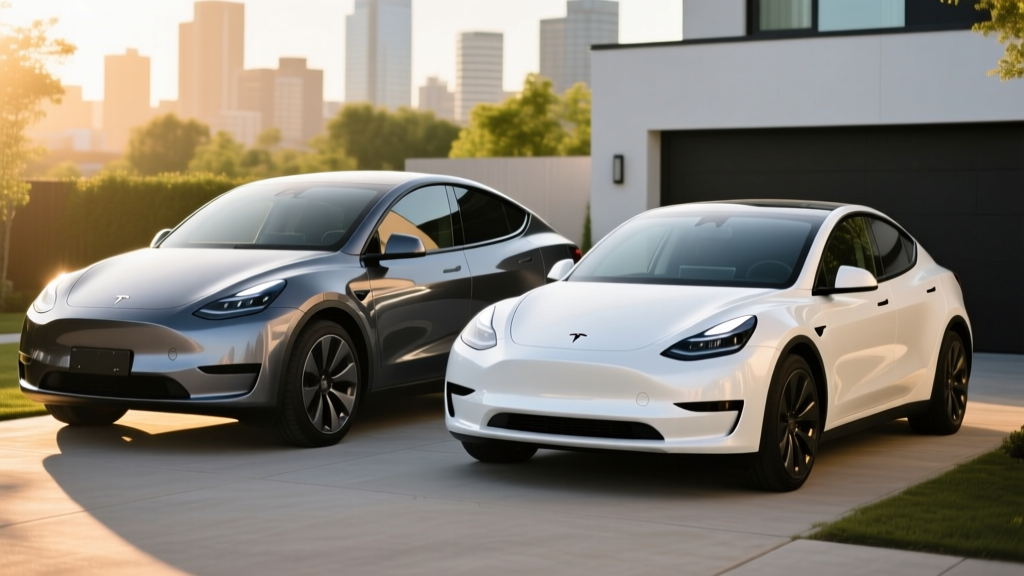
As of early 2026, HW4 (internally designated AI4 by Tesla) ships standard on all new Model S, Model 3, Model X, and Model Y vehicles produced at Fremont, Austin, and Gigafactory Shanghai. It replaces the HW3 computer that powered Tesla's vision-based FSD stack from 2019 through early 2023. The upgrade is not merely incremental — it represents a generational leap in compute density, camera resolution, and sensor fidelity that directly affects what FSD Supervised can perceive and how quickly it reacts.
This guide breaks down exactly what the HW4 upgrade entails, which vehicles carry it, whether HW3 owners can retrofit, and how the hardware translates into real-world driving behavior. We'll also cover the core EV specs — range, charging, pricing, and tax credit eligibility — because hardware decisions don't exist in a vacuum. The car around the computer matters just as much.
HW3 vs HW4: The Silicon and Sensor Differences
Understanding the Tesla HW upgrade requires looking at three layers: the system-on-chip (SoC), the camera suite, and the radar/sensor configuration. Here's what changed between generations:
| Attribute | Hardware 3 (HW3) | Hardware 4 (HW4 / AI4) |
|---|---|---|
| SoC Process Node | 12nm Samsung | 7nm (Samsung/TSMC) |
| Neural Network Processor | Dual NPU, ~144 TOPS combined | Dual NPU, estimated ~300-500 TOPS |
| Camera Resolution | 1.2 megapixel (front/rear/side) | 5 megapixel (all cameras) |
| Camera Count | 8 cameras | 8 cameras (revised mounting/FOV on newer builds) |
| Radar | Continental ARS4-B (removed in 2022+) | 4D HD radar (Phoenix radar, reintroduced 2023+) |
| Frame Rate Processing | ~36 fps per camera | Higher sustained fps, wider dynamic range |
| Power Draw | ~72W | Estimated ~50-65W (more efficient per TOPS) |
The practical impact of these numbers shows up in specific driving scenarios. The 5-megapixel cameras give HW4 roughly four times the pixel density of HW3, which matters at highway speeds where Tesla's vision system must read lane markings, brake lights, and road signs at distance. The reintroduced 4D HD radar (branded internally as Phoenix) adds a non-vision redundancy layer that can detect stationary objects and cut-through vehicles in heavy rain or direct sun glare — conditions where pure vision historically struggled.
The compute uplift means FSD Supervised can run larger neural network models on-device. In practice, this translates to smoother lane changes, fewer phantom braking events, and more confident merges in dense traffic. It does not make the car autonomous — this remains an SAE Level 2 system requiring continuous driver supervision.
Which Tesla Models Ship With HW4 in 2026?
As of the 2026 model year, every new Tesla rolling off the production line includes HW4. Here's the current lineup with core EV specifications:
| Model / Trim | EPA Range | Battery (kWh) | 0-60 mph | Drivetrain | HP | Base MSRP |
|---|---|---|---|---|---|---|
| Model 3 RWD | 272 mi | ~60 kWh (LFP) | 5.8s | RWD | 283 | $38,990 |
| Model 3 Long Range AWD | 341 mi | ~79 kWh (NMC) | 4.2s | AWD Dual-Motor | 346 | $44,990 |
| Model 3 Performance | 315 mi | ~79 kWh (NMC) | 2.9s | AWD Dual-Motor | 510 | $52,990 |
| Model Y Long Range AWD | 320 mi | ~79 kWh (NMC) | 4.8s | AWD Dual-Motor | 384 | $44,990 |
| Model Y Performance | 295 mi | ~79 kWh (NMC) | 3.3s | AWD Dual-Motor | 510 | $51,490 |
| Model S Long Range | 402 mi | ~100 kWh (NMC) | 3.1s | AWD Dual-Motor | 670 | $79,990 |
| Model X Long Range | 348 mi | ~100 kWh (NMC) | 3.8s | AWD Dual-Motor | 670 | $84,990 |
Sources: fueleconomy.gov, Tesla.com specifications (accessed Q1 2026). MSRP figures exclude destination fees.
Charging Performance: DC Fast, Level 2, and the HW4 Connection
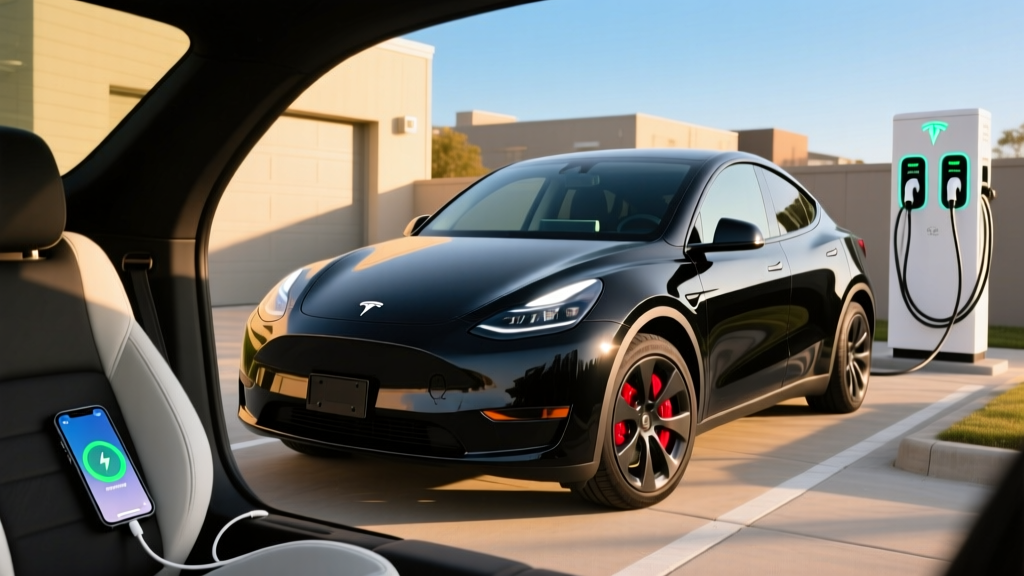
The Tesla HW upgrade does not directly alter charging speed — that's governed by battery chemistry, thermal management, and the vehicle's onboard charger. But HW4's more efficient power draw and the newer vehicle platforms it ships on do benefit from Tesla's latest thermal architecture (the structural battery pack with integrated cooling channels on Model Y and refreshed Model 3).
| Model | Max DC Fast Charge | 10-80% DC Time | Level 2 Home Rate | Miles per Hour (L2) |
|---|---|---|---|---|
| Model 3 RWD (LFP) | 170 kW | ~30 min | 11.5 kW (48A) | ~37 mi/hr |
| Model 3 Long Range / Perf | 250 kW | ~22 min | 11.5 kW (48A) | ~44 mi/hr |
| Model Y Long Range / Perf | 250 kW | ~24 min | 11.5 kW (48A) | ~40 mi/hr |
| Model S / Model X | 250 kW | ~25 min | 11.5 kW (48A) | ~44 mi/hr |
A critical nuance on DC fast charging: the peak kW figure (250 kW) is a maximum reached briefly at low state of charge. Tesla's charge curve tapers progressively above 50% SoC, and drops sharply above 80%. A 10-80% session on a V3 Supercharger (250 kW capable) typically averages 120-150 kW sustained. Plan road-trip stops around the 10-80% window — charging from 80-100% can take as long as 10-80% itself.
For home charging, Tesla's Wall Connector at 48 amps on a 60-amp circuit delivers 11.5 kW, adding roughly 37-44 miles of range per hour depending on the model. Most owners charging overnight from 20-80% will fully replenish in 5-7 hours. Installation costs for a dedicated 240V/60A circuit typically range from $800-$2,500 depending on panel proximity and local permit requirements.
FSD Supervised on HW4: Real-World Capabilities and Limitations
The primary reason owners seek the Tesla HW upgrade is improved FSD (Supervised) performance. On HW4 hardware running FSD v13.x (the latest branch available in early 2026), the system demonstrates measurable improvements over HW3 in several areas:
- Phantom braking reduction: The 5MP cameras and 4D radar dramatically reduce false-positive obstacle detections that caused unnecessary deceleration on HW3 vehicles. Owner-reported phantom braking events have dropped substantially in community tracking datasets.
- Intersection handling: Higher-resolution camera feeds allow the neural network to better read traffic signal states, pedestrian positioning, and cross-traffic gaps at complex multi-lane intersections.
- Lane-change confidence: HW4 executes lane changes with fewer hesitation cycles, particularly in moderate-density highway traffic where gap estimation benefits from the improved sensor fusion.
- Low-visibility performance: The reintroduced 4D radar provides object tracking in heavy rain, fog, and direct-sun washout scenarios that previously degraded pure-vision performance.
FSD Supervised currently costs $8,000 as a one-time purchase or $99/month as a subscription (pricing as of early 2026). It includes Navigate on Autopilot, Auto Lane Change, Autopark, Summon, and Smart Summon. Tesla has not announced a timeline for true unsupervised autonomy in consumer vehicles, and regulatory approval for such operation would require NHTSA action at the federal level and state-by-state authorization.
Can HW3 Owners Upgrade to HW4?
This is the most common question from existing Tesla owners, and the answer is nuanced:
For vehicles purchased with HW3: Tesla has not offered a general paid retrofit program from HW3 to HW4 for the broader fleet. In 2023, Tesla offered a limited, free HW4 upgrade to a small subset of FSD Beta testers who had purchased the FSD package, but this program was restricted and is no longer active. As of 2026, there is no official path for a typical HW3 owner to swap in HW4 hardware.
For vehicles with HW2.5 or earlier: Tesla previously offered free upgrades from HW2/2.5 to HW3 for FSD purchasers. That program has concluded. These older vehicles remain on their existing hardware.
The practical implication: If HW4's improved FSD performance is important to you, the most reliable path is purchasing a new or certified pre-owned Tesla built with HW4 from the factory. Check the vehicle's "Software" menu under "Additional Vehicle Information" — it will list the Autopilot computer version. VIN-based lookup tools on Tesla enthusiast sites can also confirm hardware generation before purchase.
Pricing, Tax Credits, and Total Cost
| Model / Trim | Base MSRP | Federal §30D Credit | Effective Price (if eligible) |
|---|---|---|---|
| Model 3 RWD | $38,990 | Up to $7,500 | ~$31,490 |
| Model 3 Long Range AWD | $44,990 | Up to $7,500 | ~$37,490 |
| Model 3 Performance | $52,990 | Up to $7,500 | ~$45,490 |
| Model Y Long Range AWD | $44,990 | Up to $7,500 | ~$37,490 |
| Model Y Performance | $51,490 | Up to $7,500 | ~$43,990 |
| Model S Long Range | $79,990 | $0 (exceeds MSRP cap) | $79,990 |
| Model X Long Range | $84,990 | $0 (exceeds MSRP cap) | $84,990 |
- MSRP caps (IRS §30D): Sedans (Model 3) must be under $55,000 MSRP; SUVs/trucks/vans (Model Y) must be under $80,000. Model S and Model X exceed these caps and do not qualify.
- Buyer income limits: Modified adjusted gross income (MAGI) must not exceed $150,000 (single), $225,000 (head of household), or $300,000 (married filing jointly).
- Battery sourcing requirements: The full $7,500 credit requires meeting both critical minerals and battery component sourcing thresholds, which are determined annually by the IRS. Tesla's North American battery production has generally qualified Model 3 and Model Y for the full credit, but verify current-year status at IRS.gov §30D.
- Point-of-sale transfer: As of 2024, eligible buyers can transfer the credit to the dealer at purchase, reducing the upfront price rather than waiting for a tax refund.
Always confirm eligibility with a tax professional before purchasing. Rules are subject to legislative change and annual IRS guidance updates.
Interior, Cargo, and Daily Livability
Setting aside the hardware-computer discussion, the 2026 Tesla lineup offers distinct packaging profiles:
Model 3 (Highland refresh): 23 cu ft trunk, 3.5 cu ft frunk. Rear legroom measures 35.2 inches — adequate for adults but tighter than a Hyundai Ioniq 6 or BMW i4. The Highland interior revision added ventilated front seats, ambient lighting, rear-seat touchscreen, and improved cabin insulation that noticeably reduced road noise versus pre-2024 builds.
Model Y (Juniper refresh): 30.2 cu ft cargo (rear seats up), 74.1 cu ft (seats folded), plus 4.1 cu ft frunk. Rear legroom of 40.5 inches makes it genuinely family-capable. The Juniper update brought a quieter cabin, redesigned suspension tuning, and a front-row ventilated seat option. This remains Tesla's volume seller for good reason — it's the most practical crossover in the lineup.
Model S / Model X: Model S offers 28 cu ft trunk + 5.3 cu ft frunk with 39.6 inches of rear legroom. Model X provides up to 88.1 cu ft with seats folded and standard falcon-wing rear doors that ease child-seat installation in tight parking spaces. Both ride on the same platform with adaptive air suspension standard.
Efficiency, Warranty, and Ownership Economics
Tesla's drivetrain efficiency remains among the best in the industry, measured in watt-hours per mile:
- Model 3 RWD: 132 MPGe combined / 25 kWh per 100 miles
- Model 3 Long Range AWD: 134 MPGe combined / 25 kWh per 100 miles
- Model Y Long Range AWD: 122 MPGe combined / 28 kWh per 100 miles
- Model S Long Range: 124 MPGe combined / 27 kWh per 100 miles
These figures translate directly to charging cost. At the US average residential electricity rate of ~$0.17/kWh (EIA, 2025 data), a Model 3 Long Range owner charging exclusively at home pays roughly $4.25 per 100 miles — compared to $12-15 per 100 miles for a comparable 25 MPG gas sedan at $3.20/gallon.
Warranty coverage:
- Basic vehicle limited warranty: 4 years / 50,000 miles
- Battery and drive unit: 8 years / 100,000 miles (Model 3/Y RWD with LFP), 8 years / 120,000 miles (Long Range/Performance and Model S/X)
- Battery capacity retention threshold: 70% minimum during warranty period
Tesla's battery warranty is competitive but not class-leading — Hyundai backs the Ioniq 5 battery for 10 years/100,000 miles, and Rivian offers 8 years/175,000 miles on its R1 platform.
Pros, Cons, and Who Should Buy
Pros
- HW4 delivers measurably better FSD Supervised performance — fewer phantom brakes, better intersection handling
- Supercharger network remains the most reliable DC fast-charging ecosystem in North America
- Class-leading efficiency (kWh/100mi) reduces charging costs vs. competitors
- Over-the-air updates continuously add features without dealer visits
- Model 3/Y qualify for up to $7,500 federal tax credit (subject to eligibility)
- Strong resale value relative to most EV competitors
Cons
- No HW3-to-HW4 retrofit path for existing owners
- FSD Supervised is $8,000 extra and remains Level 2 — not autonomous
- Minimalist interior lacks physical controls (no turn signal stalk on newer builds)
- Model S/X do not qualify for federal tax credit due to MSRP caps
- Service center capacity still lags behind fleet growth in many metro areas
- No Apple CarPlay or Android Auto integration
Who Should Buy a 2026 Tesla With HW4?
Choose Tesla if: You want access to the Supercharger network, prioritize drivetrain efficiency, are interested in FSD Supervised as an evolving driver-assist tool (not autonomy), and value OTA feature updates. The Model 3 Long Range and Model Y Long Range represent the strongest value with tax credit eligibility.
Look elsewhere if: You need physical buttons and stalks, want Apple CarPlay, prefer a more traditional dealership service experience, or need a longer battery warranty. Consider the Hyundai Ioniq 5/6, BMW i4, or Ford Mustang Mach-E as alternatives with competitive range and charging.
Frequently Asked Questions
What is the real-world range of a 2026 Tesla with HW4?
EPA estimates range from 272 miles (Model 3 RWD) to 402 miles (Model S Long Range). In real-world highway driving at 70-75 mph in moderate temperatures, expect 10-15% below EPA. In freezing winter conditions, expect 20-30% below EPA due to battery preconditioning demands and cabin heating. Preconditioning the battery before departure (via scheduled departure or navigation to a Supercharger) recovers some winter range by warming the pack for optimal efficiency.
How fast does a 2026 Tesla charge at home and on the road?
On DC fast charging (V3 Supercharger), Model 3 Long Range and Model Y peak at 250 kW, achieving 10-80% in approximately 22-24 minutes. Model 3 RWD with LFP chemistry peaks at 170 kW with a 10-80% time of ~30 minutes. At home on a Level 2 Wall Connector (11.5 kW / 48A), expect 37-44 miles of range added per hour, with a full overnight charge in 5-7 hours from typical daily depletion.
How much does a 2026 Tesla cost after the federal tax credit?
Model 3 and Model Y trims under the MSRP cap ($55,000 sedans / $80,000 SUVs) can qualify for up to $7,500 via IRS §30D, subject to buyer income limits ($150K single / $300K married filing jointly) and battery sourcing requirements. A Model 3 Long Range at $44,990 MSRP drops to approximately $37,490 after the full credit. Model S and Model X exceed MSRP caps and are ineligible. Confirm eligibility at IRS.gov and with a tax professional.
Is a 2026 Tesla with HW4 worth buying vs. competitors?
For buyers prioritizing charging infrastructure access and drivetrain efficiency, Tesla remains the benchmark. The Supercharger network (now open to other brands via NACS adoption) is the most reliable fast-charging ecosystem. However, the Hyundai Ioniq 5 charges faster (800V architecture, 10-80% in ~18 min), the BMW i4 offers a more traditional luxury interior, and the Ford Mustang Mach-E provides competitive range with a more conventional cabin layout. Test-drive multiple options — the Tesla minimalist interior and lack of physical controls are polarizing.
Can I upgrade my existing HW3 Tesla to HW4?
As of 2026, Tesla does not offer a general paid retrofit program from HW3 to HW4. A limited free upgrade was offered to select FSD purchasers in 2023, but that program has ended. If HW4's improved FSD performance is a priority, the practical path is purchasing a newer vehicle built with HW4 from the factory. Check the Autopilot computer version in the vehicle's Software menu to confirm hardware generation.
Does FSD Supervised on HW4 make the car self-driving?
No. FSD Supervised is an SAE Level 2 driver-assistance system. The driver must remain fully engaged — eyes on the road, prepared to intervene at any moment. The system can make errors at construction zones, unmapped intersections, and unusual road configurations. The "Full Self-Driving" name is a product designation, not a capability description. True unsupervised autonomy (Level 4) is currently available only in limited robotaxi services like Waymo in select cities.